Races
Open EndurAstur Illas 2026: date and route
Illas puts the finishing touch on the EndurAstur 2026 with a technical, tough, and highly anticipated finale in Asturias.

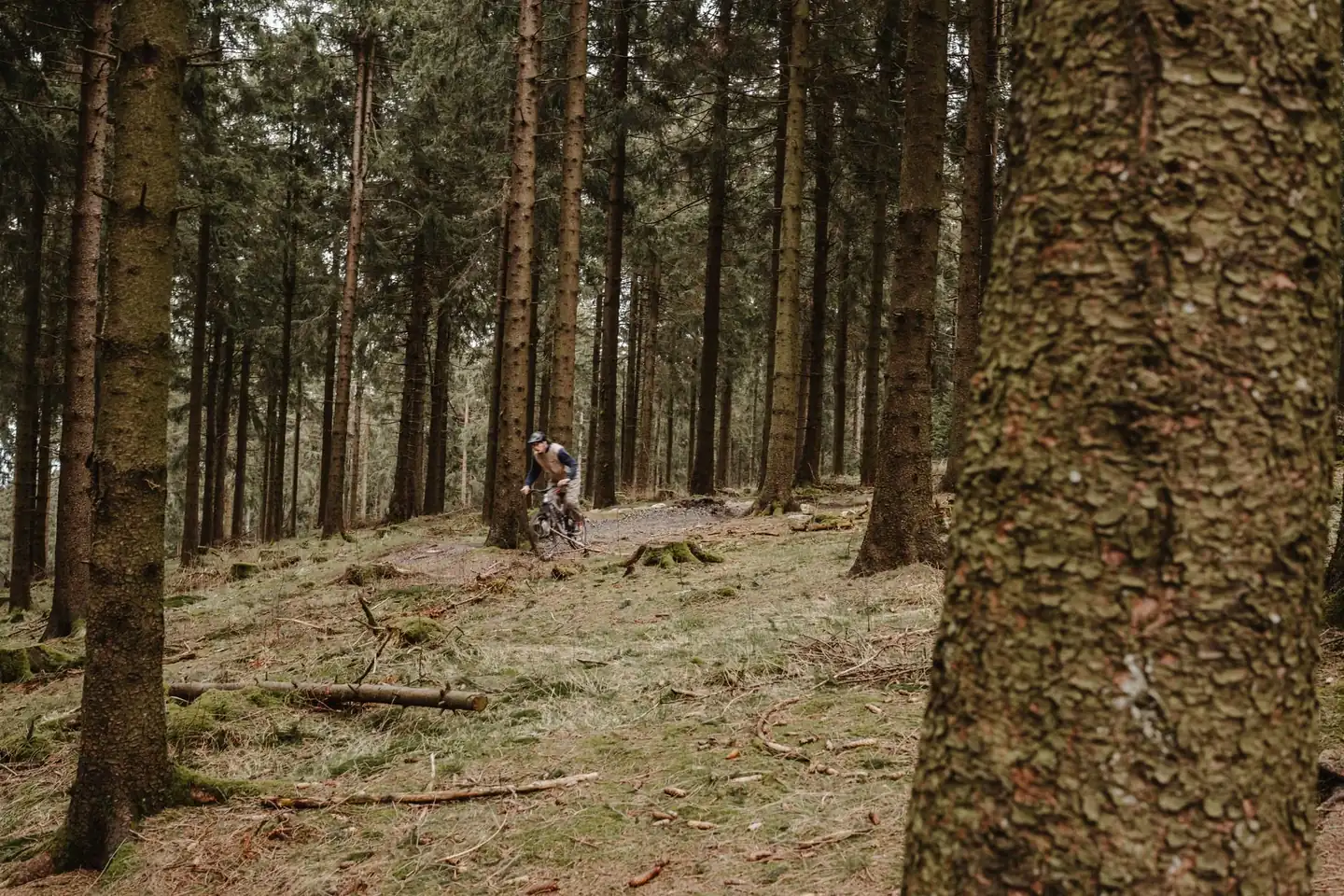
Illas will once again close the Open EndurAstur 2026 with an event marked by Asturian terrain, technical challenge, and the atmosphere of the end of the season. The race is scheduled for October 11, 2026, and appears on the circuit calendar as one of the final stops of the year, with a format designed for mountain enduro and for riders who arrive with many kilometers in their legs.
The date confirms that this is a late race within the circuit, with the added value that the season’s climax usually arrives with tight standings, accumulated fatigue, and a fine reading of each section. In that context, Illas is not just another venue: it serves as the closing stage, with all that implies in a discipline where wear and tear, mud, and precision matter as much as raw strength.
A season finale with its own weight
The end of the Open EndurAstur 2026 in Illas fits into a very recognizable northern enduro tradition: calendars spread across different parts of Asturias and one final stop that forces riders to manage the whole season well. It is not an isolated race or a simple epilogue; it is the final stretch of a series that, for many participants, defines the entire year.
In this discipline, the last event usually has a different atmosphere. Riders compete with heavier bodies, but also with more technical references and a highly refined reading of the terrain. Riders already know the pulse of the season, know where they have lost time and where they can shave off seconds, and that turns Illas into a test of steady nerves and firm hands.
The circuit’s own organizers have positioned this venue as a special closing event, reinforcing its role within the set of 2026 races. In sporting terms, that usually translates into added interest in the overall standings, category podiums, and the final impression left by a complete season. At this stage, every corner can be worth a place; every braking point, a position.
In addition, October in Asturias usually paints a very distinctive landscape: low light, persistent humidity, heavier trails, and a mountain feel that becomes almost tactile. Enduro, already a discipline of fine reading, becomes even more complex when the ground turns slippery and the forest seems to close the way like a living curtain.
Illas on the EndurAstur map
The Open EndurAstur Spiuk 2026 has announced six events between Asturias and Galicia, with a calendar running from March to October. Along that route appear Pola de Siero, Burela, Pola de Laviana, La Felguera, La Degollada and, finally, Illas. That distribution makes it possible to understand that the final race comes after a very varied season in terms of settings, profiles, and demands.
Illas thus presents itself as the final piece of a circuit that combines traditional venues with others of strong character. Enduro in this area is not limited to seeking speed; it demands decision-making, terrain reading, and the ability to sustain high intensity throughout the day. That mix turns the finale into a kind of exam with the whole syllabus on the desk.
For the rider, reaching Illas means arriving at an event that concentrates learning, wear, and ambition. Those who have gained experience at the other venues of the year will arrive with more tools; those who have fought for consistency will have a chance to finish strongly here. And those who have saved energy for October will find terrain suited to truly measuring themselves.
The circuit format adds another layer of interest: there are expanded categories, a growing presence of eBikes, and a more open structure for youth riders. All of this shapes a lively race, with participants of different profiles, but with one thing in common: respect for terrain that does not forgive distractions.
What kind of course can be expected
The available information places Illas within the world of mountain bike enduro, not road cycling or trail running. That means timed specials, uphill transfer sections, and a day designed to alternate explosive effort and fatigue management. The goal is not to race a homogeneous distance, but to chain together very different actions within the same day.
In events like this, the clock is unforgiving on the descents and endurance rules the transfer sections. The final result depends not only on pedaling fast, but also on arriving at the specials with technical clarity, maintaining control on variable surfaces, and avoiding mistakes that in enduro usually come at a high cost. A foot down, a poor line choice, or a lapse in concentration is immediately noticeable.
Asturian EndurAstur venues usually create routes with roots, humidity, compact earth, and wooded sections that demand constant attention. Illas fits that profile well: a location that, because of its climate and geographic context, suggests trails with inconsistent grip, tight corners, and a delicate balance between speed and caution. In October, moreover, the ground can change a lot between the first and the last run if rain makes an appearance.
In enduro, the terrain is not just a backdrop. It is part of the story. A narrow trail may seem friendly at first and turn into a trap once the hands are tired; a fast descent may stop being fast if mud appears on a takeoff ramp. Illas, because of its place in the calendar and the logic of the circuit, points to the kind of race where knowledge of the terrain and quick reading of every meter matter as much as power.
The sporting value of arriving in October
October changes the way competition is approached. The season has already shown its cards, the body has accumulated days of effort, and the small details matter more than in spring. In a race like the one in Illas, that translates into a more strategic contest, where there is little room for improvisation and where managing each section takes on greater importance.
In enduro, reaching the end of the year also means specific wear on the arms, hands, back, and concentration. Technical fatigue appears before cardiovascular tiredness and makes the final sections into a small mental battle. Keeping a clean form when the pressure mounts is often what separates a strong performance from an average day.
Illas can function as a barometer of the participants’ true condition at the end of the calendar. There is not much room to hide in a race like this: if the technical level is high, it shows; if physical condition is lacking, that shows too; if the equipment is not up to the task, the race exposes it without mercy. That transparency is one of the reasons enduro is so compelling and, at the same time, so honestly punishing.
The Asturian venue also adds a very specific emotional reading to this discipline. The landscape, humidity, and dense forest create an atmosphere reminiscent of the great northern mountain bike days, where the sound of wheels on wet earth mixes with breathing and the sharp crack of stones. It is a sport of sensations, but also of calculation.
Categories, eBikes, and a more open circuit
One of the new features of the Open EndurAstur Spiuk 2026 is the expansion of categories, with more room for eBikes and a more clearly defined children’s and cadet structure. That shift offers clues about the circuit’s evolution and about the type of audience it is aimed at: competitive, yes, but also broader and with space for different ways of experiencing enduro.
The presence of eBike categories in a circuit of this kind is not incidental. It responds to a growing reality within mountain biking and changes the way transfer sections, effort management, and terrain reading are approached. At a venue like Illas, that can translate into very different races within the same event, but under the same technical logic.
The opening to young riders also adds sporting context. When a circuit includes children and cadets, it is not only thinking about the current competition, but about the base that supports the discipline’s future. That usually results in days with more variety of profiles, more activity around the starts, and a greater presence of families, clubs, and local teams.
For the event’s media coverage, this detail is important because it helps read Illas not as a simple calendar date, but as part of a broader sporting ecosystem. There the local elite, veteran riders, young learners, and those who approach enduro with an assisted bike all coexist. The result is a more diverse event, but also one that is more demanding in terms of organization and pace.
Asturias as a natural stage for enduro
Asturias offers mountain biking an almost literary landscape: humidity, forest, short but intense elevation changes, and a succession of landscapes that change quickly. That environment creates races very different from those held in drier or more open areas. Here the surface matters, rain counts, and mud can alter any forecast.
Illas, within that framework, does not need great embellishments to have identity. The region’s geography already draws a clear personality: enclosed trails, dense vegetation, lines where grip appears and disappears like an intermittent light. For an enduro rider, that setting requires looking farther ahead than the front wheel and making decisions in a matter of seconds.
The experience in Asturias is usually as physical as it is sensory. There are days when the air feels humid from first thing in the morning, clothing sticks to the body, and the dark earth leaves a visible mark on frame, legs, and goggles. It is not a postcard epic; it is a very specific toughness, measured in avoided slips, controlled heart rates, and smart line choices.
That is why EndurAstur events often leave a special mark. They are remembered not only for the time spent, but for the way the terrain forced riders to respond. Illas, as the circuit finale, will have that synthesizing effect: everything learned during the year concentrated into a single day, in a single place, and under conditions that are rarely neutral.
What the available data reveals, and what remains open
The public race listing confirms the date, the general location, and its inclusion in the circuit, but it does not yet provide a full set of technical details. The exact start time, registration fee, elevation gain, and an official course breakdown are not included in the information consulted. That absence is not unusual in events of this kind when information is being updated in stages.
What is clear is that Illas is part of the confirmed calendar of the Open EndurAstur 2026 and that its name is tied to an Asturian venue at the end of the season. That makes it possible to place it quite precisely on the competitive map, even if not all logistical details are closed in the source consulted.
In an enduro race, the lack of complete figures does not prevent understanding its sporting nature. The key lies in the format, the month, the circuit, and the type of discipline. Illas brings together those four elements and projects them onto a season finale that, by definition, is usually more selective, more strategic, and more sensitive to the consistency accumulated over the year.
The tone of the 2026 calendar also helps in reading the event, as it combines classic venues with a special finale in Illas. In journalistic terms, that suggests an organization seeking continuity, but also a recognizable conclusion, with its own identity and enough substance to leave the image of a complete season.
A season-ending event that will test legs, mind, and line choice
Illas does not appear as a simple endpoint, but as the race that can bring all the rest into focus. In enduro, seasons are not understood without a finale that puts endurance, technique, and the ability to stay focused when there is nothing left to spare in their proper place. That is the true substance of a final venue.
The combination of a late calendar date, Asturian context, and mountain format suggests a race where the margin for error will be small and the reward for precision high. Those who arrive with sharp reactions, well-sorted equipment, and a clear head will find in Illas the kind of terrain that allows a strong finish. Those who arrive on the limit, by contrast, will discover that the end of the season gives nothing away.
That is how the interest in the Illas event within the Open EndurAstur 2026 is understood: not only for what it offers in itself, but for what it represents within a series that has taken shape over months. October in Asturias usually leaves memorable races. This one looks set to follow that line.
The final image will likely be the truest reflection of the event’s spirit: mud on the wheels, focus on the face, the forest closing in around it, and the sharp sound of a bike over wet ground. A season-ending race with its own texture, the kind that cannot be fully explained by a classification because it is also remembered in the hands, in the smell of the mountain, and in the feeling of having pushed the year all the way to the last trail.



How to prevent thigh chafing: causes and real solutions

Women’s running windbreakers: seven jackets and how to choose

Do more workouts get rid of soreness? A guide for runners

Jaén Half Marathon 2026: Record 3,800 Runners Registered

Men’s short running tights: how to choose the right pair

World Triathlon confirms data breach involving medical data

Izan Edo targets podium at Miyazaki World Cup

María Pérez ranks ninth in World Athletics’ 2026 top ten

Dos Santos, Duplantis and Sawe: World Athlete of the Year finalists

San Silvestre Vallecana 2026: 42,000 places, prices and start times

 Races3 months ago
Valencia Half Marathon 2027: date and registration

 Races3 months ago
Valencia Marathon 2026: entry, ballot and course

 Reviews and Comparisons4 months ago
Asics Gel-Roadmiles 3 for men: review and current price

 Reviews and Comparisons4 months ago
Asics Gel Sonoma 8 Gore-Tex: complete analysis for trail and rain

 Sneakers3 months ago
Saucony Endorphin Pro 4: full review and verdict

 News5 months ago
Strava API 2026: what changes for clubs, challenges and runner apps?

 Reviews and Comparisons5 months ago
Nike Alphafly 3: opinions, sensations, and real key points

 Reviews and Comparisons4 months ago
Under Armour running shoes review 2025-2026: models and key features

 Sports Equipment4 months ago
Shoe sizes in cm: a clear guide to getting the right fit for your footwear

 Sneakers3 months ago
Skechers GO RUN Consistent 2.0 analysis: comfort and limits

 News5 months ago
Valencia Marathon 2026 route: key tips to train and run better

 Sneakers4 months ago
Adidas Adizero Boston 13 for men: review and verdict