Races
ÖTILLÖ Mallorca 2027: date, location and distances
Alcúdia will open ÖTILLÖ’s season with three formats across sea, trails and mountains.

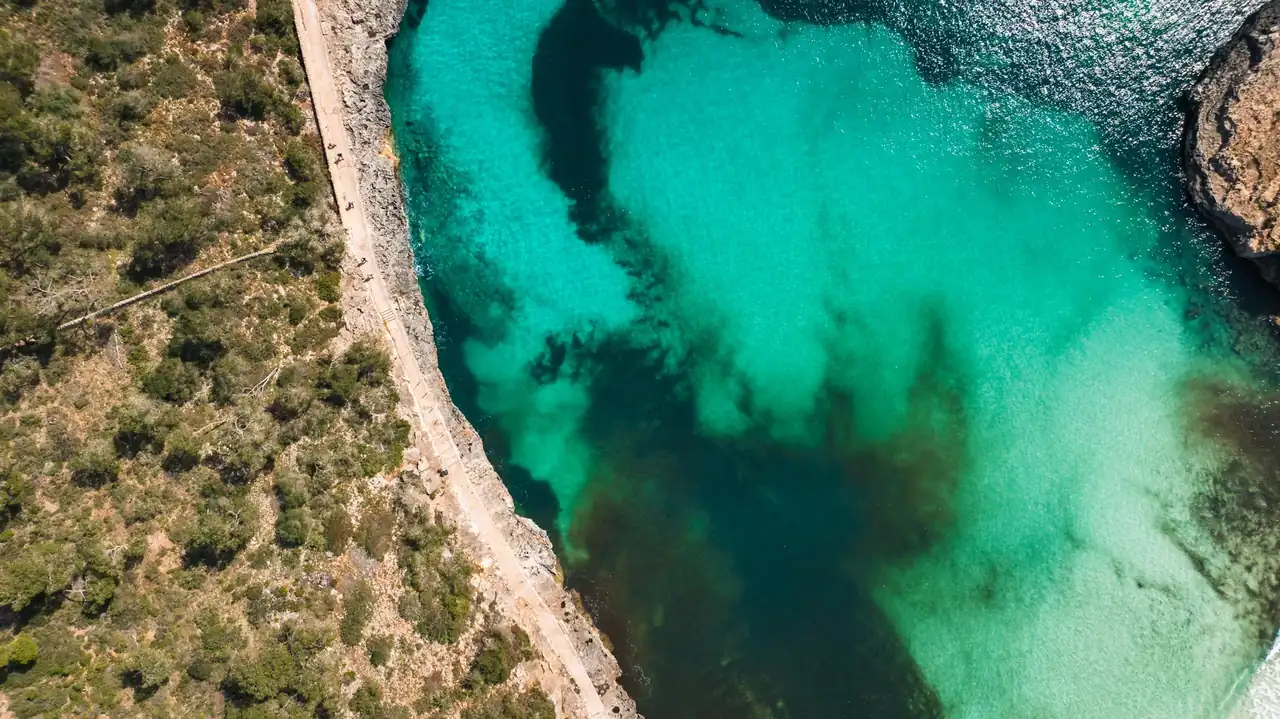
Alcúdia will host a new ÖTILLÖ event on April 3, 2027, bringing the international swimrun circuit to Mallorca. The format alternates open-water swimming with running, and the island race will open the World Series season with three options: Experience, Sprint and World Series. The longest course is listed at 31.29 kilometres, with 918 metres of elevation gain. The date is confirmed, but registration has not yet opened, and practical details such as prices and start times remain unpublished.
The announced route will cross the Alcúdia peninsula in northern Mallorca, passing coves, cliffs, pine woods and mountainous terrain. The combination of clear water and technical trails should make it very different from an urban course or a lake-based swimrun. Its visual appeal comes with a substantial physical challenge: the longest event includes more than 25 kilometres of running and nearly 1,000 metres of climbing.
A new stop on the international calendar
Mallorca expands ÖTILLÖ’s range of destinations and joins the World Series calendar for 2027. The event starts in Alcúdia, a historic town known for its medieval walls and coastal activity, before heading into rougher landscapes. Organisers present it as a spring season opener after the winter break, a date that could attract athletes from several countries before the European calendar fills up.
The announcement matters for more than the addition of another race. Swimrun requires athletes to move repeatedly between water and running, usually without changing clothes between disciplines. Competitors typically swim in their shoes and run in their swim kit, making each transition part of the race itself. In Mallorca, changes between the sea and uneven ground are expected to be central to the challenge, rather than pauses between separate sports.
ÖTILLÖ’s European sports director has described a route combining paved roads with largely untouched mountain terrain, including areas usually closed to the public. That points to varied surfaces, although the detailed course and access arrangements still need to be set out in the final technical information. The full route is not yet available, so the overall distances do not reveal the number of transitions or the difficulty of each section.
Three formats with distinct levels of challenge
The announced programme aims to bring together different kinds of athletes, though all three options require comfort in open water and on natural terrain. Experience covers 7,100 metres in total: 1,400 metres of swimming and 5,700 metres of running, with only 19 metres of elevation gain. It is the shortest option and has the least climbing, but its name should not be taken as an automatic indication that it is suitable for beginners. Open-water experience, navigation and running while wet still matter.
Sprint covers 18,410 metres, including 1,950 metres of swimming and 16,460 metres of running, with 221 metres of ascent. Running makes up most of the distance, so endurance on foot will play a major role. Even so, nearly two kilometres of swimming split into sections can alter pace and perceived effort, particularly if the sea is choppy or feels colder than expected.
The World Series distance totals 31,290 metres, with 5,340 metres of swimming, 25,960 metres of running and 918 metres of elevation gain. The published total differs by 10 metres from the sum of the two disciplines, which is 31,300 metres. The difference is small, but it should not be corrected independently: the organiser lists the figures separately, and the final race regulations should clarify any adjustment. With 25.96 kilometres on foot, this distance is clearly more demanding than the other two.
Elevation also helps distinguish the options. Experience has 19 metres of climbing, compared with 221 for Sprint and 918 for the World Series course. Those figures do not show whether the climbs are long, technical or concentrated in a few sections, and they cannot replace an elevation profile. Until a course map is released, the elevation figure is a measure of workload, not a full description of the terrain.
A course linking Alcúdia, the coast and the Tramuntana
The race will cross the north of the island, with the Tramuntana mountains and turquoise bays as its backdrop. The initial course description mentions rocky coastline, coves, pine trails and old olive-growing areas. It is not simply a series of beach sections: the route is expected to combine the Mediterranean shore with inland ground, where rocks and changes in gradient can affect a runner’s stride.
The Alcúdia peninsula can offer sharp contrasts over a short distance. A coastal section exposed to sun and wind calls for a different effort from a dirt path among pine trees or a rocky climb. That variety is especially noticeable in swimrun, as athletes repeatedly move from swimming to running, often in wet shoes and clothing. The terrain will shape both speed and effort management, including on the shorter formats.
Organisers have said the route will mix paved roads with less-travelled mountain sections, but have not yet published the full itinerary. There is no confirmed information about the number of water entries, the length of each segment, aid stations or equipment restrictions. Those details will help participants choose a suitable distance and plan race logistics. Published kilometre totals are not yet a complete set of race regulations.
April: spring on land and in the Mediterranean
The race is scheduled for early spring, when Mallorca generally has mild daytime conditions and more daylight than in winter. Organiser information gives typical daytime temperatures of around 18 to 20 degrees Celsius, with cooler nights. These are climate averages, not a forecast for race day: wind, rain and sea temperature can vary from year to year and alter how conditions feel during the swim sections.
In a race combining swimming and outdoor running, weather has a twofold effect. Sunshine can make the running more comfortable, while the water may remain cooler than the air; wind can increase the chill after athletes emerge from the sea. Conditions can also differ between a sheltered cove and an exposed stretch of coast. Mild spring weather does not remove the need to check the rules on wetsuits and equipment, which should appear in the official race information.
Palma de Mallorca Airport and the island’s connections make the event accessible from several locations, but travel to Alcúdia, accommodation and local transfers still need planning. The organiser has named Zafiro Palace Hotel as the Race Village location, but has not yet released accommodation packages or details of associated services. That identifies the announced event hub, not necessarily the exact start or finish point. The start address and local transport arrangements remain unconfirmed.
Registration details and announcements still to come
The April 3, 2027 date is confirmed in the supplied information. Registration, however, is described as opening soon, with no price published and no indication that places are currently available. It is therefore not yet possible to compare the cost of each format or calculate the full trip budget. Entry limits, cancellation terms and registration deadlines have also not been stated.
Important practical information is still missing: start times, race-pack collection, regulations, a course map showing transitions, eligibility requirements, mandatory equipment and safety procedures. For an open-water event, participants will also want to know how athletes will be tracked and what support will be provided at sea and on land. Until those conditions are published, sporting and financial plans should be treated as provisional.
The lack of a listed price does not mean entry is free, and a confirmed date does not mean every detail has been settled. The race page should clarify whether prices change by entry phase, whether categories are individual or team-based, and what each entry includes. Requirements may also differ between Experience, Sprint and World Series. There is no official entry fee to quote yet; prices from other events in the series are not a reliable substitute.
The pre-race camp adds a week of activities
ÖTILLÖ has announced a Swimrun Camp running from March 28 to April 4, the week around race day. The programme will include sporting and social activities, with swimming coached by Anna-Karin Lundin, a former Olympic swimmer and founder of Simcoachen. Camp registration is expected to open later; its price, capacity and daily schedule have not yet been detailed.
The camp may appeal to athletes who want to get familiar with the discipline before racing, although a camp does not replace prior preparation or make a demanding distance suitable for every level. Training in the event’s surroundings could help participants understand the water and terrain, provided the final programme and requirements match their needs. The activity week has been announced, but its entry conditions have not been published.
The camp dates include race day and extend through April 4. That suggests a week of sporting and social gatherings, but does not confirm which sessions will take place before or after the race, or how they will be organised. It is also unclear whether activities will be open to people who are not racing. Those distinctions will depend on the registration announcement and the detailed schedule ÖTILLÖ releases.
Alcúdia as a base for a sporting getaway
The appeal of the venue goes beyond the race. Alcúdia has a historic centre, beaches and natural areas nearby, while coastal routes and surrounding hills offer outdoor activities. The bay, old paths and Tramuntana scenery form part of the event’s setting and help explain why the route aims to show a less urban side of Mallorca. The town combines visitor infrastructure with access to terrain that can be demanding on foot.
Travel arrangements should still account for actual journey times and the event timetable once published. Naming Zafiro Palace Hotel as the Race Village does not confirm that all activities will be held there or that accommodation is included in the entry fee. Packages are described as forthcoming, so no price, availability or specific services can yet be assumed. For visitors from off the island, Palma Airport is the main transport reference provided, but the journey to Alcúdia must also be included in the plan.
The landscape may encourage visitors to extend their trip with walks, cycling or recreational swimming, but racers will need time to rest and review event logistics. An April day may feel warm in the sun and cool in the evening, making it sensible to check the forecast close to race day and follow official equipment guidance. The setting adds value, but it does not replace preparation or a careful reading of the regulations.
The specific demands of swimrun
Anyone new to the discipline will find repeated transitions, not a swimming race followed by a running race. Competitors alternate between the two activities and generally keep the same equipment throughout. This requires a different adaptation from a conventional triathlon: there is no transition area for a leisurely change of clothes, and every exit from the water leads back onto the running course.
Footwear must work in two very different settings: it needs grip on rocks, trails or wet paths while remaining manageable in the water. Wetsuit and accessory choices depend on the rules, temperature and route conditions. Since Mallorca’s detailed information is not yet available, it is not possible to recommend specific models or state which equipment will be mandatory. Final equipment choices should follow the regulations, not just the advertised distance.
Navigation matters too. In open-water racing, participants need to stay on course while managing effort and transitions; visibility, waves and the shape of a cove can all influence sighting. On land, rocks and changes in surface demand attention even after a runner settles into a rhythm. This combination explains why total kilometres alone cannot fully describe difficulty. Open-water and trail experience differ from the ability to run on roads.
How to read the distances before choosing
Experience is the shortest option and has the least climbing, but its 1,400 metres of swimming still make water a significant part of the event. It may suit someone with enough experience in both disciplines, but the name alone should not determine the choice. Sprint raises the running distance to 16.46 kilometres and nearly doubles the overall workload; the World Series event, with 5.34 kilometres of swimming and 918 metres of ascent, is a much larger endurance challenge.
The split between swimming and running shows the broad shape of each format but does not reveal the length of each individual segment. The same total swimming distance could be divided into many short sections or a few longer ones, producing a very different experience. Detailed profiles for each format are also unavailable. Before entering, participants should compare the course map, cut-off times and water sections, not only the total distance.
Preparation should account for sustained effort and expected conditions, rather than simply transferring road-race paces to the event. Running after swimming feels different, particularly when the route climbs or demands careful footing. Sighting technique and comfort with equipment can also affect performance. These are general features of swimrun; Mallorca’s specific demands can only be judged once its full route and regulations are published.
A promising event still in the announcement phase
The Alcúdia race brings together several appealing elements: a spring date, an announced route between the Mediterranean and the Tramuntana, three distances and the role of World Series season opener. Its figures point to a broad range, from a shorter option to a mountain-and-water race of more than 31 kilometres. The clearest confirmed detail so far is the April 3, 2027 race date.
The full picture still depends on the release of entry prices, registration, start times, maps, mandatory equipment and safety rules. The 10-metre discrepancy in the long-distance total should be clarified in the final race information, and the Race Village location should not be mistaken for the start point. Until these details are announced, the event is best treated as confirmed on the calendar but incomplete in practical information.
Mallorca offers a distinctive setting for a sport built on contrasts: water and land, running and swimming, comfort and effort. The island could make the new event a notable fixture, but the final course and organisation will define the character of each format. The scenic promise is clear; the regulations will show what the challenge actually involves.
Where to stay in Alcúdia
Hotels available 1–4 April 2027.
Affiliate links: if you book through this map we earn a commission, at no extra cost to you.



How to prevent thigh chafing: causes and real solutions

Women’s running windbreakers: seven jackets and how to choose

Do more workouts get rid of soreness? A guide for runners

Jaén Half Marathon 2026: Record 3,800 Runners Registered

Men’s short running tights: how to choose the right pair

World Triathlon confirms data breach involving medical data

Izan Edo targets podium at Miyazaki World Cup

María Pérez ranks ninth in World Athletics’ 2026 top ten

Dos Santos, Duplantis and Sawe: World Athlete of the Year finalists

San Silvestre Vallecana 2026: 42,000 places, prices and start times

 Races3 months ago
Valencia Half Marathon 2027: date and registration

 Races3 months ago
Valencia Marathon 2026: entry, ballot and course

 Reviews and Comparisons4 months ago
Asics Gel-Roadmiles 3 for men: review and current price

 Reviews and Comparisons4 months ago
Asics Gel Sonoma 8 Gore-Tex: complete analysis for trail and rain

 Sneakers3 months ago
Saucony Endorphin Pro 4: full review and verdict

 News5 months ago
Strava API 2026: what changes for clubs, challenges and runner apps?

 Reviews and Comparisons5 months ago
Nike Alphafly 3: opinions, sensations, and real key points

 Reviews and Comparisons4 months ago
Under Armour running shoes review 2025-2026: models and key features

 Sports Equipment4 months ago
Shoe sizes in cm: a clear guide to getting the right fit for your footwear

 Sneakers3 months ago
Skechers GO RUN Consistent 2.0 analysis: comfort and limits

 News5 months ago
Valencia Marathon 2026 route: key tips to train and run better

 Sneakers4 months ago
Adidas Adizero Boston 13 for men: review and verdict