Races
Photos from the Movistar Madrid Half Marathon 2026: guide and gallery
Galleries, access by selfie, and prices of the images from the Madrid half marathon, with all the useful information to find them.

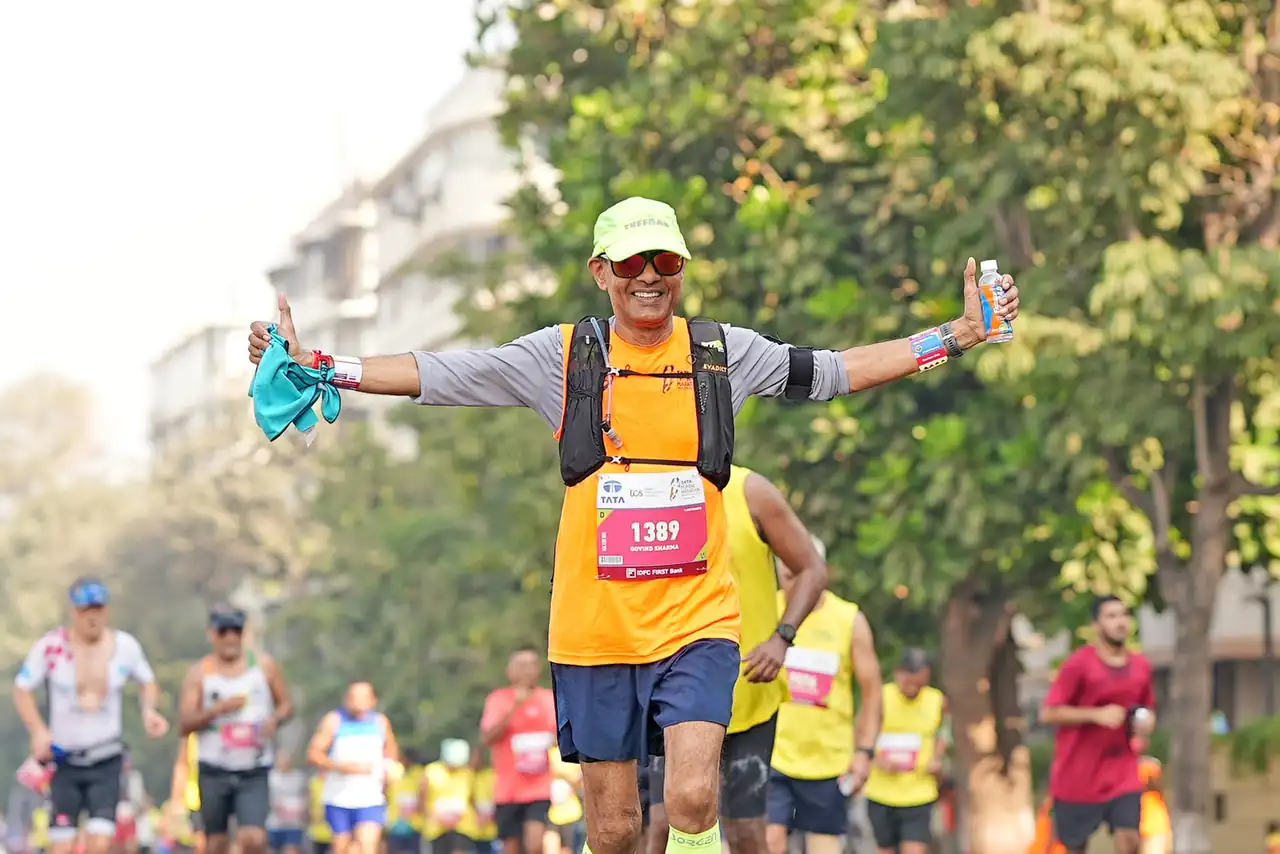
Images from the Movistar Madrid Half Marathon 2026 have become an essential part of the race experience: the effort on Gran Vía, the finish-line arrival, the gestures of relief in the final kilometer, and that mix of exhaustion and satisfaction that only a major race can leave behind. For thousands of runners, the official photograph is the keepsake that captures the whole morning, far beyond the stopwatch.
The organizers have kept the selfie-based search system to locate the day’s shots and access them in a matter of seconds. The service makes it possible to find race photos without endless searching and with a simple pricing structure: one image costs 4 euros and the full package costs 16.90 euros. That combination of speed and fixed pricing has made the gallery one of the most visited sections after the race.
The official gallery as part of the race memory
In an event with more than 30,000 participants, photography is no minor add-on. It becomes a record of participation, almost an emotional credential. The Madrid half marathon passes through some of the capital’s most recognizable settings, and that multiplies the visual value of every shot: the wide avenues, groups of runners stretching their stride, and faces that reveal the strain of effort before the finish line.
The official gallery also responds to a practical need. In huge events, finding your own image among thousands of bib numbers and race movements can be tedious work. That is why the selfie identification system simplifies the process and reduces the margin of error. The runner uploads a reference image, the search engine matches facial features, and returns the available photos from the day.
That model has gained ground in popular races and major events because it works like an instant archive. It does not depend on page-by-page browsing or waiting for manual filtering. On a morning that leaves pulses racing, with no mud, but sweat, wind, and changing light over Madrid’s asphalt, immediacy matters. The photos appear while the memory is still fresh.
How much it costs to access the images
The pricing is clear. The individual photo costs 4 euros and the full package is offered for 16.90 euros. These are relatively contained figures within the sports photography market for high-participation events, where access is usually organized through packages or one-off purchases. That structure allows each runner to choose between a single finish-line image or a broader set of shots from different points along the course.
The value is not only in the final image, but in the chance to recover moments the runner did not see. Many of the best shots come from sections where attention is elsewhere: breathing on a climb, a long stride on the flat, a volunteer offering water, an unexpected smile upon spotting a teammate. The camera captures what the runner cannot control.
It is worth remembering that the price does not follow the same logic as a casual social photo. Here there is travel, event coverage, editing, storage, and a search system. In a half marathon of Madrid’s scale, with a mass start and thousands of athletes spread across the city, the technical work behind each gallery is extensive and invisible, like the back of a stage the public usually does not see.
How selfie access works
The procedure is straightforward. The runner enters the official gallery, takes or uploads a selfie, and waits a few seconds for the system to cross the image with the event photo database. The idea is simple, but very effective: compare facial features with the shots taken along the course and display the most likely results. The more frontal and sharper the reference photo, the better the result usually is.
The key is the quality of the selfie. An image taken head-on, with enough light and without accessories covering the face, makes recognition easier. Very dark sunglasses, low caps, or abrupt movement can make matching more difficult. Even so, in road races the technology has improved considerably and the success rate is much higher than it was a few years ago, when finding your own photo could become a small detective search.
This system fits especially well in a race like Madrid’s, where elite runners, amateurs, club groups, and first-timers all mix together. The gallery does not distinguish among them: it tries to capture the collective dimension of the race while also offering an individual solution for each participant. It is a useful answer for an event that, because of its size, can no longer rely only on the improvised memory of a friend on the sidewalk.
What the photography of a major half marathon really shows
Sports photography is not limited to showing someone running. In a race like Madrid’s, the camera captures different rhythms. There is the runner fighting to go under 90 minutes and the one who only wants to finish; the group chatting in the early kilometers and the one falling apart in the second half; the focused expression of someone clenching their teeth and the strange calm of someone who already knows the finish is near. Every gesture tells a different story.
Madrid also offers a highly recognizable visual backdrop. The course and urban atmosphere turn the photos into a portrait of the city, not just of physical effort. La Castellana, the surroundings of Puerta del Sol, Gran Vía, and the wider stretches of the center provide perspective, human traffic, and a very particular light in spring. It is not a race closed in on itself, but a line of movement within a capital in motion.
That is why galleries like this work so well among runners. They are not only a personal keepsake; they also document a relationship with the city. A bib number, an avenue, and a tired expression end up becoming a kind of postcard of voluntary sacrifice. And that is, in part, the magic of mass-participation events: sport stops being a mark in a ranking and becomes a shared scene.
A race with its own weight on the calendar
The Movistar Madrid Half Marathon 2026 once again brought together huge participation and a very notable international presence, with more than 36% of runners coming from abroad. That scale helps explain why interest in the photos is not limited to local spectators. Every athlete wants a record of their race, but so do many companions, clubs, and visitors who want to keep a visual souvenir of the day in the capital.
The edition maintained the competitive tone that has already become part of its identity. In the men’s elite race, Levy Kibet Chematot won in 1:00:49, while in the women’s race the victory went to Ludwina Chepngetich in 1:08:30. The ProFuturo 5-kilometer race was also held on the same program, adding another layer of scenes useful for the gallery. That expands the archive and multiplies the reasons why the image search tool becomes useful after the finish line.
Photography also captures the event’s hierarchy: the leading finishers, recreational runners, the parallel 5K race, and the atmosphere of a city fully engaged with sport. Together, the gallery ends up being a visual memory of the day, with its layers and contrasts. It is not just an album of results; it is a way to capture the pulse of a major urban event.
The importance of looking beyond the finish line
In a half marathon, the most sought-after image is usually the finish. That makes sense: it is the moment where weeks or months of effort are condensed. But official galleries often hold more valuable surprises at points earlier on the course. A photo at kilometer 15, with posture still firm and the group still compact, can say more about the race than a final shot with the runner bent over at the waist.
The best images usually combine context and tension. It is not enough for the face to be in focus. The surroundings, the gesture, the space between runners, the line of the asphalt, and the visual noise of the city all matter. A good running photo has something of a report and something of a portrait; it captures motion without losing dignity, even when the body is already protesting. That is where its strength lies.
Madrid also offers a variety of framing options that help the photographer. There are wide straightaways for cleaner shots and denser areas where the background matters as much as the main subject. That mix makes the gallery anything but uniform; it is rich in nuance. The same runner can appear heroic on a wide avenue and exhausted on a narrower street, and both images would be true.
The gallery as an archive of a record-setting morning
The 2026 edition was marked by a general sense of growth: more runners, more visibility, greater presence outside Spain, and an organization that now handles the weight of a large-scale event with ease. Photography, in that context, acts as material proof of that magnitude. Where individual memory fades, the fixed image restores order.
For those who took part, the gallery works as both memory and proof. For those who followed the race from outside, it is a way to read the event from within, almost as if they were on the avenue with a bib in view. And for the city itself, the visual archive of each edition ends up becoming part of Madrid’s sporting history. They are photos, yes, but also a chronicle of the popular use of urban space.
The Madrid half marathon has consolidated its own identity within the national calendar. Its importance depends not only on times, but on the size of the field, the course, and the ability to generate memorable scenes. That is why the official images are in such high demand: because they do not portray only a race, but a full day of urban sport, with its noise, its pace, and its reward.
An image worth more than the bib tucked away in a drawer
After the race, many bibs end up folded in a box, with the medal hanging on a wall or stored in a drawer. The photograph, by contrast, stays alive. It is shared, forwarded, printed, revisited months later, and brings back something the clock no longer explains. In an event as visible as Madrid’s, that permanence matters a great deal.
The official photos of the Madrid half marathon sum up a simple idea: running also leaves a visual trace, not just marks on a chip or times in a ranking. The value of the gallery lies in turning fleeting effort into something lasting, clear, and accessible. And in a race of this size, with thousands of stories crossing the same avenue, that is not a minor detail, but part of the event’s larger narrative.



How to prevent thigh chafing: causes and real solutions

Women’s running windbreakers: seven jackets and how to choose

Do more workouts get rid of soreness? A guide for runners

Jaén Half Marathon 2026: Record 3,800 Runners Registered

Men’s short running tights: how to choose the right pair

World Triathlon confirms data breach involving medical data

Izan Edo targets podium at Miyazaki World Cup

María Pérez ranks ninth in World Athletics’ 2026 top ten

Dos Santos, Duplantis and Sawe: World Athlete of the Year finalists

San Silvestre Vallecana 2026: 42,000 places, prices and start times

 Races4 months ago
Valencia Half Marathon 2027: date and registration

 Races4 months ago
Valencia Marathon 2026: entry, ballot and course

 Reviews and Comparisons4 months ago
Asics Gel-Roadmiles 3 for men: review and current price

 Reviews and Comparisons4 months ago
Asics Gel Sonoma 8 Gore-Tex: complete analysis for trail and rain

 Sneakers4 months ago
Saucony Endorphin Pro 4: full review and verdict

 News5 months ago
Strava API 2026: what changes for clubs, challenges and runner apps?

 Reviews and Comparisons5 months ago
Nike Alphafly 3: opinions, sensations, and real key points

 Reviews and Comparisons4 months ago
Under Armour running shoes review 2025-2026: models and key features

 Sports Equipment4 months ago
Shoe sizes in cm: a clear guide to getting the right fit for your footwear

 Sneakers3 months ago
Skechers GO RUN Consistent 2.0 analysis: comfort and limits

 News5 months ago
Valencia Marathon 2026 route: key tips to train and run better

 Sneakers4 months ago
Adidas Adizero Boston 13 for men: review and verdict