Races
Pujada a l’ermita de Sant Joan de Montblanc 2026: date and location
Montblanc held a short, tough, and deeply rooted event, starting from Plaça Major, with a notable elevation gain and a limited field.

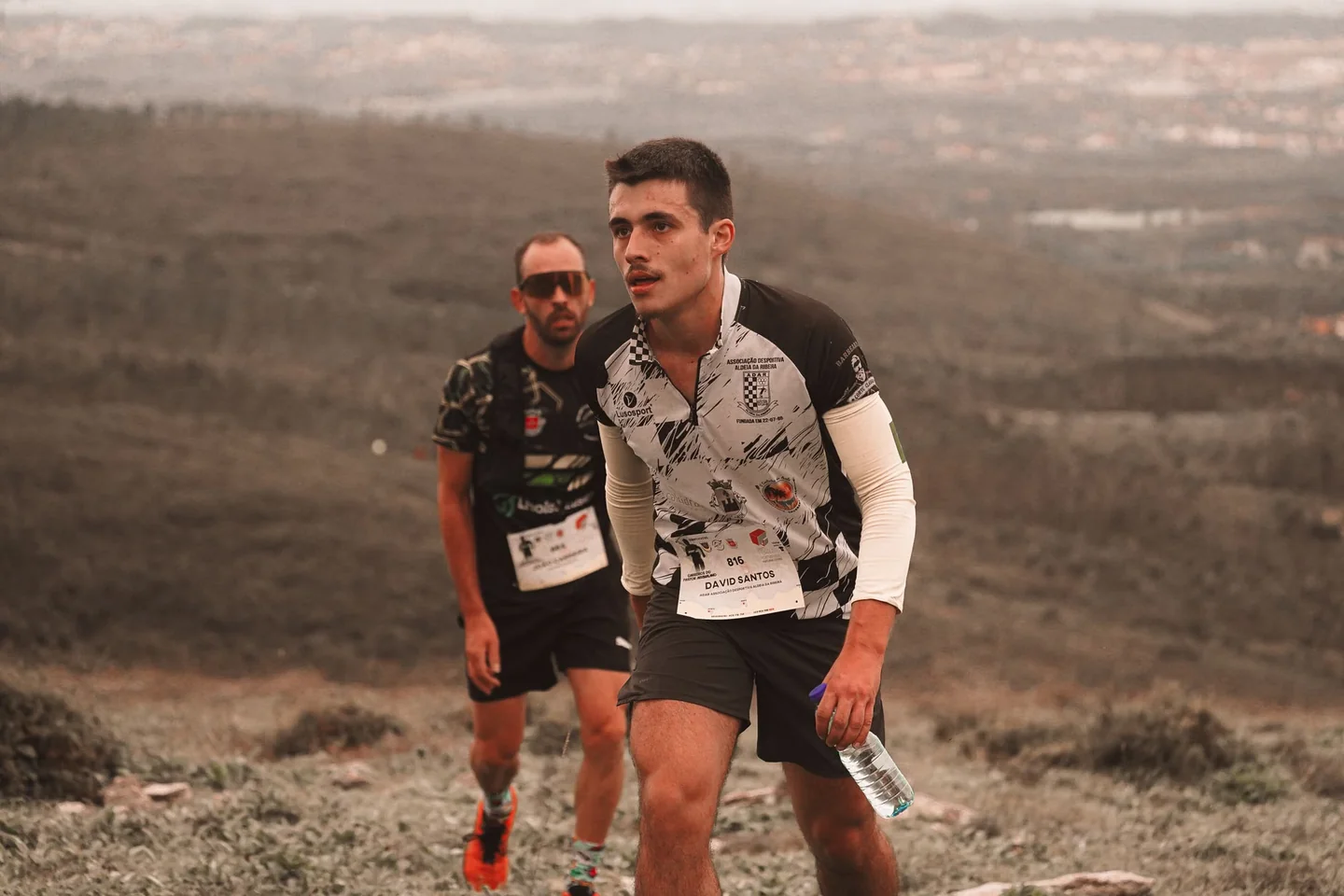
Imagen: RUN 4 FFWPU / Pexels
Montblanc looked again toward the hermitage of Sant Joan with a day that blends sport, landscape, and tradition. The 33rd Pujada and the 26th Caminada brought together runners and walkers in the early hours of June 24, 2026, on a 7.2-kilometer route, starting from Plaça Major and finishing at one of the most recognizable spots in the area. The event, organized by Club Atlètic Montblanc, kept its classic format: two separate starts, limited places, and a route that punishes less for distance than for elevation gain and sustained pace.
The key to this event is not its length, but its profile. With about 557 meters of positive elevation gain in the Pujada and a stepped access via trails and tracks in the municipality, the effort is concentrated into a few kilometers and requires good management of every change in gradient. In the 2026 edition, the cap was also set at 50 participants for the walk and 50 for the race, a figure that reinforces its intimate character and avoids overcrowding in a sensitive environment closely tied to the local calendar.
A short event that gives nothing away
The route is short in absolute terms, but intense from the very first climb. Starting from Montblanc’s Plaça Major, at around 350 meters above sea level, the course links streets, roads, and paths until reaching the hermitage, located at around 680 meters. Between the two points, the route alternates comfortable sections with ramps that force changes in stride, breathing, and, in many cases, strategy. It is a profile that does not allow you to run on inertia: every meter gains or loses weight.
The 2026 edition confirmed that character. The walk started at 7:30 a.m., while the race began at 9:00. That time gap is not minor, because the early part of the day softens the temperature somewhat, but in June the heat can already begin to build quickly in Conca de Barberà. The organization, aware of this, focused its efforts on aid stations, signage, and route control, three elements that in short mountain events are as important as the stopwatch.
The route also has a very local reading. It is not simply a climb up the mountain, but a journey through landmarks that participants recognize immediately: the Sant Marçal gate, the Bulló ravine, the Reboll path, the Mare de Déu trail, the Sant Joan track, Mas de la Pasquala, and the bassa dels bombers, before the final descent toward the hermitage. This sequence turns the event into a kind of moving map of Montblanc, with landscape changes that help explain why this event has endured for so many years.
Timetables, quotas, and the logic of a very early morning
The organization maintains a precise formula that avoids improvisation. The walk started at 7:30 and the Pujada at 9:00, with bib pickup in Plaça Major during very specific windows: from 7:00 to 7:25 for walkers and from 8:00 to 8:45 for runners. This kind of order is not incidental. In an event with limited capacity, the time slots set the tone for the entire day and allow each group to move smoothly without unnecessary interference.
Registration opened on June 1 and closed on June 16 at 12:00, or earlier if the quota was reached. The price was 10 euros for both the walk and the race. That very modest fee helps explain the nature of the event: a popular, deeply rooted gathering with a real sporting dimension but also a community one. Part of the registration fee, according to the information provided, is also allocated to the reconstruction of the Sant Joan hermitage, adding a symbolic layer to each participant’s effort.
There was no on-the-day registration. That detail, which may seem administrative, actually defines much of how the day works. Planning reduces queues, improves bib management, and avoids last-minute crowding. It also speaks of an event that, despite its closeness and almost family-like feel, is organized with clear criteria and with a limited capacity that is not aimed at growing at any cost.
A climb with memory and landscape
The Sant Joan hermitage is not just the end of the route: it is the reason for the route. Its presence turns the climb into something more than an athletic event. For Montblanc, the course reflects an ongoing relationship between the town and its immediate surroundings, a way of ascending into the landscape without separating it from everyday life. In running, not every race is defined by the finishing time; some are better understood by where they lead and by the way they force you to read the territory.
The Pujada itinerary passes through a sequence of spaces that combine track and trail, with the elevation gain spread in a way that offers no prolonged respite. First, altitude is gained progressively; then the terrain steepens more clearly and, by the time the bassa dels bombers appears as the highest point, the body has already stored away a good portion of the effort. From there, the final descent also demands attention. Going down, in a race like this, does not mean resting; it means staying focused while the terrain punishes legs and footwork.
That balance between toughness and accessibility explains the event’s sustained success. It is neither an ultradistance nor an endless ascent, but neither is it a simple competitive outing. It sits right in that middle ground where both experienced runners and people looking for an achievable, measured challenge can take part. The walk broadens that profile even further, because it turns the event into a shared experience, less focused on the clock and more attentive to the gesture of reaching the top.
The 2026 edition, between heat and limited participation
The morning of June 24 offered a very familiar image in Catalan popular sport. At 7:30, 50 walkers set off, and at 9:00, 60 runners did the same, completing a total of 110 participants that consolidates the organization’s usual limit. The expected heat did arrive, but it did not prevent the event from running normally. All participants reached the hermitage at different paces, but with the same underlying logic: climb, endure, and share a finish that rewards perseverance as much as patience.
Post-race coverage highlighted an important detail: the atmosphere was that of an event that retains its own identity despite the passage of time. The Pujada does not need major spotlights to endure. It is sustained by a very precise combination of community, tradition, and enough difficulty for the effort to be meaningful. In a calendar crowded with events, that simplicity feels almost like a statement of intent.
There was also a strong solidarity and heritage dimension. Part of the funds raised were allocated to the hermit caretakers to support the reconstruction of the hermitage, a contribution that strengthens the bond between the race and the place it ascends to. It is not an ornamental gesture. In events of this kind, the symbolic component is often as important as the sporting one: running or walking toward a historic building means, in some way, helping sustain it in collective memory.
What makes this climb unique within the short mountain calendar
Its uniqueness lies in its scale. The event does not aim to intimidate with impossible distances or high-altitude summits. Its strength comes from its closeness and the precision with which it is designed. Just over seven kilometers with more than five hundred meters of ascent are enough to turn a June morning into an intense experience, especially when heat and an early start are added. It is a simple recipe, but very finely tuned.
In events like this, the reference is usually not the absolute time, but the ability to sustain effort without breaking rhythm on the longest ramps. The runner who starts too fast pays for it quickly; the one who conserves energy and manages it reaches the final stretch better and takes advantage of the descent without excessive tension. That lesson, so basic in trail running and mountain climbs, is distilled here into a short, almost educational format.
The relationship with the terrain also matters. The roads and paths in Montblanc’s municipal area are not neutral scenery. They have texture, changes in surface, and a clear reading of the rural environment. For participants, each point on the route is tied to a concrete reference; for outside observers, the event functions as a small sporting map of the municipality. That connection between sport and territory is one of the reasons events like this survive with such a strong identity.
Registration, services, and details worth knowing
Registration for the Pujada and the Caminada was set at 10 euros per category. Included in that fee were elements that are already part of the experience: aid stations on the climb, breakfast upon arrival, a commemorative T-shirt, a memento of the event, and practical services such as baggage storage and showers at the municipal pool. These are details that are not always valued enough, but on a morning of exertion they make the difference between a cold finish and a complete experience.
The rules were also clear on several points. The minimum age to participate was set at 16 with authorization from a parent, mother, or legal guardian, although the senior category starts at 18. Competing with pets was not allowed and the bib was personal and non-transferable. In addition, once registration closed, no changes of name or event were accepted, and no refunds were issued after registration was completed. These are standard conditions in well-defined popular events, designed to avoid last-minute conflicts and protect the organization.
The Pujada did include rankings and trophies, but the walk did not. Prizes were awarded to the top three men and top three women overall, as well as to the first finisher in each category and the first male and female CAM runner. Race categories were set by year of birth: senior from 18 to 39 years old, veteran from 40 to 49, super-veteran from 50 to 59, and master from 60 onward. That system is classic, clear, and sufficient for a race of this size.
The value of a race that remains local without losing ambition
For an event to retain its scale does not mean it is any less significant. On the contrary: the 33rd Pujada to the Sant Joan hermitage in Montblanc shows that an event can be modest in numbers and yet strong in personality. Limited participation does not reduce interest; it concentrates it. The route needs no gimmicks, because the elevation gain, the potential June heat, and the surroundings already create a demanding and recognizable experience on their own.
Post-event coverage also left an image of continuity: volunteers, safety control, municipal support, trophy presentation, and thanks to participants coming from different parts of Catalonia. It is this collection of small pieces that allows a race to survive changes in the calendar and in sporting habits. It is not just about competing, but about sustaining a tradition that shapes Montblanc’s sporting summer.
In times of ever bigger and more impersonal races, this climb preserves something essential. The runner arrives with a racing heart, looks up at the hermitage, and immediately understands why so many people return year after year. There is no overdone epic tone or unnecessary embellishment. There is a path, a visible goal, measurable effort, and a community that makes it possible. Sometimes, that is enough to explain why a small event ends up occupying a big place in the memory of those who run or walk it.



How to prevent thigh chafing: causes and real solutions

Women’s running windbreakers: seven jackets and how to choose

Do more workouts get rid of soreness? A guide for runners

Jaén Half Marathon 2026: Record 3,800 Runners Registered

Men’s short running tights: how to choose the right pair

World Triathlon confirms data breach involving medical data

Izan Edo targets podium at Miyazaki World Cup

María Pérez ranks ninth in World Athletics’ 2026 top ten

Dos Santos, Duplantis and Sawe: World Athlete of the Year finalists

San Silvestre Vallecana 2026: 42,000 places, prices and start times

 Races4 months ago
Valencia Half Marathon 2027: date and registration

 Races4 months ago
Valencia Marathon 2026: entry, ballot and course

 Reviews and Comparisons4 months ago
Asics Gel-Roadmiles 3 for men: review and current price

 Reviews and Comparisons4 months ago
Asics Gel Sonoma 8 Gore-Tex: complete analysis for trail and rain

 Sneakers4 months ago
Saucony Endorphin Pro 4: full review and verdict

 News5 months ago
Strava API 2026: what changes for clubs, challenges and runner apps?

 Reviews and Comparisons5 months ago
Nike Alphafly 3: opinions, sensations, and real key points

 Reviews and Comparisons4 months ago
Under Armour running shoes review 2025-2026: models and key features

 Sports Equipment4 months ago
Shoe sizes in cm: a clear guide to getting the right fit for your footwear

 Sneakers3 months ago
Skechers GO RUN Consistent 2.0 analysis: comfort and limits

 News5 months ago
Valencia Marathon 2026 route: key tips to train and run better

 Sneakers4 months ago
Adidas Adizero Boston 13 for men: review and verdict