Routes
26th walk to the Hermitage of Sant Joan de Montblanc: complete guide
Date, times, route, and registration for an event deeply rooted in Montblanc and its surroundings.

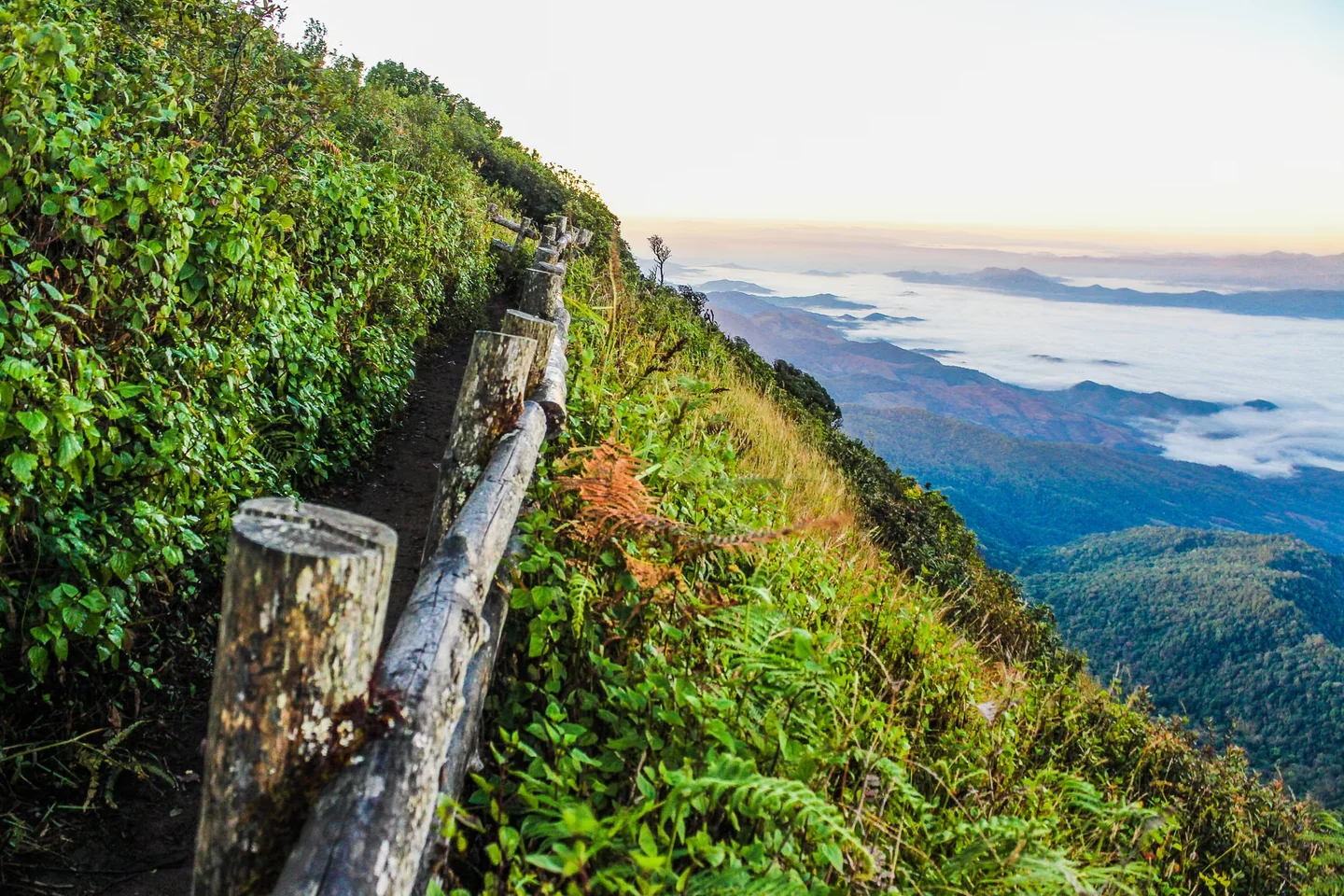
The 26th Walk to the Hermitage of Sant Joan in Montblanc once again set things in motion on the morning of June 24, 2026 with an early start from Plaça Major and a 7.2-kilometer route that combines trails, track, and dry inland landscape. The event, organized by Club Atlètic Montblanc, is part of a shared day with the Pujada, although the walk keeps its own identity: slower, more social, and closely tied to local memory.
The event took place at 7:30 a.m., with a limit of 50 participants and an entry fee set at 10 euros. The route leads to the hermitage of Sant Joan through the Montblanc area, with a positive elevation gain of 557 meters and a finish at the top that explains why, despite the walking tone, the effort is by no means minor. The combination of heritage, popular sport, and an early summer morning defines an activity that each year attracts locals and runners from the area.
A walk rooted in Montblanc’s calendar
The Sant Joan walk is not an improvised event nor a hike that accidentally became a sporting challenge. It is part of a tradition that Club Atlètic Montblanc has consolidated edition after edition, with a simple and recognizable formula: climb together, respect the surroundings, and finish at the hermitage, where effort blends with togetherness. That sense of belonging explains its permanence in the local calendar, even in years of intense heat and limited participation.
Montblanc, in the Conca de Barberà, has in this outing a very clear expression of close-to-home sport. The walk relies on paths and trails that many know by sight, but on this date they take on a different pace. The place sets the tone: June light, uneven ground, the nearby mountain range, and the constant reference point of the hermitage turn the route into something more than an organized march. There is also a symbolic reading of Sant Joan Day, with a sunrise start that fits well with festive tradition and the appeal of early-morning events.
The 2026 edition followed that pattern. The organizers kept the usual format and a participation cap closed before race day, a measure that avoids crowds and helps preserve a comfortable experience for those who make the ascent on foot. The result is a small-scale walk, but one with a very clear identity.
Timetable, distance, and route profile
The walk started at 7:30 a.m. from Plaça Major in Montblanc, with bib pickup between 7:00 and 7:25. That early window sets the tone for the day: air still cool, streets in semi-darkness, and a compact group of participants ready to complete a 7.2-kilometer route. The Pujada, reserved for competitors, started later, at 9:00, but the walk opened the morning at a calmer pace.
The route is demanding in terms of elevation gain, even if not in length. The 557 meters of accumulated climbing make the pace change constantly: stretches of comfortable progress, ramps that force a slower rhythm, trail sections where the stride disappears and the body works as a whole. The start from Montblanc’s center, at about 350 meters above sea level, and the arrival at the hermitage, around 680 meters, trace a very clear ascent. It is not an explosive climb, but rather a progressive build-up of effort, like a zipper slowly closing over the landscape.
The itinerary passes through recognizable spots for locals, such as the portal of Sant Marçal, the Bulló ravine, the Reboll path, the Mare de Déu trail, the Sant Joan track, and the surroundings of Mas de la Pasquala. After that, the final stretch leads toward the firefighters’ reservoir, the highest point on the route, and from there the descent toward the hermitage begins. This sequence of terrains turns the walk into a very complete experience for a popular event: it is not pavement, not pure mountain, not a flat stroll. It has a bit of everything, with Montblanc’s geography as the guiding thread.
Limited registration and very measured organization
Registration cost 10 euros and was limited to 50 walkers, with a registration period open from June 1 to 20 or until the quota was filled. That restriction is not only a logistical matter; it also helps maintain the balance between participant turnout and the environment’s capacity to absorb the activity without losing its character. In this kind of event, the limit is not an administrative detail, but part of the experience.
The organizers also confirmed that no registrations would be accepted on the day of the walk. That decision, common in small-format events, avoids improvisation and allows bibs, refreshments, and arrival logistics to be finalized in advance. As with the Pujada, part of the fee is allocated to the hermits of Sant Joan; in this case, one euro per registration is donated to support the reconstruction of the hermitage. That gesture reinforces the link between the event and the place it leads to.
There was also bib collection available early in the morning at Plaça Major, a simple but crucial element to ensure everything runs on time. In short, compact events, where participants set off almost at dawn, those timing margins make the difference between an orderly start and a rushed departure. Here, the organizers opted for clarity: specific schedules, a closed quota, and few ambiguities.
What sets this march apart from other popular walks
The 26th Walk to the Hermitage of Sant Joan combines heritage, elevation gain, and proximity in a way that is uncommon on the popular-event calendar. Many walks rely on comfortable, looped routes; this one, by contrast, is built around a real, visible climb, finishing at a hermitage that gives the journey meaning. The goal is not to rack up kilometers, but to gain altitude little by little, with the feeling of entering another layer of the territory.
The Montblanc setting adds value that is hard to replicate. The town retains historical weight and a very recognizable image, which makes the departure from the square, still in the early dawn, feel almost ceremonial. The group moves through streets, leaves the urban center, and soon enters a landscape that is neither fully urban nor fully wild. That transition, almost like a threshold, is one of the reasons the event works so well as a walk and not just as physical exercise.
The community aspect also matters. At the finish, breakfast and refreshments serve as a meeting point, and the closing awards in the case of the Pujada reinforce the atmosphere of a shared day. Although the walk does not award rankings, it still takes part in the same overall mood: familiar faces, volunteers, local organizations, and a short course that leaves room to talk, look at the landscape, and understand why this event endures year after year.
The route step by step, from the square to the hermitage
The start from Plaça Major in Montblanc places the walk in the heart of the town before opening out toward the outskirts and, soon after, toward the slopes. That first part of the route has something transitional about it; the streets let participants find their rhythm and organize the group, while the June sun begins to cast short shadows on the façades. Passing through the portal of Sant Marçal marks the departure from the historic center and the entry into an edge landscape.
The Bulló ravine and the Reboll path introduce the most natural component of the itinerary. Here the walk changes texture: the ground stops being a uniform surface and the body enters a more direct conversation with the incline. The Mare de Déu trail and the Sant Joan track broaden that sense of moving across layers, with stretches that can be covered fluidly and others that demand attention, especially if the heat builds. It is not uncommon for the march to settle into a staggered, almost breathing-like rhythm.
The surroundings of Mas de la Pasquala and the climb to the firefighters’ reservoir are the physical heart of the route. There the elevation gain becomes obvious and the landscape seems to tilt suddenly. From the highest point, the descent toward the hermitage brings a change in mood: the legs get a break, but the finish requires concentration to avoid slips or missteps. Arriving there, in that context, has a double value: the destination is reached and a small, gentle but authentic mountain traverse is completed.
Services, safety, and details that shape the experience
The walk included refreshments, a keepsake, and breakfast at the finish, as well as cloakroom service and showers at the municipal pool, according to the regulations released by the organizers. These are simple elements, almost invisible at first glance, but essential for this kind of event to run smoothly. On hot days, especially in June, water and refreshments stop being extras and become part of the route itself.
The regulations also emphasized the obligation to respect the marked circuit and to participate under one’s own responsibility. That formula, common in popular events, is a reminder that the terrain requires caution and that the surroundings are not something to improvise. The fact that the walk takes place on paths and trails within the Montblanc area means extra attention is needed, especially on narrower sections or in areas where the slope can mislead those descending with too much confidence.
Another important detail is the minimum participation age, set at 16 with permission from a parent or legal guardian. It is a reasonable threshold for a march with enough incline and duration to require a basic level of physical independence. In addition, the prohibition on bringing pets and the impossibility of changing bib numbers once registration closed show an organization that seeks order and clarity, leaving no room for last-minute complications.
The walk within a larger Sant Joan celebration
The walk shares its date and location with the Pujada to the Hermitage of Sant Joan, although the two events follow different logics. The walk brings together those who prefer a slower, collective ascent; the race attracts those who want to test themselves in competition. Together they create a single morning, with two ways of climbing and one shared destination at the hermitage. That coexistence of paces explains part of the event’s strength.
The 2026 edition also confirmed that participation is tightly designed. The combined number of walkers and runners brought together a contained group, large enough to create atmosphere and small enough not to break the intimacy of the route. At a time when many popular events grow without restraint, this formula feels almost austere, but precisely for that reason it retains a recognizable personality. It is more like a village celebration with bibs than a major sporting event.
In practice, that shows in everything: in the punctuality of the starts, in the closeness between organizers and participants, in the presence of volunteers, and in the use of the shared space at the finish. The walk needs no embellishment. The route, the sunrise, the climb, and the hermitage are enough. Everything else simply supports it.
A small event that says a lot about Montblanc and its surroundings
The 26th Walk to the Hermitage of Sant Joan sums up very well the kind of popular sport that still makes sense: close, measured, tied to a specific place, and carrying a symbolic weight that goes beyond the clock. In an era dominated by large numbers and mass routes, this walk preserves a human scale. And that scale, far from diminishing its value, gives it value.
With this walk, Montblanc projects an image of an active community, careful with its heritage and capable of turning a short climb into a collective act. The hermitage is not just a sporting destination; it is a cultural and emotional reference point. Reaching it on foot on Sant Joan morning, with the body warmed up and the view open over the landscape of the Conca de Barberà, has something of a secular ritual. There is no need to embellish it much more.
That is why this event continues to attract those looking for races with identity. The walk does not compete in spectacle with big city races nor boast eye-catching numbers. Its strength lies elsewhere: in the mix of local history, modest logistics, real elevation gain, and an arrival that feels earned step by step. In Montblanc, that balance still works.



How to prevent thigh chafing: causes and real solutions

Women’s running windbreakers: seven jackets and how to choose

Do more workouts get rid of soreness? A guide for runners

Jaén Half Marathon 2026: Record 3,800 Runners Registered

Men’s short running tights: how to choose the right pair

World Triathlon confirms data breach involving medical data

Izan Edo targets podium at Miyazaki World Cup

María Pérez ranks ninth in World Athletics’ 2026 top ten

Dos Santos, Duplantis and Sawe: World Athlete of the Year finalists

San Silvestre Vallecana 2026: 42,000 places, prices and start times

 Races4 months ago
Valencia Half Marathon 2027: date and registration

 Races4 months ago
Valencia Marathon 2026: entry, ballot and course

 Reviews and Comparisons4 months ago
Asics Gel-Roadmiles 3 for men: review and current price

 Reviews and Comparisons4 months ago
Asics Gel Sonoma 8 Gore-Tex: complete analysis for trail and rain

 Sneakers4 months ago
Saucony Endorphin Pro 4: full review and verdict

 News5 months ago
Strava API 2026: what changes for clubs, challenges and runner apps?

 Reviews and Comparisons5 months ago
Nike Alphafly 3: opinions, sensations, and real key points

 Reviews and Comparisons4 months ago
Under Armour running shoes review 2025-2026: models and key features

 Sports Equipment4 months ago
Shoe sizes in cm: a clear guide to getting the right fit for your footwear

 Sneakers3 months ago
Skechers GO RUN Consistent 2.0 analysis: comfort and limits

 News5 months ago
Valencia Marathon 2026 route: key tips to train and run better

 Sneakers4 months ago
Adidas Adizero Boston 13 for men: review and verdict