Races
Quixote Marathon Ciudad Real 2026: route, schedules, and prices
Ciudad Real fine-tunes an event with a marathon, half marathon, and 10K, schedules, prices, and a fast, certified urban course.

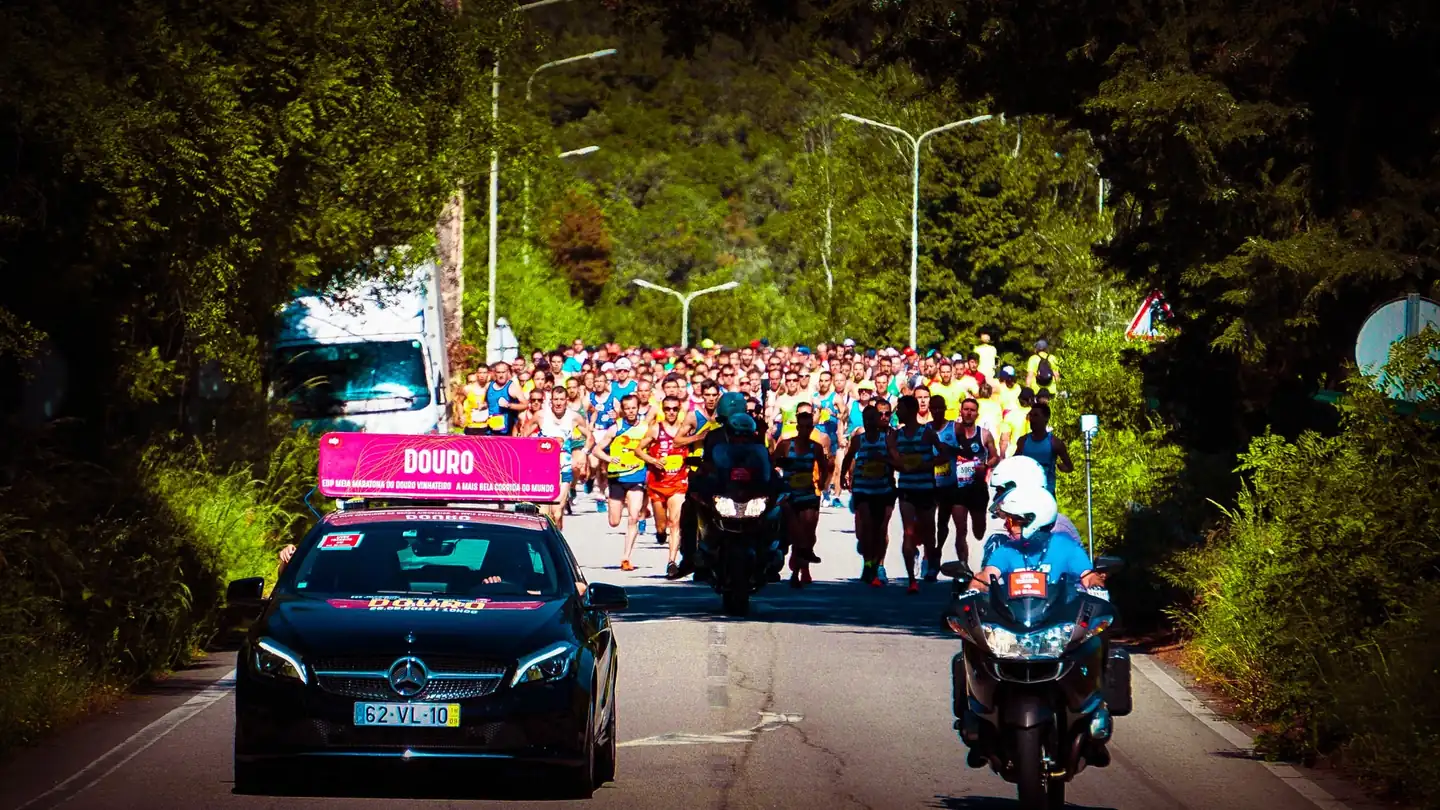
Ciudad Real is once again putting itself on the map of popular athletics with an event that combines tradition, the atmosphere of a major race, and a program designed for several runner profiles. The Quijote Marathon has established itself as the big road-running day in Castilla-La Mancha, with a start and finish that center activity in Gasset Park and an urban course that passes through some of the city’s most recognizable spots.
The 2026 edition arrives with three official distances and a structure that keeps the interest of those looking for the challenge of the marathon, the solidity of the half marathon, or a more accessible entry point with the 10K. The organizers have set the race for October 18, 2026, with a start at 8:30 a.m. and a tiered registration system that for the marathon starts at 40 euros, rises to 50 euros, and reaches 60 euros depending on the fee schedule; the half marathon starts at 20 euros and the 10K at 15 euros.
An urban race with its own weight on the calendar
The Quijote Marathon is not just another event in the runner’s autumn. Its value lies not only in the premier distance, but in the way Ciudad Real embraces the event and in the coexistence of three races that share a competitive climate and the same starting atmosphere. For many runners, the appeal lies in the balance between solid organization, a controlled course, and a city that lets you run without the feeling of being trapped in a hostile circuit.
The race’s character rests on a very simple idea: making the difficult easier. A marathon always demands respect, but the urban course and its official certification turn the effort into something measurable, comparable, and clean from a sporting point of view. The race is overseen by the Official College of Athletics Judges of Castilla-La Mancha, and its courses are certified by the RFEA, an important detail for those seeking valid times and a serious competitive setting.
The city also adds a recognizable backdrop. The route passes through streets and spaces that are part of Ciudad Real’s identity, a capital that knows how to alternate urban pace with openness in several of its sections. That mix means the effort does not feel like an endless succession of tight turns, but rather a smoother progression, with Gasset Park as an emotional and logistical anchor.
Date, start, and official distances
The event is set for Sunday, October 18, 2026, with the start at 8:30 a.m. from the Rey Juan Carlos I Sports Center, on Juan Ramón Jiménez Street in Ciudad Real. The early hour is no minor detail: it helps reduce the impact of residual La Mancha autumn heat and allows the long distances to unfold under more stable conditions, something that is always appreciated when the race demands concentration and effort management.
The sporting program includes the marathon, half marathon, and 10K, a combination that broadens the event’s reach and keeps it from being reserved only for endurance specialists. The marathon retains the classic distance of 42.195 kilometers; the half marathon, 21.0975 kilometers; and the 10K offers a competitive entry point for those who want to gauge their form without facing the harshness of longer races. That diversity explains much of the loyalty the race has earned over the years.
In practical terms, the structure is easy for runners to understand: one start, one shared sporting celebration, and three ways to experience it. For some, it will be a chance to chase a personal best; for others, a personal challenge; for many, a day of athletic community in which the clock matters, but does not explain everything. The coexistence of distances also fills the city with different rhythms, from the runner pacing carefully to the one who simply aims to hold a solid, well-run 10K.
Certified course and a profile designed for fast running
One of the major arguments for this race is its certified course. We are not talking about an improvised route or a course drawn up as a quick fix, but rather a design that seeks clarity, control, and sporting readability. In 2025, the organizers already highlighted a new route with few turns and few climbs, a combination that usually translates into a smoother course and fewer interruptions for the runner.
In an urban marathon, every unnecessary corner steals a few meters of mental comfort. Every abrupt change of direction forces the stride to be readjusted. That is why a course with few maneuvers is especially valuable for those looking to stabilize their pace. Fewer turns mean fewer micro-brakes, and in a long race, that is felt in both the legs and the head.
Ciudad Real’s surroundings also tend to offer a friendly geography for this kind of event. Without the need for prolonged climbs, the runner can focus on strategy, pace per kilometer, and energy management. This is not a race to improvise; nor is it one to overdo. The key is to let the course do part of the work and for the athlete to save energy for the section where everything is truly decided, when fatigue bites and discipline matters more than early enthusiasm.
RFEA certification and officiating control provide a framework of trust for those comparing times or pursuing a specific target. That detail turns the race into more than a popular festival: it is a competitive benchmark with technical guarantees, suitable for serious results and for runners who demand precision over the distance.
Registration, fees, and what the three races cost
The financial side also helps explain the event’s structure. The 2026 organizers opened the registration period from March 17 to October 11, with staggered prices that reward early sign-up. The marathon is priced at 40 euros until July 31, rises to 50 euros until September 11, and reaches 60 euros until October 11. The half marathon starts at 20 euros, then goes to 25 euros, and reaches 30 euros in the final period. The 10K starts at 15 euros, rises to 17 euros, and ends at 19 euros.
This system, common in many endurance races, serves a dual purpose. On one hand, it organizes demand and helps the organizers plan; on the other, it encourages runners to make decisions in advance. Early registration is usually the wisest choice, not only because of the price, but because participation trends affect logistics, hydration stations, and race services. In events of this size, the registration timeline is almost a thermometer for the true interest the race generates.
In 2025, the organizers reported figures of around 1,138 runners from 10 nationalities and 39 Spanish provinces, a number that clearly illustrates the event’s reach. That figure, beyond showing the variety of the field, shows that Ciudad Real is not competing only in its immediate surroundings, but attracting runners from elsewhere thanks to the combination of course, atmosphere, and organizational reliability. In a popular race, that mix has great value: it adds color, density, and the feeling of a big athletic day.
Schedule, bib pickup, and runner logistics
The early schedule simplifies the day, but it also requires very precise logistics. The 8:30 a.m. start means arriving with time to spare, checking your gear carefully, and avoiding the kind of unnecessary rush that usually appears when everything depends on a badly parked car or a bib collected at the last minute. In recent editions, the organizers have already indicated that bib pickup is available on Saturday afternoon and also on Sunday morning, a practical formula that spreads out attendance and reduces queues.
Arrival at Gasset Park and its surroundings concentrates the operational heart of the event. For the runner, that means less dispersion and a clearer reading of the day: pick up, warm up, start, and return to the same ecosystem. Logistical simplicity is a form of quality. You do not see it in the headlines, but you feel it in the minutes before the start, when the mind needs order and the body begins to demand focus.
In this kind of race, the details of the service also matter. The runner’s pack, which in recent information included the official T-shirt and products from companies in Ciudad Real and Castilla-La Mancha, works as a gesture of local identity and as another part of the experience. It does not replace the race, but it completes it. And in an event with the vocation of a major popular gathering, those elements build memory, a layer of remembrance that runners take home along with their time and sensations.
Feed stations, technical control, and what awaits in the race
Feed stations every 5 kilometers reinforce the idea of an event designed for serious endurance. Water, isotonic drinks, and fruit appear as basic support to maintain energy and manage hydration over a long distance. In a marathon, the regularity of supply matters as much as its content. It is not just about drinking, but doing so at the right time and without breaking race rhythm.
The event’s technical control adds another layer of confidence. When a race is supervised by athletics judges and aligned with certified courses, runners enter an environment where measurement and fairness matter. Chronometric precision then becomes as important as the atmosphere on the streets. For anyone looking to improve a time, that combination of control and flow is almost the ideal raw material.
In races like this, runners are not only fighting the distance. They are also managing temperature, the feeling of the miles passing, and the mental monotony that sometimes appears when the effort settles in. The Ciudad Real course, with its few turns and friendly profile, allows a fairly clean reading of the effort, something that can benefit both the runner trying to hold steady and the one betting on a final push to improve a result.
The simultaneous presence of the marathon, half marathon, and 10K also changes the human landscape of the race. Not everyone lives the same adventure, but everyone shares the same start and part of the same imagination. A race like this works like a city within the city: there are nerves, calm, spectators, overlapping paces, and a kind of electric current running through the streets from first thing in the morning.
Ciudad Real as a sporting and heritage setting
Ciudad Real offers more than a neutral backdrop for running. Its city center, its monuments, and its status as a provincial capital provide a recognizable context that enriches the experience. In race editions and listings, the route through emblematic points of the city has been highlighted, and that heritage dimension adds appeal to an event that does not rely solely on the clock to justify its prestige.
The relationship between sport and city becomes especially visible in well-established popular races. The streets empty for the runner and, at the same time, frame them. An urban marathon does not just measure endurance; it also reveals part of the local character. Ciudad Real presents itself here as both host and stage, with a race that turns the routine of asphalt into a day of collective celebration.
That urban component also has an emotional effect. Those taking part are not crossing an abstract place, but a capital with identity, visible references, and a web of everyday life that on this day bends toward sport. That coexistence between city and runner explains why some races are remembered more for the overall feeling than for the exact time. The Quijote Marathon, by its format and history, belongs to that category of races that leave a mark beyond the bib.
An event that blends performance, atmosphere, and athletic memory
The strength of the Quijote Marathon lies in its mix of precision and community. It offers certification, well-defined distances, clear schedules, and an orderly registration structure, but at the same time it retains that texture of a major popular event that keeps the morning from feeling like a mere sum of data. There is anticipation, there is a crowd, there are clubs, there are runners who return and others who arrive for the first time, and all of that gives the day substance.
The 2026 edition starts from a base already familiar to regular runners: 8:30 a.m. start, Gasset Park as the nerve center, staggered pricing, an urban course, and technical control. On that framework, the organizers build the rest of the experience. The race does not need gimmicks. It only needs to offer a well-run event, an involved city, and a course that lets you run.
At heart, that is why the Quijote Marathon continues to hold its own place on the calendar. It does not aim to be spectacular in the loudest sense of the word; it aims for something more lasting. It wants to be a reliable, recognizable race with identity. And in a calendar saturated with options, that kind of consistency is worth as much as a fast bib or a tight finish. Because some races are forgotten as soon as the finish line is crossed, while others stay, like a clean echo in the legs, long after the shoes have been put away.
Ciudad Real, on October 18, 2026, will once again measure its pulse against thousands of strides. Marathon, half marathon, and 10K will share the stage on a day that combines sport, city, and a touch of restrained epic, the kind that does not need exaggeration to be convincing.



How to prevent thigh chafing: causes and real solutions

Women’s running windbreakers: seven jackets and how to choose

Do more workouts get rid of soreness? A guide for runners

Jaén Half Marathon 2026: Record 3,800 Runners Registered

Men’s short running tights: how to choose the right pair

World Triathlon confirms data breach involving medical data

Izan Edo targets podium at Miyazaki World Cup

María Pérez ranks ninth in World Athletics’ 2026 top ten

Dos Santos, Duplantis and Sawe: World Athlete of the Year finalists

San Silvestre Vallecana 2026: 42,000 places, prices and start times

 Races3 months ago
Valencia Half Marathon 2027: date and registration

 Races3 months ago
Valencia Marathon 2026: entry, ballot and course

 Reviews and Comparisons4 months ago
Asics Gel-Roadmiles 3 for men: review and current price

 Reviews and Comparisons4 months ago
Asics Gel Sonoma 8 Gore-Tex: complete analysis for trail and rain

 Sneakers3 months ago
Saucony Endorphin Pro 4: full review and verdict

 News5 months ago
Strava API 2026: what changes for clubs, challenges and runner apps?

 Reviews and Comparisons5 months ago
Nike Alphafly 3: opinions, sensations, and real key points

 Reviews and Comparisons4 months ago
Under Armour running shoes review 2025-2026: models and key features

 Sports Equipment4 months ago
Shoe sizes in cm: a clear guide to getting the right fit for your footwear

 Sneakers3 months ago
Skechers GO RUN Consistent 2.0 analysis: comfort and limits

 News5 months ago
Valencia Marathon 2026 route: key tips to train and run better

 Sneakers4 months ago
Adidas Adizero Boston 13 for men: review and verdict