Races
Race for Life Solidarity Walk 2024: date and start
Departure from Siam Mall, route between Adeje and Arona, and registration with a donation to support the fight against breast cancer.

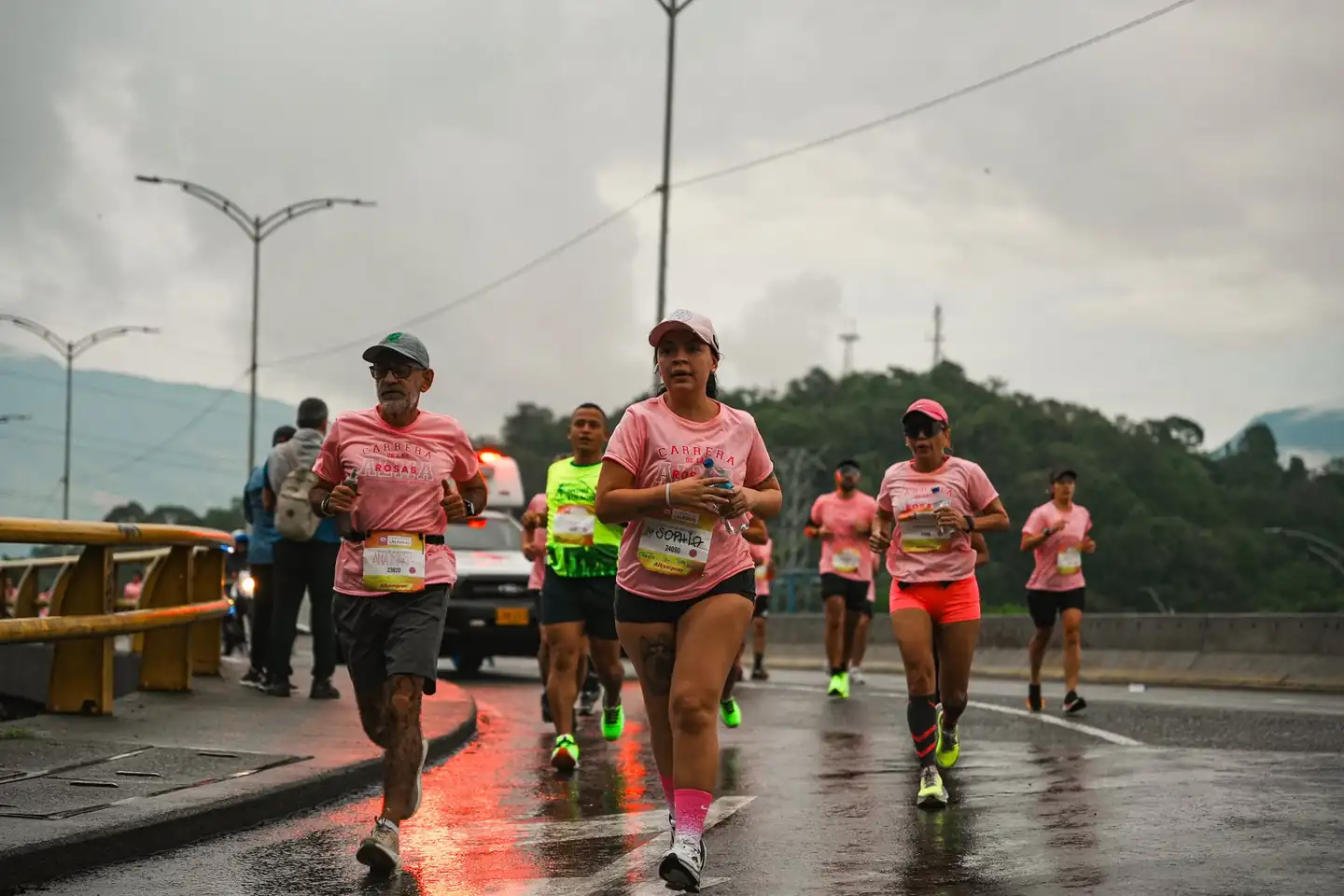
The charity walk Carrera por la Vida once again turns southern Tenerife into a strip of color and visible support against breast cancer. The event is set for Sunday, December 1, 2024, starting at Siam Mall Shopping Center in Adeje at 10:30 a.m., and following a route that continues to Avenida de Las Américas in Arona.
More than a mass walk, the event has established itself as a collective gesture of support for early detection, research, and social awareness. It is organized by the Canarian Foundation Carrera por la Vida, with the support of the town councils of Adeje and Arona, and participation in recent editions has far exceeded the local setting to become a benchmark event in the Canary Islands.
A route that blends sport, remembrance, and visibility
The charity walk does not follow the logic of a competitive race, but rather that of a citizen tide moving forward together. The choice of the route between Siam Mall and Avenida de Las Américas is no accident: it connects two highly recognizable spots in southern Tenerife and turns the walk into a public postcard of support. In practice, the most repeated image is that of thousands of participants dressed in pink, white, or blue, a palette that has become part of the event’s identity.
That visual code also has a narrative meaning. Pink identifies people who have gone through or are going through the illness; white groups together relatives, friends, and companions who walk as a sign of support; blue brings visibility to breast cancer in men and to volunteer work. This is not just about aesthetics, but about recognizing different journeys within the same cause, as if each T-shirt added a layer of meaning to the walk.
In recent editions, participation has been high and very diverse. The walk brings together residents, visitors, families, local groups, and people from other parts of the island. This mix gives the morning more the feel of a civic gathering than a conventional sporting event: there is a runner atmosphere, yes, but also the energy of a public square, of a shared cause, of a repeated gesture that becomes a tradition and takes root.
The date, time, and course defining this edition
The 10:30 a.m. start time, allows for broad participation and makes it easier to fit in the earlier logistics, something important in a march of this kind. The meeting point at Siam Mall once again serves as the gathering, starting, and organization hub, while the finish in Arona offers a recognizable ending closely associated with the event’s public reach. Between both ends, the route becomes a human ribbon moving at a relaxed pace, without a tight race bib or a stopwatch involved.
The 2024 edition also comes with a particularly clear symbolic reading. The Foundation has emphasized the value of self-examination and mammography as early-detection tools. That message has been repeated by institutional representatives and by people connected with the event, who stress one very concrete idea: detecting earlier can completely change the prognosis. In a context like today’s, where breast cancer remains a major public health concern, the event serves as a showcase, but also as a practical reminder.
The march does not arise in isolation from Tenerife’s social calendar. It is based on the ongoing work of the foundation and on a network of collaboration that includes public administrations, sponsors, media outlets, and volunteers. This structure explains why the event has managed to endure and grow: it does not depend solely on the emotion of the day, but on a framework that supports every detail, from registration to the T-shirt, including care for those participating in person or through virtual registration.
Course & elevation Edition 2024
Per-kilometre table
| Km | Elevation | Grade |
|---|---|---|
| 1 | 80 m | 5.1 % |
| 2 | 155 m | 7.5 % |
| 3 | 174 m | 1.9 % |
| 4 | 228 m | 5.4 % |
| 5 | 354 m | 12.7 % |
| 6 | 262 m | -9.2 % |
| 7 | 156 m | -10.6 % |
| 8 | 104 m | -5.2 % |
| 9 | 55 m | -4.9 % |
| 10 | 24 m | -3.1 % |
Plan your pace on this course →
Route source: OpenRunner
Solidarity registration and the destination of the contributions
Registrations are not presented as a simple reservation of a spot, but as a contribution with a social purpose. The information released for this edition details two contribution options: 6 euros for the solidarity race and 4 euros for the solidarity walk. Registration is managed through the Canarian Foundation Carrera por la Vida, with support from the RockTheSport platform, and remained open from late February to the first days of April in the San Martín de Montalbán call, a format that shows how the event’s brand also travels across other territories and formats.
In the case of Tenerife, the economic aspect is simple and transparent: it is an affordable registration that prioritizes mass participation and fundraising for a charitable purpose. The money raised is linked to the fight against breast cancer and to the social projects promoted by the foundation. This clarity about how contributions are used is one of the reasons the event retains credibility among those who follow it year after year.
Beyond the financial aspect, there is a logistical detail that reinforces the inclusive spirit of the gathering: virtual registration is usually kept as a complementary alternative. This option expands the reach of the walk without diluting the in-person core. It does not replace the street walk, but it does allow support to be added from other parts of the archipelago or from beyond it, something very much aligned with the international character the foundation has highlighted in previous editions.
An event that began in 2005 and is now part of the Canary Islands’ social calendar
Carrera por la Vida began in 2005 and has since grown into an annual event full of public recognition. Continuity matters because, in solidarity events, permanence counts as much as visibility. This is not an isolated gesture that ends in one morning, but a repeated ritual that has gained meaning with each edition.
The 2024 edition was presented as the 19th walk in Tenerife, a figure that neatly summarizes its longevity. The foundation, chaired by Brigitte Gypen, has stressed that the main goal remains twofold: to support people affected by breast cancer and to keep pushing the public conversation toward prevention and research. To this purpose is added the institutional backing of Adeje and Arona, key to ensuring the walk does not lose its community dimension.
In recent calls, the event has brought together more than five thousand participants, a figure that helps explain its scale. That volume turns streets and avenues into a visible corridor of solidarity, with a scenic force unusual for non-competitive walks. What matters, however, is not only the number but what it represents: a community that shows up, accompanies, and makes visible a cause that is close to thousands of families.
The meaning of the T-shirts and the language of colors
The T-shirts are one of the day’s most recognizable elements and, at the same time, one of the most eloquent. In 2023, the foundation introduced pink, white, and blue garments to clearly distinguish the different groups of participants. This decision, which might seem minor, actually helps read the walk at a glance and reinforces the message of inclusion. Each color speaks, but none excludes.
Pink usually carries the most visible emotional weight, as it refers to survival, treatment, remembrance, and companionship. White introduces the idea of a network, of an extended family, of support from the closest circle. Blue, less common in this kind of campaign, adds a necessary correction: men can also suffer from breast cancer, even if their presence in the public debate remains less visible than it deserves. The result is a color language that does not merely decorate the walk, but explains it.
That symbolic dimension also has an interesting journalistic reading. In times of fast messages and fleeting consumption, Carrera por la Vida keeps a direct and easy-to-identify message. Visibility does not come from a complicated slogan, but from a simple and effective image: an avenue full of people who are not competing with one another, but moving forward under the same cause. This clarity largely explains its persistence.
What public officials and the foundation say
Brigitte Gypen has focused in several editions on prevention and the role of early detection. Her message emphasizes the routine of monthly self-examination and the importance of getting a mammogram when age or medical guidance calls for it. It is a simple message, but one of enormous value, because it translates a complex health issue into concrete habits that anyone can understand.
From the town councils of Adeje and Arona, support has been expressed as a mix of social commitment and recognition of the foundation’s ongoing work. José Miguel Rodríguez Fraga and Fátima Lemes Reverón have stressed in different presentations that the walk goes beyond the local level and brings together people with very diverse profiles. This breadth is not only an organizational achievement: it also shows that the cause has managed to move beyond the strictly sporting circuit and enter the civic agenda.
Another recurring point in public remarks has been the need to keep advancing in research and healthcare resources. The walk does not replace health policy, but it does challenge it. That is one of its most powerful traits: while the group moves along the avenue, the underlying message pushes toward a broader conversation about diagnosis, treatment, emotional support, and quality of life.
Why this walk has special weight in the runner calendar
In the running world, not every event is measured by pace or distance. Some are measured by their ability to bring people together around a cause, and in that sense Carrera por la Vida occupies a unique place. Unlike a classic road race, here the value is not in the finishing time, but in the shared movement. The gesture of walking matters just as much as the destination.
This explains why this kind of event also interests those who follow the race calendar in Spain. Even if there is no battle for a personal best, there is a collective experience very similar to that of a major popular start: pre-event atmosphere, gathering, urban route, continuous movement, and a finish line that symbolizes something more than the end of a course. The result is a scene of social sport that, in southern Tenerife, is now part of recent memory.
The walk also offers a useful perspective for the runner ecosystem itself. It reminds us that popular sport is not only about sanctioned races, prizes, or podiums. There is also an emotional calendar, one of causes and commitment, where the value of effort is measured in companionship rather than classification. That is perhaps the great difference that turns this event into something more than a charity walk.
A morning in which southern Tenerife walks at the same pace
The 2024 edition is set to repeat a scene that has already become recognizable: thousands of people moving between Adeje and Arona with a mix of solemnity, closeness, and quiet celebration. The T-shirt, the color, the sea of people, and the health message form a powerful, almost choral image, where every step adds up without making a noise. It is a way of occupying public space with purpose and without excess.
In a country accustomed to major popular races, Carrera por la Vida shows that a walk can have as much narrative force as a 10-kilometer race. Here, distance matters less than direction. And the direction, once again, points to the visibility of breast cancer, prevention, and that idea as simple as it is hard to sustain: walking together is also a way of caring.
The Siam Mall event at 10:30 a.m. is no longer just a starting point on a map. For many participants, it is an annual tradition, a way of standing alongside those living with the illness, and a scene that reminds us that popular sport can be, at the same time, movement and message. In that combination lies much of the strength of the charity walk Carrera por la Vida.



How to prevent thigh chafing: causes and real solutions

Women’s running windbreakers: seven jackets and how to choose

Do more workouts get rid of soreness? A guide for runners

Jaén Half Marathon 2026: Record 3,800 Runners Registered

Men’s short running tights: how to choose the right pair

World Triathlon confirms data breach involving medical data

Izan Edo targets podium at Miyazaki World Cup

María Pérez ranks ninth in World Athletics’ 2026 top ten

Dos Santos, Duplantis and Sawe: World Athlete of the Year finalists

San Silvestre Vallecana 2026: 42,000 places, prices and start times

 Races3 months ago
Valencia Half Marathon 2027: date and registration

 Races3 months ago
Valencia Marathon 2026: entry, ballot and course

 Reviews and Comparisons4 months ago
Asics Gel-Roadmiles 3 for men: review and current price

 Reviews and Comparisons4 months ago
Asics Gel Sonoma 8 Gore-Tex: complete analysis for trail and rain

 Sneakers3 months ago
Saucony Endorphin Pro 4: full review and verdict

 News5 months ago
Strava API 2026: what changes for clubs, challenges and runner apps?

 Reviews and Comparisons5 months ago
Nike Alphafly 3: opinions, sensations, and real key points

 Reviews and Comparisons4 months ago
Under Armour running shoes review 2025-2026: models and key features

 Sports Equipment4 months ago
Shoe sizes in cm: a clear guide to getting the right fit for your footwear

 Sneakers3 months ago
Skechers GO RUN Consistent 2.0 analysis: comfort and limits

 News5 months ago
Valencia Marathon 2026 route: key tips to train and run better

 Sneakers4 months ago
Adidas Adizero Boston 13 for men: review and verdict