Races
Half Marathon A Coruña 2026 results: complete guide and key data
Dates, route, finish at María Pita, and key details to follow the 2026 A Coruña event with useful context.

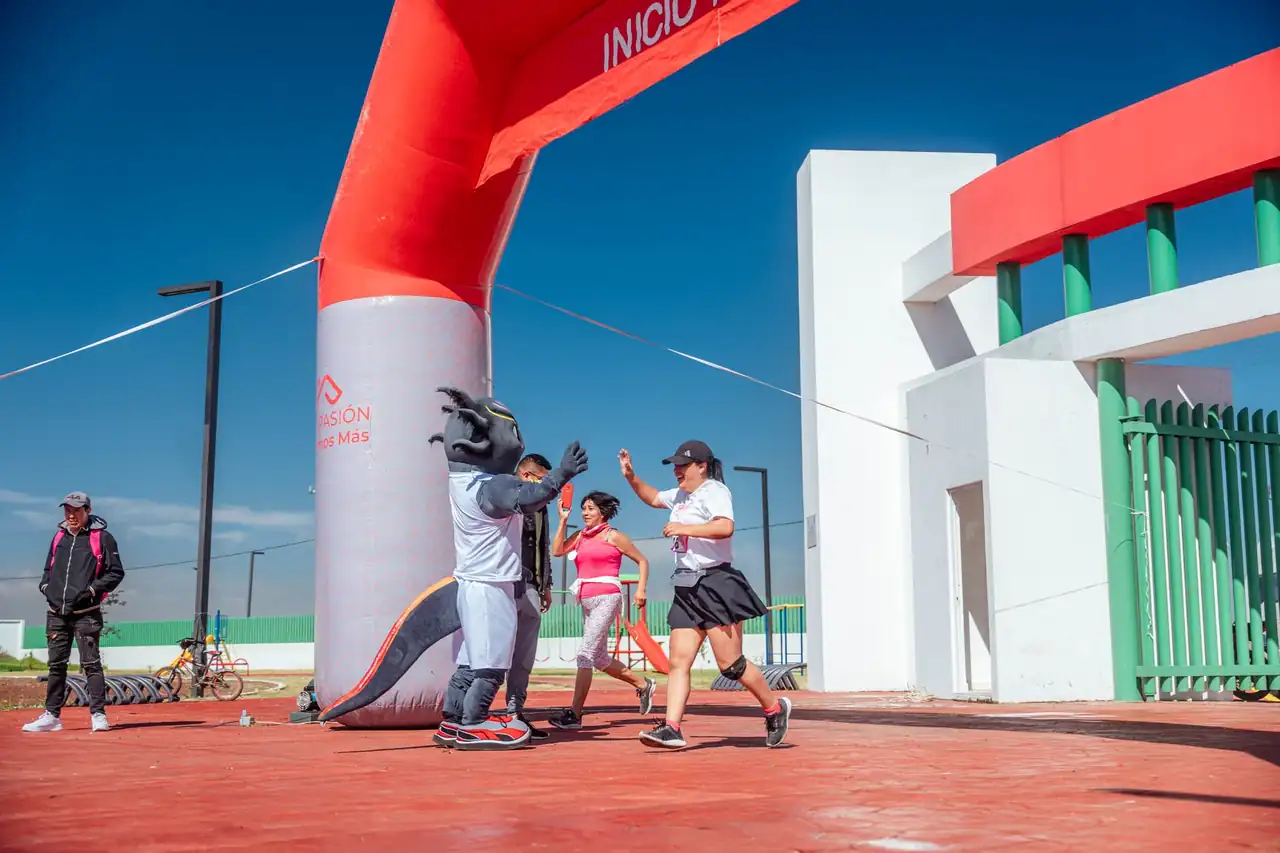
The 2026 A Coruña half marathon arrives with a change of setting that places it on the national calendar map: the start in the area around Cantón Grande and the finish in María Pita Square, a postcard-worthy finale that reinforces the sporting and urban value of the event. The March 1 edition, certified and contested on asphalt, covers the official 21.097 kilometers and retains the appeal of a fast course, closely watched by those chasing times and by those who simply want to feel the pulse of the city at street level.
Much of the pre-race attention revolves around the results of the A Coruña half marathon 2026: times, overall ranking, splits at key kilometers, performance on a flat circuit, and above all the way a central finish can change how the entire race is read. It is not just a list of names and times; context matters too, because a race finishing in María Pita turns the final straight into a showcase and leaves images that carry as much weight as the official clock.
An edition that changes the race’s story
The big novelty in 2026 is the symbolic finish in María Pita Square, a landmark that places the line in the institutional and emotional heart of A Coruña. That gesture is no small thing. In a half marathon, the last kilometer decides far more than the ranking: it shapes the emotion, rewards effort management, and leaves a visual imprint that helps explain why some races grow year after year. The finish in such a recognizable space adds a layer of urban epic quality that depends not on the weather or the profile, but on architecture and atmosphere.
The start, for its part, remains in the area around Cantón Grande, a point closely linked to this event and to other popular competitions in the city. The organization, backed by the A Coruña City Council and the Galician Athletics Federation, has opted for a race certified by the Royal Spanish Athletics Federation, which guarantees the validity of the times and gives purpose to those looking for a serious result. In sporting terms, that detail is central: without certification, times lose part of their comparative value, and in a race of this kind that matters as much as the great atmosphere.
For runners, this offers a hard-to-dispute combination: an urban route, little elevation gain, the presence of the sea, and a central finish that draws the crowd together. For many, that cocktail is ideal for running smart. For others, it is an opportunity to see how the body responds when the city opens its avenues and the Atlantic wind can appear either as an ally or as a subtle obstacle. Much of the performance seen in A Coruña is explained by that balance, where results depend less on climbs and more on pacing.
Official times and what they say about the race
The 2026 edition takes place on Sunday, March 1 at 09:30, a time chosen to run in daylight and, presumably, in moderate temperatures for the season. The maximum time limit is set at 2 hours and 30 minutes, a cutoff that defines the race’s character and sets a reference average pace for those who need to calculate checkpoints and splits. In practice, that margin puts the target at around 7:06 per kilometer, enough to finish the half marathon without rushing, but demanding for anyone who lets up in the second half.
There is also an intermediate cutoff at the 10-kilometer mark with 1 hour and 15 minutes. That detail is more important than it may seem, because it affects the strategy of those who start too cautiously and those who risk saving too much for later. In a 21-kilometer city race, a cutoff like this draws a clear line between two ways of competing: one aimed at finishing safely, and another seeking to conserve energy for a strong finish. The half marathon rarely forgives improvisation, especially when the course encourages a fast opening pace.
The rankings in events like this are ultimately ordered by a mix of sensations, not just by the sum of seconds. Those who arrive with a steady pace usually hold up better in the second half; those who go out too hard pay the price in the final five kilometers, right where the city center starts to weigh more than the race bib. That is why, when results are published, the sporting reading goes beyond the podium: people want to see split consistency, the gap between start and finish, and the ability to maintain pace in a race that, on paper, invites fast running.
Urban course, clean asphalt, and a logic favorable to the clock
The race is held over 21,097.50 certified meters on a fully asphalt surface, a setting very different from mountain events or routes with sharp turns and uneven surfaces. A Coruña offers runners an open road, with wide avenues, stretches close to the port, and the seafront promenade as a backdrop. According to the available information, the course is favorable and the time limit confirms its profile as a classic urban half marathon, designed for racing and also for enjoying the route.
The route passes through some very recognizable parts of the city and combines historic areas with the waterfront. That contrast creates a powerful visual experience: the runner moves from the geometry of the Cantons to the salty air of the promenade, from urban traffic to the murmur of the sea. It is a circuit that makes sense visually before it does through GPS, which matters because it helps sustain effort when concentration starts to fade. In races like this, the surroundings do not just decorate; they also drive you forward.
Asphalt favors those looking for technical stability and a steady pace. Racing shoes or versatile trainers have an obvious role here, always according to each runner’s personal choice. The main enemy is usually not the elevation, but overconfidence. A fast course can lead to an overly aggressive start and leave a heavy bill after kilometer 15. That is why the results of this half marathon usually reward those who know how to pace themselves, even when the setting suggests the opposite.
The finish in María Pita and the value of a final image
The decision to place the finish in María Pita changes the race’s narrative. Until now, the experience of crossing the line depended more on the route and the overall setting; in 2026, the finish becomes an act of the city itself. The square, in front of City Hall, offers a clean, recognizable, and highly photogenic image, the kind that helps build sporting identity. In a popular race, that is no small detail: the finish is the runner’s last memory and the first one shared by anyone looking at photos or results.
The value of that location is also practical. Concentrating the finish in an emblematic space makes it easier to organize the race’s closing stages and gives spectators a clear reference point. The final straight becomes more legible for viewers and companions, and that increases the feeling of a major event. A finish in the city’s historic and administrative center turns the race into something closer to an urban ceremony than a mere sporting formality.
For those looking at results, this kind of finish leaves a very useful trace: it is usually where the difference between the runner who empties out in the final meters and the one who still has a finishing kick is most visible. The stories of a half marathon are rarely written only with the winner’s name; they are also written with the sound of that final straight, the crowd’s hands, faces of exhaustion and relief. María Pita adds a backdrop capable of amplifying all of that.
What information is worth checking when reviewing the results
Gun times are only the beginning. In a certified half marathon, it is worth looking at the splits, category positions, and the runner’s behavior through the intermediate stages. A solid first half and a gentle fade at the end point to a well-managed race. A strong first 10K followed by a collapse in the final stretch suggests something else: too much enthusiasm, insufficient adaptation to effort, or a strategy that was too optimistic. The ranking tells who arrived first, but the race development tells how each person got there.
It is also worth distinguishing between the elite race and the popular runner’s reading of it. At the front, the difference between places can come down to seconds and tactics; in the middle and toward the back, the question is different: how well the pace was maintained, whether there was progression, or whether the second half turned into a battle against the legs. That is why the results of a race like this are viewed with different eyes depending on the reader’s profile. For some, the podium is the story. For others, the key is the consistency of thousands of anonymous bibs.
The presence of a 5K race in the same program adds another layer of interest. Although the half marathon is the main distance, sharing the day with a shorter race helps broaden the showcase and fills the city with runners of very different paces. That context usually affects the overall atmosphere and the perception of the event as a civic occasion, not just a competitive one. A day with multiple distances usually creates more movement, more spectators, and more visual references for anyone who later wants to review times and rankings.
How to read performance in a city like A Coruña
A Coruña has a weather personality unlike that of the great inland plains. In early March, temperatures are usually mild, but wind and humidity can enter the equation. That means results should be viewed in context. A time that might seem modest in a sheltered city can mean more if it was run with coastal breeze or heavy humidity. The Atlantic climate is not always visible on the bib, but it is felt in the legs.
The urban route also affects how effort is perceived. Running by the sea gives a feeling of openness, but long avenues can fool the runner, who thinks they are moving more comfortably than they really are. In races like this, crowd noise helps measure pace, and entering more central areas usually lifts morale when fatigue starts to stiffen the face. The final result, then, is a mix of legs, mind, and reading the surroundings.
That is why post-race analyses often focus on runners who maintain steady paces and those who gain places in the second half. Often that is where the difference between a good time and an excellent one lies. The A Coruña course, with its logic as a fast urban circuit, rewards precisely that ability not to get thrown off. The half marathon is won not just by running hard, but by running with order.
The organization and technical context of a certified race
The certification of the distance and the involvement of the Galician Athletics Federation provide a technical foundation that should not go unnoticed. In races like this, the result is not an approximate impression but an official figure. That matters for personal bests, season statistics, and comparisons between editions. When a race is accurately measured, the post-race conversation becomes more precise and less noisy. The reliability of the course is an essential part of the sporting value of the result.
From an organizational standpoint, the available information points to a well-established event, with the usual services of a popular urban half marathon: chip timing, aid stations, baggage drop, showers, runner support, and official rankings. Those elements do not need embellishment to understand their importance. They are the invisible backbone of a race that, if it works well, feels smooth from the outside and orderly from within. And when everything fits together, the sporting outcome looks cleaner.
It also helps that the race is supported by the municipality and included in the Galician athletics calendar. That combination gives it continuity and institutional weight. It is not an isolated event or an improvised date; it is part of a tradition that in A Coruña has spent years gaining ground in the running conversation in Spain. The results, therefore, are not read just as a table, but as the reflection of a race that has managed to establish itself.
What this half marathon leaves in the running calendar
The A Coruña half marathon 2026 sits in a very useful place within the calendar: early enough to serve as the first major test of the year, and established enough to attract runners looking for a reliable setting. Its combination of date, certification, favorable profile, and finish in María Pita makes it an event with its own value. It is a race designed to run well and to look good in the final photo, two things that do not always match.
When looking at the results of this edition, it is worth doing so with that double reading in mind. There are the names and the times, yes, but there is also the city that supports them, the sea that slips into the air, and the square that completes the scene. A Coruña has understood that a half marathon is not just sport measured in kilometers; it is a way of showing the city at the runners’ pace. And that approach, at heart, explains why interest in the 2026 ranking goes far beyond a simple list of places.
The edition leaves one clear idea: urban races keep growing when they know how to combine technical precision, an attractive course, and a finish with personality. In an era of saturated calendars and increasingly similar events, A Coruña is betting on a recognizable identity. The results of 2026, once recorded in the official rankings, will not be just a record of times. They will also be the trace of a city that decided to turn its center into the final stage of a half marathon with a showcase spirit.
Official results: atletismo.gal.



How to prevent thigh chafing: causes and real solutions

Women’s running windbreakers: seven jackets and how to choose

Do more workouts get rid of soreness? A guide for runners

Jaén Half Marathon 2026: Record 3,800 Runners Registered

Men’s short running tights: how to choose the right pair

World Triathlon confirms data breach involving medical data

Izan Edo targets podium at Miyazaki World Cup

María Pérez ranks ninth in World Athletics’ 2026 top ten

Dos Santos, Duplantis and Sawe: World Athlete of the Year finalists

San Silvestre Vallecana 2026: 42,000 places, prices and start times

 Races3 months ago
Valencia Half Marathon 2027: date and registration

 Races3 months ago
Valencia Marathon 2026: entry, ballot and course

 Reviews and Comparisons4 months ago
Asics Gel-Roadmiles 3 for men: review and current price

 Reviews and Comparisons4 months ago
Asics Gel Sonoma 8 Gore-Tex: complete analysis for trail and rain

 Sneakers3 months ago
Saucony Endorphin Pro 4: full review and verdict

 News5 months ago
Strava API 2026: what changes for clubs, challenges and runner apps?

 Reviews and Comparisons5 months ago
Nike Alphafly 3: opinions, sensations, and real key points

 Reviews and Comparisons4 months ago
Under Armour running shoes review 2025-2026: models and key features

 Sports Equipment4 months ago
Shoe sizes in cm: a clear guide to getting the right fit for your footwear

 Sneakers3 months ago
Skechers GO RUN Consistent 2.0 analysis: comfort and limits

 News5 months ago
Valencia Marathon 2026 route: key tips to train and run better

 Sneakers4 months ago
Adidas Adizero Boston 13 for men: review and verdict