Races
Run’in Park Marathon 2026: route, schedules, and key details
Heillecourt hosts a fast, flat event with formats for running solo or in teams.

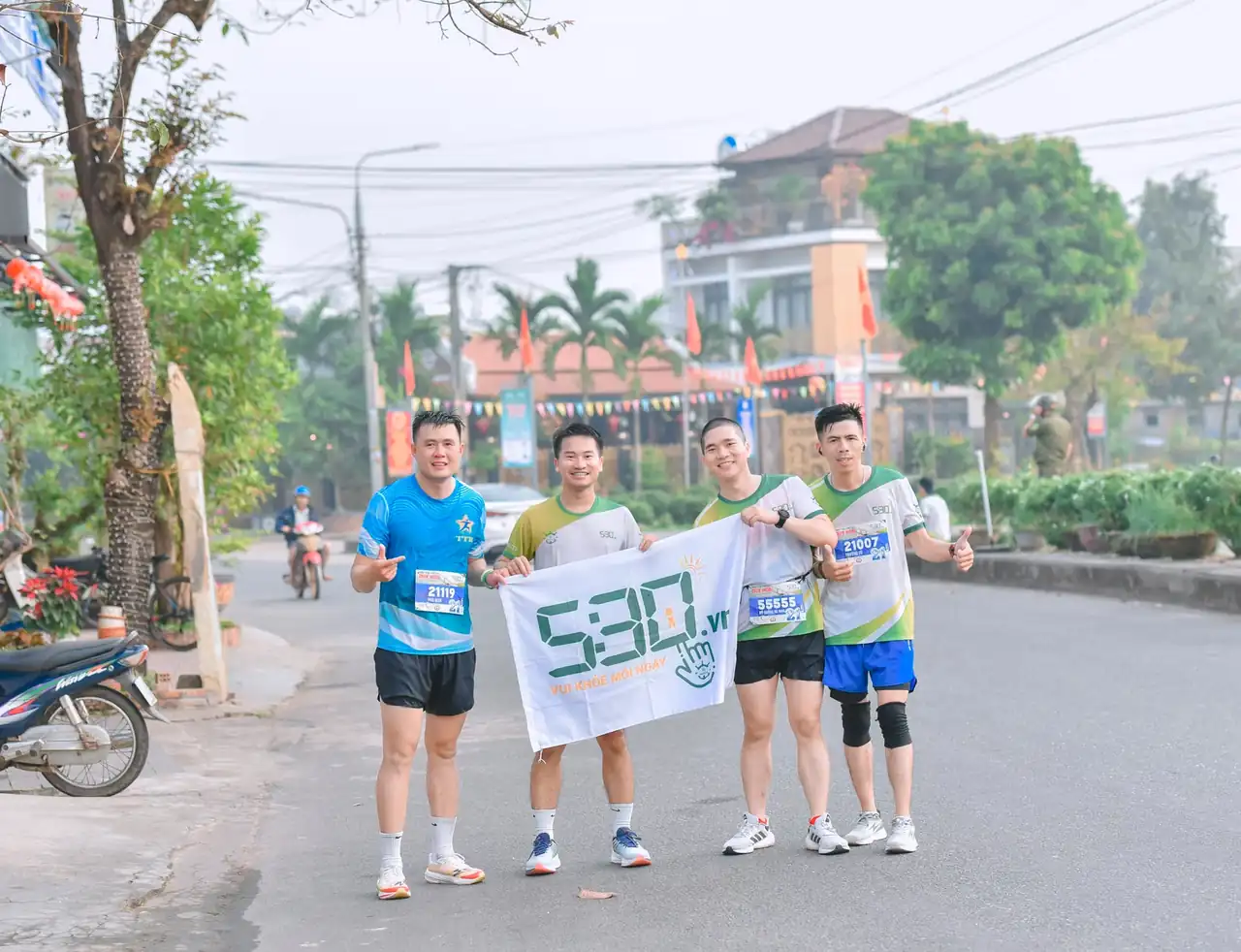
Run’in Park Marathon comes to Heillecourt with an unusual formula on the French calendar: a road race at sustained pace, set on a short, measured circuit repeated lap after lap. The 2026 edition is scheduled for Sunday, July 5 and brings together the marathon, half marathon and 10 kilometers in the l’Embanie park, in the Grand Est region.
The appeal is not only in the queen distance. The organization has built an event designed so that runners find a friendly course, flat and fast, with individual and relay options that broaden the participant profile. For many, that combination of a short layout, time control and long-day atmosphere makes this event a very different kind of marathon from the big city avenues or mountain races.
A marathon that revolves around a 2-kilometer lap
The heart of this race is a 2-kilometer circuit laid out in l’Embanie park, officially measured according to FFA rules. That precision matters because it reduces doubts about the real distance and reinforces the idea of a race meant for chasing times, keeping references and running at a steady cadence. There is no appreciable elevation gain, or as the reference sources describe it, without significant D+.
Repeating the same lap completely changes the experience. The runner stops navigating a long, heterogeneous route and instead focuses on the economy of movement, breathing, and the mental management of each step. In a marathon like this, the surroundings stop being scenery and become a metronome: the corner in the bend, the aid station point, the straight past the finish line. Everything becomes a familiar sequence.
That format also favors those looking for a controllable race. The even asphalt, the absence of sudden changes and the short lap reduce uncertainty. It can also make the effort more manageable for runners less experienced over the distance, because the day becomes more readable, almost like a real-time pace laboratory. Consistency matters more than terrain.
Distances, formats and the role of relays
Run’in Park is not limited to the classic marathon. The day includes a solo marathon, a 2- or 4-person team marathon, a half marathon and a 10-kilometer race. The expansion of the program since 2025 has consolidated an event with several entry points, from those who want to complete the long distance to those who prefer a shorter day but the same competitive environment.
The relay marathon is probably its most distinctive feature. Teams can be men’s, women’s or mixed, and the organization does not impose a rigid order of changes. In practice, that gives freedom to distribute legs according to the group’s strategy, fitness level or simply the desire to share a race day without following a fixed script. The relay exchange takes place in a marked zone, at the end of the 2-kilometer lap, with the bib holder as the transfer item between runners.
The flexibility of the format explains part of its popularity. Relay running removes pressure, allows very different profiles to be combined and turns the marathon into a collective experience without erasing the competitive component. Instead of one prolonged endurance effort, the distance is split into a chain of short, linked efforts. That changes the tactics, the mood and also the background noise of the race: more conversation, more movement, more sense of continuous activity around the circuit.
Timetables, timing control and the classification limit
The solo marathon starts at 7:30, while the relay marathon teams set off at 8:30. The 10-kilometer race starts at 9:00 and the half marathon at 10:00, according to the information available in the runners’ reference. This sequence organizes the day so that runners of different paces can coexist without clogging the park area.
There is another detail that defines the character of the race: the course must be completed in 6 hours. Beyond that limit, runners are not classified. It is a reasonable cutoff for a short circuit and a festive marathon, but it also serves as a reminder that the organization is not offering a clockless stroll, but a competition with clearly defined paces and times.
Timing relies on an electronic chip on the shoe, activated from the starting gun to the finish line. For the runner, that means every pass over the finish line counts as an accurate lap reference, something especially useful on a 2-kilometer layout where split-time information is just as valuable as the final mark. In this type of race, the watch does not just record: it also disciplines.
Registration, capacity and published prices
The organization announced that registrations are open and that the race is limited to 500 entries. That cap is no minor detail. On a short circuit, controlling the flow of participants helps maintain safety, aid-station logistics and relay exchanges. It also prevents overcrowding in a finish area that, by definition, concentrates a lot of traffic throughout the morning.
The prices listed in the reference information set the solo marathon at 45 euros. The 2-person team marathon costs 40 euros per team, while the 4-person version rises to 80 euros per team. The half marathon is set at 22 euros and the 10-kilometer race at 12 euros. Race-day registration carries a 3-euro surcharge.
The fee includes the bib, refreshments, computer timing and a medal for each participant. That combination sums up the spirit of the event well: a race with a competitive structure, but without losing the feel of a popular community day. There are no unnecessary frills; there is clear logistics, well-defined basic services and a final reward that aims to highlight everyone’s finish, not just the front-runners.
Bib pickup and weekend logistics
Bib pickup is centralized at Intersport Houdemont, in the running area, on Saturday, July 4 from 14:00 to 18:00, and on Sunday morning from 6:00. For teams and individual runners, an ID document is required and, according to the consulted reference, a valid license or PPS less than one year old as of July 5, 2026. This formality is common in French races and is part of the administrative framework of the competition.
The location of the bib pickup and the event itself shapes an experience closely tied to the Nancy area. Heillecourt, in Meurthe-et-Moselle, is only a short drive from the regional capital, which makes accommodation and travel easier. The reference information even notes that the previous night is usually best handled in Nancy or nearby, a useful clue that the race is designed for both local runners and those coming from farther away.
The organizers have also planned a race-support setup that reinforces this impression of careful logistics. There is aid at every lap, that is, every 2 kilometers, and it is allowed to bring personal supplies in a reserved area. In races of this kind, that detail avoids improvisation and helps runners with specific hydration or nutrition needs during long efforts.
Prizes, medals and a popular-race atmosphere
Run’in Park awards prizes in men’s, women’s and mixed categories, both individually and in 2- and 4-person teams. But beyond the podium, the organization provides medals for all finishers in the marathon and half marathon. That gesture is not incidental. In races with a lap format and long duration, the medal acts as a tangible closure to an experience that requires patience, consistency and a much more complex mental management than it may seem at first glance.
After the race, the reference mentions Lorraine specialties, with quiche lorraine, Toul wines and local beer. That regional touch helps define the tone of the event: a competition with athletic ambition, but also with territorial identity. It is not an anonymous marathon, but an event that is recognized through its flavors, its circuit and the way it brings together participants and companions around the same day.
There is also a charitable incentive: for each participant, the organization sets aside 1 euro for children affected by cystic fibrosis, in collaboration with the Tramuco association. That detail adds a social layer to the race and places it within a long-standing tradition in French running, where competition often coexists with charitable actions of modest but visible scope. In an increasingly professionalized calendar, that kind of contribution keeps the link between sport and community alive.
What kind of runner best fits this event
By design, Run’in Park favors runners who value effort control and precise pace reading. A flat, short, measured circuit offers clear advantages to those chasing consistency, but it also demands mental strength. Repeating a course can feel comforting or exhausting, depending on each athlete’s profile. Some runners find in that monotony the best ally for running smart; others miss the visual variety of a long route.
The relay marathon opens the field even more. Teams of two or four can turn the distance into a shared experience, less solitary and more tactical. In that format, success is measured not only by individual endurance, but by coordination, effort distribution and the ability to keep the group motivated over more than six hours of activity. The race stops being a straight line and becomes a small choreography.
The half marathon and 10K also help broaden the participant profile. Some runners come close to the environment of a major event for the first time because the 10K serves as an entry point. Others prefer the half marathon because it offers a real challenge without the extreme wear of 42.195 kilometers. In both cases, the park and its circuit give the event a homogeneous identity that supports the experience from start to finish.
Run’in Park and the appeal of short-loop races
Short-lap races have gained ground in running because they simplify organization and concentrate excitement. They do not force the runner to memorize large sections of the course or read changing scenery, but they do demand discipline and attention. Each lap works as a unit of measurement, almost as if the race were divided into brief, repeated chapters. That makes it easier to follow the effort while also multiplying the chances of seeing the runner pass the finish area.
In that sense, Run’in Park fits into a broader trend: events that combine competition, accessibility and atmosphere. The team format, the medal for all marathon and half-marathon finishers, the frequent aid stations and the contained logistics lower the barriers to entry. You do not need to be a specialist in urban courses or a hill climber to understand what this race offers. Its proposal is simpler and, precisely for that reason, easier to explain.
The July 5, 2026 date also places it in a part of the calendar where heat can already be a factor. On a flat circuit, that means paying attention to hydration, starting pace and the management of each lap. Unlike other marathons where elevation gain or forest weather add drama, here the main external variable may be the climate. The rest depends on the runner, the team and their ability to keep the pace with a cool head.
An event marked by regularity and cooperation
Run’in Park Marathon does not aim to impress with a mountain profile or a monumental finish. Its strength lies elsewhere: an exact circuit, clear logistics and a format that allows running solo or in a team without losing its competitive edge. That combination gives it a unique place on the calendar and explains why the race keeps appearing in searches as a stable reference in Heillecourt.
At a time when many races are sold on spectacle, this commitment to repetition, precise measurement and shared effort has something of a classic heartbeat. The clock rules, the short lap orders the day and the park serves as the stage. Everything else, from aid stations to relay exchanges, is arranged so that the runner can focus on running. And sometimes, in a discipline as demanding as the marathon, that is enough to build a memorable experience.



How to prevent thigh chafing: causes and real solutions

Women’s running windbreakers: seven jackets and how to choose

Do more workouts get rid of soreness? A guide for runners

Jaén Half Marathon 2026: Record 3,800 Runners Registered

Men’s short running tights: how to choose the right pair

World Triathlon confirms data breach involving medical data

Izan Edo targets podium at Miyazaki World Cup

María Pérez ranks ninth in World Athletics’ 2026 top ten

Dos Santos, Duplantis and Sawe: World Athlete of the Year finalists

San Silvestre Vallecana 2026: 42,000 places, prices and start times

 Races3 months ago
Valencia Half Marathon 2027: date and registration

 Races3 months ago
Valencia Marathon 2026: entry, ballot and course

 Reviews and Comparisons4 months ago
Asics Gel-Roadmiles 3 for men: review and current price

 Reviews and Comparisons4 months ago
Asics Gel Sonoma 8 Gore-Tex: complete analysis for trail and rain

 Sneakers3 months ago
Saucony Endorphin Pro 4: full review and verdict

 News5 months ago
Strava API 2026: what changes for clubs, challenges and runner apps?

 Reviews and Comparisons5 months ago
Nike Alphafly 3: opinions, sensations, and real key points

 Reviews and Comparisons4 months ago
Under Armour running shoes review 2025-2026: models and key features

 Sports Equipment4 months ago
Shoe sizes in cm: a clear guide to getting the right fit for your footwear

 Sneakers3 months ago
Skechers GO RUN Consistent 2.0 analysis: comfort and limits

 News5 months ago
Valencia Marathon 2026 route: key tips to train and run better

 Sneakers4 months ago
Adidas Adizero Boston 13 for men: review and verdict