Races
Salamanca Half Marathon 2027: route, schedules and key details
The Salamanca race combines heritage, an urban route, and services for runners in a highly anticipated edition.

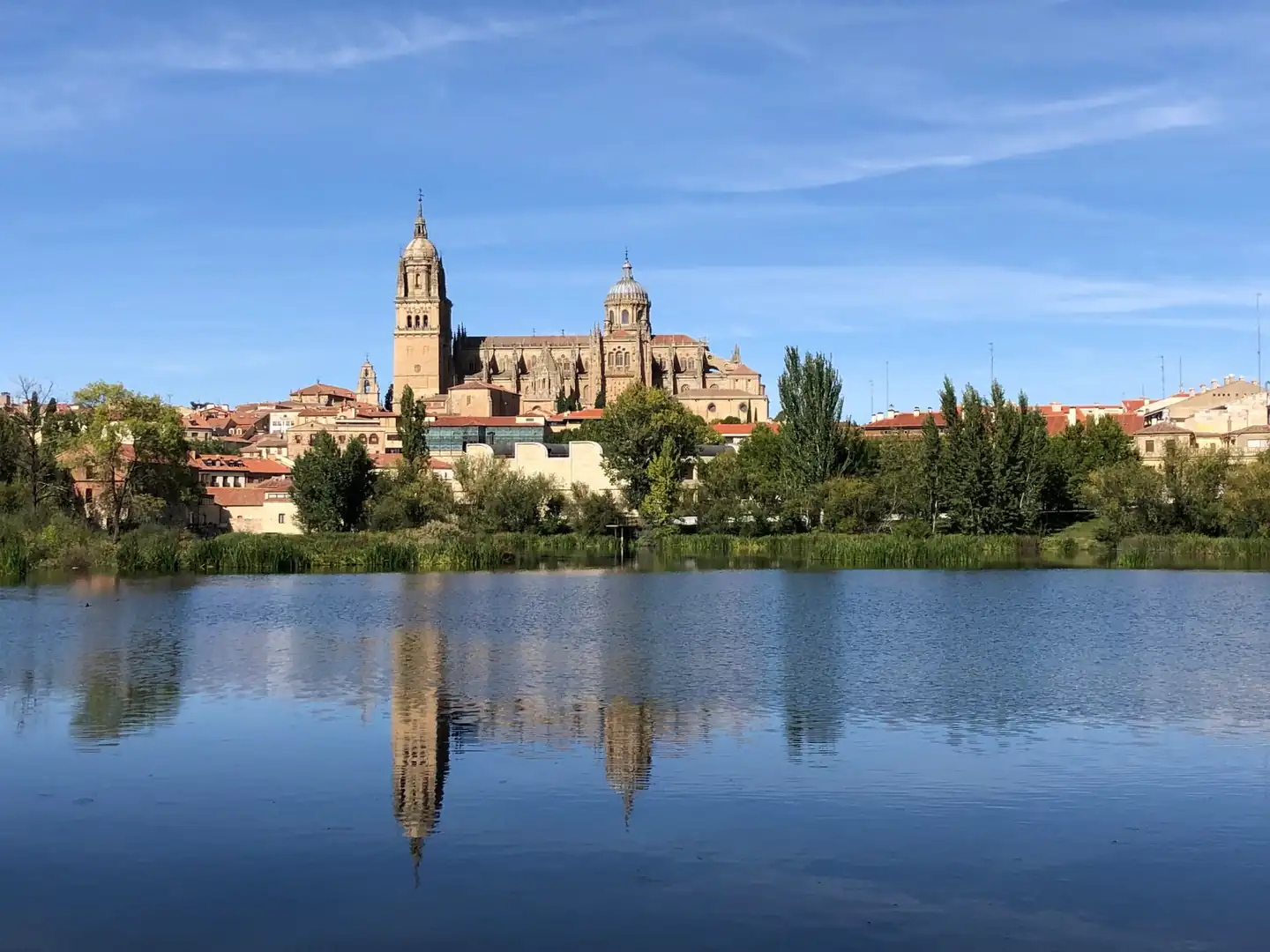
Salamanca will once again dress itself for racing with an event that blends popular athletics, a monumental city, and logistics designed for thousands of runners. The start on Paseo de la Estación and the finish at La Alamedilla sketch out a 21.097-kilometer route that passes through some of the most recognizable places in the charra capital, with an atmosphere that usually turns every kilometer into a moving postcard.
The race keeps a fully urban and federated format, with starting pens, pacers for different paces, and services ranging from bag drop to physiotherapy, podiatry, and showers. In the 2027 edition, the organizers have set the race for March 7, with registrations open from January 7 at 10:00, a schedule that confirms the usual demand for a half marathon that tends to sell out bibs quickly.
A race measured in kilometers and in heritage
Salamanca’s great singularity lies not only in the distance, but in the setting. Running through this city means crossing an urban landscape where golden stone, historic façades, and the layout of the old town turn the effort into a constant visual experience. There is not much room for indifference: the runner alternates wide straights, gentle curves, and stretches steeped in history that demand attention, but also give back a very lively racing feeling.
The Salamanca half marathon has established itself as one of the most recognizable events on the Castilla y León calendar thanks to that combination of sport, tourism, and popular participation. The route is not understood as a fast, bare circuit, but as an urban path with personality, where heritage is not a backdrop but part of the race’s identity. That condition explains much of its appeal among local runners and visitors alike.
Passing through emblematic landmarks gives the race added value that does not depend only on the clock. The Plaza Mayor, the cathedrals, the University, and the Roman Bridge are part of the image many fans associate with Salamanca, and the race takes advantage of that heritage to build a different kind of morning. In athletic terms, that translates into an enjoyable route, with sections to hold pace and others that require managing effort wisely.
Date, start, and structure of the 2027 edition
The 2027 edition is set for March 7, starting at 10:30 with a start organized by time pens. That detail, which may seem minor, is actually a key part of the experience: it orders the flow of runners, reduces crowding in the first meters, and helps each participant find a space more suited to their real pace. In mass races, that mechanism makes the difference between setting off elbow to elbow or doing so with some fluidity.
The organizers place the start at Paseo de la Estación and the finish area at La Alamedilla park, a setup that makes it possible to concentrate services, ease access, and create a more welcoming finish for the runner. The urban nature of the route also makes the street logistics especially visible: barriers, cheering points, medical assistance, and technical control coexist with the normal pulse of a city that adapts for a few hours to the rhythm of the race.
The maximum number of participants has been set at 2,300 athletes. That cap shapes demand and gives a fairly clear idea of the interest the race generates. This is not an open-ended call without limits, but a race with precise boundaries, something common in events that care about the course, safety, and the quality of the experience. The organizers themselves recommend reserving a spot in advance, although for 2027 they have already announced that registrations are closed and the waiting list is closed as well.
An urban course with emblematic stretches and changing pace
The 21.097 meters of the route run over asphalt and through representative neighborhoods of the city. There is no mountain or trail here; urban road running rules, with a rolling profile that does not punish like a hard-profile half marathon, but also does not hand out a continuous carpet. That mix forces you to run with discipline, especially if the goal is to hold a steady time without emptying yourself too early.
Urban half marathons with personality usually have something of theater and something of engineering, and Salamanca fits that description well. The route combines wider avenues with areas of greater symbolic weight, so the race alternates sections where you can run freely and others where it is wise to watch both your breathing and the visual reference of the surroundings. That balance usually appeals to those looking for a serious race, but not a monotonous one.
The passage through the historic center is one of the most celebrated moments, because the city is felt up close: the echo of footsteps on the asphalt, the crowd at specific points, the pale stone of the buildings, and the contrast between the March cold and the movement of the pack. In that blend of sensations, the race finds part of its appeal. It is not just about running 21.1 kilometers; it is about doing it in a city that lets itself be seen and heard.
Registrations, prices, and race status
Registrations for the 2027 edition opened on January 7 at 10:00, with a price range that in the reference information appears between 16 and 20 euros, and in other consultation sheets between 20 and 25 euros, which reflects pricing tiers or partial source updates. In any case, it is a contained cost for a race with a bib, timing, runner services, and a technical T-shirt.
The current status is listed as closed for both registrations and the waiting list in the most recent information consulted. That situation fits the tradition of a highly sought-after event, where spots disappear at a speed that usually does not surprise those who follow the half marathon calendar in Spain. The key, in this context, is not only to sign up early, but to understand that the race works as a very limited event in number and very concentrated in time.
Beyond the fee, the real value of the registration lies in what it includes: official timing, insurance, runner’s bag, technical T-shirt, refreshments, and basic assistance. These are elements that have already become standard in races of this level, but here they take on a special dimension because of the event’s medium size and the attention to detail that the organizers usually bring. The runner is not just buying a bib; they are buying a well-run race morning.
Services that make the difference in a half marathon
The runner’s bag remains one of the most closely watched points of interest for participants. In Salamanca, tradition points to a bag with a technical T-shirt and sponsored products, although the exact contents may vary by edition. In popular races, this small symbolic package works almost like a calling card: it sums up the care for the runner and also the overall tone of the event.
The race also offers bag drop, physiotherapy, podiatry, changing rooms, showers, and medical service. In a half marathon in March, with possible humidity and cool temperatures, these services are not accessories: they are part of the participant’s real experience. Bag drop allows for greater comfort before and after; physiotherapy and podiatry provide a basic recovery network; showers and changing rooms complete the logistical circle.
Another element that sets the race apart is the presence of pacers with approximate paces ranging from 1 hour 20 minutes to 2 hours. This figure is not decorative. For many runners, following a pace balloon is a concrete help to avoid going out too fast, something common on urban courses where the excitement of the start usually pushes people harder than they should. The race, therefore, does not just offer a route, but a structure for covering it in an orderly way.
How Salamanca is experienced before, during, and after the bib
The half marathon does not end on race Sunday. The organizers have added hotel options for participants, a free guided tourist route, and a selection of dining options designed for runners and companions. That approach broadens the meaning of the event: it turns a sporting race into an urban getaway, something very fitting for a city like Salamanca, where cultural visits naturally go hand in hand with food tourism and walking around on foot.
The guided route, held on the Saturday before the race, sums up that idea of a complete experience very well. It lasts about two hours, starts from beneath the clock in the Plaza Mayor, and is limited to 300 people, provided at least one of them is registered in the race. It is not just an ornamental add-on; it works as an elegant way of introducing the city to those coming from elsewhere and to those who, even if they are from nearby, do not always walk it with a visitor’s eye.
There is also room for the soundtrack and the grandstand atmosphere: the live YouTube coverage and the weight of the cheering at different points along the course reinforce a collective dimension that runners usually appreciate. In races like this, the city does not just lend its streets. It also lends its crowd, its balconies, and its energy, an energy that in Salamanca is usually especially noticeable when the route enters the most recognizable areas.
The organization and the sporting seal of the race
The Salamanca City Council and the Cazabaches Sports Club appear linked to the organization of the race in the reference information. That alliance between institution and sports club gives stability to a race that has consolidated over the years and that also has technical supervision and the presence of federation judges. In a half marathon, that layer of control matters more than it may seem: it guarantees consistency, rigor in the course, and a reliable reading of times.
The 2026 edition, which serves as the immediate organizational reference, already left some useful data to understand the weight of the event: start pens, finish area at La Alamedilla, federated control, and a limit of 2,600 participants on that occasion. For 2027, the cap drops to 2,300 bibs, a decision that points to containing the size of the event and, probably, better preserving the runner’s experience and circulation at certain points in the city.
The presence of rankings, videos, photos, and an archive of previous editions completes the portrait of a race with its own memory. This is not a race that disappears once the last runner crosses the line; it leaves a trail, comparisons, stories, and references from previous years. That documentary component is very valuable for anyone looking to understand how the event has established itself and what to expect in a new edition.
Why this half marathon keeps attracting so many runners
Its main strength is the mix of accessibility and character. Salamanca does not require a long trip for much of the national running community, but it does offer a city with enough personality to justify the getaway. The route is not extreme, though it is not flat to the point of caricature either. And the services are at the level expected by a participant who already knows the calendar and compares with judgment. That combination explains much of the recurring interest.
It also matters that the race allows people to run with very different goals. Some are looking for a personal best, some want to complete a half marathon with a certain level of comfort, and others simply want a special day in a historic city. The event accommodates those three profiles without losing coherence. In the end, that flexibility is one of the most valued virtues in popular running today: one race can be competitive, touristy, and emotional without falling apart in the attempt.
Salamanca also adds a very recognizable staging component. The city does not impose itself on the runner like a hostile metropolis; rather, it accompanies them, with a historic center that seems made for walking and an aesthetic that turns the asphalt into a corridor of stone and light. That is why the half marathon retains such a singular pull: you do not just run in Salamanca, you run inside its urban story.
A race that is better understood when seen as a complete experience
The Salamanca Half Marathon works as a sum of layers: course, services, heritage, organization, tourism, and community. The distance is the same as in any other half marathon, but the context changes the meaning of each stride. Where other races are reduced to time and classification, this one adds city and memory, two elements that still carry a lot of weight in the popular calendar.
With the 2027 edition already set for March 7 and registrations closed, interest shifts toward reading the event as a consolidated fixture. The runner looks at Salamanca and finds a race with a clear identity, a limited field, and a route that does not hide its personality. In an increasingly crowded calendar, that is worth almost as much as a big lineup: it offers a recognizable, concrete experience that is easy to remember.
Deep down, that is the reason this race keeps coming up in popular running conversations. It does not promise miracles or easy records. It offers something more sober and, often, more lasting: a half marathon well placed on the map, supported by a monumental city and capable of turning 21.1 kilometers into a morning with its own meaning.
You may also like: Ciudad Rodrigo Half Marathon 2025: date, start, and price.
Where to stay in Salamanca
Hotels available 5–8 March 2027.
Affiliate links: if you book through this map we earn a commission, at no extra cost to you.



How to prevent thigh chafing: causes and real solutions

Women’s running windbreakers: seven jackets and how to choose

Do more workouts get rid of soreness? A guide for runners

Jaén Half Marathon 2026: Record 3,800 Runners Registered

Men’s short running tights: how to choose the right pair

World Triathlon confirms data breach involving medical data

Izan Edo targets podium at Miyazaki World Cup

María Pérez ranks ninth in World Athletics’ 2026 top ten

Dos Santos, Duplantis and Sawe: World Athlete of the Year finalists

San Silvestre Vallecana 2026: 42,000 places, prices and start times

 Races3 months ago
Valencia Half Marathon 2027: date and registration

 Races3 months ago
Valencia Marathon 2026: entry, ballot and course

 Reviews and Comparisons4 months ago
Asics Gel-Roadmiles 3 for men: review and current price

 Reviews and Comparisons4 months ago
Asics Gel Sonoma 8 Gore-Tex: complete analysis for trail and rain

 Sneakers3 months ago
Saucony Endorphin Pro 4: full review and verdict

 News5 months ago
Strava API 2026: what changes for clubs, challenges and runner apps?

 Reviews and Comparisons5 months ago
Nike Alphafly 3: opinions, sensations, and real key points

 Reviews and Comparisons4 months ago
Under Armour running shoes review 2025-2026: models and key features

 Sports Equipment4 months ago
Shoe sizes in cm: a clear guide to getting the right fit for your footwear

 Sneakers3 months ago
Skechers GO RUN Consistent 2.0 analysis: comfort and limits

 News5 months ago
Valencia Marathon 2026 route: key tips to train and run better

 Sneakers4 months ago
Adidas Adizero Boston 13 for men: review and verdict