Races
San Antón Race Results 2025 in Jaén
Complete standings, winners, and key times from the 2025 San Antón Night in Jaén.

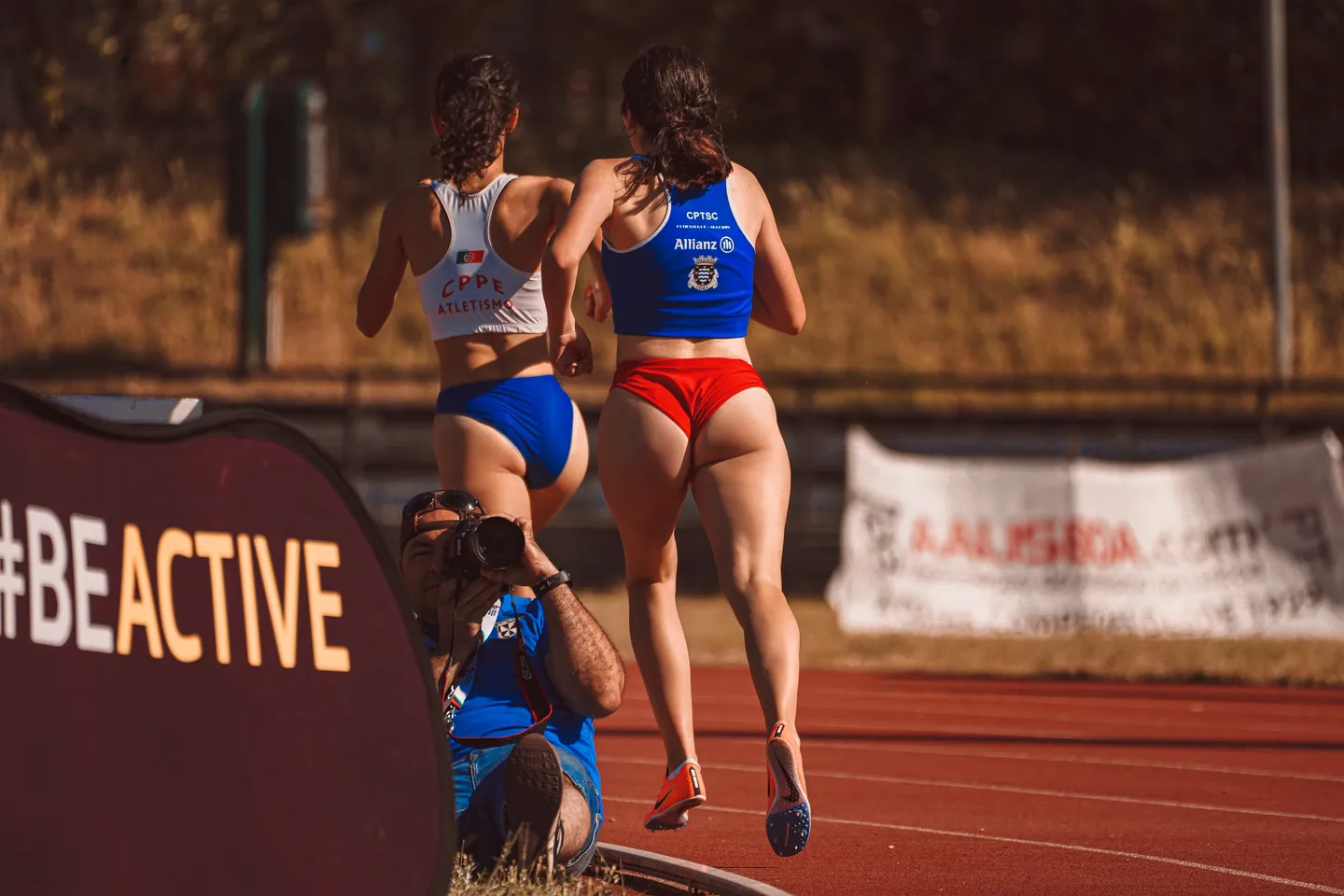
Imagen: RUN 4 FFWPU / Pexels
San Antón Night 2025 left Jaén with a day of endurance, brilliance, and tense bends: Abdessad Oukhelfen and Mekedes Alemeshete dominated the elite race, while Ignacio Barranco and Noelia Valenzuela prevailed in the popular race, in an edition that once again brought together international elite runners, emerging talent, and massive participation in the streets of Jaén.
The results also confirmed the importance of an event that is no longer measured only by its winners, but by the collective pulse of the whole city. Between the children’s race, the race for people with disabilities, and the wheelchair competition, the night produced times, names, and scenes that explain why San Antón remains one of the great landmarks of the urban calendar in Andalusia.
A distance-running showcase with an urban flavor
San Antón once again functioned as a kind of barometer of popular and elite athletics. It is not just any race or a simple nighttime jog with a bib number: its course, atmosphere, and mix of levels mean that each edition has sporting and social significance. In 2025, attention also focused on a popular race that brought together thousands of runners and on an elite field capable of attracting top-level names.
The race looked as it always does, but with renewed intensity. Packed streets, voices along the edges, spotlights on the key sections, and that spark of electricity that only appears when asphalt becomes a stage. Oukhelfen won in 29:21, a time that reflected control and authority from the opening stages of the route, while Olympic champion Soufiane El Bakkali finished second in 29:41 and Eduardo Menacho completed the podium in 29:46.
In the women’s race, Mekedes Alemeshete took victory in 31:47, ahead of Alemnat Walle, second in 31:55, and Carla Gallardo, third in 33:44. The times reveal a tightly contested race at the front, with a real battle to the end between the two Ethiopian athletes and a strong Spanish presence on the podium with Gallardo as the best national finisher.
Who won each race and what the times tell us
The men’s elite race was defined by Oukhelfen’s composure. The Spanish athlete managed the race better and resisted the early pressure from the leading group, where El Bakkali pushed hard. The final gap of 20 seconds was not huge at first glance, but it was enough to confirm the winner’s tactical dominance. In races like this, with so much tension in the first half, reading the pace ends up mattering almost as much as raw speed.
In the women’s elite race, the event was decided in a high-level duel between Ethiopians. Alemeshete crossed the line in 31:47 and Walle arrived just eight seconds later. The gap between them shows a close fight, one that is decided in the final stretch, when accumulated endurance matters less than the ability to sustain a finishing surge. Gallardo, with 33:44, earned a valuable third place and posted the best Spanish time in the women’s field.
In the popular race, Ignacio Barranco clocked 32:54 with a very controlled run, practically in solitude. Noelia Valenzuela won the women’s race in 36:22 and delivered a very solid performance in a race that rarely gives anything away. In the men’s race, Sergio López and Christian Villazala joined Barranco on the podium; in the women’s race, Lola Chiclana and Carolina Huertas accompanied Valenzuela. These results point to broad participation and a very even standard at the sharp end.
The full standings and the value of each podium
Beyond the overall winners, San Antón 2025 produced standings with several layers of meaning. The presence of different races means the night is not limited to a single focus and that each podium has its own story. The elite race is the sporting showcase; the popular race, the civic dimension; the children’s race, the relay; and the adapted race, a reminder that a great event is also measured by its ability to include everyone.
In the race for people with disabilities, Francisco Javier Deogracia and Isabel Cornejo were the winners, while in the wheelchair competition the victory once again went to Rafael Botello, who defended his dominance with 11:36. He was followed by Marco Antonio Baena, with 12:03, and Joaquín Álvarez, with 13:00. That part of the program often gets less attention in quick headlines, but it is one of the elements that best explains the true breadth of the event.
The children’s race also produced standout names: Rafael Jesús Sánchez and Cayetana Panadero were the fastest. The fact that the day reserves space for the youngest participants is no minor detail. In an event of this kind, the youth ranks do not just add atmosphere; they also provide continuity to an athletic culture that in Jaén has deep roots and an audience that values starting early.
Jaén as the stage and the logic of running at night
The international urban race Noche de San Antón has a personality born of the schedule, the January cold, and the illuminated city. Running at night changes how effort is perceived. The pace feels shorter, visual references are reduced, and every stretch becomes a sequence of lights, shadows, and breathing. That is why this race has its own identity within the Spanish circuit: it is not just a date, it is an atmosphere.
Jaén throws itself into the event with an unusual mix of solemnity and celebration. The city center acts as a sounding board; runners pass through a very close crowd, and that proximity changes the usual mechanics of a long race. The noise pushes, but it also demands. It is not enough to run fast: you have to manage excitement, avoid going out too hard, and understand that every surge in a race with so much visibility can take its toll later.
That context helps explain why elite times matter so much. Oukhelfen’s 29:21, El Bakkali’s 29:41, and Alemeshete’s 31:47 are not just numbers: they are the numerical translation of a night of pressure and of an organization that every year turns the center of Jaén into an open-air track for the public. The final result, therefore, speaks both to the athletes’ level and to the character of the race.
The race seen in 2025 and what it means for the calendar
The 2025 edition confirmed that San Antón remains a benchmark beyond the winner’s trophy. In the Spanish racing calendar, few events combine tradition, mass participation, and the presence of top-level athletes so well. That explains why every result is followed with interest not only by those who ran, but also by those who track the pulse of urban athletics from the outside.
The event once again showed that interest in the standings does not end at the finish line. Whoever dominates such a race not only adds a victory; they also gain visibility, prestige, and a useful benchmark for comparing fitness with other winter races. In January, when many seasons are just getting underway, a time like Oukhelfen’s or Alemeshete’s already provides a very clear snapshot of competitive form.
Total participation, exceeding 13,500 registered runners according to the count released after the race, reinforces the scale of the event. With that volume, each edition becomes a small map of local and national running: recreational runners, road specialists, elite athletes, and adapted athletes sharing the same night, even if with different goals. That coexistence is one of the reasons San Antón retains such appeal.
Why San Antón results matter so much to runners and fans
The standings in this race draw attention because they serve as a real sporting reference. This is not an isolated mark in a minor circuit, but a race with history, dense participation, and athletes with proven credentials. When an event brings together an Olympic champion, international figures, and ambitious recreational runners, the result gains a dual meaning: competitive and social.
The variety of the program also plays a role. One night offers elite times, popular podiums, adapted categories, and a children’s race. That means checking the results is not driven by a single interest, but by many at once. Some people want to verify their bib number, others follow the performance of favorites, others compare times with previous years, and others simply want to understand how the day unfolded.
In that context, the results of San Antón 2025 function as a chronicle of endurance, speed, and community. The race is not exhausted by a list of winners. It speaks of an engaged city, of athletes arriving with different goals, and of a format that keeps its ability to attract attention intact. That is, in the end, the true measure of a great race: that its numbers tell a story bigger than that of a podium.
An edition that leaves marks, names, and a benchmark for winter
San Antón 2025 leaves a clear snapshot of the state of athletics in January. Oukhelfen, Alemeshete, Barranco, Valenzuela, and Botello represent different faces of the same phenomenon: serious competition, international presence, and a popular base that underpins the event’s prestige. The times help fix the event in memory, but they also help explain its real level.
For the reader looking for the standings, the essentials are already clear: victories for Abdessad Oukhelfen and Mekedes Alemeshete in the elite races, for Ignacio Barranco and Noelia Valenzuela in the popular races, for Francisco Javier Deogracia and Isabel Cornejo in the disability race, for Rafael Botello in the wheelchair race, and for Rafael Jesús Sánchez and Cayetana Panadero in the children’s race. For road athletics, the reading is even broader: San Antón remains a night in which Jaén runs, watches, and recognizes itself in its own race.
And that explains why each edition leaves behind more than a list of times. It leaves the echo of a nighttime start, the outline of a lively finish, and the certainty that, in this race, the standings matter as much as the scene surrounding them. San Antón is not just run; it is also remembered.



How to prevent thigh chafing: causes and real solutions

Women’s running windbreakers: seven jackets and how to choose

Do more workouts get rid of soreness? A guide for runners

Jaén Half Marathon 2026: Record 3,800 Runners Registered

Men’s short running tights: how to choose the right pair

World Triathlon confirms data breach involving medical data

Izan Edo targets podium at Miyazaki World Cup

María Pérez ranks ninth in World Athletics’ 2026 top ten

Dos Santos, Duplantis and Sawe: World Athlete of the Year finalists

San Silvestre Vallecana 2026: 42,000 places, prices and start times

 Races4 months ago
Valencia Half Marathon 2027: date and registration

 Reviews and Comparisons4 months ago
Asics Gel-Roadmiles 3 for men: review and current price

 Races4 months ago
Valencia Marathon 2026: entry, ballot and course

 Reviews and Comparisons4 months ago
Asics Gel Sonoma 8 Gore-Tex: complete analysis for trail and rain

 Sneakers4 months ago
Saucony Endorphin Pro 4: full review and verdict

 News5 months ago
Strava API 2026: what changes for clubs, challenges and runner apps?

 Reviews and Comparisons5 months ago
Nike Alphafly 3: opinions, sensations, and real key points

 Reviews and Comparisons4 months ago
Under Armour running shoes review 2025-2026: models and key features

 Sports Equipment4 months ago
Shoe sizes in cm: a clear guide to getting the right fit for your footwear

 Sneakers3 months ago
Skechers GO RUN Consistent 2.0 analysis: comfort and limits

 News5 months ago
Valencia Marathon 2026 route: key tips to train and run better

 Sneakers4 months ago
Adidas Adizero Boston 13 for men: review and verdict