Races
San Fernando de Henares Popular Race 2025: details and route
The 2025 test was held on May 11, with 6.3 km and a start on Paseo de los Chopos.

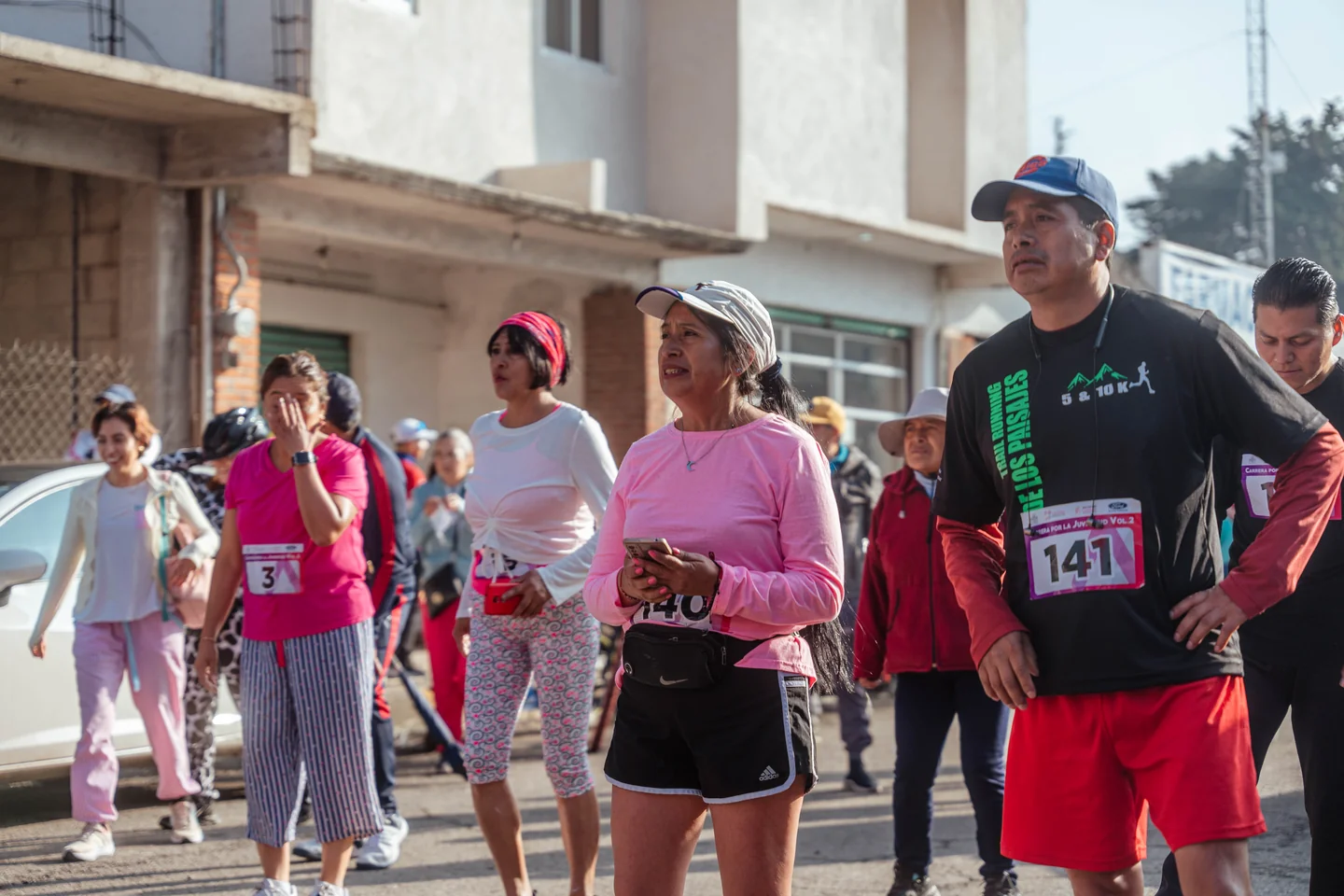
Imagen: Pexels LATAM / Pexels
The 44th San Fernando de Henares Popular Race took place on Sunday, May 11, 2025 at 9:30 a.m., with the start at Paseo de los Chopos and a 6.3-kilometer course. The race, organized by the City Council of San Fernando de Henares, closed registrations days before the event and was held as one of the local benchmarks in Madrid’s spring calendar.
For the popular runner, the event condensed the classic appeal of these urban races: an achievable route, neighborhood atmosphere, timing control, and the feeling of being part of a morning of accessible athletics. In a calendar saturated with competitions, San Fernando de Henares maintained that close-to-home race profile, without gimmicks, designed to add participation and keep the municipality’s sporting pulse alive.
A race with local roots and weight in the calendar
San Fernando de Henares has linked its sporting identity to popular races for decades, and the 2025 edition once again confirmed that connection. It was not an isolated event, but a race with history, capable of bringing together regular runners, neighbors, and athletes looking for a short but demanding effort—one of those efforts that leave your legs warm and the clear feeling of having truly competed.
The event was organized by the City Council of San Fernando de Henares, a formula that gives these races a very recognizable tone in the Community of Madrid: institutional proximity, simple management, and a route that usually values participation more than spectacle. That approach explains much of its continuity. The race does not need to be sold as an extreme challenge; its value lies in the balance between accessibility, tradition, and enough demand for no one to mistake it for a stroll.
In 2025, the race also came with an important detail for journalistic reading: the registration period closed on May 8 at 11:59 p.m., three days before the event. That early closure marked the final stretch of preparation and made it clear that demand had moved ahead of time, as happens in many popular races that rely more on loyalty than on aggressive promotion.
The 6.3-kilometer course and what it means for the runner
The most useful fact for any participant was the 6.3 km course, a short distance in absolute terms, but long enough to require pace, effort management, and a certain reading of the route. It is neither a pure-speed 5K nor a half marathon where endurance rules above all else. It sits at that midpoint where the runner sets out to handle the effort intelligently, but also with ambition.
Races of this length usually reward those who get positioned well and are able to hold a high pace without burning out too early. On an urban circuit, moreover, every turn, every straightaway, and every small change in surface or visual openness has an effect. The San Fernando de Henares race therefore demanded concentration and race reading, something that is not always valued from the outside, but that makes the difference between those who finish satisfied and those who fade before their time.
That kind of distance also explains why the race remains so appealing to runners of very different profiles. For some, it is a controlled test; for others, an opportunity to push hard without the logistical wear of a major event. For the road runner, these races work as a useful thermometer: they allow you to check fitness, sustainable speed, and the ability to compete in a real setting, with spectators and a bib, without the complexity of longer distances.
Start, time, and atmosphere on Paseo de los Chopos
The start was set at Paseo de los Chopos, in the Madrid municipality of San Fernando de Henares, a location that sums up the character of the race well: accessible, recognizable, and closely tied to local life. The 9:30 a.m. schedule fit the usual format of spring popular races, when the heat has not yet set in and the city begins to wake up calmly, amid applause, warm-ups, and the sharp sound of shoes hitting the asphalt.
That early-morning start usually has a photogenic quality of its own. The air still cool, the brief conversation before lining up, the final adjustments to the bib or the watch… All of it contributes to an atmosphere that combines nerves and routine. In races like this, atmosphere matters as much as the stopwatch, because many participants are not only looking for a time, but also for the shared experience of running through familiar streets, among familiar faces and a crowd that understands exactly what is happening.
Paseo de los Chopos thus served as both starting point and logistical symbol. The location simplifies arrival, organizes the pre-race gathering, and gives the event a very clear urban base. In this type of event, the choice of venue is no minor matter: it affects mobility, runner distribution, and the sense of scale. Here, everything pointed to a race that was easy to follow and easy to identify for anyone coming from outside.
Registration closed and a useful reading for future editions
Closing registrations on May 8, 2025 was one of the most concrete features of the edition and also one of the most useful for understanding the event’s dynamics. Popular races with a solid local base usually open entries well in advance, but they close them with a certain discipline in order to organize logistics, control bib numbers, and avoid last-minute imbalances. In this case, the schedule was clear and left no room for improvisation.
For the runner, that detail is not minor. Registration dates define the real opportunity to enter a race, and in a race like San Fernando de Henares it is wise to look at the opening period in advance and not wait until the last minute. The 2025 edition opened registrations on April 23 at noon and closed them on May 8 at 11:59 p.m., a relatively short window that fits the scale of the event and its municipal management.
This kind of schedule also says something about the race’s place in the popular running ecosystem. It does not compete in volume with the big mass events, but it does compete on stability, continuity, and loyalty. And that, in grassroots athletics, matters much more than it may seem. Races that are repeated year after year end up building their own story, with returning participants, accompanying families, and a community that already knows what to expect.
What 6.3 km means in a popular race
The 6.3 kilometers place the race at a very specific distance within popular athletics. It is short enough to attract those who prioritize speed, but also serious enough for a fast start to take its toll if overdone. In effort terms, it is closer to a pace test than to a simple first contact. Those who handle it well are usually those who find a stable speed early and avoid abrupt changes.
At distances like this, runners quickly learn that there is no time to hide mistakes. Going out too fast is costly, but holding back too much also leaves a bitter taste. The key is controlled tension racing: breathing regularly, not losing position, and accepting that every kilometer has its own value. That balance turns an intermediate distance into a very complete experience, especially for those coming from varied training and looking to check how they feel.
In addition, the 6.3 km format fits very well with the amateur runner who does not want to subject themselves to the wear of a long distance, but does not want to settle for a symbolic effort either. There is a very Madrid-like logic here of mid-distance urban races: fast, close, and with a point of sporting honesty that leaves little room for excuses. If you run well, it shows; if you don’t, it shows too.
An organization with a municipal stamp and a vocation for continuity
The role of the City Council of San Fernando de Henares was central in the 2025 edition, and that places the race within a long-established tradition of grassroots athletics promoted from the public sector. This model has a clear virtue: it keeps the race tied to the municipality, its spaces, and its community. It is not an imported event or a fleeting product, but a race that belongs to the local calendar.
In popular sport, that continuity matters almost as much as the raw participation data. A race sustained over time creates habits, encourages the presence of clubs, attracts runners from nearby towns, and gives the city a recognizable sporting image. San Fernando de Henares has managed to preserve that role with an event that still makes sense in 2025, even in a race market where offerings often compete on novelty rather than solidity.
The relationship between city council, route, and community also adds a layer of trust. The runner knows what kind of event they will find: an urban race, clearly defined and designed for competitive enjoyment. Far from reducing interest, that predictability usually increases attendance because it reduces uncertainty and makes the event easier to plan within any amateur’s personal calendar.
Why this event still interests runners with different profiles
The San Fernando de Henares Popular Race works as both an entry point and a serious test. For beginners, the distance allows competition without excessive strain. For those with more experience, it offers an ideal setting to measure pace changes and check whether training supports a higher intensity than regular jogging. That dual reading explains much of its longevity.
There is also an emotional factor, less visible in the technical sheet but very present in the runner’s experience. Running in a medium-sized city, with familiar streets and very specific references, has something of a mirror effect. A major production is not necessary for the race to feel intense. Sometimes an arch, a large group, and the sound of the crowd are enough to turn an ordinary morning into a day with sporting memories.
The 2025 edition left precisely that impression: a race of contained scale, well defined and useful for the runner who values asphalt, punctuality, and a clear format. It did not try to distract with embellishments; it relied on the essence of these races, where the value lies in running and doing so within a community that recognizes the gesture. And that still carries a lot of weight.
What the 2025 edition leaves on the Madrid running map
The May 11, 2025 event reinforced San Fernando de Henares’ role within the popular racing circuit of the Community of Madrid. In a broad and competitive calendar, staying visible requires more than a good name. It takes regularity, consistency in organization, and a sporting proposal that does not blur over the years. This race keeps those three pieces in place, which is why it remains a recognizable benchmark.
For the reader looking for concrete data, the summary is simple and clear: 44th edition, May 11, 2025, 9:30 a.m., 6.3 km, Paseo de los Chopos. For the runner, however, the meaning is broader. It speaks of a well-established urban race, with a popular character, that offers a measurable effort and a classic experience of close-to-home athletics. In a landscape where events increasingly come in larger or more extravagant formats, that sobriety has its own value.
And that is where, in the end, this race’s relevance lies. It does not need embellishment to justify its place in the calendar. Its strength lies in continuity, an achievable route, and the truth of the asphalt. A bib, a start time, a 6.3-kilometer course, and a city that turns out to run again: sometimes that is enough to explain why a popular race still matters.
You may also like: San Antonio de la Florida 2025 race: complete guide and key facts and Hortaleza Popular Race 2025: date, route and key details.



How to prevent thigh chafing: causes and real solutions

Women’s running windbreakers: seven jackets and how to choose

Do more workouts get rid of soreness? A guide for runners

Jaén Half Marathon 2026: Record 3,800 Runners Registered

Men’s short running tights: how to choose the right pair

World Triathlon confirms data breach involving medical data

Izan Edo targets podium at Miyazaki World Cup

María Pérez ranks ninth in World Athletics’ 2026 top ten

Dos Santos, Duplantis and Sawe: World Athlete of the Year finalists

San Silvestre Vallecana 2026: 42,000 places, prices and start times

 Races4 months ago
Valencia Half Marathon 2027: date and registration

 Reviews and Comparisons4 months ago
Asics Gel-Roadmiles 3 for men: review and current price

 Races4 months ago
Valencia Marathon 2026: entry, ballot and course

 Reviews and Comparisons4 months ago
Asics Gel Sonoma 8 Gore-Tex: complete analysis for trail and rain

 Sneakers3 months ago
Saucony Endorphin Pro 4: full review and verdict

 News5 months ago
Strava API 2026: what changes for clubs, challenges and runner apps?

 Reviews and Comparisons5 months ago
Nike Alphafly 3: opinions, sensations, and real key points

 Reviews and Comparisons4 months ago
Under Armour running shoes review 2025-2026: models and key features

 Sports Equipment4 months ago
Shoe sizes in cm: a clear guide to getting the right fit for your footwear

 Sneakers3 months ago
Skechers GO RUN Consistent 2.0 analysis: comfort and limits

 News5 months ago
Valencia Marathon 2026 route: key tips to train and run better

 Sneakers4 months ago
Adidas Adizero Boston 13 for men: review and verdict