Races
San Juan Race in Madrid 2025: date and route
The Madrid June race returns with 10 km through the city, an early start, and a route closed to traffic.

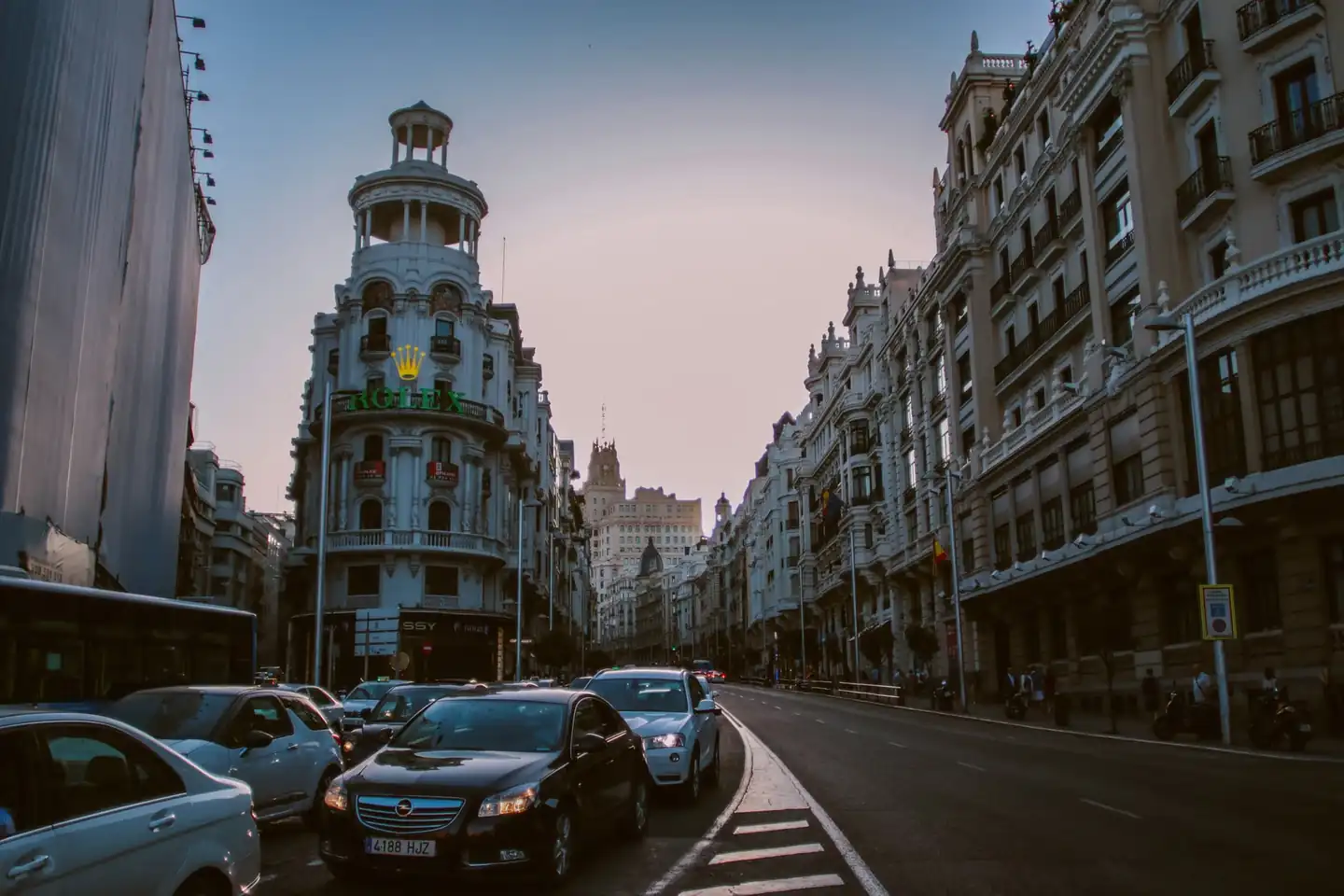
Imagen: Luis Quintero / Pexels
The San Juan Race 2025 in Madrid returns on June 15 with a 10-kilometer course through the city and a route designed to blend sport, urban heritage, and a festive popular atmosphere. The event is listed in the municipal calendar as one of the June races and will be run through Chamberí, Centro, Arganzuela, Latina, and Moncloa, with a fully urban profile.
In this edition, the start is set for 9:00 a.m. and the official distance is 10 kilometers. The available information places the race in a calendar window strongly marked by early-summer heat, so the early start is no minor detail: it affects preparation, pace choice, and even hydration strategy before taking the start.
A June event with an urban stamp
The race name refers to the feast of Saint John the Baptist, but its sporting identity is closely tied to Madrid. This is not a mountain race or a long half marathon, but an urban 10K with a popular spirit, one of those events that turn several emblematic streets into a continuous ribbon of asphalt, turns, and familiar landmarks for any runner used to the capital.
The municipal organization and the inclusion of the race in the city’s official calendar place it in a very clear context: an event designed for runners of different levels, though with enough challenge for respect for the heat and pace to be decisive. June in Madrid is unforgiving; the ground retains heat and the feels-like temperature can rise quickly even early in the morning.
This context explains why the event tends to attract both those looking to post a solid time and those who simply want to complete a 10K in a well-known urban setting. The race has something of a seasonal thermometer about it: it measures the participant’s fitness and, at the same time, their ability to adapt to a city already moving toward summer.
Course, districts, and what the route tells us
The reference information identifies a circuit that passes through Chamberí, Centro, Arganzuela, Latina, and Moncloa. That combination is no accident. These are areas with a very Madrid mix of wide avenues, moderate inclines, stretches of regular traffic, and spaces that, in a race, quickly change visual texture. The runner moves from classic façades to more open thoroughfares and then into surroundings that usually demand constant attention to pace and foot placement.
The route is fully urban and paved, an important point because it removes uncertainty about the terrain and puts the focus on stride, positioning, and effort management. It also means that heat reflected by the asphalt can be strongly felt once the sun gets higher. In a 10-kilometer race that may seem secondary, but in practice it changes the perception of every kilometer.
In this type of race, the route usually favors those who know how to run smartly. The point is not to go out hard from the first minute, but to find a pace that does not fall apart in the second half. On a June morning, consistency matters more than the initial burst. The city helps, but it also punishes if you run above what is reasonable.
Start time and race conditions
The 9:00 a.m. start makes it clear that the organizers are trying to avoid the worst heat conditions. Even so, Madrid in June can already offer a warm morning, with variable humidity and solar radiation that becomes noticeable as soon as the sun appears between the buildings. For a 10K, that combination makes it essential to consider pre-race hydration and effort control from the very first kilometer.
The schedule also affects arrival logistics. Participants should allow enough time to park, access the start area, and move around calmly before the start. The race begins from a very common premise in urban events in the capital: punctuality is not only an organizational matter, but also a way to avoid unnecessary rushing when the body is not yet fully awake.
The maximum time of 90 minutes set in the 2024 regulations serves as a useful reference for understanding the tone of the event. Although that figure corresponds to the previous edition, it outlines a race with a popular spirit and a broad participation framework, but with a clear time limit for the finish-line closure and safety operation.
Start, finish, and logistical details that matter
In the previous edition, the start was located on Paseo San Francisco de Sales, next to Parque Santander, and the finish at the Patio de Armas of the Municipal Police General Directorate, on Avenida Principal, 6. The organization has not confirmed in the information provided that these points will be repeated in 2025, so they should be treated as a reliable precedent, not as a confirmed fact for the new edition.
What the known regulations do make clear is the type of setup: a race with liquid refreshments along the course and also at the finish, plus medical services in the start and finish areas. That format is typical of an urban event of this size and provides an important safety foundation for runners at different paces.
A bag check was also provided at the start, with belongings transferred to the finish area and a specific drop-off schedule. These are minor logistical details in appearance, but crucial to the runner’s experience, because they reduce pre-race tension and allow the athlete to focus on the effort without carrying bags or outerwear.
Results, categories, and competitive character
The information from the previous entry shows that the event featured an overall classification and a specific block for Madrid Municipal Police personnel. That gives it a dual identity: open to the running public and, at the same time, integrated into the sporting life of the municipal force. That nuance gives it its own personality within Madrid’s calendar.
In the 2024 regulations, age-group categories were included in the overall standings, with brackets such as under 18, senior, master 35, master 45, and master 55, as well as an internal classification for Municipal Police by age groups. Although the 2025 edition must be confirmed in its specific announcement, that precedent helps explain the kind of competitive structure that has accompanied the race.
The official results were published on the event website once the race was over, and the previous year’s regulations even set a claim period of up to three days afterward. This level of detail is especially interesting to those who follow the race for its sporting side and not just as another popular event on the calendar.
Registrations, bibs, and deadlines worth keeping in mind
The 2024 reference indicated online-only registration and a deadline until June 13 or until bibs ran out. That does not guarantee that the 2025 edition will keep exactly the same administrative timetable, but it does confirm that the race operates with a limited-capacity entry system, something very common in established urban races.
It was also announced that bibs and chips would be distributed at Municipal Police Headquarters, with two pick-up days before the race and no distribution on race day itself. In events of this kind, that setup requires planning ahead and avoids last-minute crowds. The organization rewards foresight and penalizes improvisation.
Timing with a bib-chip and split control at the start, intermediate point, and finish reinforces the event’s sporting seriousness. This is not a decorative detail: it ensures the result is verifiable and that the race retains a measurable competitive character, something many runners value as much as the atmosphere or the memory of taking part.
What kind of runner is best suited to this event
By distance, profile, and schedule, the race is a very good fit for someone looking for an accessible but demanding urban 10K. It is not a race to improvise completely, especially if the heat is already intense. The experience is usually more satisfying for those who arrive with some pace work under their belt and know how to read the early kilometers without being carried away by the adrenaline of the start.
It also suits runners who prefer city races over closed circuits or major elevation changes. Here the value lies in continuity: avenues, turns, straight stretches, and an atmosphere that mixes recreational runners, neighborhood supporters, and participants who know Madrid’s calendar well. That gives the day a very specific texture, closer to an urban sports festival than to a simple date on the calendar.
For those preparing other distances in summer, this event can serve as an intermediate benchmark. A June 10K lets you gauge how you feel before entering weeks that are more difficult because of heat and fatigue. It is not a definitive exam, but it is an honest mirror of how each runner is arriving at the first major heat wave.
Why this event still matters in Madrid’s calendar
Madrid has a very crowded race calendar, but few June events bring together so many recognizable elements as this one. It has a date tied to a festival, an urban route, municipal backing, a morning start, and the symbolic value of running through the center and neighboring districts at a time of year when the city changes skin.
Its strength is not in spectacle, but in the combination of solid elements: an accessible distance, an urban route, a festive context, and regulations that, in the previous edition, left little room for improvisation. It is the kind of race that needs no gimmicks to catch the attention of runners who follow Madrid’s calendar regularly.
There is also an identity factor. San Juan races are often associated with the start of summer, with bodies already beginning to feel the heat, and with the atmosphere of a city that does not completely stop. In Madrid, that intersection of sport and local calendar gives rise to events with a recognizable personality, and this one has earned its place among them.
What a San Juan morning running through Madrid leaves behind
The final image of this race is that of a large group of runners crossing familiar streets with the light already high, the asphalt warm, and the pace still under control. It is a race that asks for composure and returns a very specific feeling: having run through a real Madrid, not a postcard. The route, the time, and the month all push in the same direction.
The San Juan Race 2025 in Madrid brings together, in just 10 kilometers, several of the features that best define popular running in the capital: tradition, city, organization, and a touch of environmental toughness typical of June. It does not need any more embellishment. Its appeal lies precisely there, in that mix of neighborhood, ceremony, and measured effort that each year again tests both legs and mind.
It thus stands as an event that speaks as much about sport as about the time of year. Between urban noise, rising heat, and the rhythm of the runners, Madrid offers on this day a clear portrait of how it understands popular races: running in the city, with the city, and through the city.



How to prevent thigh chafing: causes and real solutions

Women’s running windbreakers: seven jackets and how to choose

Do more workouts get rid of soreness? A guide for runners

Jaén Half Marathon 2026: Record 3,800 Runners Registered

Men’s short running tights: how to choose the right pair

World Triathlon confirms data breach involving medical data

Izan Edo targets podium at Miyazaki World Cup

María Pérez ranks ninth in World Athletics’ 2026 top ten

Dos Santos, Duplantis and Sawe: World Athlete of the Year finalists

San Silvestre Vallecana 2026: 42,000 places, prices and start times

 Races3 months ago
Valencia Half Marathon 2027: date and registration

 Races3 months ago
Valencia Marathon 2026: entry, ballot and course

 Reviews and Comparisons4 months ago
Asics Gel-Roadmiles 3 for men: review and current price

 Reviews and Comparisons4 months ago
Asics Gel Sonoma 8 Gore-Tex: complete analysis for trail and rain

 Sneakers3 months ago
Saucony Endorphin Pro 4: full review and verdict

 News5 months ago
Strava API 2026: what changes for clubs, challenges and runner apps?

 Reviews and Comparisons5 months ago
Nike Alphafly 3: opinions, sensations, and real key points

 Reviews and Comparisons4 months ago
Under Armour running shoes review 2025-2026: models and key features

 Sports Equipment4 months ago
Shoe sizes in cm: a clear guide to getting the right fit for your footwear

 Sneakers3 months ago
Skechers GO RUN Consistent 2.0 analysis: comfort and limits

 News5 months ago
Valencia Marathon 2026 route: key tips to train and run better

 Sneakers4 months ago
Adidas Adizero Boston 13 for men: review and verdict