Races
San Sebastián 10K 2026: route, schedule and price
Key facts about the Donostia 10K: start, price, urban course, and practical details so you don’t miss a thing.

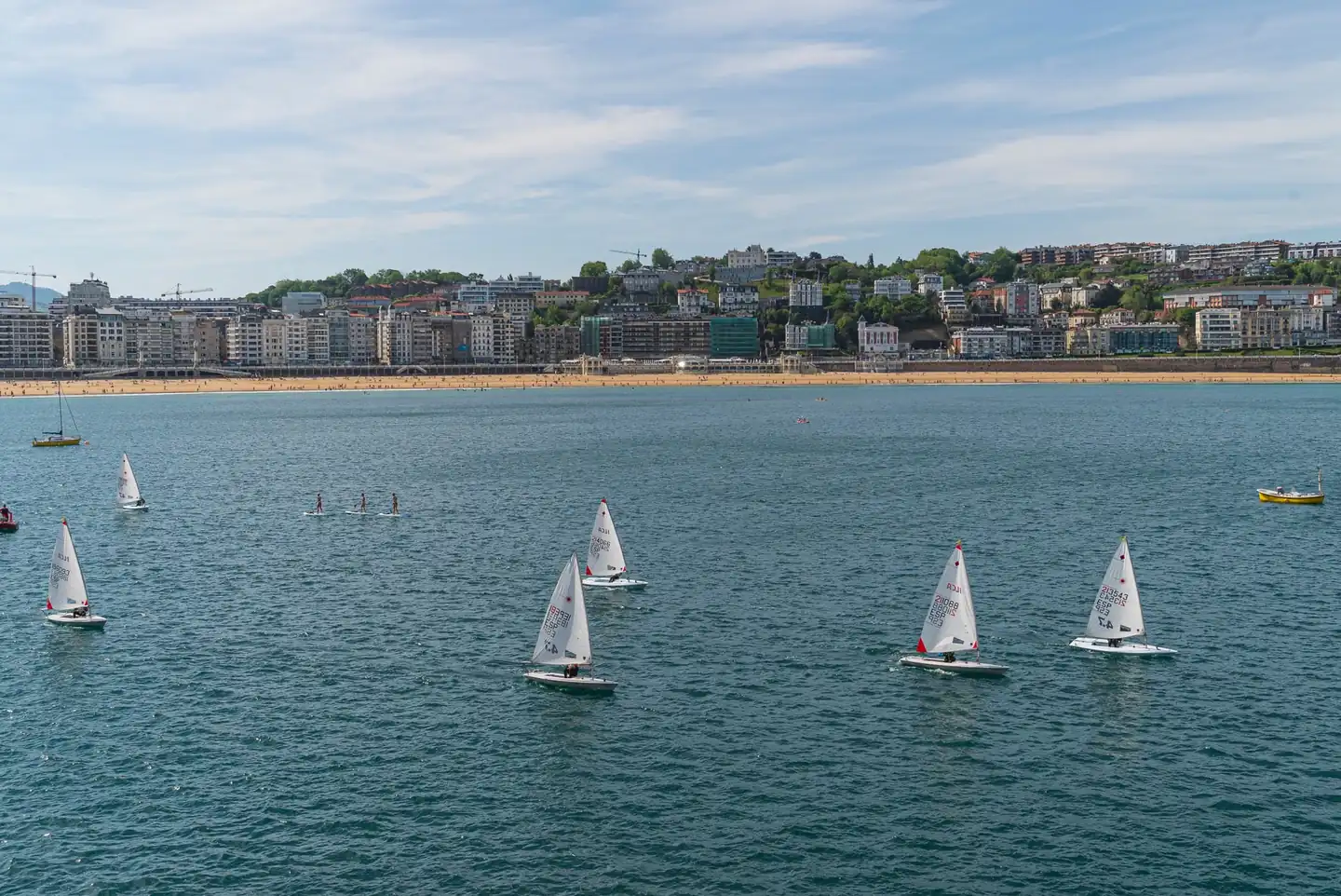
The Donostia 10K has established itself as a very visible distance within the runner calendar for a simple reason: it packs a large part of the postcard of San Sebastián into a single lap and adds the appeal of a fast, urban race that is very well placed in the autumn calendar. In the 2026 edition, the event is part of the Zurich Maratón San Sebastián and starts on Sunday, November 22 at 8:15 on Hernani Street, right in the city center.
Registration for this distance was set at 28 euros, with a price of 32 euros for the final batch, and the organization adds a one-day license of 5 euros for those who do not have a valid Spanish national or Gipuzkoa license. The time limit is set at 1 hour and 10 minutes, a margin that reflects the competitive nature of a race designed for popular runners with solid pace, but also for those looking for a morning of atmosphere and asphalt with open views of the Cantabrian Sea.
A short race, but with its own weight in Donostia
The Donostia 10K does not work as just a secondary distance within the day. It shares the stage with the marathon and, even so, has a different personality: more accessible, more compact, and with an intensity that builds from the very first meter. For many runners, it represents the most direct version of the big November event, because it offers almost everything one expects from San Sebastián without demanding the physical and mental load of 42.195 kilometers.
That profile explains part of its appeal. The city is made for an urban circuit like few others, with clean streets, stretches along the bay, and a route that combines straight sections where you can fine-tune your pace with areas that invite you to lift your gaze. In races like this, the surroundings matter as much as the clock. San Sebastián has that rare quality of making the effort feel lighter, even if your legs remember otherwise at the end of the finish straight.
The race also comes backed by an organization that takes care of the logistics: central start, bib collection beforehand, and a race structure designed to keep the runner’s experience well organized. That kind of detail usually makes the difference in a 10-kilometer race, where the minutes fly by and any bottleneck at the start or at the aid stations affects the final result more than in longer events.
Start, times, and logistics designed for running fast
The starting gun is scheduled for 8:15 in the morning, an early hour that helps find clearer streets and conditions that are still stable for running. The starting point is on Hernani Street, in the urban heart of Donostia, which makes it easier for participants to arrive and places the race in a recognizable area, well connected and closely tied to the city’s everyday rhythm.
Bib and runner pack collection was scheduled for Friday, November 20 from 14:00 to 20:00 and Saturday, November 21 from 10:00 to 20:00 at Expo Sport, inside the Kursaal Elkargunea Center, at Avenida de Zurriola 1. There is no pickup on race day, an important detail because it means you have to arrive with that task already sorted before pinning on the bib and switching into race mode.
In urban races with thousands of participants across all distances, logistical anticipation is not a whim: it avoids queues, reduces nerves, and allows Sunday morning to focus on the sporting side. There is also a practical detail worth keeping in mind: the race does not allow headphones for safety reasons, so the route is heard as much as it is run. Breathing, encouragement, and the murmur of the city all become part of the same soundscape.
A route that mixes bay, city center, and some of the most recognizable places
The 10K course is run in a single lap and passes through the city center, going by places that will be very familiar to anyone who has walked around Donostia at a leisurely pace. The organization highlights La Concha promenade, the beach, the Victoria Eugenia Theater, and the Kursaal cubes as standout points on the route. It is not an empty postcard course; it is a race that goes right into the city and lets it run alongside it.
That mix of sea and urban center is one of the keys to the event’s appeal. The bay provides visual openness, a kind of long breath in the middle of the effort, while the central streets bring back the sound of runners and spectators. La Concha works here as a very recognizable backdrop, almost a signature, and the Kursaal adds a more contemporary aesthetic to the whole. The result is not only beautiful; it is also ideal for holding steady paces.
Since it is a 10K, the route reference matters more than it might seem. Experienced runners know that a race like this is decided by how the first kilometers are managed, when the start can feel easier than it should. An urban circuit with landmark points helps keep concentration, but it can also tempt you to go out faster than planned. In Donostia, that mistake usually gets paid for before kilometer 8 rather than kilometer 4.
Price, minimum age, and rules worth checking before pinning on the bib
Participation in this distance requires being 16 years old on race day. If the runner is underage, the organization asks for parental authorization and identity documentation for both the minor and the guardian. It is a reasonable requirement for a race that combines a festive atmosphere with real physical demand, even over a short distance.
The announced price for the 10K was 28 euros, with a final tier of 32 euros for the last wave of registrations. On top of that comes the one-day license of 5 euros for those who do not have a valid license. In a reference urban race, these amounts place the event in an intermediate range within the Spanish market, with a cost that is manageable for a race that includes timing, race services, and well-established logistics.
There is also a time limit of 1 hour and 10 minutes. This is not an arbitrary figure, but a limit that organizes the event’s setup and defines the type of runner it is aimed at. It is a distance open to popular runners, but not to improvisation. Anyone going for a personal best needs to be clear that the margin is wide for most, but narrow for anyone who mismanages pace or heart rate.
Aid stations, support, and a format that is safer than it looks
The course has an aid station at kilometer 5, with water and isotonic drinks, as well as refreshments at the finish. In a 10-kilometer race, hydration does not usually play the same role as in a marathon, but it is still important, especially when the intensity of the start raises body temperature more than expected. A single aid station, well placed, fits the race duration and avoids unnecessary interruptions.
The organization also provides medical assistance, baggage storage, toilets, and accident insurance. These are elements that often go unnoticed in promotion, but they support the real functioning of the day. In urban races with thousands of bibs, the feeling of smoothness does not appear by magic; it comes from a sum of logistical micro-decisions that runners notice more by their absence than by their presence.
That framework is especially useful in San Sebastián, a city where runners move through very lively spaces, with spectators, regulated traffic, and high-traffic areas. Safety is not limited to the runner chasing a time; it also protects the one who comes to complete the distance calmly, the one making their 10K debut, or the one focused on enjoying the route without checking the watch every 200 meters.
What kind of runner fits this 10 kilometers best
The distance has a special value for anyone who already runs with some regularity and is looking for a demanding, but not excessive, race. A 10K in a city like Donostia calls for a minimum training base, some tolerance for sustained pace, and the ability to hold on through the final stretch without losing too much form. Anyone arriving without enough mileage usually discovers quickly that ten kilometers at race pace are nothing like a relaxed weekend run.
It is also a very suitable distance for those who want to test their fitness in autumn. The November date makes it something like an exam before winter, right at that moment when many runners have gotten back into routine after summer or are fine-tuning the end of the season. In a fast 10K, you can clearly see what lies beneath the training: aerobic base, patience in the first third, and the ability to suffer in the final stretch.
The participant profile is broad because the race welcomes both the runner chasing a time and the one chasing the experience. That duality explains why 10-kilometer races are so healthy: they are short enough to attract many popular runners and serious enough to interest those who really want to compete. In Donostia, the setting adds an extra something that does not appear on the bib: running in a city where asphalt, sea, and architecture seem to have been put in agreement.
The city as part of the race
San Sebastián does not act as a mere backdrop. In this kind of race, the city enters the runner’s stride. The openness of the bay, the elegance of the seafront promenade, the presence of the Victoria Eugenia Theater, and the contemporary profile of the Kursaal build a route with its own identity. It is not the monotony of an industrial circuit or the neutrality of an industrial estate; it is a race with visual memory.
That urban weight also helps the public. A central route makes it easier for neighbors and companions to see the runners pass more than once or from different points, which multiplies the atmosphere. The city becomes a kind of open-air amphitheater, with the Cantabrian Sea in the background and the asphalt as the main stage. The result is a race morning that also works as a portrait of Donostia.
In the case of the 10K, the beauty of the surroundings does not take away a single bit of the effort’s toughness. On the contrary: it often makes you push a little harder. The runner feels below their limit for a few minutes and, when the decisive stretch arrives, the city has already done its emotional work. The time, in the end, comes from the legs; the memory, from the landscape.
What the reference edition made clear and why it still draws interest
The information available about the 2026 edition reflects a very well-established race, with defined times, a central start, fixed prices, access control, and a structure that does not improvise. That kind of stability is one of the reasons why the San Sebastián 10K continues to appear among the recurring searches of runners preparing for autumn. It is not an abstract race or a vague appointment; it is an event with a date, a place, and concrete rules.
The organization itself insists on details that reveal the event’s level of maturity: bibs are not collected on the same day, the start is located on a central street, and the 10-kilometer circuit is presented as a compact lap, designed for clear running. Even the time limit and age control show that the race is aimed at a realistic use of public space, with sporting ambition and operational order.
In that context, the Donostia 10K works as a very effective calling card for both the city and the runner. It does not boast of excessive epicness; it boasts of a good distance, a good route, and a setting that elevates the experience. Sometimes that is enough for a race to leave a mark: that it be clean, measurable, beautiful, and demanding enough for the body to remember every kilometer at the end.
A 10K that is worth much more than ten kilometers
The key to this race lies in the combination of precision and character. Ten kilometers, yes, but with a very specific start, a recognizable urban circuit, a realistic time limit, and a city that turns the race into a complete visual experience. San Sebastián does not need to exaggerate to stand out; its light, its bay, and an asphalt that seems designed for runners’ strides are enough.
On the calendar, this 10K holds a strategic place because of its date, the prestige of the host city, and the ease with which it can attract different participant profiles. The popular runner sees an achievable distance. The more ambitious runner sees an opportunity to sharpen up. And the city, once again, provides the perfect setting for all of that to happen with order and beauty.
That is what explains its permanence on the runner map: not just the distance, but the way it is run. In Donostia, the 10K is not reduced to measuring a time; it also measures the relationship between effort and landscape, between pace and city, between the precision of the stopwatch and the memory of a morning by the sea.



How to prevent thigh chafing: causes and real solutions

Women’s running windbreakers: seven jackets and how to choose

Do more workouts get rid of soreness? A guide for runners

Jaén Half Marathon 2026: Record 3,800 Runners Registered

Men’s short running tights: how to choose the right pair

World Triathlon confirms data breach involving medical data

Izan Edo targets podium at Miyazaki World Cup

María Pérez ranks ninth in World Athletics’ 2026 top ten

Dos Santos, Duplantis and Sawe: World Athlete of the Year finalists

San Silvestre Vallecana 2026: 42,000 places, prices and start times

 Races4 months ago
Valencia Half Marathon 2027: date and registration

 Races4 months ago
Valencia Marathon 2026: entry, ballot and course

 Reviews and Comparisons4 months ago
Asics Gel-Roadmiles 3 for men: review and current price

 Reviews and Comparisons4 months ago
Asics Gel Sonoma 8 Gore-Tex: complete analysis for trail and rain

 Sneakers3 months ago
Saucony Endorphin Pro 4: full review and verdict

 News5 months ago
Strava API 2026: what changes for clubs, challenges and runner apps?

 Reviews and Comparisons5 months ago
Nike Alphafly 3: opinions, sensations, and real key points

 Reviews and Comparisons4 months ago
Under Armour running shoes review 2025-2026: models and key features

 Sports Equipment4 months ago
Shoe sizes in cm: a clear guide to getting the right fit for your footwear

 Sneakers3 months ago
Skechers GO RUN Consistent 2.0 analysis: comfort and limits

 News5 months ago
Valencia Marathon 2026 route: key tips to train and run better

 Sneakers4 months ago
Adidas Adizero Boston 13 for men: review and verdict