Races
Santa Rosa Marathon 2027: date, course and registration
Four distances and Sonoma vineyard scenery await in August, with key race-day logistics still to be confirmed.

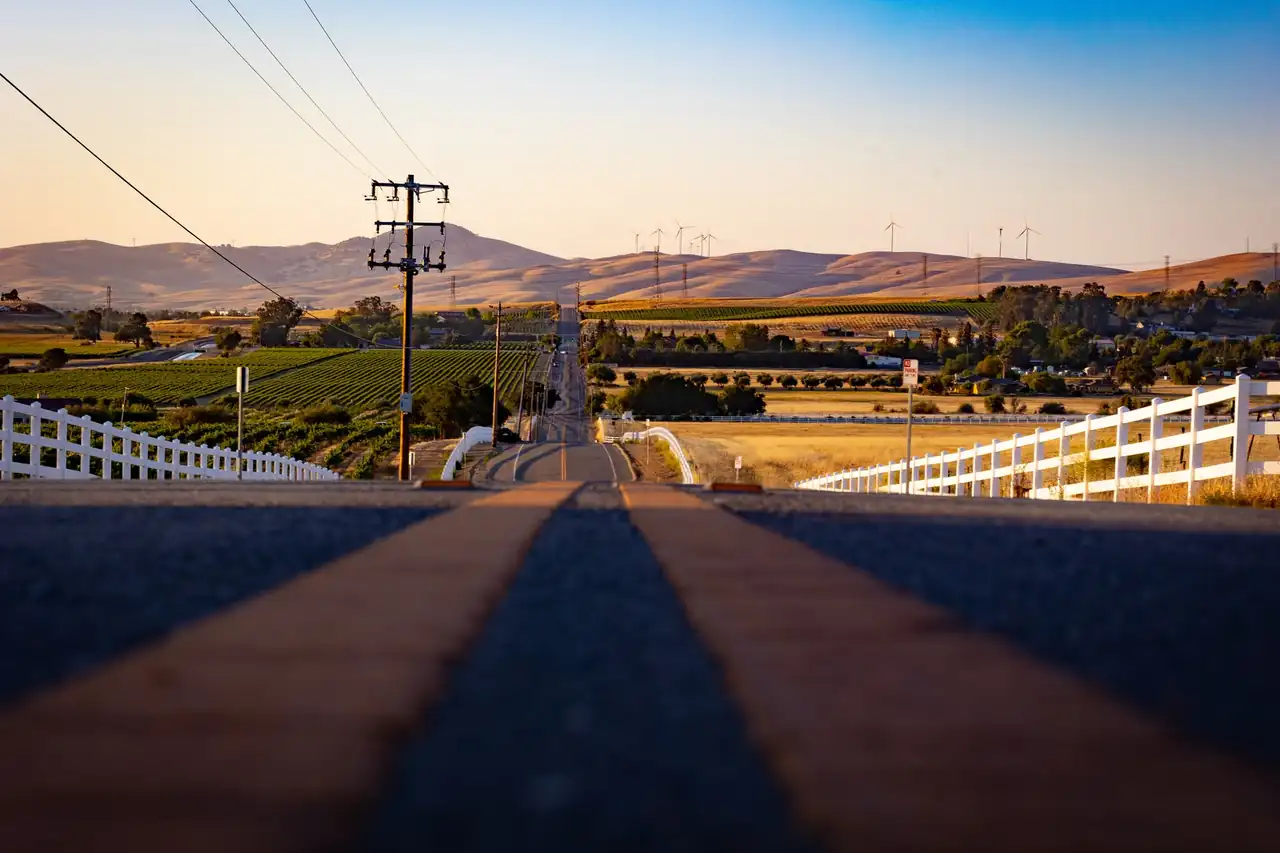
The 2027 marathon in Santa Rosa has a confirmed date of August 22, a Sunday, in this Northern California city. The event offers four distances: 5 kilometers, 10 kilometers, a half marathon and a marathon. Available listings place the race weekend on Saturday, August 21, and Sunday, August 22. The final schedule assigning each race to a day, along with start times, still needs edition-specific confirmation.
Its sporting appeal combines a course described as mostly flat with Sonoma County wine country and paths near Santa Rosa Creek. However, several details remain unverified for this edition, including the start time, registration fee and final route. The exact start and finish locations cannot be treated as settled either: available descriptions mix different downtown sites with information from other seasons.
For a runner traveling from Spain, that distinction matters as much as the date. The calendar places the race in summer 2027, but it does not automatically make every detail in international directories definitive. A marathon involves months of preparation and an expensive trip. Separating confirmed information from provisional details helps avoid planning around a start time, hotel location or service that ultimately does not apply to this edition.
Santa Rosa is in Sonoma County, California, in the United States. Vineyards are central to its identity, although the running experience extends beyond rural scenery. Available descriptions connect downtown streets, green corridors and areas west of the city. That contrast between urban surroundings and agricultural landscapes sets the event apart from a major metropolitan marathon dominated by avenues and buildings from start to finish.
Sunday, August 22, is the confirmed marathon date. The wider event is listed for August 21 and 22, but that window alone does not establish which distance takes place on which day. Some descriptions put the 5K and 10K on Saturday and the longer races on Sunday while discussing another edition. That schedule cannot automatically be carried over to 2027 without a program covering the actual year of participation.
The four distances support very different sporting goals. The marathon covers 42.195 kilometers and the half marathon 21.0975 kilometers; the other two races are 10 and 5 kilometers. Being part of the same event does not mean sharing a course, start time, aid stations or preparation requirements. A group traveling together may find a suitable distance for each person, but will need to check how their individual schedules fit together.
The 5K offers a shorter race, but it is not necessarily an easy outing: experienced runners can also race it hard. The 10K increases the challenge of holding pace, while the half marathon requires a more sustained management of effort. Over 42.195 kilometers, endurance and race-day fueling take on an importance that cannot be inferred simply from performing well over a shorter distance.
Registration is one area where there is still no sufficiently supported price for 2027. One directory advertises entry from $114, but that figure does not reliably establish the distance, pricing tier or possible additional charges. It therefore cannot be presented as a confirmed marathon fee. The supplied information also does not reliably establish registration opening or closing dates, or whether any distance has sold out for this edition.
The relevant expense extends beyond the advertised cost of a race entry. An international trip also involves accommodation, flights, transfers and the change or cancellation terms attached to each booking. For race registration, refund policies, distance changes and entry transfers remain unverified. A confirmed race date does not establish that registration is open or that any of those options will be available.
Santa Rosa’s sporting reputation is that of a road marathon well suited to maintaining a steady pace. The references agree that the route is predominantly flat, but differ when quantifying elevation gain. One gives 100 meters of total climbing; another lists 416 feet, approximately 127 meters. Without an official 2027 elevation profile, neither figure should be treated as the definitive measurement for the next edition.
Likewise, similar starting and finishing elevations do not prove that every kilometer is flat. Small rises, turns, surface changes and narrow sections can affect effort too. Their impact accumulates over a marathon: a slight undulation may pass unnoticed early on and become more apparent much later. A description of a fast course is useful context, not a guarantee of a personal best or an indication that every section is equally straightforward.
Santa Rosa Creek and Prince Memorial Greenway appear repeatedly in descriptions of the route. These green corridors provide a transition between downtown and the more open areas west of Santa Rosa. Water, vegetation and paths contribute to the race’s visual character, but the edition-specific course map will be the decisive document for identifying which sections are used, in which direction and with which access points.
The references also highlight DeLoach Vineyards and a passage through its barrel room, an unusual feature for a road marathon. That detail explains much of the personality associated with the event: wine-country scenery is not simply a distant backdrop. Even so, the winery passage should not be assumed to feature in 2027 until it appears on a confirmed course for that edition.
Conflicting descriptions of the start and finish are particularly important. Available information names Juilliard Park, Old Courthouse Square and the Sonoma County fairgrounds area. These are not interchangeable locations and do not establish a single reliable address. The exact venue remains unverified for 2027, so it would also be premature to calculate a walking distance from a hotel using any one of those references as definitive.
Surface descriptions require similar caution. The race is presented as a road event, but one account mentions paved paths alongside natural and gravel sections. Without an updated map, it is impossible to establish which of those descriptions still applies. Shoe selection depends on the surface actually being used, not just the event’s broad classification: stability over an uneven stretch can matter as much as a shoe’s response on smooth pavement.
One of the main sporting attractions is the race’s connection with Boston Marathon qualification. Several references identify Santa Rosa as having a USATF-certified course that can be used to pursue a qualifying time. That status needs to be checked for the route raced in 2027. Course certification establishes measured distance; it does not, by itself, guarantee subsequent acceptance into Boston.
Whether a result can be used also depends on the qualifying window and the Boston Athletic Association’s rules for the intended Boston edition. Age and the relevant category form part of that assessment. Moreover, meeting the qualifying standard does not guarantee entry: it allows a runner to apply under the applicable rules. The information available here does not support attaching a specific Boston qualifying-time table to Santa Rosa’s 2027 race.
Race planning should not rely on a time limit borrowed from another season either. One reference mentions six hours to finish the marathon, but does not explicitly verify that limit for 2027. If the limit ultimately is six hours, the required average would be approximately 8 minutes and 32 seconds per kilometer, including stops. That calculation is illustrative only and does not replace confirmation of intermediate cutoffs or the official overall limit.
Weather is another factor that can change the experience without altering a single meter of the course. Descriptions place the event in a late-summer setting where a cool morning may be followed by rising temperatures. This far ahead, there is no useful weather forecast for that particular Sunday. A climate range published in a directory is not equivalent to the temperature each runner will encounter while taking part.
Time on the course changes exposure: runners who remain out longer may experience different conditions from those faced by the earliest finishers. A shaded section does not represent the entire route either, particularly when moving from a green corridor into an open area. In that setting, sustainable pace depends on the day’s conditions, as well as previous training and the course’s general characteristics.
Hydration needs to reflect those actual conditions too. Excessive drinking is not automatic protection, while improvising a strategy on race day is unhelpful. Knowing the aid-station layout will allow runners to relate the availability of water and other drinks to their expected time on the course. At present, no confirmed aid-station layout is available for 2027, nor are there specific products that can safely be assumed to appear at each station.
For the full marathon, fueling on the course deserves attention separately from water intake. Gels, drinks or foods should have been tested in comparable training sessions to establish tolerance. No universal plan can be assigned to every participant merely from the name of the race. The important principle is avoiding untested choices on race day and not relying on products whose availability at aid stations has yet to be verified.
For runners from Spain’s Valencian Community, summer brings a familiar context: training in heat and racing in August require attention to conditions, not just the pace displayed on a watch. However, running in Valencia on warm days does not necessarily reproduce Sonoma’s environment. Temperature, humidity and sun exposure may combine differently, while travel fatigue adds another variable that does not appear on the course profile.
The time difference also matters for an early start, although the actual starting time is not yet confirmed. In August, under current time-zone rules, mainland Spain is nine hours ahead of California. At 7 a.m. in Santa Rosa, it is 4 p.m. in Valencia. This is an illustrative conversion, not an announcement of the start time: the reference listing 7 a.m. also gives a date different from the confirmed race date.
That difference is not resolved simply by sleeping longer the night before. The body arrives with sleep, meal and activity patterns linked to another time zone. A rushed trip can combine flight fatigue with race packet collection and final preparations. Allowing time before the event therefore has practical value, although adjustment varies between individuals and no precise number of days can be promised to work for everyone.
Santa Rosa is not San Francisco, even though both cities feature in the broader tourist image of Northern California. Choosing an airport and accommodation requires considering the onward ground journey to Sonoma County. The supplied information does not establish transfer times, and traffic can change the experience. Proximity on a map is no substitute for checking the journey, particularly when arrival coincides with a race weekend.
Staying downtown may make some arrangements easier, but it does not yet mean sleeping close to the start. The practical value of a booking depends on the final event location and access arrangements. Verified details of parking, road closures and any dedicated transport are also missing. Services should not be assumed to include buses, shuttles or reserved parking spaces that have not been confirmed for this edition.
Race packet collection deserves its own place in travel planning. No specific venue, dates or opening hours have been supplied for 2027, so Sunday collection or pickup by another person cannot be guaranteed. This matters particularly to runners arriving on Saturday. Unconfirmed collection arrangements can affect which flights are suitable, how much time is needed and whether several distances follow the same procedure.
The exact contents of the entry package also remain to be established. Some descriptions mention a medal, a finisher jacket and a bottle of wine for marathon finishers; others highlight a post-race celebration downtown. These features appear in information about the event, but they are not confirmed 2027 inclusions. A specific garment, drink or gift should not be promised solely on the basis of material describing other seasons.
The connection with wine adds tourism appeal, not a recommendation to drink alcohol after running. Following a long effort, recovery starts with attending to physical condition, resting and replenishing fluids and food appropriately. A celebration can contribute to the atmosphere without becoming the focus of the sporting experience. A food-and-drink attraction does not replace a runner’s basic needs or change the usual precautions after a marathon.
The references describe a regional-scale event, with a broad estimate of between 1,000 and 5,000 participants. That range does not establish the 2027 capacity or the number expected in each distance. Nor does it demonstrate ample room in every start corral or an absence of congestion. The published field size is indicative; the experience will depend on staggered starts, course width and the actual organization of that edition.
Preparation should reflect the chosen distance and previous experience. For someone accustomed to 10K races, moving up to a marathon is not simply a matter of extending a few runs. Accumulated mileage, long runs, rest and the ability to tolerate several hours of running change the demands. A shorter distance is also a complete goal, without needing to turn the trip into a commitment to 42.195 kilometers.
Runners chasing a time may find the predominantly flat profile attractive, but the decision requires more than that description. Course certification, weather conditions, recovery from travel and training all need to align. For those focused on finishing, time limits and available support matter too. The same course supports different goals, none of which should be built around unknown details or assumed services borrowed from another edition.
The event offers a clear date and a recognizable setting: on August 22, 2027, Santa Rosa will bring running and wine-country scenery together in Northern California. Four distances broaden participation options; start times, fees and the final map will complete the picture once verified. Its appeal lies in that combination of city streets, green paths and vineyards, with one essential condition for any sporting trip: plan around edition-specific information, not a mixture of seasons.
You may also like: Santa Rosa Marathon 2026: complete race guide.
Where to stay in Santa Rosa
Hotels available 20–23 August 2027.
Affiliate links: if you book through this map we earn a commission, at no extra cost to you.



How to prevent thigh chafing: causes and real solutions

Women’s running windbreakers: seven jackets and how to choose

Do more workouts get rid of soreness? A guide for runners

Jaén Half Marathon 2026: Record 3,800 Runners Registered

Men’s short running tights: how to choose the right pair

World Triathlon confirms data breach involving medical data

Izan Edo targets podium at Miyazaki World Cup

María Pérez ranks ninth in World Athletics’ 2026 top ten

Dos Santos, Duplantis and Sawe: World Athlete of the Year finalists

San Silvestre Vallecana 2026: 42,000 places, prices and start times

 Races3 months ago
Valencia Half Marathon 2027: date and registration

 Races3 months ago
Valencia Marathon 2026: entry, ballot and course

 Reviews and Comparisons4 months ago
Asics Gel-Roadmiles 3 for men: review and current price

 Reviews and Comparisons4 months ago
Asics Gel Sonoma 8 Gore-Tex: complete analysis for trail and rain

 Sneakers3 months ago
Saucony Endorphin Pro 4: full review and verdict

 News5 months ago
Strava API 2026: what changes for clubs, challenges and runner apps?

 Reviews and Comparisons5 months ago
Nike Alphafly 3: opinions, sensations, and real key points

 Reviews and Comparisons4 months ago
Under Armour running shoes review 2025-2026: models and key features

 Sports Equipment4 months ago
Shoe sizes in cm: a clear guide to getting the right fit for your footwear

 Sneakers3 months ago
Skechers GO RUN Consistent 2.0 analysis: comfort and limits

 News5 months ago
Valencia Marathon 2026 route: key tips to train and run better

 Sneakers4 months ago
Adidas Adizero Boston 13 for men: review and verdict