Races
Santander Half Marathon 2026: route, times, and key details
Santander summons runners on May 10 with 21, 10, and 5 kilometers, start at Pereda and a seaside atmosphere.

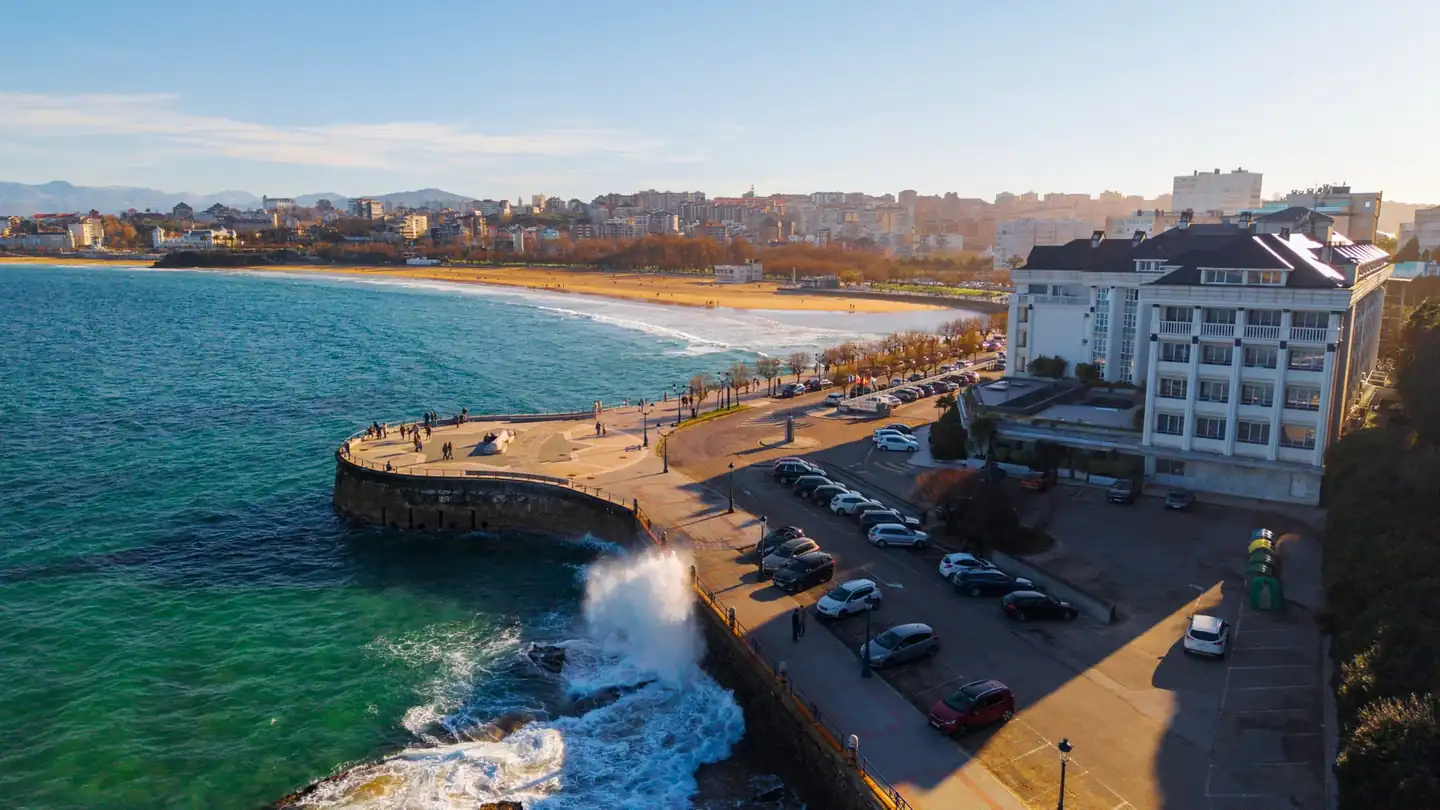
On May 10, 2026, Santander will once again put asphalt, the bay, and the city’s pulse at the service of running. The event will feature three distances —21.097 kilometers, 10 kilometers, and 5 kilometers— with the start and finish at Paseo Pereda, a setting that combines openness, sea views, and a course designed for fast running without losing the urban spirit that gives the race its meaning.
The event comes with the ambition of a major popular race: 1,500 bibs for the half marathon in some organizational references, a maximum time of 2 hours and 15 minutes to complete the main course, and a package of services that includes refreshments, baggage storage, changing rooms, showers, medical service, and pacers for several target times. The result is a race that is not just about the distance, but about the logistics of a big, orderly event that is very runner-oriented.
A race that turns the seafront promenade into a sporting hub
The start from Paseo Pereda is no minor detail. That setting defines the character of the race from the very first meter: an elegant urban frontage, the bay in the background, and a feeling of an open, clean race, without the noise of the great inner-city avenues. It is the kind of course that tends to attract both those looking for a personal best and those who want to enjoy the city at running pace.
The calendar places the race on a date already well established in spring, when Cantabria’s light usually works in the runner’s favor. In that context, Santander offers a very recognizable race profile: streets with public turnout, wide stretches, and an organization focused on the overall experience, not just the stopwatch. The half marathon remains the flagship distance, but the 10K and the 5K broaden the range and turn the day into an athletic celebration accessible to very different profiles.
The choice of an urban, coastal course also has a practical side. For many runners, the sea acts as a visual metronome: it creates space, organizes the landscape, and reduces the feeling of confinement that more demanding or narrower races sometimes produce. In Santander, that combination of openness and city center can be especially appealing for anyone seeking a fast race, although it is always worth remembering that a half marathon is still a half marathon: a sustained effort, where the apparent smoothness of the surroundings does not replace pace management.
Distances for different profiles and the same starting atmosphere
The offer of 21K, 10K, and 5K means the day is not reserved for specialists. The half marathon retains the classic appeal of the distance, with its 21,097 meters and the demand of maintaining intensity for more than an hour for most participants. The 10K is presented as an intermediate option for those who want to compete without entering the harsher territory of the half, while the 5K opens the door to recreational runners, first-timers, and participants who prefer a shorter experience.
This distribution of distances usually creates a very typical scene in modern urban races: groups with different ambitions sharing the same city, the same start arch, and the same kind of emotional fueling. The race grows when it diversifies, because it turns a single event into several parallel experiences. For the organizers, it also means a morning filled with continuous movement and the event remaining present in the streets and squares for longer.
In the half marathon, the reference data point to a pace designed for specific goals. Pacers have been announced for 1:25, 1:30, 1:35, 1:40, 1:45, 1:50, and 1:55 in some organizational and reference sources, a clear sign that the race wants to attract runners who are not content with simply finishing, but are chasing a precise time. Pacers are more than just company: they work as a guide to collective discipline, a small human convoy that orders the effort and prevents starts that are too fast.
Registration, spots, and the real value of signing up early
Registration opens on March 9, 2026 and remains available until May 7 at 11:59 p.m., or until bibs run out. In the sources consulted, the half marathon price falls within a range of 20 to 30 euros, although it is always advisable to read the official communication to verify the exact tier depending on the registration date. In races of this kind, the fee does not only pay for the bib: it also funds timing, aid stations, signage, support staff, and the structure that allows thousands of people to run safely.
Availability of spots sets the pace of demand. A race with a limited field tends to see registrations surge as the date approaches, especially when the course is known to be fast or when the city has obvious tourist appeal. Registering early is not just a matter of price; it also means securing a place in a race that may sell out before the official closing, something common in urban events with a strong reputation.
Another important aspect is the minimum age. Some descriptions of the race indicate that anyone, licensed or not, may participate, provided they are 18 years old on race day in the half marathon distance. This detail defines the profile of the main race: an open competition, yes, but not one intended for minors or last-minute improvisation. In road running, the half marathon remains a serious test of physical maturity.
Runner logistics: bibs, race pack, and services
Pick-up of the bib and official shirt is centralized at Plaza Porticada, with a Saturday, May 9 schedule from 11:00 a.m. to 8:00 p.m. and Sunday, May 10 from 8:00 a.m. to 9:30 a.m., according to the available references. That time window requires calm planning, especially for those arriving from outside the city. In well-organized urban races, the bib is not a minor formality: it is the first act of the day, the transition between normal life and the race.
The organization has also indicated the need to present the receipt or a copy of the registration along with an identity document. If a third party collects the packet, authorization and a photocopy of the registrant’s ID are required. These are simple but decisive requirements, because they prevent last-minute incidents and speed up a process that, in large events, can become a bottleneck if it is not properly organized.
The runner’s pack includes a technical shirt and, in some references, a gym sack or lightweight bag. The set fits the current trend of many urban races, which opt for a useful keepsake rather than a purely decorative item. Added to this are services that are now almost indispensable in an established race: liquid refreshment, timing, baggage storage, changing rooms, showers, toilets, and medical support. The quality of a race is also measured by these invisible details, by everything that is barely noticed when things go well, but that sustains the experience when something becomes complicated.
Course, signage, and race pace
The course is certified by the Spanish Athletics Federation in some descriptions of the event, although other sources describe it as uncertified; this difference invites checking the specific rules for the edition before setting pace goals. In any case, the overall profile points to an urban route through some of Santander’s most recognizable spots, with kilometer markers and liquid aid stations distributed לאורך the distance.
For the recreational runner, kilometer signage is almost as important as the finish arch. Knowing where you are, how much is left, and when to take a gel or ease the pace changes the perception of the race. In a half marathon, the course stops being a map and becomes a continuous conversation with effort. The information boards make no noise, but they organize your head.
The presence of six or seven pacers, depending on the source, points to a course geared toward steady pacing. In a city open to the sea, with long stretches and wide areas, that kind of support is especially useful for anyone chasing a specific time. It also helps prevent the race from becoming a sequence of sudden speed changes, something that usually hurts more than helps in the second half of a half marathon.
The 2 hour and 15 minute cutoff for finishing the half marathon sets a reasonable boundary for a popular race with competitive aspirations. It is not an extreme margin, but it is enough to organize the field and ensure that the street operation does not last longer than expected. In a lively city, the runner’s time and urban traffic time must coexist, and the organization resolves that with a clear time window.
Prizes, categories, and the sporting weight of the standings
The competitive side is not limited to crossing the finish line. According to the reference information, the race awards trophies to the top three male and female finishers in each category. These are joined by divisions such as overall, Cantabrian men and women, and masters A, B, and C, with age brackets from 40 to 49, 50 to 59, and 60 and over. This segmentation allows the event to recognize different performance levels within the same day.
Categories matter because they keep the race from revolving solely around the elite overall field. In popular events, the age-group podium has enormous symbolic value: it reminds us that competition is not exhausted by the fastest names, but also celebrates consistency, continuity, and the ability to keep running well over the years. The half marathon is a distance sport, but also a sport of permanence.
In races like this, the standings are often as important as the finisher’s diploma. A few days after the race, the runner can download their time certificate from the official website, while finish-line videos are published the next day, provided the organization has that material. These are now almost standard elements in urban races, but they still have practical and emotional value. The diploma certifies; the finish tells the story.
What kind of runner will feel at home in Santander
The Santander Half Marathon is especially well suited to those looking for a road race in a pleasant setting without giving up sporting demand. It is not an isolated race in the middle of a harsh landscape, nor is it an event aimed only at the elite. It is, rather, a city event: accessible in its concept, serious in its logistics, and attractive enough to draw runners of different profiles.
It is also a good choice for those who enjoy routes where the surroundings help sustain the effort. Running by the sea, in a manageable capital with a recognizable center, changes the perception of each kilometer. The landscape does not do the work for the runner, but it does provide reference points. The bay acts as a horizon line, a stable backdrop in a race where the body, after a certain point, starts questioning everything.
For the regular participant, the race offers a complete package: a serious distance, a good atmosphere, pacing options, and sufficient services. For the half marathon debutant, it demands respect for race time but does not overwhelm with an overly technical design. That balance is a big part of its appeal. The races that stay on the calendar are usually the ones that know how to mix challenge and enjoyment, and Santander seems to sit precisely on that line.
A date that consolidates Santander on the urban running map
The race has steadily established itself as a reference on the Cantabrian calendar and as an event of interest in northern Spain. Its combination of a coastal route, runner services, and distance offerings places it in a category that goes beyond a mere local race. It is an event with its own personality, one of those that need no embellishment to explain themselves.
In a spring season full of races, the distinguishing value usually lies in the sum of small factors: an inviting city center, clear organization, well-defined schedules, orderly bib pickup, and a course that allows you to run with intent. Santander brings several of those ingredients together. And when they come together, the experience stops being only sporting and becomes also a way of reading the city.
The half marathon, the 10K, and the 5K share the same framework and, at the same time, tell different stories. Some will chase a time, others will seek training mileage, and others will simply enjoy taking part. That diversity explains why urban races still have so much strength: in the same sunrise, ambition, passion, and the simple pleasure of going out to run by the sea can all coexist. In Santander, all of that unfolds on the same course and under the same light.
That is why the event is understood not just as a date on the calendar, but as a complete scene of Spanish running. An open city, a start on the promenade, a human tide finding its rhythm, and a finish line that arrives with the smell of salt air and well-managed effort. Few images better capture what the recreational runner is still looking for: a well-run race, a city that supports it, and a distance that still carries prestige.



How to prevent thigh chafing: causes and real solutions

Women’s running windbreakers: seven jackets and how to choose

Do more workouts get rid of soreness? A guide for runners

Jaén Half Marathon 2026: Record 3,800 Runners Registered

Men’s short running tights: how to choose the right pair

World Triathlon confirms data breach involving medical data

Izan Edo targets podium at Miyazaki World Cup

María Pérez ranks ninth in World Athletics’ 2026 top ten

Dos Santos, Duplantis and Sawe: World Athlete of the Year finalists

San Silvestre Vallecana 2026: 42,000 places, prices and start times

 Races3 months ago
Valencia Half Marathon 2027: date and registration

 Races3 months ago
Valencia Marathon 2026: entry, ballot and course

 Reviews and Comparisons4 months ago
Asics Gel-Roadmiles 3 for men: review and current price

 Reviews and Comparisons4 months ago
Asics Gel Sonoma 8 Gore-Tex: complete analysis for trail and rain

 Sneakers3 months ago
Saucony Endorphin Pro 4: full review and verdict

 News5 months ago
Strava API 2026: what changes for clubs, challenges and runner apps?

 Reviews and Comparisons5 months ago
Nike Alphafly 3: opinions, sensations, and real key points

 Reviews and Comparisons4 months ago
Under Armour running shoes review 2025-2026: models and key features

 Sports Equipment4 months ago
Shoe sizes in cm: a clear guide to getting the right fit for your footwear

 Sneakers3 months ago
Skechers GO RUN Consistent 2.0 analysis: comfort and limits

 News5 months ago
Valencia Marathon 2026 route: key tips to train and run better

 Sneakers4 months ago
Adidas Adizero Boston 13 for men: review and verdict