Races
Segovia Half Marathon 2026: date, route, and key details
The Segovian race returns with a monumental route, a tough profile, and a start at the Aqueduct.

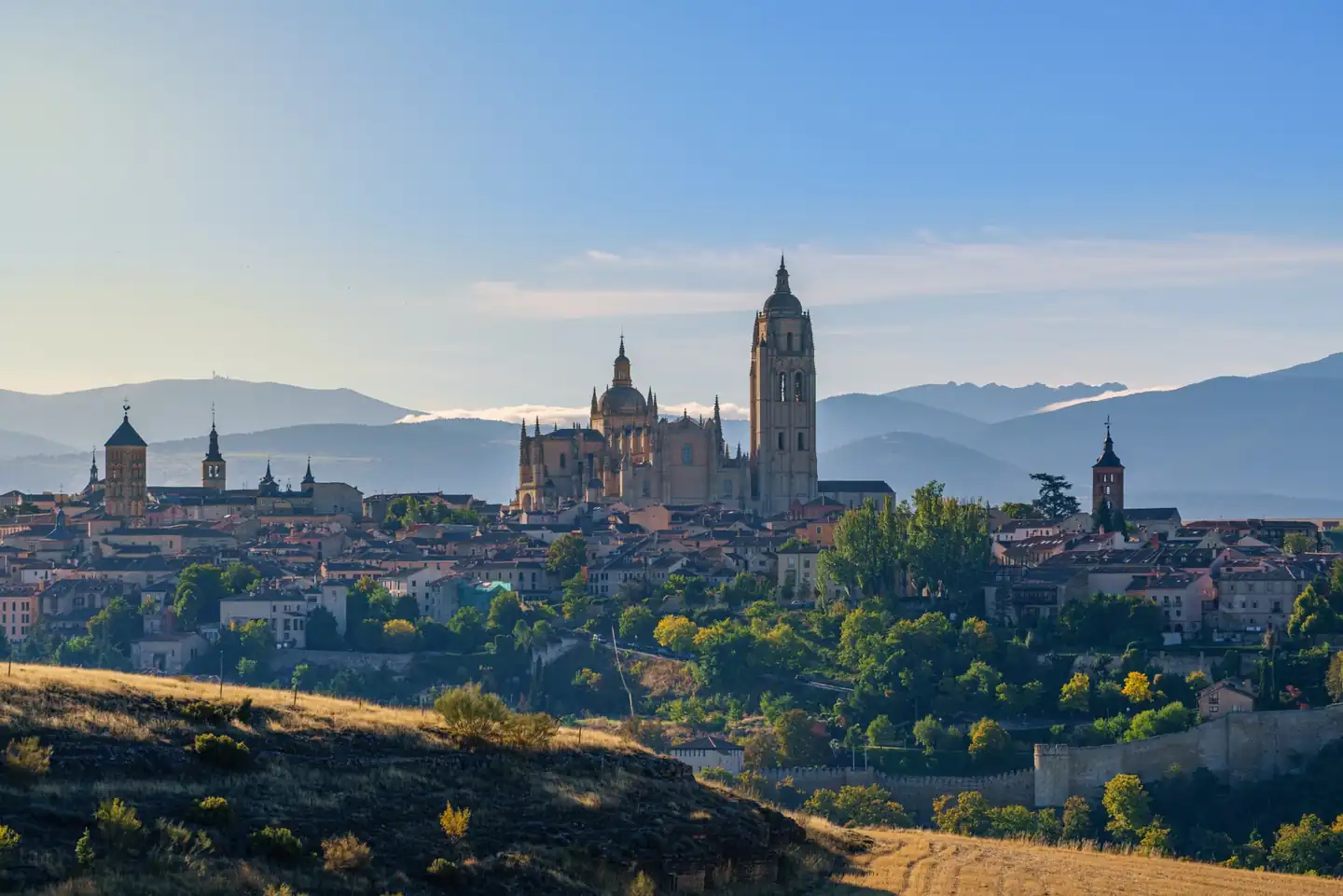
Segovia will once again measure its sporting pulse on March 28, 2026 with a half marathon that is already part of the Spanish popular race calendar. The event, associated with Cajaviva, is run on asphalt and starts and finishes on Avenida del Acueducto, a setting that sums up its character well: monumental, central, and with a demand that does not hide the hills.
The race has established itself as one of the most recognizable in Castilla y León because it combines heritage, toughness, and the atmosphere of a big city in popular race format. It is not a course for looking for a flat pace with no surprises; rather, it is a route that forces you to manage your effort, read the gradients well, and accept that Segovia is run with your head as much as with your legs.
A race marked by the urban landscape and the incline
The route is one of the great defining features of this half marathon. The organization describes it as an urban and monumental course, with the seal of a city declared a World Heritage Site. That means the runner is not moving only through streets: they are crossing a setting of stone, arches, wide avenues, and historic corners that turn every kilometer into a moving postcard.
The profile is rolling and demands more than just endurance. The source consulted describes it as hilly, a word that here should be translated without embellishment: there is elevation gain, there are changes of pace, and there are stretches where it is wise to keep something in reserve. That detail affects strategy a lot, because an eager pace in the first kilometers can end up costing dearly when the route starts showing its teeth.
The start and finish are set on Avenida del Acueducto, one of the city’s most recognizable places. Running there has obvious symbolic value, but also practical value: it concentrates the atmosphere, organizes access, and makes it clear from the very first meter that this race belongs to Segovia just as much as Segovia belongs to the race.
Date, location, and an edition designed for the general public
The 2026 edition takes place on Saturday, March 28 in Segovia, a date that places the race in the early part of spring, when the weather can be pleasant but not necessarily predictable. In Castilla y León, that calendar invites you to wear light clothing, yes, though without losing sight of the fact that mornings are still cool and that the wind can matter more than it seems in an open, elevated city.
The fact that it is held on a Saturday makes logistics easier for many participants, especially those traveling from outside. It also helps the city center maintain an event atmosphere throughout the day, with runners, companions, and curious onlookers sharing sidewalks and cheering points. That social component is part of the race’s charm: it is not just about running, but about inhabiting the city for a few hours from another angle.
Registration is presented as an experience for athletes of different levels, although the course profile requires a minimum of realistic preparation. It is not a race to improvise. Those who take it seriously find an appealing challenge; those who underestimate it will probably end up negotiating every incline as if it were a small mountain pass climb.
What the organization offers the runner
Beyond the route, the race stands out for a fairly complete package of services. Registration includes finisher medal, event T-shirt, disposable chip, medical assistance, aid stations, bag drop, toilets, and photo service. Drink and nutrition stations are also provided, along with massage and showers according to the available reference information.
That kind of service is not just decoration. In a half marathon with elevation gain and several demanding sections, water stations and medical support are part of the participant’s real safety. Aid stations help sustain the effort when the terrain tightens and the body starts emptying its reserves. In a race like this, logistics weighs almost as much as the clock.
Bib and runner’s bag collection takes place at the runner expo in the days before the race, not on race day. To collect the bib, you must present the registration receipt and an ID document. If someone else picks it up, they must provide authorization and a copy of the bib holder’s ID. Practical details, yes, but in a race like this they save queues, doubts, and last-minute time-trial sprints.
The course and what it is worth reading between the lines
The exact map of the course is not always easy to sum up in a single detail, but the available information makes it clear that this is a road race, a single loop, passing through urban and monumental landmarks. The start and finish at the Aqueduct already suggest a recognizable geometry: an itinerary that opens and closes in the heart of the city and seeks to show the most emblematic sights without losing its competitive character.
There is an important aspect that often goes unnoticed in urban half marathons: the beauty of the surroundings does not reduce the difficulty. In fact, sometimes it increases it, because runners get carried away by the historic setting and later pay for the uphill meters or the stretches of turns and gradient changes. Segovia is not run like a flat asphalt loop beside a river; it is run with ups and downs, with views, and with tension-filled bends.
The race has split-time checks at intermediate kilometers and a cutoff zone of around 3 hours. That detail defines its character as a city event compatible with urban mobility and also sets the margin for those planning to finish without trouble. The back-of-the-pack pace is around 8 minutes per kilometer, a useful reference for knowing whether the race fits each runner’s current shape.
Services, safety, and rules that keep the race in order
The organization provides medical assistance at the start, at several points along the course, and at the finish, as well as an emergency service at the back of the race. There are also portable toilets in the start and finish area, and along the route. Safety is not left to chance, something especially relevant in a half marathon that shares space with the city’s everyday life.
Accompaniment by bicycle, motorcycle, skates, or other wheeled devices is not allowed. Running without a visible bib is also not permitted. These are common rules in large urban races, but they are worth remembering because they affect the event’s development and everyone’s safety. In a course closed to traffic for the occasion, organizational discipline is what allows the celebration to work.
Runners may use a GPS watch or smartwatch without issue, and the organization does not recommend the use of headphones for attention and safety reasons. That combination describes the race’s logic well: technology yes, total disconnection no. The runner can measure, compare, and adjust, but must still pay attention to instructions, crossings, and signage.
Bibs, bags, and the small bureaucracy of running well
Bib collection has its own schedule and, as usually happens in events of this size, requires planning ahead. The registration QR code and an ID document are required. The runner’s bag is handed out together with the bib and contains an event T-shirt and various sponsor gifts. The organization makes it clear that the size cannot be guaranteed, because production is closed before the registration period ends.
There is also a bag drop service, always subject to authorization from the competent authorities. It operates in the start and finish area, and the bag is identified with a numbered tag linked to the bib. They are simple mechanisms, almost invisible when everything flows, but essential so that thousands of participants can move around the Aqueduct area with some comfort.
If a runner cannot go to collect the bib, another person may do so with the correct documentation. It does not seem like much until you approach race day with the tension of travel, parking, and the clock working against you. The organization of a half marathon begins long before the starting gun, and these small procedures are part of the ritual.
Registration, categories, and the real costs of the race
The fee depends on the registration date and is divided into several tiers. The consulted reference places the price at 25, 30, 35, and 40 euros depending on the date, with late expo registration at 100 euros. There is also a reserved quota with a 50% reduction for athletes with disabilities and for some cases of financial hardship or prolonged unemployment, as well as a reserve option for clubs.
The competitive section includes age categories from under 20 to masters 70, as well as overall men’s and women’s classifications and specific divisions for wheelchair athletes and athletes with physical or intellectual disabilities. It is a broad structure, designed to accommodate very different profiles, something consistent with a large popular race with an inclusive vocation.
Registration is personal and non-transferable unless a cancellation guarantee has been purchased in advance. That guarantee costs 4 euros and allows a full refund or transfer to the next edition before certain dates. It is not a minor detail, because the race calendar changes frequently and administrative flexibility has become a real value for the popular runner.
Pacers, paces, and the role of strategy
The half marathon has pacers for several target times: 1:30, 1:40, 1:50, 2:00, and 2:10. The presence of pacers says a lot about the kind of event it is: a race that is not content with simply gathering participants, but tries to organize the competition around useful references for finishing with a specific split.
On a course with elevation gain, those references help, but they do not replace reading the terrain. A runner may feel comfortable with a certain time on flat ground and find themselves drained in Segovia if they do not control the climbs. That is why the presence of pacers is especially valuable here: they not only set a pace, they also serve as an emotional anchor when the body starts negotiating.
The intermediate check and timing points reinforce that logic. Anyone looking for a personal best will need to understand that in Segovia strategy matters as much as fitness. Going out too fast is paid back with interest; holding back too much can leave the feeling that there was more in the legs. Balance, in this race, is like walking across an old stone bridge: any excess is noticeable.
A race that blends tourism, memory, and sport
Segovia has something many race cities would love to have: a historic center capable of turning a half marathon into a continuous visual experience. The Aqueduct, the wide avenues, the weight of the stone, and the feeling of running in a city that does not need a backdrop create a very recognizable setting. The race does not sell only kilometers; it also sells a way of seeing the city from the stride.
That tourist value, however, should not hide the competitive character. The race remains a half marathon with real demands, cutoff times, regulated services, and logistical planning that leaves no room for improvisation. The contrast between postcard and effort is part of its charm: while the visitor looks, the runner calculates, breathes, and moves forward.
The 2026 edition reinforces that mix of sporting event and urban celebration. The appeal of the date, the monumental setting, and the breadth of services point to a race designed for a wide audience, but with a very marked identity. In Segovia, running 21.097 kilometers is not just adding distance; it is letting the city pass by like a ribbon of stone, history, and incline.
What truly defines the Segovian half marathon
There are races remembered for the final time and others remembered for the course. Segovia clearly belongs to the second group. Its personality comes from the route, the setting, and the elevation gain, but also from the well-built logistics, the start at the Aqueduct, and that feeling that for a few hours the runner enters a city that is reserved for them without ceasing to be a city.
That is why this half marathon keeps growing in interest within the national calendar. It does not compete only with other races for times or number of entrants; it competes for footprint, image, and experience. And there Segovia has an advantage that is hard to copy: few starting lines can boast of beginning and ending with such a powerful symbol behind them.
The final photo of the race, with effort written on the face and the golden stone of the Aqueduct behind, explains almost everything. It is an urban, historic, and demanding half marathon, one of those that you finish with tired legs and the feeling of having run inside a city that is not easily forgotten.



How to prevent thigh chafing: causes and real solutions

Women’s running windbreakers: seven jackets and how to choose

Do more workouts get rid of soreness? A guide for runners

Jaén Half Marathon 2026: Record 3,800 Runners Registered

Men’s short running tights: how to choose the right pair

World Triathlon confirms data breach involving medical data

Izan Edo targets podium at Miyazaki World Cup

María Pérez ranks ninth in World Athletics’ 2026 top ten

Dos Santos, Duplantis and Sawe: World Athlete of the Year finalists

San Silvestre Vallecana 2026: 42,000 places, prices and start times

 Races3 months ago
Valencia Half Marathon 2027: date and registration

 Reviews and Comparisons4 months ago
Asics Gel-Roadmiles 3 for men: review and current price

 Races3 months ago
Valencia Marathon 2026: entry, ballot and course

 Reviews and Comparisons4 months ago
Asics Gel Sonoma 8 Gore-Tex: complete analysis for trail and rain

 Sneakers3 months ago
Saucony Endorphin Pro 4: full review and verdict

 News5 months ago
Strava API 2026: what changes for clubs, challenges and runner apps?

 Reviews and Comparisons5 months ago
Nike Alphafly 3: opinions, sensations, and real key points

 Reviews and Comparisons4 months ago
Under Armour running shoes review 2025-2026: models and key features

 Sports Equipment4 months ago
Shoe sizes in cm: a clear guide to getting the right fit for your footwear

 Sneakers3 months ago
Skechers GO RUN Consistent 2.0 analysis: comfort and limits

 News5 months ago
Valencia Marathon 2026 route: key tips to train and run better

 Sneakers4 months ago
Adidas Adizero Boston 13 for men: review and verdict