Races
Complete results of the 2026 Seville Half Marathon
Results, records, and proper names from a historic edition in Seville, with a sprint victory and strong public turnout.

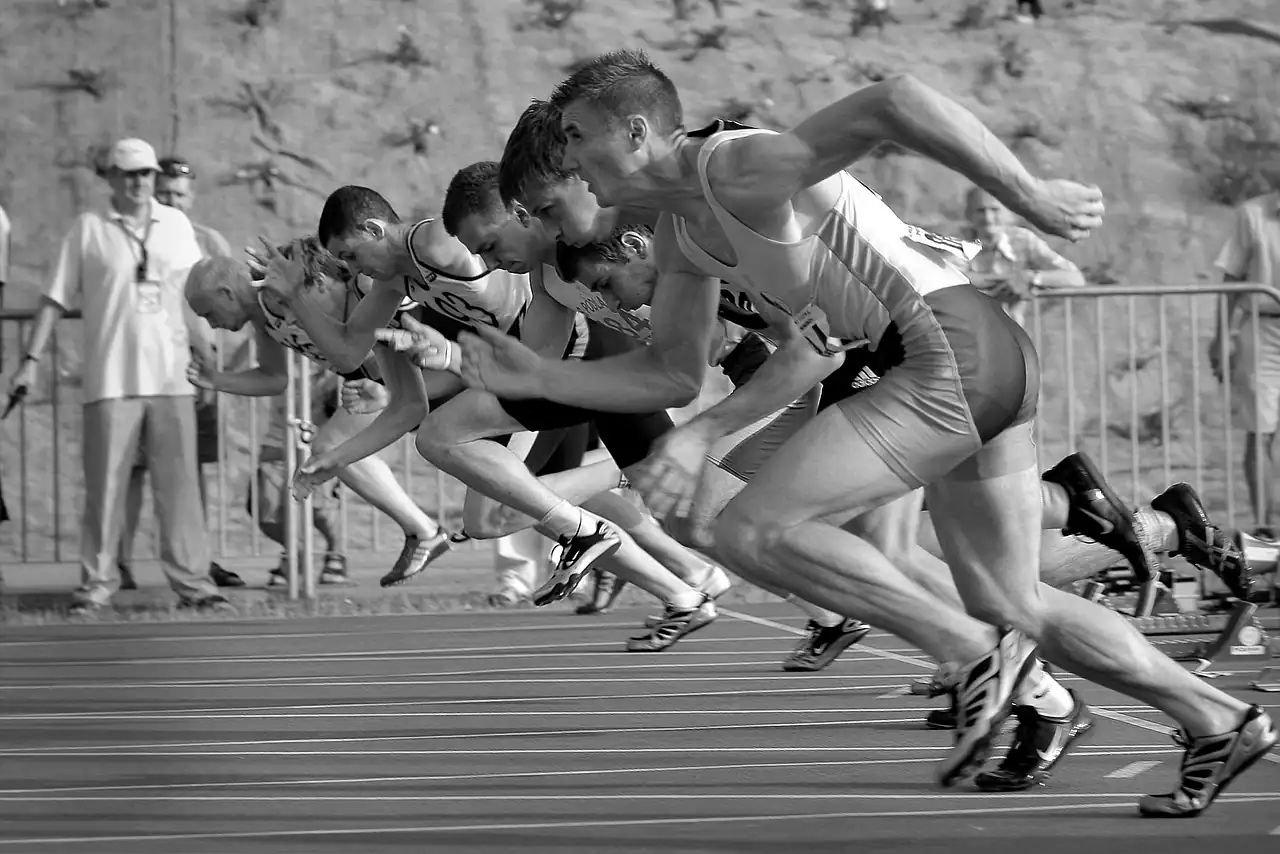
Imagen: morzaszum / Pixabay
The Seville Half Marathon 2026 left one lasting image in the background and another in the foreground: on one hand, a massive, fast, and very clean race competitively; on the other, a day of big performances, a women’s record, and a men’s finish decided in the very last meter. In a city that has already turned the 21,097 kilometers into a major calendar event, the standings told more than just a list of placings: they measured the pulse of a race that continues to grow in level, participation, and sporting ambition.
In the January 25 edition, with 20,000 registered runners and thousands of recreational runners on the streets, the race confirmed why Seville has earned a reputation for a fast course. The women’s victory went to Ethiopian Zeineba Yimer Worku, who stopped the clock at 1:06:33 and lowered the previous record convincingly. In the men’s race, Frenchman Emmanuel Roudolff prevailed in a thrilling finish with 1:00:24, just one second ahead of Kenyan Owen Korir Kapkama.
A record edition on the streets of Seville
The Seville race reached its 31st edition in 2026 and did so with a figure that helps explain the scale of the event: 20,000 participants took the start, a number that firmly establishes the Seville half marathon among the most important in Spain. It is not just about volume. The city offers a hard-to-match combination, with wide avenues, recognizable urban stretches, and weather that at this time of year usually provides better conditions than other winter European venues.
That context explains the large number of personal bests usually seen in the final results. Seville does not hand out fast times; it organizes them. The wave start, the flat course, and the openness of certain areas allow runners to find their rhythm very early, like a river stretching out without sudden turns. In a distance where every small change in gradient weighs like a stone in your pocket, that kind of course has strategic and symbolic value.
The 2026 edition also had a very visible social component. More than 6,000 women were on the start line, exceeding 32% of the total, and there were more than 3,000 foreign athletes from up to 90 nationalities. In running language, that speaks of an open, international race with the ability to attract very different profiles, from African and European elites to thousands of recreational runners looking to test themselves on a favorable stage.
The women’s victory and a record that changed the race’s scale
The performance of Zeineba Yimer Worku was the standout signature of the day. The Ethiopian ran with almost surgical authority and won in 1:06:33, taking nearly 45 seconds off the race record. Over a 21-kilometer distance, an improvement of that size is not a matter of chance. It speaks of a runner in top form, a well-planned race, and a course that allows long efforts to be sustained without punishing running mechanics.
Behind her, Kenyan Winnie Jepkogei was second in 1:07:45, also with a personal best, and Ethiopian Aminet Ahmed Abde completed the podium in 1:09:11. The women’s podium painted a very clear picture of the race today: high international level, tight gaps among the best, and a battle sustained at paces under 1 hour and 10 minutes, a barrier that is now the natural language of fast half marathons.
Beyond the podium, Spaniard Marta Galimany delivered an outstanding performance as the first national runner and fifth overall with 1:09:57, also a personal best. Her result adds an important layer: when a Spanish distance runner can get close to 1:10 at home, the race is not only attracting foreign elite athletes, but also offering a serious competitive setting for local athletics.
A men’s finish decided the old-fashioned way: a sprint
The men’s race had a different script, more tense and more open. Frenchman Emmanuel Roudolff won in 1:00:24 after a high-voltage final straight, just one second ahead of Owen Korir Kapkama, who was making his debut over the distance and crossed the line in 1:00:25. Third was fellow Kenyan Jonathan Kipkoech Kamosong with 1:00:33. In top-level races, one second can seem like a blink; in competition, it is a crack through which glory slips in.
That outcome confirms that Seville is not just a venue for solitary fast times. It can also become a tactical stage, with groups staying very close together until the decisive stretch. The winning time, under one hour and one minute, keeps the race in a strong competitive orbit, although in this edition the excitement was driven less by pace differences and more by the direct battle between runners capable of pushing to the limit in the final meters.
The fact that the runner-up was making his debut over the distance adds an interesting layer to the result. Strong debutants often bring uncertainty: sometimes endurance falls apart, sometimes the body responds with unexpected precision. In Seville, Korir Kapkama was one step away from turning his debut into victory, a sign that the race continues to be a magnet for elite runners who arrive with room to fight head-to-head.
The Spanish benchmark and the importance of national runners
Among the Spanish names, Roberto Alaiz became the first national finisher with 1:03:55, ninth overall. His result places him in a very respectable position within a high-level international field, and confirms that Spanish marks can also stand out clearly in such a selective race. In a race like this, being the best local runner is no small thing: it means sustaining the pace of a quality group on a course designed for speed.
Sevillian David Palacio debuted over the distance with 1:05:51, third Spanish runner behind Sergio Ortiz. The detail is of sporting and narrative interest, because half marathon debuts always require a fine balance between courage and restraint. Palacio’s result suggests a convincing adaptation to a distance that demands patience, economy, and a very particular ability to withstand fatigue without losing form.
In the classification narrative, the Spaniards were not merely decorative figures in the scene, but active parts of a race that left room for local athletes to compete honorably against a very sharp international elite. That balance between the front of the race and the national group is one of the elements that gives a half marathon the most value when its results are examined closely.
Wheelchair racing and the true breadth of competition
The race also featured a wheelchair category, where the victory went to Guzmán Martín Jiménez in 1:20:16. His presence in the standings is a reminder that a major running event is measured not only by elite times or the number of recreational runners, but by its ability to make space for other forms of competition, all with the same sporting dignity and the same symbolic weight at the finish line.
Including this category is not an incidental gesture. It is a way to broaden the event, to make visible another way of covering the 21,097 kilometers, and to reinforce the idea that a modern half marathon must be broader than the sum of the standing bibs. In Seville, that breadth existed alongside the huge wave of runners and an organization that already commands the language of major urban events.
The presence of different categories also helps explain why a complete classification matters so much. It is not just about knowing who won. It is about reading the full map of a day in which every time tells a different story: a personal best, a debut, a return to competition, or a battle against the clock in the final climbs of effort.
A race designed for speed, but also for sustained effort
One of Seville’s keys lies in its flat course, but reducing the race to that detail would be too simplistic. The new 2026 route reorganized the start and some city sections to improve early flow and better distribute runner traffic through the city. The wave start helped avoid bottlenecks in the first meters, something decisive when a mass of 20,000 participants sets off at once over a distance so sensitive to pace.
The revamped course also offered a more technical reading. By eliminating some traditional crossings and reorganizing the passage through iconic areas, the organizers sought to combine speed and comfort. That matters not only for the elite. Recreational runners, who often end up paying for sudden pace changes like climbing and descending stairs with tired legs, appreciate routes that let them stabilize their stride and find clear visual references.
That is why Seville’s standings are usually so dense with results. On tougher courses, the time curve opens up; here, by contrast, it compresses. Many recreational athletes find room to go under 1:30, 1:45, or even 2 hours, and that feeds the sense that the race functions as a kind of open-air performance lab, a long avenue where the solidity of weeks of training is put to the test.
Beyond the podium: the value of reading a complete classification
Half marathon standings are not just an inventory. In an event like Seville’s, they make it possible to measure the temperature of national and international distance running, detect the growth of women’s participation, and understand how the race is distributed among elite runners, advanced amateurs, and recreational participants. The fact that there were 13,633 finishers in 2025 already pointed to a massive structure; in 2026, the organizational and sporting leap reinforced that trend.
They also help read the evolution of average paces. In the previous edition, for example, hundreds of runners went under 1:20 and thousands finished below 2 hours. That kind of density is a sign of competitive health and course attractiveness. When a race concentrates so many strong performances, it not only gains prestige; it also becomes a reference for those comparing courses, traveling to race, or looking for an event that lets them make the most of their training.
In Seville, the appeal rests on a very specific mix: a monumental city, broad logistics, a fast course, and an organization capable of absorbing enormous participation without losing sight of the runner’s experience. The result is a race that produces elite headlines, but also leaves behind a huge mass of silent stories, the kind that appear only when you dig through the standings all the way to the last name.
What Seville leaves on the map of the Spanish half marathon
The 2026 edition confirms that Seville is already playing in the top tier of Spanish half marathons. Its growth is not explained only by tradition or January’s mild weather. There is patient construction behind it: an organization that has steadily refined the details, an increasingly recognizable course, and a special ability to attract runners from within Spain and abroad. That combination creates a sporting product that is hard to replicate.
The standings from this edition reinforce that position. A commanding women’s record, a razor-close men’s finish, well-placed Spaniards, massive participation, and a very broad international mix. All of this paints a picture of a race that does not live off a single image, but off many overlapping layers. That is precisely what sets Seville apart: the way it turns 21 kilometers into a complete radiograph of running today.
The feeling remains that the city no longer just hosts a half marathon, but a top-tier sporting benchmark. And when a race makes its standings interesting both at the top and throughout the list, for the elite as much as for the recreational runners, for the record as much as for the personal best, the result goes beyond the stopwatch: it becomes part of the larger story of athletics in Spain.
You may also like: Segovia Half Marathon 2026 rankings and Seville Half Marathon 2025 standings: results and records.
Official results: sportmaniacs.com.



How to prevent thigh chafing: causes and real solutions

Women’s running windbreakers: seven jackets and how to choose

Do more workouts get rid of soreness? A guide for runners

Jaén Half Marathon 2026: Record 3,800 Runners Registered

Men’s short running tights: how to choose the right pair

World Triathlon confirms data breach involving medical data

Izan Edo targets podium at Miyazaki World Cup

María Pérez ranks ninth in World Athletics’ 2026 top ten

Dos Santos, Duplantis and Sawe: World Athlete of the Year finalists

San Silvestre Vallecana 2026: 42,000 places, prices and start times

 Races4 months ago
Valencia Half Marathon 2027: date and registration

 Races4 months ago
Valencia Marathon 2026: entry, ballot and course

 Reviews and Comparisons4 months ago
Asics Gel-Roadmiles 3 for men: review and current price

 Reviews and Comparisons4 months ago
Asics Gel Sonoma 8 Gore-Tex: complete analysis for trail and rain

 Sneakers4 months ago
Saucony Endorphin Pro 4: full review and verdict

 News5 months ago
Strava API 2026: what changes for clubs, challenges and runner apps?

 Reviews and Comparisons5 months ago
Nike Alphafly 3: opinions, sensations, and real key points

 Reviews and Comparisons4 months ago
Under Armour running shoes review 2025-2026: models and key features

 Sports Equipment4 months ago
Shoe sizes in cm: a clear guide to getting the right fit for your footwear

 Sneakers3 months ago
Skechers GO RUN Consistent 2.0 analysis: comfort and limits

 News5 months ago
Valencia Marathon 2026 route: key tips to train and run better

 Sneakers4 months ago
Adidas Adizero Boston 13 for men: review and verdict