News
Seville Marathon 2026 traffic closures: streets and times
The Seville marathon event will leave closures, detours, and no-parking zones throughout the entire weekend.

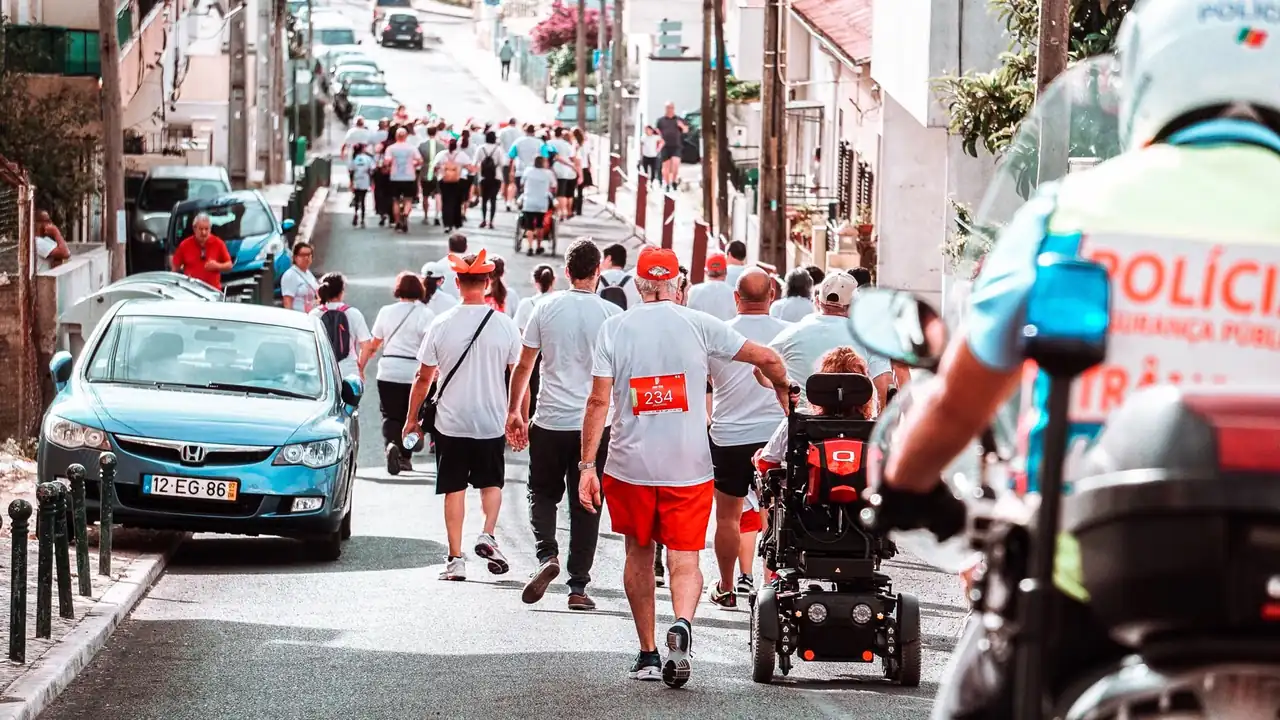
Seville is preparing for a weekend of disrupted mobility because of one of the most important sporting events on the calendar: the 2026 marathon. The city will activate a special operation with early closures around the start and finish areas, intermittent roadblocks during the race, and parking restrictions on several key avenues. The impact will be visible from Friday and will reach its peak on Sunday morning, when thousands of runners take to the streets.
The race will start at 8:30 a.m. from Avenida de María Luisa and finish on Paseo de las Delicias, next to Glorieta de Buenos Aires, with an official closing expected around 3:00 p.m. The City Council has also set a horizon for gradual normalization until 7:00 p.m. on Sunday, when the operation will be withdrawn and traffic will regain its usual rhythm. In the meantime, surface traffic will experience a choreography of detours, pauses, and partial openings that will affect entire neighborhoods.
A city that changes pace from Friday
The first major closure will not come with the starting gun, but much earlier. Paseo de las Delicias will be closed from Friday at 6:00 p.m. until Sunday at 7:00 p.m., a broad time window that corresponds to the setup and dismantling of the race infrastructure. It is the backbone of the operation, the place where the start, finish, barriers, medical logistics, and much of the organizational movement are concentrated. In a city as dense and tourist-heavy as Seville, that prolonged closure acts like a dam, reorganizing traffic in the surrounding area.
Avenida de María Luisa will also be reserved for the race from Saturday at 4:00 p.m. until Sunday at 7:00 p.m. Closing both ends of the route creates a sports corridor that crosses the city from south to north and back again, especially affecting connections with María Luisa Park, access to Plaza de España, and the usual routes toward Los Remedios, the city center, and the banks of the Guadalquivir. This is not just a simple isolated closure: it is an intervention on an urban scale.
The planned detours to ease that pressure will rely mainly on Avenida de la Guardia Civil, Moliní, El Cid, and Portugal, roads that will absorb much of the traffic that normally runs through the Delicias and María Luisa area. In practice, drivers who do not adjust their schedules or routes will encounter forced turns, waits at congested traffic lights, and some stretches that will require longer detours than they may seem to on a map. Mobility in Seville during that weekend will stop functioning like a predictable grid and will instead resemble a circuit with locks.
The streets where parking will be impossible
The other major part of the operation is parking. From Friday at 12:01 a.m. it will not be possible to park on Paseo de las Delicias, in the section between Glorieta de los Marineros and Avenida de la Guardia Civil. Starting Saturday at the same time, restrictions will be added in Moliní, Guardia Civil, and Las Razas, as well as La Rábida, Chile, Uruguay, Isabel la Católica, and Nicolás Alpériz. The tow-truck map expands as the start approaches, and any poorly placed vehicle can become an obstacle to emergency access or to the race itself.
The list of affected streets continues with Camino de los Descubrimientos, Ingeniero Luis Salvador, Cardenal Bueno Monreal, Manuel Siurot, Vib Arragel, and Calatrava, as well as the parking area in front of the Rectorate. These are very different areas, but they share one thing: they form part of the network through which the race moves, or they serve as logistical support for the operation. The City Council has stressed the need to respect the temporary signage because towing will not be an unlikely exception, but a real possibility for any vehicle left in the wrong place.
Specific evacuation points have also been marked on Duque de la Victoria, Torneo, República Argentina, López de Gomara, José Laguillo, and Kansas City. That selection is no accident. These are hubs where traffic usually struggles even on normal days and where, with the race underway, the margin for improvisation is reduced to a minimum. The municipal message is clear: it is advisable to take the car out early or accept that for several hours some simple maneuvers will no longer be simple.
On Sunday, the closures will extend across much of the route
Sunday morning will concentrate the most visible effect on the city. As the lead pack and the bulk of the runners pass through the different districts, there will be intermittent closures along the entire route. This is not a uniform end-to-end closure, but rather a series of interruptions that move forward with the pack. That means the city must be read almost in real time: an avenue may be open for a few minutes and then close, and a roundabout may return to normal only to be blocked again with the arrival of the next group of athletes.
The areas of Triana, Nervión, and the Historic Center will take a large share of the impact, although the route touches much more than those three areas. The race crosses such recognizable spaces as Avenida de la Palmera, Manuel Siurot, La Borbolla, María Auxiliadora, Ronda de Capuchinos, Resolana, Torneo, Arjona, Paseo de Cristóbal Colón, República Argentina, López de Gomara, Tetuán, Campana, Plaza Nueva, Avenida de la Constitución, and Puerta de Jerez, among other points in a city that, for a few hours, becomes a large athletic stage.
That long, highly urban route means the marathon affects not only those who live or work in the center. It also disrupts connections to Santa Justa, San Bernardo, La Macarena, Los Remedios, and the peripheral access roads that feed daily mobility. The domino effect is almost inevitable: a surface closure turns into bus detours, changes in traffic directions, and traffic buildup on parallel roads. The final result depends, above all, on the time each trip is attempted.
Public transport also adapts to the race
The city bus network is not left out. Tussam will have significant changes during the central part of the morning, with suspensions, diversions, and route limitations on different lines. Among the most affected are 1, C1, C2, C3, C4, and C5, which will not provide service between 8:00 a.m. and approximately 2:00 p.m., although some sources extend the interruption of C5 until 3:00 p.m. The rest of the network will remain in operation, but with altered routes and more irregular waiting times than usual.
Other lines will also suffer temporary stops or route changes, including 40, 41, and 43, which will start later; 5, 25, 26, 30, and 31, which will be suspended for part of the morning; and 3, 6, 10, 11, 12, 13, 14, 15, 20, and 21, all affected at different times by the progress of the race. MetroCentro and Tranvibús are not left out of the operation either. In short, the city moves with a less linear and more fragmented rhythm.
At the same time, the City Council recommends using the metro and the bike-sharing system for trips into the center during Sunday morning. This is not a decorative recommendation. With streets closed, lanes reserved for the race, and buses rerouted, the surface belongs to the marathon, while the underground and cycling routes gain value as escape routes. For thousands of residents, the difference between arriving on time or getting stuck in a detour may depend on that change of transport.
The runners, the public, and the cleanup behind the spectacle
Beyond traffic, the marathon operation reveals the invisible logistics that sustain an event of this magnitude. Lipasam will deploy more than 80 workers and 50 vehicles to clean the more than 42 kilometers of the route, as well as the start, finish, and aid-station areas. Cleaning does not come afterward as a final layer; it accompanies the event from before it begins, with brush clearing, graffiti removal, container inspections, and planning aimed at allowing the city to breathe normally again as soon as the race ends.
That work is especially noticeable in the busiest areas, where the crowd gathers with coffee in hand, phones raised, and the sharp noise of barriers mixed with the constant hum of diverted cars. In that setting, the race is not just sport: it is also order, waste, transport, safety, and a sequence of small logistical decisions that support one another. The citizen sees the runners pass; the whole city manages every meter of asphalt behind them.
The existence of the preceding 5K, also held around María Luisa Park, adds another layer of complexity to the weekend. Although its impact is smaller than that of the main marathon, it requires additional closures on several nearby roads and brings forward part of the mobility operation. Seville thus strings together two days of competition, with the park and its avenues serving as the prelude to an even bigger day. It is a very different picture from an ordinary Sunday, and also a demonstration of how much the sports calendar can rewrite the urban geography for a few hours.
Why the impact in Seville goes beyond the race
The marathon leaves a mark measured both in split times and in everyday habits. Anyone working in the center, taking a relative to the hospital, needing to cross from one district to another, or simply planning a breakfast by the river suddenly finds a slower, more filtered city, more conditioned by the race. The event turns Seville into a top-tier sports capital, but it also requires careful management of that visibility, because the prestige of the race coexists with very concrete inconveniences for residents and drivers.
That balance explains why mobility plans for events like this are increasingly detailed and visible. The city seeks to protect the experience of those running and, at the same time, minimize the urban cost of the event. It is not always possible to avoid traffic jams, nor the inconvenience of a tow truck working beside an empty curb. But it is possible to anticipate where the problem will be, for how long, and what escape routes will be available. In an event of this size, information is worth almost as much as the stopwatch.
The 2026 edition leaves a very clear image: Seville knows how to stage a top-level marathon, with thousands of entrants and a route that crosses its urban memory, but it also knows that every stride implies an adjustment in city life. Between the closures on Delicias, the detours on María Luisa, the parking reservations, and the changes to Tussam, Sunday will read like a moving map. And, as usually happens in major events, the race will end well before the city fully returns to its ordinary rhythm.
A city organized around 42 kilometers
The scale of the operation confirms that the marathon is not simply an isolated sporting event, but a first-rate urban operation. Start, finish, parking, public transport, cleaning, and safety form a single mechanism, and any failure in one of its teeth is immediately felt in the rest. That is why the operation extends from Friday until Sunday afternoon and is not limited to the exact moment of the start. The city needs time to be set up, run, and get back on its feet.
Seville, accustomed to living alongside major celebrations, once again faces that transformation with a mix of patience and practical discipline. Traffic closures are not experienced the same way in every neighborhood, but they all affect how the city crosses itself. On a marathon day, the asphalt stops being just a thoroughfare and becomes the center of a scene where every detour matters. Normality returns later, yes, although for a few hours the Andalusian capital is shaped by a different logic: that of 42 kilometers of racing and mobility revolving around them.
You may also like: Road closures for the Cursa El Corte Inglés 2026 in Barcelona.



How to prevent thigh chafing: causes and real solutions

Women’s running windbreakers: seven jackets and how to choose

Do more workouts get rid of soreness? A guide for runners

Jaén Half Marathon 2026: Record 3,800 Runners Registered

Men’s short running tights: how to choose the right pair

World Triathlon confirms data breach involving medical data

Izan Edo targets podium at Miyazaki World Cup

María Pérez ranks ninth in World Athletics’ 2026 top ten

Dos Santos, Duplantis and Sawe: World Athlete of the Year finalists

San Silvestre Vallecana 2026: 42,000 places, prices and start times

 Races4 months ago
Valencia Half Marathon 2027: date and registration

 Races4 months ago
Valencia Marathon 2026: entry, ballot and course

 Reviews and Comparisons4 months ago
Asics Gel-Roadmiles 3 for men: review and current price

 Reviews and Comparisons4 months ago
Asics Gel Sonoma 8 Gore-Tex: complete analysis for trail and rain

 Sneakers3 months ago
Saucony Endorphin Pro 4: full review and verdict

 News5 months ago
Strava API 2026: what changes for clubs, challenges and runner apps?

 Reviews and Comparisons5 months ago
Nike Alphafly 3: opinions, sensations, and real key points

 Reviews and Comparisons4 months ago
Under Armour running shoes review 2025-2026: models and key features

 Sports Equipment4 months ago
Shoe sizes in cm: a clear guide to getting the right fit for your footwear

 Sneakers3 months ago
Skechers GO RUN Consistent 2.0 analysis: comfort and limits

 News5 months ago
Valencia Marathon 2026 route: key tips to train and run better

 Sneakers4 months ago
Adidas Adizero Boston 13 for men: review and verdict