Races
Sunshine Coast Marathon: complete guide to the Australian race
Queensland offers a fast, coastal, and very popular race, with distances for everyone and a course along the ocean.

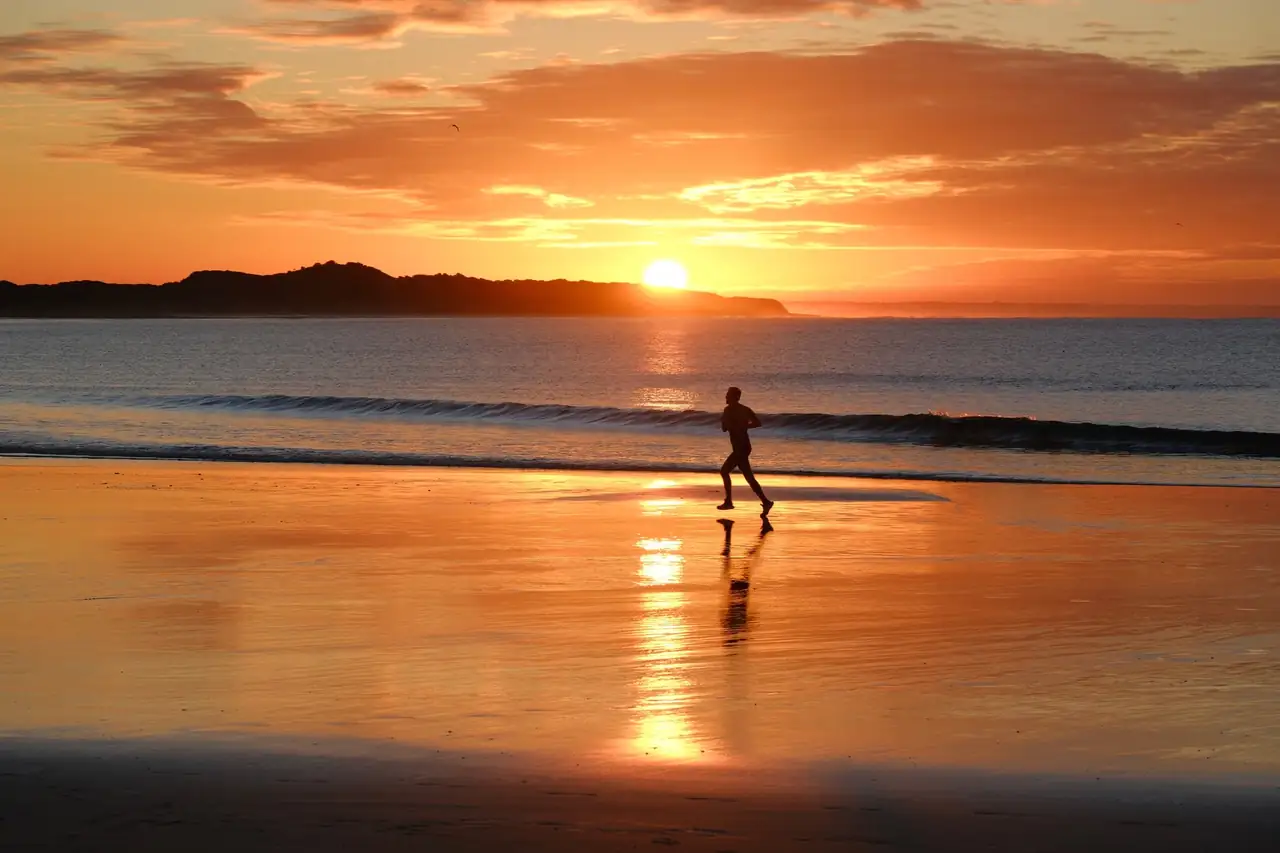
The Sunshine Coast Marathon has established itself as one of the most recognizable events on the Australian calendar for a simple reason: it combines a fast course, a highly photogenic coastal setting, and a festival structure that goes far beyond the marathon. It was born in 2012 and, since then, it has grown to include the main event, a half marathon, 10K, 5K, and a 2-kilometer race, as well as side activities that turn the weekend into a small runner’s fair.
The race takes place on the Sunshine Coast, in Queensland, and its hallmark is the flat profile, the sea breeze, and the feeling of running almost right by the water’s edge. The marathon starts and finishes at Alexandra Headland Surf Life Saving Club, passes through areas such as Mooloolaba and Maroochydore, and is certified by World Athletics and AIMS, a detail that matters for those seeking serious times and an officially certified course.
A marathon born to run fast beside the ocean
The geography explains much of the appeal of this race. The Sunshine Coast combines mild temperatures in the middle of the Australian winter, lower humidity than at other times of the year, and a route that stays close to the coastline. That setting creates a very distinctive atmosphere: neither the stifling heat of other regions nor the toughness of a rolling course, but rather a kind of natural corridor where strides come more easily and with less muscular punishment.
The course is one of its biggest selling points. The organizers present the marathon as a scenic coastal loop, with broad avenues, ocean views, and an atmosphere that alternates between focused silence and more lively stretches with crowd support. It is not a mountain race or a typical urban road race; it belongs to that category of marathons where the scenery seems to help sustain the pace when the clock starts to bite.
That fast character is reflected in its results. In 2025, Ryan Gregson clocked 2:14:05 and Sarah Short won in 2:41:12. A year earlier, Milly Clark produced one of the benchmark women’s times for the event, 2:37:07. Those performances confirm what many runners already suspected: this is a place where you can truly compete, not just complete kilometers with nice views.
The distances that turn the weekend into a festival
The event is not centered solely on the 42.195 kilometers. The program also includes a half marathon, 10 kilometers, 5 kilometers, and a 2-kilometer race designed to broaden access for all kinds of participants. That setup multiplies the event’s appeal, because it does not reserve the day exclusively for experienced marathoners.
The half marathon and 10K usually attract much of the field, while the 5K and 2K open the door to families, first-timers, and runners who prefer a friendlier format. The organizers also emphasize that the event is designed for different ages and abilities, with space for people with physical or intellectual disabilities, and with adapted options such as wheelchair participation in specific races.
That broad approach explains why the Sunshine Coast Marathon Festival functions almost like a small ecosystem. There are staggered start areas, expos, yoga, warm-up runs, and an atmosphere that builds throughout the weekend. It is not just a race; it is a sequence of moments surrounding the central effort and making it more visible, more social, and more shared.
A date shaped by the Australian winter
The 2026 edition is scheduled for August 2, with pre-event activities from July 30 to August 1. The choice is no accident. At that time of year, the Sunshine Coast usually offers ideal running conditions, with clear skies, more comfortable temperatures, and a very clean light that makes the coastline shine with postcard-like clarity.
The marathon starts very early. The main start is set for 6:00 a.m., while the half marathon begins at 7:15, the 10K at 9:00, and the 5K at 10:15. The 2K, meanwhile, starts at 11:00. The schedule follows a simple logic: run before the day gets too hot, take advantage of the best hours, and keep the transition between distances orderly.
The timetable also says something about the kind of event it is. There is a clear choreography among runners, volunteers, spectators, and companions, with a flow that runs from dawn to midday. In races like this, logistics stop being a secondary detail and become part of the experience, because the organizer’s clock ends up shaping the mood of the whole weekend.
The route and its most recognizable landmarks
The start and finish at Alexandra Headland Surf Life Saving Club act as the symbolic anchor of the race. From there, the course unfolds along the coast and passes through areas closely associated with the local landscape, such as Mooloolaba and Maroochydore. The result is a marathon deeply tied to its setting, where runners clearly feel they are moving through a maritime and tourist environment, not a generic avenue without identity.
The dominant visual cue is the beachfront line. White sand, open water, seaside promenades, and a sequence of straight sections that make it possible to maintain pace without too many abrupt changes. That combination favors both the athlete chasing a personal best and the recreational runner who wants to enjoy the course without having to constantly negotiate every bend or incline.
There is also a factor you cannot see on the stopwatch, but you can feel in the memory: the race produces very clean images. Participants stand out against the sea, the Australian winter light sharpens the shadows, and the dawn sections often create the atmosphere of a restrained sports film, closer to reportage than to spectacle. In a marathon, that matters. Almost as much as a certified course.
Certification, records, and why it matters to demanding runners
The marathon holds IAAF-AIMS certification and is recognized as a Boston qualifier, two seals that place the race in a serious category on the international map. For many runners, that kind of backing is worth as much as the scenery. A certified course provides confidence in the distance, comparability of results, and a valid reference point for those pursuing specific goals on the calendar.
The sporting quality of the event is not limited to the main race. The best times in the 10K, half marathon, and 5K show that the festival brings together fast participants across multiple distances and that it is not merely a recreational gathering. The competitive depth is evident in the event’s history: names like Andy Buchanan, Lisa Weightman, and Michael Shelley appear linked to strong times at shorter distances, reinforcing the image of an event with solid athletic foundations.
From a journalistic perspective, that places the race in an interesting zone: it is popular, yes, but also reliable for anyone studying autumn and winter calendars in the Southern Hemisphere, looking for a sports trip with a performance goal, or wanting a race with enough prestige to attract both elites and well-prepared recreational runners.
The social dimension: much more than just going for a run
One of the keys to the Sunshine Coast Marathon is its community component. The organizers present it as a running festival with charitable fundraising, family participation, and space for different ages and abilities. Since its creation, the event has raised more than 2.5 million Australian dollars for charitable causes and community groups, a figure that explains part of its deep roots in the local area.
That social vocation changes the tone of the race. The runner is not just arriving at a sporting event, but at a public celebration where individual effort is woven into a collective narrative. Volunteers, spectators, support zones, and aid stations create a recognizable scene for anyone who has seen how a marathon can transform a city for a few hours.
There is also a broader reading: this kind of festival strengthens the relationship between sport and place. Sunshine Coast promotes itself as a destination for holidays and outdoor activity, and the marathon fits perfectly as a showcase for that identity. Running here is, in part, a way of experiencing landscape, weather, and community all in one day.
The atmosphere around the start and finish
Pre-race activities help ensure the event is not reduced to the Sunday morning itself. The Expo, easy runs, yoga sessions, and bib collection create a lead-up in which race tension blends with an almost holiday-like feel. That is no small detail: for many participants, the experience of a major event begins before the start, when the place already smells of sunscreen, early coffee, and well-managed nerves.
The logistics are designed to keep the day flowing. The organizers provide recommended arrival times, baggage drop areas, information points, and winner presentations throughout the morning. All of that helps avoid chaos and allows the race to maintain a friendly tone, even when the number of participants and companions is high.
The finish, meanwhile, has that special magnetism typical of well-run coastal races: the runner crosses exhausted, stops, looks around, and immediately knows where they have been. Instead of a finish enclosed by buildings, there is the openness of the coastline, the sound of the sea, and a sense of an open ending, as if the race did not entirely end when the clock stopped.
Who tends to seek out this race, and why it keeps growing
The profile of those drawn to this race is broad. There are marathoners looking for a fast time, middle-distance runners wanting a sporting getaway, and families who prefer a shared day with shorter distances. Added to that is a traveling crowd that chooses Queensland for its climate, beaches, and the possibility of turning a race into a multi-day experience.
Its growth makes sporting and tourism sense. The event fits a widely established trend in Australia and at other major races around the world: well-organized events, attractive settings, and a range of distances that makes it easier to increase participation without diluting the appeal of the main marathon. The more diverse the audience, the greater the ability to sustain the event year after year.
Its accumulated prestige also helps. Being associated with a World Athletics Road Label, an AIMS certification, and a history of solid times places the Sunshine Coast Marathon in a recognizable spot on the international calendar. It does not compete on size alone; it competes on reputation, consistency, and the sense that this is a place where you can run fast without giving up the scenery.
A finish that leaves a clear image of Australia running at dawn
The Sunshine Coast Marathon neatly captures an idea that matters more and more in modern running: the runner is not just looking for a distance, but for a setting. They want a reliable course, a well-organized start, a memorable finish, and an environment that tells them more than just how long they took. In Queensland, all of that comes together without fuss.
That is why this race has earned its own place. It is not the biggest in the world, nor does it try to be, but it is one of the most coherent in its offering: coast, speed, a broad range of distances, and a festival that understands running as sport, celebration, and a showcase for a region. Sometimes, the simplest formula is the one that works best.
You may also like: Gold Coast Marathon: history, facts, and key points of the major Australian event and Victoria Falls Marathon 2026: date, route, and key details.



How to prevent thigh chafing: causes and real solutions

Women’s running windbreakers: seven jackets and how to choose

Do more workouts get rid of soreness? A guide for runners

Jaén Half Marathon 2026: Record 3,800 Runners Registered

Men’s short running tights: how to choose the right pair

World Triathlon confirms data breach involving medical data

Izan Edo targets podium at Miyazaki World Cup

María Pérez ranks ninth in World Athletics’ 2026 top ten

Dos Santos, Duplantis and Sawe: World Athlete of the Year finalists

San Silvestre Vallecana 2026: 42,000 places, prices and start times

 Races3 months ago
Valencia Half Marathon 2027: date and registration

 Races3 months ago
Valencia Marathon 2026: entry, ballot and course

 Reviews and Comparisons4 months ago
Asics Gel-Roadmiles 3 for men: review and current price

 Reviews and Comparisons4 months ago
Asics Gel Sonoma 8 Gore-Tex: complete analysis for trail and rain

 Sneakers3 months ago
Saucony Endorphin Pro 4: full review and verdict

 News5 months ago
Strava API 2026: what changes for clubs, challenges and runner apps?

 Reviews and Comparisons5 months ago
Nike Alphafly 3: opinions, sensations, and real key points

 Reviews and Comparisons4 months ago
Under Armour running shoes review 2025-2026: models and key features

 Sports Equipment4 months ago
Shoe sizes in cm: a clear guide to getting the right fit for your footwear

 Sneakers3 months ago
Skechers GO RUN Consistent 2.0 analysis: comfort and limits

 News5 months ago
Valencia Marathon 2026 route: key tips to train and run better

 Sneakers4 months ago
Adidas Adizero Boston 13 for men: review and verdict