Races
Victoria Falls Marathon 2026: date, route, and key details
The Zimbabwe race combines running, wild landscapes, and travel in an event with a set date, distances, and a predefined route.

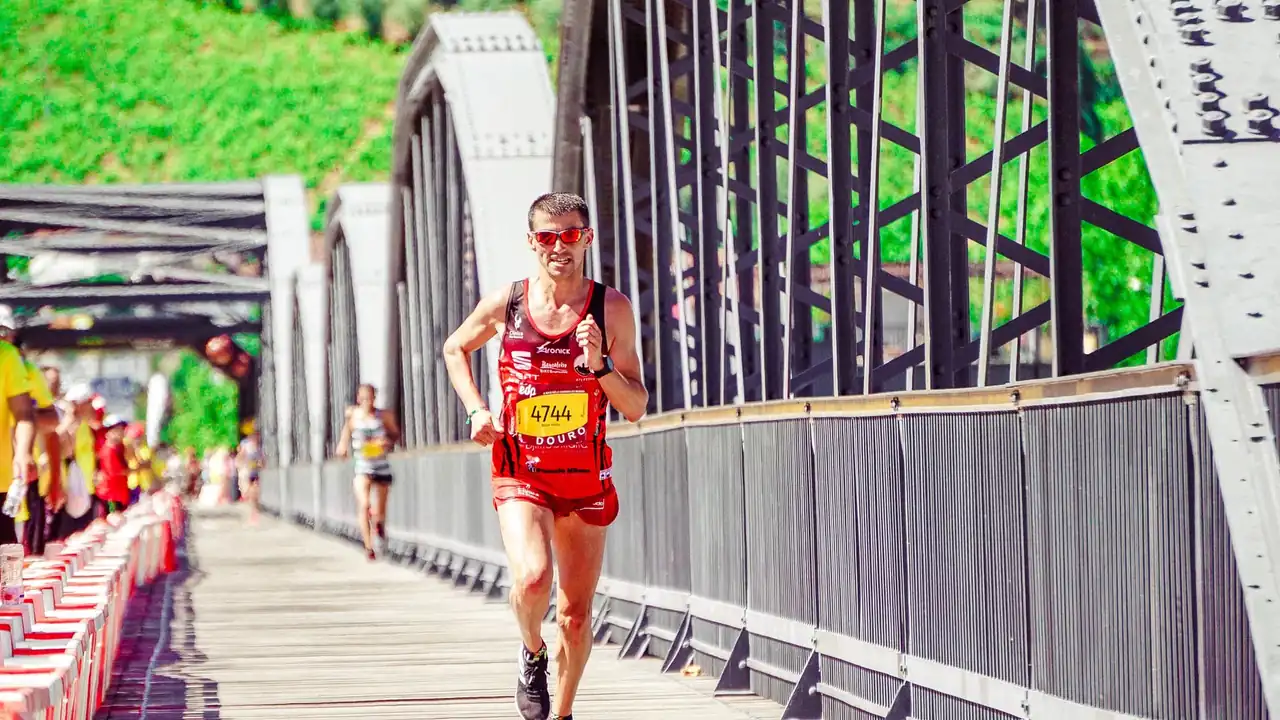
Victoria Falls Marathon brings running back to one of Africa’s most recognizable landscapes: the area around Victoria Falls in Zimbabwe. The 2026 edition is set for July 5 and retains the classic format of a race designed both for competition and for a destination experience, with a marathon, a half marathon, and a short race for those not looking for a long distance.
Beyond the name, the race has a very distinct identity. The start in Victoria Falls, the crossing over the bridge into Zambia, and the presence of the river, wildlife, and national park turn the course into something unusual on the international calendar. It is not just a fast and relatively flat race, but a route with scenic weight, international logistics, and the stamp of an event registered by World Athletics and AIMS.
An event that blends competition and landscape
The main appeal of this race is not only the time you can aim for on the road. The race has established itself as a window into sports tourism in an area where the setting matters just as much as the stopwatch. The runner passes through part of the course with open views of the Zambezi River, crosses the falls bridge, and enters areas where geography matters more than pace.
The 2026 edition is presented as the 18th in the marathon’s history, a fact that helps explain its maturity. Wild Frontiers Events is listed as the official organizer, and the event has been developed alongside the National Athletics Association of Zimbabwe. That backing explains the presence of certified measurements, technical control, and a structure designed to welcome both local athletes and runners from outside the country.
In the international running ecosystem, few races combine competition, travel, and scenery so clearly. That triangle is part of its magnetism. For some, the appeal lies in its status as a benchmark marathon in a highly attractive tourist area; for others, it is its value as a bridge race between sport and adventure, with safaris, boating, rafting, or visits to the natural border between Zimbabwe and Zambia as part of the context.
Date, distances, and course type
The race is scheduled for July 5, 2026. The date places it in the middle of the southern winter, an important detail for those traveling from Europe, who may encounter weather conditions different from those of a typical summer race in the Northern Hemisphere. The event offers a 42.2 km marathon, a 21.2 km half marathon, and a 7.5 km fun run, so the range of participation is broad and does not force runners to take on the premier distance in order to be part of the atmosphere.
The course is described as fast and relatively flat, although that should not be confused with a conventional city race. The route includes asphalt, open stretches, and areas where the landscape changes quickly. The athletic side is clear, but there is also a geographical dimension: the runner moves between well-distributed aid stations, crosses the Victoria Falls bridge, and enters spaces where the presence of nature is noticeable even in the group’s breathing.
The full marathon is also set up as a double loop, a format that often requires tactical effort management. On courses like this, the mind plays as much of a role as the legs, because the scenery can distract while heat, humidity, or exposure to wind can influence how energy is distributed. That mix of visual calm and physical demand explains why the race is remembered as both beautiful and demanding.
Start, finish, and the bridge crossing
The start of the main race is located in the parking area opposite the Ilala Lodge entrance and the banks in Victoria Falls, and the finish is at Victoria Falls Primary School. That urban setup is useful for logistics, but it also makes clear that the race does not stay within a domestic perimeter. From the outset, the route heads toward a setting that is more open and symbolic than functional.
One of the most recognizable moments is the crossing of the Victoria Falls Bridge, with a brief entry into Zambia. That section adds an almost cinematic quality: the bridge acts as both a passage between countries and a balcony over one of the continent’s most photographed landscapes. For the social runner, the stretch can feel like a moving viewpoint; for the competitor, it can be a tense point where it is wise not to spend too much energy on the excitement of the surroundings.
After that, the route continues through Zambezi National Park and its surroundings, with the possibility of seeing wildlife and running in a less urban context than the race name might suggest. That combination is part of its uniqueness. It is not a race of grand boulevards, nor a pure mountain event, nor a technical trail. It occupies an intermediate space, with asphalt and nature, where the sensory experience carries unusual weight.
An event with international backing and sporting control
The organizers highlight that the race is registered with World Athletics and AIMS, two labels that matter on a serious calendar because they help place the event within internationally recognized standards. It is also mentioned that it is developed alongside Zimbabwe’s national athletics federation, which adds institutional context and credibility to the event structure.
For runners coming from abroad, that means several things at once: an organization that takes technical references seriously, an officially measured route, and the opportunity to treat the race as a valid sporting target in a broader calendar. The race is also presented as a Comrades qualifier, a detail of major significance in the world of long-distance events, as it makes the race a gateway for athletes interested in even longer challenges.
That link to other prestigious races places the event in a special category. It is not just an exotic destination; it is a race with real competitive value. The mix of technical status and tourist appeal makes it attractive to runners who want a major experience without giving up a serious race structure, with water, timing control, and a well-managed environment.
Travel, accommodation, and the power of the destination
Victoria Falls does not only compete with other races; it competes with the strength of its own destination. That is why the event is also sold as a full getaway. Wild Frontiers appears as the official travel partner and offers packages that can combine race entry with safari, canoeing, boating, wildlife viewing, or bungee jumping. That logic greatly broadens the profile of the trip, turning it from a simple sporting stay into a longer journey.
Air connectivity supports that model. The event notes the existence of daily flights from Johannesburg, which makes it easy to connect with international routes. In practice, the race thrives on a clear combination: a highly recognized destination, an event organization with structure, and a tourism offer that makes the trip worthwhile even for those traveling with companions and not only for sporting reasons.
That destination dimension also explains the constant presence of edition photos, results, and news on the event website. The marathon is not limited to a Sunday morning; it spans several days of travel, bib collection, pre-race meetings, and, in many cases, a slightly longer stay to enjoy the area. The runner thus becomes a visitor, and the visitor becomes part of the race atmosphere.
Registrations, entries, and approximate costs
Third-party references place the entry fee between 85 and 120 dollars, although the exact cost may vary depending on the distance, the time of purchase, or the associated package. The event website also indicates that 2026 entries opened in March 2026 and that the race can sell out in advance, which matches its reputation as a sought-after event.
At the same time, some registration sources warn of a closure in June or once bibs are sold out, and note that the cancellation or refund period may depend on the purchase channel. That kind of variation is common in races with a tourist component, where demand is concentrated and availability changes quickly. In practice, runners should understand that this is not a mass event with no pressure, but a race with limits and international interest.
There are also references to travel packages sold out in the 2026 edition, reinforcing the idea that travel and registration go hand in hand in this case. For a race like this, the experience usually begins long before the starting gun: with booking, choosing accommodation, and planning transfers, especially because the destination is attractive both for sport and for its surroundings.
What the course says about the race
The profile of the course helps explain who the race attracts. References describe it as moderate, relatively fast, and suitable for runners looking for an experience less punishing than a route with constant elevation changes. Even so, the race is not reduced to a simple time trial. The stretches through open areas, exposure to the environment, and the presence of water and wildlife make the effort feel different.
Regular aid stations and cooling sections are clearly present in the official description, an important detail in a race held in an environment where climate and hydration are no small matter. The runner is not only dealing with distance; they must also adapt to the setting, the trip, and the hours beforehand in a place different from the usual one.
That combination explains why the race often appears on lists of memorable events. The stopwatch matters, yes, but it does not dominate the story of the race. Some races are remembered for a personal best; this one is remembered for the full image: the bridge, the mist, the park, the river, the shared passage with runners from many countries, and the feeling of having run in a natural backdrop that needs no embellishment.
Why this race is gaining space on the international calendar
In an increasingly crowded global calendar, the races that leave a mark usually offer something more than distance and a chip. Victoria Falls Marathon has exactly that extra value. It delivers a serious sporting experience, adds a first-class tourist destination, and maintains a clear identity that is easy to communicate and difficult to confuse with any other race.
Its status as an event with an international community also counts. The reference to thousands of runners and diverse nationalities reflects a participation profile that goes beyond the host country. In races like this, the atmosphere at the start usually has a cosmopolitan tone, and runners quickly realize they are not at a standard local event, but at a day where different languages, paces, and goals come together.
That is why the race continues to gain ground in conversations about unique marathons. It does not compete to be the fastest or the most technical, but to bring together travel, athletic identity, and memorable scenery in a single day. In times of event saturation, that combination has special power. The race lasts a few hours; the memory lasts much longer.
A race best understood as a complete experience
The best way to read this event is not to separate the bib from the destination. The July date, the available distances, the start in Victoria Falls, the crossing into Zambia, the passage through the national park, and the finish at the primary school form a very defined sequence, where each section contributes something to the whole. The result is a race that fits both the long-distance runner’s calendar and that of someone looking for a getaway with sporting purpose.
There are marathons that are consumed through their splits; this one is also consumed through its images. The runner hears their own breathing, but around them everything is on a larger scale: the river, the bridge, the vegetation, the distance between two countries, the light on the water. In that crossing between effort and landscape lies much of its narrative strength and its staying power on the international radar.
Anyone looking toward the 2026 edition will find a fully defined event, with a concrete date, clear distances, and a history that does not depend on fashion. Victoria Falls Marathon remains a singular race because it does not try to resemble any other. And that, at its core, is the best argument a race can have on the world running map.



How to prevent thigh chafing: causes and real solutions

Women’s running windbreakers: seven jackets and how to choose

Do more workouts get rid of soreness? A guide for runners

Jaén Half Marathon 2026: Record 3,800 Runners Registered

Men’s short running tights: how to choose the right pair

World Triathlon confirms data breach involving medical data

Izan Edo targets podium at Miyazaki World Cup

María Pérez ranks ninth in World Athletics’ 2026 top ten

Dos Santos, Duplantis and Sawe: World Athlete of the Year finalists

San Silvestre Vallecana 2026: 42,000 places, prices and start times

 Races3 months ago
Valencia Half Marathon 2027: date and registration

 Races3 months ago
Valencia Marathon 2026: entry, ballot and course

 Reviews and Comparisons4 months ago
Asics Gel-Roadmiles 3 for men: review and current price

 Reviews and Comparisons4 months ago
Asics Gel Sonoma 8 Gore-Tex: complete analysis for trail and rain

 Sneakers3 months ago
Saucony Endorphin Pro 4: full review and verdict

 News5 months ago
Strava API 2026: what changes for clubs, challenges and runner apps?

 Reviews and Comparisons5 months ago
Nike Alphafly 3: opinions, sensations, and real key points

 Reviews and Comparisons4 months ago
Under Armour running shoes review 2025-2026: models and key features

 Sports Equipment4 months ago
Shoe sizes in cm: a clear guide to getting the right fit for your footwear

 Sneakers3 months ago
Skechers GO RUN Consistent 2.0 analysis: comfort and limits

 News5 months ago
Valencia Marathon 2026 route: key tips to train and run better

 Sneakers4 months ago
Adidas Adizero Boston 13 for men: review and verdict