Races
Sur El Torcal Challenge 2027: route, price and key details
Antequera is preparing another tough and spectacular edition: 40.3 km, 1,950 m of elevation gain, and a very technical route.

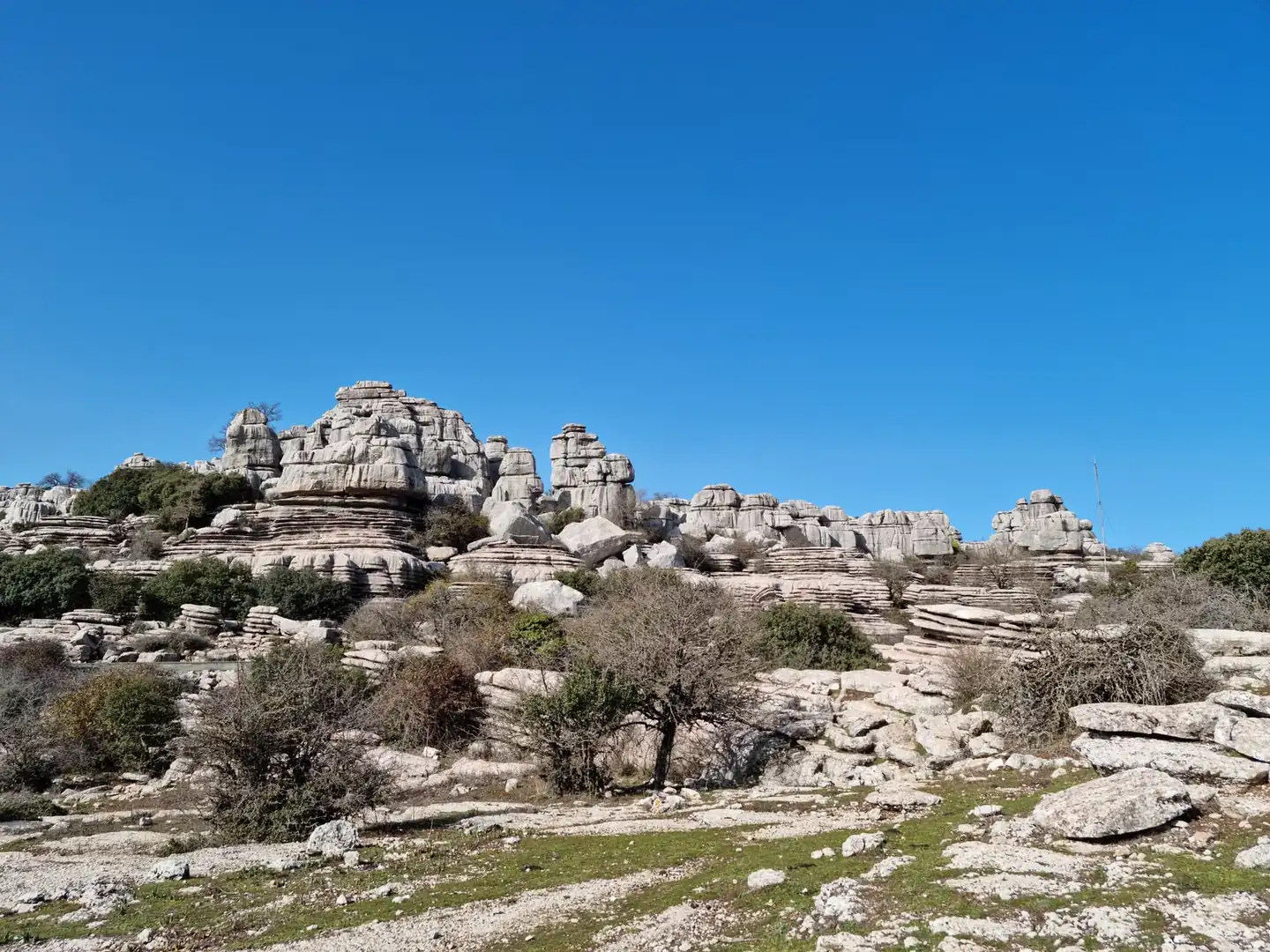
The Desafío Sur El Torcal once again puts Antequera on the Andalusian trail map with a proposal that is as demanding as it is recognizable: a mountain race of about 40.3 kilometers and around 1,950 meters of positive elevation gain, designed to cross the Torcal surroundings and squeeze the legs on changing terrain, fast in some stretches and technical in others.
The race combines trails, paths, tracks and cross-country sections, with an identity strongly marked by the climb, the descent and the fine reading of the terrain. It is not a course to run from memory; it is a race to manage effort, respect the elevation gain and understand that every kilometer in the Torcal demands something different, almost as if the landscape were shifting the difficulty as the day goes on.
A route that changes character without ever ceasing to be Torcal
The course of this race has been adjusted over time, but it keeps a clear idea: to start from Antequera and embrace the southern face of the Torcal, an area that gives the whole race its personality. The return to an eight-shaped route, with the crossing of the Escaleruela pass both on the way out and on the way back, gives the race back a very recognizable structure for those who follow the mountain calendar in the province of Málaga.
On the sporting side, the toughness does not depend only on the distance. The race concentrates three especially relevant climbs: Sierra de las Cabras, with about 515 meters of elevation gain over 2.7 kilometers; the Escaleruela pass, with 310 meters in 2.4 kilometers; and Cerro del Águila, which adds 340 meters in just 1.8 kilometers. These are figures that explain why this event has earned a reputation as a complete race, one in which strength, positioning and pace control matter as much as pure speed.
The terrain speaks for itself too. The organization has described the route as 30% tracks or paths and 70% trails, footpaths or cross-country sections, a proportion that anticipates a day where the mountain refuses to be tamed. There are technical downhill sections, but also more fluid and faster stretches, which forces runners to alternate caution and ambition with an almost surgical naturalness.
Start, schedule and logistics designed for the mountain
The most recent official reference places the start of the 2023 edition at 09:00 from the area of the Nacimiento del Río de la Villa, next to Restaurante Molino Blanco, in Antequera. In the 2027 listing consulted by competitors, the race appears linked to early March, with location in Antequera, Málaga, Andalusia, Spain, which fits the tradition of this event at the start of the sporting spring.
The organization sets a finish cutoff at 18:00 in the known regulations, with a maximum time of 9 hours from the start of the last group. That margin is not decorative: in a mountain race of this intensity, the clock is part of the course just as much as the trails are. The time cutoffs, moreover, reinforce the feeling of being in a very structured race, with serious control over progress and safety.
The regulations detail several checkpoints and aid stations spread across the mountain, with locations such as Las Beatas, La Alhajuela, the Nacimiento, Las Escaleruelas, Los Navazos and La Fuenfría, as well as the finish. It is a setup that allows the race to be understood as a kind of backbone in which the runner passes through stations of effort, hydration and decision. In a race like this, every aid station does not just replenish fluids; it also mentally orders the race.
What the regulations demand and why it is no small detail
The race rules make it clear that Desafío Sur El Torcal is intended for those over 18 years old and for runners with mountain experience. It is not presented as a friendly race or as a first introduction to hard trail running. The regulations themselves underline that the effort can become more difficult if weather conditions worsen, something especially relevant in an environment where temperature, wind or humidity quickly change the character of the terrain.
There is also an emphasis on the use of mandatory gear when the weather calls for it. The organization may require a long-sleeve windbreaker with hood, hat and gloves, tights or long pants below the knee, a container to refill at aid stations and a thermal blanket. The check is carried out before entering the starting corral, a common practice in trail running that seeks to avoid last-minute improvisation and reduce risks in the mountains.
The race also includes strict rules about the course. Leaving the marked route can mean disqualification, as can littering or ignoring the instructions of the organization staff. It is not bureaucratic formality; it is the way a race of this kind protects both safety and the natural environment through which it runs. In a landscape like El Torcal, every bad shortcut stops being a simple infraction and becomes a lack of respect for the terrain and for those who look after it.
Registration, places and prices: the least romantic part, but a decisive one
The available regulations for a previous edition set the opening of registrations on December 1 and the closing on February 28, provided the places had not already sold out. The maximum cap was 500 runners, with a waiting list in case the field was filled. That limit fits the nature of the race: a long, technical mountain race with tight logistical control, where overcrowding would make no sense.
The registration fee was structured in tiers. In the known range, fees went from 37 euros for licensed runners in the first 200 registrations to 43 euros for non-licensed runners in the final bracket from 401 to 500. In between, the cost ranged between 39 and 41 euros depending on bib number and licensing status. These amounts place the race within the usual range for mountain races with timing, insurance, aid stations and rescue logistics.
Registration included elements that help measure the scope of the organization: medical and rescue assistance, basic and advanced life support ambulances, support vehicles, solid and liquid aid stations, runner’s bag with finisher garment, finisher medal, accident and civil liability insurance, photo report, video and post-race meal. Added to that was the transport of those who dropped out of the race at established points. In other words, it is not just a bib; it is a complete infrastructure around the runner.
The sporting value of a race that mixes mountain, strategy and landscape
One of the reasons this event has gained presence is that it does not limit itself to offering a long distance. It proposes a very complete mountain experience, where elevation gain and technique combine with powerful landscape references. The Torcal de Antequera does not act as a backdrop, but as the main actor: it shapes the effort, orders the breathing and turns every climb into a kind of conversation with the rock.
The race also benefits from a very clear identity within the Andalusian calendar. Antequera brings accessibility, history and heritage, but the route adds a layer of rugged and attractive nature, with wooded areas to the north of the range, technical downhill sections and more runnable stretches. That mix explains why the race attracts both those looking to compete and those who want to test themselves in a high-mountain setting without leaving the province of Málaga.
In journalistic terms, its value lies in the combination of hard data and atmosphere. 40.3 kilometers, almost 2,000 positive meters, three main climbs, 500 places and a demanding rulebook are enough to understand the scale of the event. But the real signature comes from the terrain: an itinerary that gives nothing away, that forces you to read the mountain and that rewards those who know how to run intelligently instead of chasing only momentum.
Antequera, the Torcal and a race with its own seal on the Andalusian calendar
Antequera does not appear here as a mere starting point. The city provides historical and geographical context to a race that moves between heritage, nature and sport. The Torcal surroundings, with their singular relief, turn the course into an intense visual experience, almost cinematic, but also into a physical test that punishes small mistakes and rewards consistency. In races like this, the landscape is not only looked at; it is also negotiated with.
The 2027 edition, as shown in the records consulted, keeps that aura of an eagerly awaited event for the beginning of March. Although the available public reference information is more abundant for the regulations and the course than for the operational details of the new edition, the pattern of the race remains clear: a mountain race with a stable identity, strongly marked by the toughness of the profile and the uniqueness of the setting.
That is why Desafío Sur El Torcal continues to draw interest among trail runners: because it does not promise ease, but a measured, technical and recognizable challenge. In an increasingly broad calendar, that sporting honesty is worth a lot. There are races that pass by; this one leaves a mark on the legs, in the head and in the visual memory of whoever completes it.
A race that measures strength, head and respect for the mountain
The great mountain races are distinguished less by verbal epic than by the coherence of their design, and that coherence is very present here. The course, the cutoffs, the aid stations, the required gear and the limit on places draw a race designed for control and safety without losing the wild character of the environment. It is a sober formula, without embellishment, that fits well with the harshness of the Torcal.
The result is a race that does not need exaggeration to impose itself. It is enough to look at its data: marathon distance, serious elevation gain, technical sections, detailed regulations and a territory of rock and trail that forces you to run with respect. Desafío Sur El Torcal is, above all, a race that separates improvisation from experience. And in that filter lies much of its sporting appeal.
Anyone who follows trail running in Andalusia immediately recognizes that kind of event: the one that does not end with a date on the calendar, but leaves a repeated mark on the map of running memory. The Torcal, with its capricious relief and dry toughness, remains one of those settings where the mountain does not accompany you; it demands. And that demand, well measured, is precisely what keeps this race in a place of its own.
Its relevance, at heart, comes from a simple and uncommon idea: running here is not just about reaching the finish, but about crossing a geography with character. And that, in trail running, remains one of the most serious ways to measure an effort.
Where to stay in Antequera
Hotels available 27 February – 2 March 2027.
Affiliate links: if you book through this map we earn a commission, at no extra cost to you.



How to prevent thigh chafing: causes and real solutions

Women’s running windbreakers: seven jackets and how to choose

Do more workouts get rid of soreness? A guide for runners

Jaén Half Marathon 2026: Record 3,800 Runners Registered

Men’s short running tights: how to choose the right pair

World Triathlon confirms data breach involving medical data

Izan Edo targets podium at Miyazaki World Cup

María Pérez ranks ninth in World Athletics’ 2026 top ten

Dos Santos, Duplantis and Sawe: World Athlete of the Year finalists

San Silvestre Vallecana 2026: 42,000 places, prices and start times

 Races3 months ago
Valencia Half Marathon 2027: date and registration

 Races3 months ago
Valencia Marathon 2026: entry, ballot and course

 Reviews and Comparisons4 months ago
Asics Gel-Roadmiles 3 for men: review and current price

 Reviews and Comparisons4 months ago
Asics Gel Sonoma 8 Gore-Tex: complete analysis for trail and rain

 Sneakers3 months ago
Saucony Endorphin Pro 4: full review and verdict

 News5 months ago
Strava API 2026: what changes for clubs, challenges and runner apps?

 Reviews and Comparisons5 months ago
Nike Alphafly 3: opinions, sensations, and real key points

 Reviews and Comparisons4 months ago
Under Armour running shoes review 2025-2026: models and key features

 Sports Equipment4 months ago
Shoe sizes in cm: a clear guide to getting the right fit for your footwear

 Sneakers3 months ago
Skechers GO RUN Consistent 2.0 analysis: comfort and limits

 News5 months ago
Valencia Marathon 2026 route: key tips to train and run better

 Sneakers4 months ago
Adidas Adizero Boston 13 for men: review and verdict