Races
Extreme Filabres Trail 2027: route, distances and key details
Serón once again brings together mountain, elevation gain and two demanding routes in an event marked by the Sierra de los Filabres.

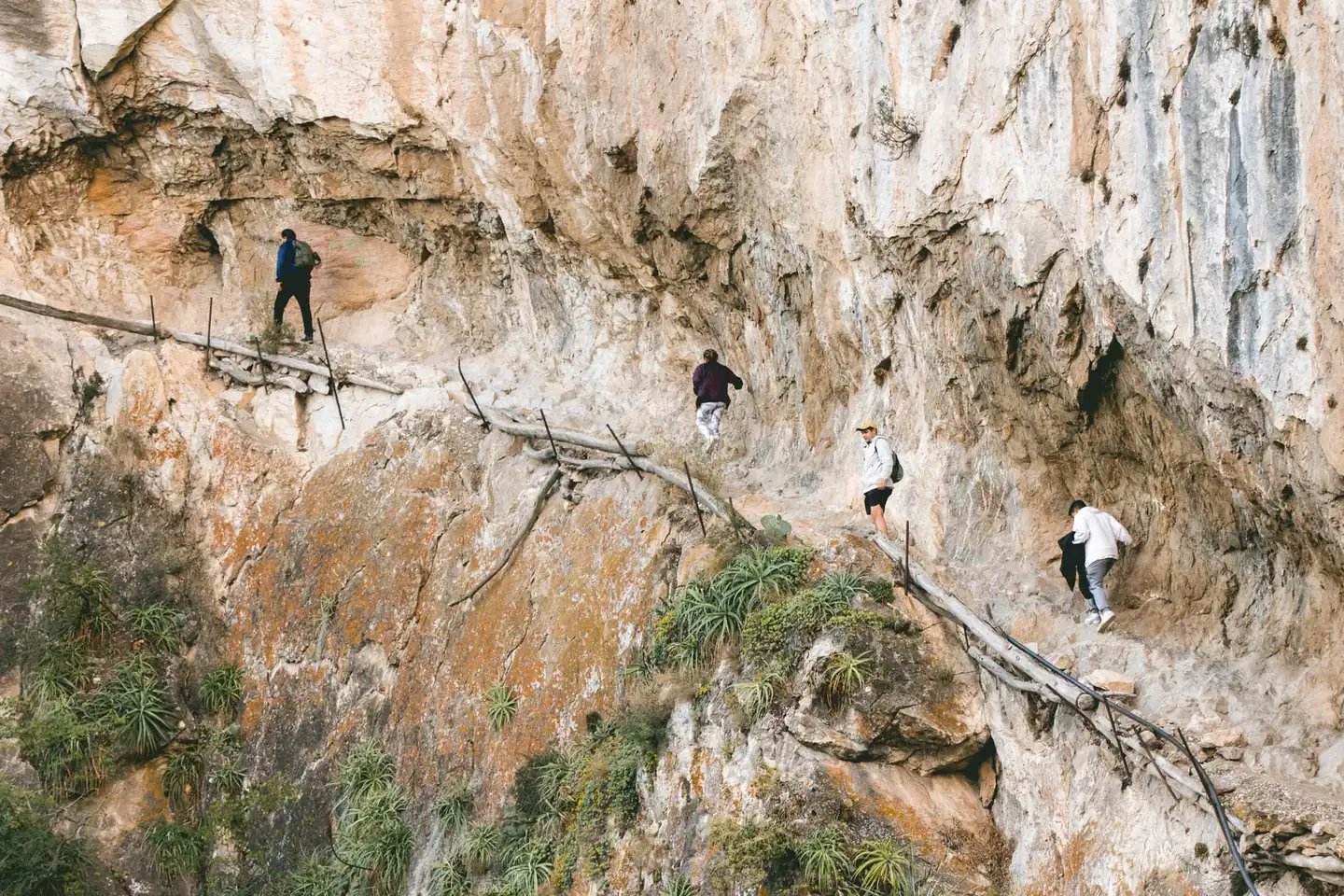
Imagen: Deniss Bojanini / Pexels
Serón is getting ready to welcome a new edition of the Extreme Filabres Trail, a mountain race that has turned the Sierra de los Filabres into a recognizable setting on the Andalusian calendar. The event keeps that very distinctive profile of inland races: sustained effort, rugged scenery, long uphill sections, and a reading of the terrain that punishes any excess pace from the very first kilometers.
The 2027 edition is scheduled for early March and once again places Serón, in the province of Almería, as a reference point for those looking for a trail with character. The event combines two distances, a main one of 33.7 kilometers and a shorter one of 13.4 kilometers, both with a clear mountain profile and a level of elevation gain that leaves no room for improvisation.
A trail marked by the Sierra de los Filabres
The sporting value of this race is closely tied to its surroundings. The Sierra de los Filabres is not just a backdrop; it is the very structure of the race. There, the terrain takes over with trails, prolonged climbs, and descents that demand constant attention. The feeling for the runner is that of moving through a wide, dry, and forceful landscape, where every footstep matters more than it seems in the course profile.
That fit between nature and demand explains much of the event’s appeal. This is not an urban circuit or a race designed to be run at a steady pace. Here, the clock breaks down into a thousand small decisions: when to save energy, where to lengthen the stride, in which section to accept that walking will be necessary. Mountain trail rewards intelligence as much as physical condition, and Serón fits that logic perfectly.
The recent history of the race points in the same direction. In recent years, the route has established itself as a reference for those seeking a demanding race, with local identity and a strong connection to the Almerían massif. That combination of toughness and scenery has helped the event gain visibility beyond its immediate surroundings, something increasingly common in Spanish mountain running.
Distances, elevation gain, and what the race really offers
The main race covers 33.7 kilometers with around 1,700 meters of positive elevation gain. It is not a short distance disguised as an adventure; it is a serious effort, one of endurance and mountain running, designed for runners who handle accumulated elevation and changes in terrain well. The elevation gain matters almost more than the mileage, because it is what truly shapes the day’s wear and tear.
The shorter distance, 13.4 kilometers, adds around 700 meters of positive elevation gain and opens the door to a broader range of participants. It also presents itself as a less demanding option in terms of time and energy, although it would still be a real mountain race. In this kind of route, the word mini can be misleading; the mountain does not become kinder just because the bib number is smaller.
The organization also includes a hiking route along the same shorter course, a format that broadens the event’s reach without changing its essence. That coexistence between competition and non-competitive participation is common in locally rooted mountain races, because it allows race day to become both a social and sporting gathering, not just a battle against the clock.
Schedule, start, and location in Serón
The start is set for March 15, 2026 at 08:30 in the vicinity of the Town Hall, with Calle Gadil as the starting reference point. That location places the race right in the center of Serón, which makes logistics easier and reinforces the town’s presence as part of the race story, not just a place to pass through.
The finish shares that same setting, something that usually improves the experience for both participants and companions. In a mountain race, reaching the town center has both practical and symbolic value: the runner leaves the tough terrain for a more familiar space, where effort takes the form of celebration. The square, the municipal façade, and the nearby streets act almost like a natural frame for the event.
Race bib pickup is also organized in Serón, with an earlier window on Saturday and another on race day first thing in the morning. This kind of setup avoids crowding and makes it easier to manage the start, which is important when it comes to a race with participants of different levels and formats. The logistical side, though less visible, often makes the difference in races like this.
What the course is like and why it demands so much
The main course is defined by a sustained climb and a very mountainous profile. That combination usually forces runners to pace themselves from the start, because major elevation gains are not solved with short bursts, but with patient management of effort. On this kind of terrain, a pacing mistake can be paid for several kilometers later, when the legs no longer respond with the same freshness.
The Almerían mountains also have a particular trait: they mix firmness and roughness. There are sections where the runner can find more stable footing and others where the ground becomes uneven, loose, or more technical. That alternation means the runner never fully settles in. The race demands constant reading of the ground, controlled breathing, and the ability to change pace without losing composure.
In the official figures from the previous edition, the 22-kilometer route already showed a very clear tendency toward toughness, with 1,300 meters of positive elevation gain and finish times that reflected an intense competition. That data helps explain the event’s personality: even in its intermediate format, the race keeps a determined mountain identity, far from smooth or fast-running courses.
A race that moves between sport and territory
Extreme Filabres Trail does not just organize a race; it projects an image of the territory. Serón and the Sierra de los Filabres appear on the runner’s map as a space of nature, tradition, and physical effort. That territorial dimension is now a sporting value in itself, because many mountain races are no longer understood only by their distance, but by the story they tell about the place where they are born.
In that sense, the event fits a clear trend in European trail running: races that engage with their surroundings and offer something more than meters and stopwatches. The runner is not only looking for a bib number, but also for texture, relief, and memory of the place. A mountain pass, a stone path, an open pine forest, or a descent broken by rain leaves a more lasting mark than a technical profile printed on a sheet.
The presence of strategically placed aid stations, timing services, baggage storage, showers, and changing rooms points to an organization designed for a full day, not for an isolated outing. In trail running, infrastructure is also part of performance, because it reduces friction and allows you to focus on what matters most: moving forward, holding on, and finishing.
What the results say and how the race has evolved
Information from previous editions shows a race with a good competitive level. In 2024, the roughly 22-kilometer event brought together dozens of finishers and produced times of around two hours and a few minutes for the top finishers. That reference helps measure the tone of the event: this is not a long walk, but a challenge in which mountain speed still plays a decisive role.
The evolution of the calendar is also revealing. The event has maintained continuity and has secured its place in March, a common window for many trail races in southern Spain, where the weather still allows for relatively comfortable competition, even if the mountain always imposes its own rules. The early date adds an extra layer of toughness, because the body usually arrives with less specific mileage than in full spring.
That balance between calendar, elevation, and scenery has made the race more interesting to very different profiles. Some approach it as their main goal of the season, while others use it as a fitness test for other longer events. In both cases, the Almerían mountains act as a fairly honest judge: they do not hide weaknesses or give away any section for free.
Registration, price, and planned services
The registration fee has ranged between 24 and 28 euros in the reference edition, a reasonable range for a race with timing, race services, and a runner’s pack. That price range places the race in the usual territory for local and regional events that aim to offer a well-cared-for experience without driving up costs for participants.
The runner’s pack included a bib with chip, technical shirt, and sponsor gifts, as well as services such as aid stations, parking, medical support, changing rooms, showers, and toilets. In a mountain race, these elements are not minor extras. They are part of the experience and, in some cases, of safety. A good aid station in the mountains can change an entire race, especially when the heat is on or the elevation gain stretches the effort longer than expected.
Registration had been set to close a week before the race in the reference consulted, something common in races with compact organization and limited capacity. This kind of early closing makes it easier to prepare bibs, aid stations, and services, and also helps organize participation flows in a small place like Serón.
Which runner profile fits Serón best
The long distance suits runners accustomed to mountains and accumulated elevation gain. You do not need to be a complete specialist, but you do need to arrive with legs ready for a prolonged climb and with a head prepared to manage effort without rushing. Races like this usually punish poor pacing more than lack of raw strength.
The short format, on the other hand, opens the door to those who want a serious first trail experience or are looking for an intense but more contained day. Even so, the 700 meters of positive elevation gain should not be underestimated: on broken terrain, a short distance can leave the legs just as loaded as a much longer race. The mountain measures commitment differently than the road.
That is why the event is interesting for a wide range of profiles: competitive runners, enthusiasts who want to discover the Almerían massif, and participants who prefer a sporting day with scenery and elevation gain, without needing ultra-level demands. That mix of profiles explains much of the vitality of trail running today, which has moved beyond being a niche discipline and become a space with many entry points.
Serón as a sporting and rural setting
Serón’s appeal is not limited to race day. As an inland municipality, it offers a human scale that fits mountain races very well: manageable bib pickup, a compact start, routes close to the town center, and a very direct relationship between residents, organizers, and runners. That closeness creates an atmosphere rarely found in big-city events.
The Sierra de los Filabres, moreover, brings a sense of openness that is uncommon. In some sections, the landscape seems to open up like a natural amphitheater, with slopes, heights, and very defined light. For the runner, that openness has something of visual relief and something of physical warning: the terrain lets you breathe, yes, but it also shows clearly everything that still has to be climbed.
That contrast between beauty and toughness is probably the most recognizable signature of the Extreme Filabres Trail. The race does not need gimmicks to leave a mark. It is enough with the mountain, the elevation gain, and a town that embraces the event as part of its sporting identity. In times of crowded calendars, that kind of authenticity weighs more than it seems.
The Almerían mountains keep gaining ground on the calendar
Trail races in Almería have been building their own map, and Extreme Filabres Trail already holds a recognizable place within that set. The terrain, weather, and geography offer a particular mix that attracts runners from inside and outside the province. It is no coincidence that races like this keep growing in interest: they combine physical challenge, a well-kept environment, and a very clear reading of the territory.
The result is a race that works on several levels at once. It is competition for those seeking performance, a natural showcase for those who value the landscape, and a local event with the power to mobilize an entire town around sport. When a race manages to bring those three layers together, it stops being just another date on the calendar and becomes part of a region’s sporting memory.
In Serón, that memory is fed by a demanding route, an organization that has already shown continuity, and a mountain that offers no shortcuts. That is, in the end, the reason why the Extreme Filabres Trail continues to spark interest: because it delivers exactly what it promises, without unnecessary embellishment and with the rough honesty of the sierra.



How to prevent thigh chafing: causes and real solutions

Women’s running windbreakers: seven jackets and how to choose

Do more workouts get rid of soreness? A guide for runners

Jaén Half Marathon 2026: Record 3,800 Runners Registered

Men’s short running tights: how to choose the right pair

World Triathlon confirms data breach involving medical data

Izan Edo targets podium at Miyazaki World Cup

María Pérez ranks ninth in World Athletics’ 2026 top ten

Dos Santos, Duplantis and Sawe: World Athlete of the Year finalists

San Silvestre Vallecana 2026: 42,000 places, prices and start times

 Races3 months ago
Valencia Half Marathon 2027: date and registration

 Races3 months ago
Valencia Marathon 2026: entry, ballot and course

 Reviews and Comparisons4 months ago
Asics Gel-Roadmiles 3 for men: review and current price

 Reviews and Comparisons4 months ago
Asics Gel Sonoma 8 Gore-Tex: complete analysis for trail and rain

 Sneakers3 months ago
Saucony Endorphin Pro 4: full review and verdict

 News5 months ago
Strava API 2026: what changes for clubs, challenges and runner apps?

 Reviews and Comparisons5 months ago
Nike Alphafly 3: opinions, sensations, and real key points

 Reviews and Comparisons4 months ago
Under Armour running shoes review 2025-2026: models and key features

 Sports Equipment4 months ago
Shoe sizes in cm: a clear guide to getting the right fit for your footwear

 Sneakers3 months ago
Skechers GO RUN Consistent 2.0 analysis: comfort and limits

 News5 months ago
Valencia Marathon 2026 route: key tips to train and run better

 Sneakers4 months ago
Adidas Adizero Boston 13 for men: review and verdict