Races
Surya Spiti Marathon: dates, distances, and key details of the race
The Himalayan race returns with ultra, marathon, half marathon, and 10K. Dates, course, prices, and key details.

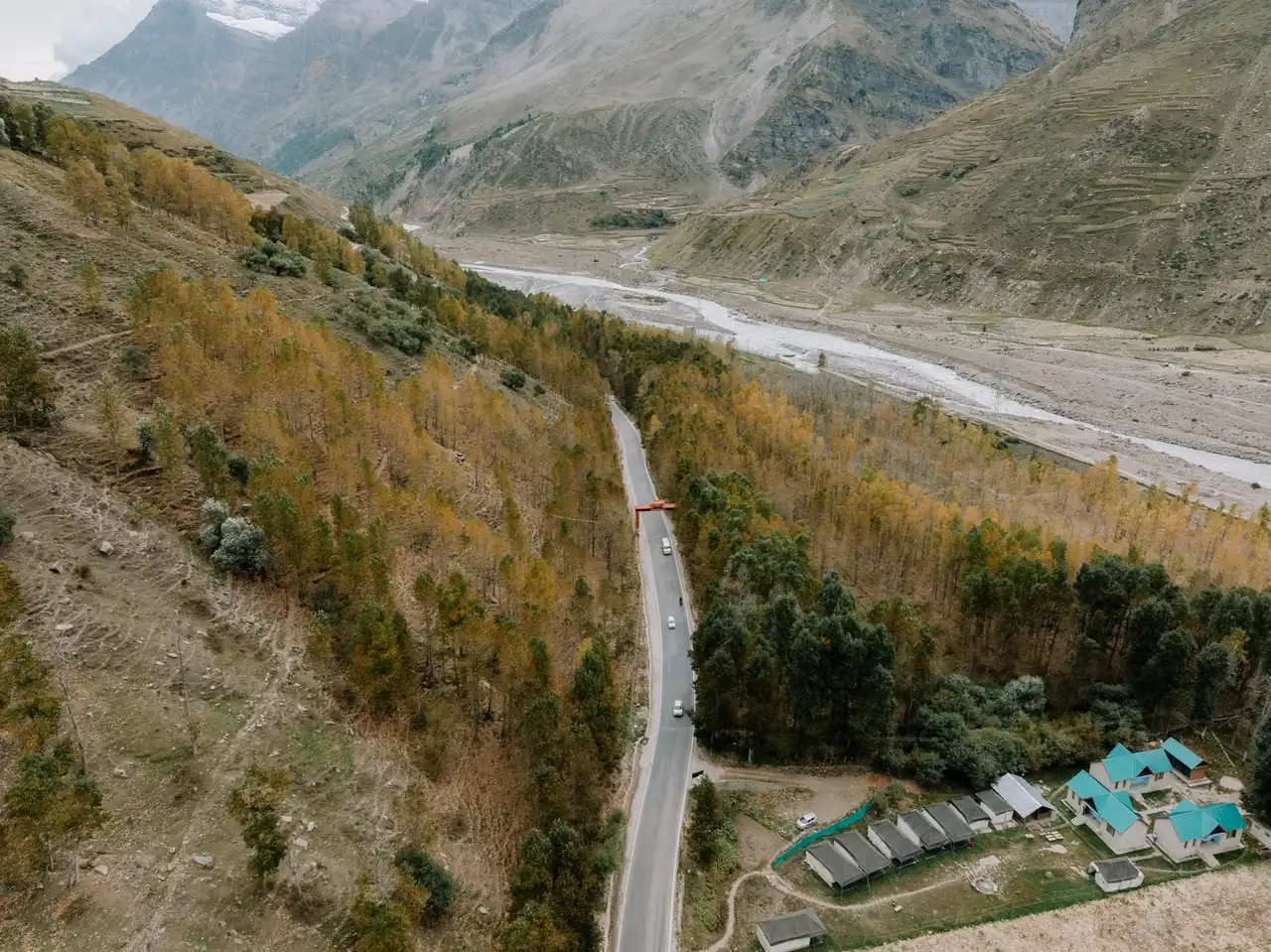
The Surya Spiti Marathon has established itself as one of the most distinctive mountain and altitude races on the international calendar, set in a landscape unlike any urban circuit or standard road race. In the Spiti Valley, at more than 3,800 meters above sea level, the event combines physical effort, extreme scenery, and logistics that demand precision down to the smallest detail. This is not a marathon for chasing a personal best; above all, it is an endurance test in one of the harshest and most photogenic environments in the Himalayas.
The 2026 edition is organized as an initiative of the Indian Army and features four official distances: 77 kilometers, 42.195 kilometers, 21.0975 kilometers, and 10 kilometers. The event is scheduled between August 28 and 30, with the main start in Shang Sumdo, in Kaza, within the state of Himachal Pradesh. The offering combines ultra distance, a full marathon, a half marathon, and a short course, but even the most accessible option retains the tension of the high plateau, where the air is thinner and every stride demands more.
A race in a place where the landscape competes too
Spiti does not sell decoration; it offers a striking geography. Runners pass along mountain roads, stretches of cold desert, glacial rivers, and monasteries that seem embedded in the rock as if they had grown with it. That mix turns the event into something closer to a sporting expedition than a conventional race. The value of the bib is not only in covering the distance, but in doing so in a territory where altitude changes breathing, temperature, and even the perception of effort.
The organizers stress that it is a high-performance experience, but also one of adaptation. The altitude of Spiti Valley demands respect for the body’s timing. Poor sleep, insufficient hydration, or arriving in a rush can derail a race that is already demanding enough on its own. That is why the most repeated element in the official information is not the stopwatch, but acclimatization, an unglamorous term that is decisive here. In Spiti, a fast start can cost dearly later on.
That context explains why the race attracts both experienced runners and enthusiasts drawn to adventure events. The appeal is not a mass finish line or a traffic-free city, but a much harsher image: bibs at dawn, empty roads, towering mountains, and a finish line earned as much with the mind as with the legs.
Dates, venue, and official distances
The 2026 edition is presented with two key race days. August 28 is reserved for the 77-kilometer event, known as the Kunzum La Challenge, while August 30 brings together the marathon, half marathon, and 10K. The start is located in Shang Sumdo, referenced geographically in Kaza, Himachal Pradesh, and the event retains its high-altitude challenge label under the banner of an Indian Army initiative.
The official distances are four and cover very different profiles. The 77K ultra starts at Kunzum La and finishes in Kaza. The full marathon covers 42.195 kilometers between Sumdo, Giu, Hurling, and back to Sumdo. The half marathon, 21.0975 kilometers, takes place between Kaurik, Lepcha, and Sumdo. The 10K, named the Highland Dash, links Sumdo and Sugar before returning to the starting point. The race is also AIMS certified, a seal that guarantees homologated measurements for the advertised distances.
In practical terms, this certification matters because it provides a solid basis for performances and comparison across editions. It does not remove the course’s difficulty or soften the altitude, but it does give confidence to those who care about route accuracy. In a race where elevation gain, thin air, and weather already introduce too many variables, official measurement is a valuable rarity.
What makes the course different
The defining feature of the Surya Spiti Marathon is not just the altitude, but the combination of isolation, terrain, and climate. The valley’s geography forces runners to deal with mountain roads and landscapes that change every kilometer. There are stretches exposed to the wind, curves that break rhythm, and an environment that can shift from harsh sun to much colder conditions in a matter of minutes. The race demands legs, but also terrain awareness.
The route has something of a road movie and something of an alpine crossing. It is not the typical event where runners rely on the crowd to regulate their effort. Here, breathing, pacing, and the ability not to speed up when the scenery seems to invite it matter more. That tension is part of its appeal. Those who run in Spiti are not only competing against other bibs; they are competing against the temptation to start faster than is wise.
There is also a visual component that explains its magnetism. Images from the race usually show a powerful contrast between the runners and the Himalayas. The human figure appears small, almost fragile, within an immense geography. That kind of setting elevates the narrative value of the event and has made it a highly followed race for those seeking events with their own identity, not just distances and times.
Registration, fees, and participation categories
Registration does not use a single fee, but rather two main tiers. For personnel from the Indian Armed Forces, the listed fee is 499 rupees, exclusive of taxes. For the open category, aimed at civilian participants, the published prices reflect a 15% discount on the base rates. In that bracket, the 77K costs 2,974.15 rupees, the marathon 2,124.15, the half marathon 1,529.15, and the 10K 934.15.
Those amounts place the race in a reasonable range for an event of this profile, especially considering the mountain logistics, certified measurement, and institutional weight behind the organization. That said, the real cost for the runner never ends with the bib. In a destination like Spiti, travel, accommodation, extra acclimatization days, and a wide margin for unexpected issues all have to be added. So, rather than an isolated registration fee, the race requires overall trip planning.
The participation structure also helps explain the event’s DNA. There is a clear orientation toward military personnel and veterans, but civilian access is open and part of the race’s identity. In practice, this creates an uncommon mix of military discipline, sports tourism, and endurance athletics. The result is an event with a very particular atmosphere, less commercial than other major races and more closely tied to the territory.
Medical screening, safety, and fitness criteria
Safety is not presented as an add-on, but as a core requirement. During bib collection, a mandatory medical exam is conducted, and anyone who does not pass that check may be barred from the start. In a high-altitude environment, this measure is not a formality. It is a reasonable barrier against risks that would be far less likely on an urban course, but in the Himalayas become concrete and serious.
The decision to require a health screening fits the race’s logic. The Spiti Valley is not a setting where improvisation is possible. The body responds differently here, and altitude more easily punishes dehydration, fatigue, and mountain sickness. That is why the event aims to prevent competitive ambition from pushing someone beyond a safe threshold. In journalistic terms, the most relevant fact is not who wins, but how the runner is protected from a real risk.
This also explains why the organization insists so much on prior preparation. Having an aerobic base is not enough. You need to arrive with time to spare, sleep at altitude if possible, reduce effort in the first few days, and accept that your usual pace is not a valid reference. What would be an easy run at sea level can become, in Spiti, a precise management of pulse and air.
Acclimatization and adaptation to altitude
The Spiti Valley sits above 3,800 meters, a figure that already sums up much of the challenge. The most repeated recommendation from the organizers is to arrive at least three or four days before the race. That buffer allows the body to begin adapting gradually to the lower oxygen levels. Arriving on the same day, or even just one day in advance, would be too risky for most runners.
Adapting to the high plateau is not like a simple warm-up. During the first hours, it is advisable to drink more than usual, avoid any unnecessary effort, and opt for light meals with sufficient carbohydrate intake. The logic is simple: help the body work with less extra load. It is also wise to avoid intense training as soon as you arrive. At altitude, impatience usually comes at a high cost.
The race embraces that reality and makes it part of its story. It is not about arriving and running, but about living with the place. In events like this, patience is almost a sporting discipline. Those who respect it can enjoy the surroundings more and manage effort better. Those who ignore it often discover too late that the legs are not the only limit.
What clothing and what gear make sense in Spiti
Technical clothing takes on double value in an environment where the sun can be intense and the wind biting. The most sensible recommendation is to dress in layers: a breathable base layer, a light thermal layer, and a jacket that blocks the wind. The idea is not to dress as if for the depth of winter, but to be able to regulate temperature during a race that may start in the cold and end with a much drier, harsher feel.
Footwear matters more than in an urban half marathon too. Mountain routes and uneven terrain favor shoes with good grip and a reliable outsole, especially on sections where the surface leaves no room for mistakes. There is no need for a heavy boot, but there should be enough traction to maintain stability. At altitude, every stumble matters more because physical margin is smaller and fatigue arrives sooner.
Alongside footwear, small details stop being accessories and become allies. A buff, cap, or head covering helps against the strong mountain sun. So do fabrics that wick sweat well and do not soak easily. The thermal sensation in Spiti can be deceptive: even if the air is dry and the sky looks clear, prolonged exposure is more punishing than it appears. That is one of the classic traps of the high Himalayas.
How to reach the valley and why the journey matters so much
Logistics are part of the race almost as much as the start itself. The nearest airport indicated by the organizers is Kullu-Manali, also called Bhuntar, from where you can continue by taxi or bus. Another option is to reach it by road from Manali, though the Rohtang pass and the rest of the journey demand time, patience, and some tolerance for a trip that is not always comfortable. The nearest major railway station listed is Chandigarh, which then connects with buses or shared vehicles.
In practice, the journey already prepares the body and mind for what is coming. Mountain roads do not offer the smooth pace of a big city or the comfort of a short transfer. They are a fitting prelude to the spirit of the event. The runner arrives tired, yes, but also more aware of where they are. And that helps explain that nothing here works like a standard road marathon.
The official information also refers to accommodation and a location guide, two elements that underline that the event is not limited to the course itself. The runner moves through a remote region with specific needs for rest, nutrition, and adaptation. In a race like this, deciding when to leave, where to sleep, and how long to stay is part of performance. The trip is not a formality; it is a chapter of the effort.
Prizes, awards, and the event’s competitive logic
The announced prize purse exceeds 40 lakh rupees, a figure that places the event at a notable competitive level for a race of this kind. The organizers also spell out specific rules depending on the number of participants in each age group. If a category has five runners or fewer, only first prize is awarded. Between six and ten participants, first and second are awarded. From eleven onward, the usual three podium spots are distributed.
That mechanism shows a desire to structure the competition with clear criteria, which is especially important in mountain races where course difficulty could distort simple comparisons. There is also a relevant distinction between defense personnel and civilian participants. The former compete in defense and age categories, but are excluded from the open category. Civilians, in turn, compete in the open and age categories. The system does more than organize the podium; it defines the meaning of the competition.
Beyond the prize money, simply finishing already carries significant symbolic weight. The bib comes with a finisher’s medal and an official timing certificate. In such an extreme setting, these are not just protocol accessories. They function as tangible proof of an experience that leaves a physical and emotional mark difficult to replicate in any other type of event.
Why this race has drawn so much attention
The Surya Spiti Marathon fits a global trend: the search for races with identity, territory, and a story. Many runners now look beyond the official time and pay attention to the story that surrounds the start line. On that map, Spiti occupies a very clear place. It has altitude, isolation, a powerful aesthetic, and an organization backed by the Army, which reinforces the event’s distinctive character.
The rarity of the setting also matters. There are not many races that offer such an extreme combination of altitude, scenery, and certified distance. That balance of hardship and beauty makes it a highly recognizable sporting product. The image of a runner in the mountains travels well, but behind that image lies a less romantic and more demanding reality: scarce oxygen, cold, long roads, and the need for serious preparation.
For that reason, the race has moved from a niche event toward something of a reference point for those following ultrarunning and high-altitude mountain races. It is not massive, nor does it aim to be. Its strength lies in its uniqueness. While other marathons compete on speed, Spiti competes on intensity of experience. And in that field, its proposition is very hard to imitate.
What a marathon at the roof of the world leaves behind
A race like this is measured by more than a stopwatch. It is measured in adaptation, caution, and the ability to accept that the body has different limits when the air thins out. Spiti turns racing into something broader than a course: an exercise in respect for the environment and in honest reading of one’s own strength. Those who finish there come away not just with a time, but with a new benchmark for what mountain running means.
The 2026 edition reinforces that idea with a clear format, well-defined distances, AIMS certification, and a calendar that concentrates attention into two August days. Between the 28th and the 30th, the valley once again becomes a setting for sustained effort, surrounded by snow, rock, and silence. This is not a race for measuring speed alone. It is an event that places endurance within a landscape that gives nothing away for free.
In the end, that is where its journalistic and sporting appeal lies. The Surya Spiti Marathon does not need exaggeration. What it already has is enough: real altitude, a demanding course, complex logistics, and an environment that imposes its own rules. In an increasingly uniform calendar, that kind of difference is worth far more than promotional noise. Here, the most eloquent fact remains the same: running at 3,800 meters changes the way you understand a marathon completely.
You may also like: Ladakh Marathon 2026: dates, events, routes, and requirements and Thimphu Marathon 2026: complete guide to Bhutan’s race.



How to prevent thigh chafing: causes and real solutions

Women’s running windbreakers: seven jackets and how to choose

Do more workouts get rid of soreness? A guide for runners

Jaén Half Marathon 2026: Record 3,800 Runners Registered

Men’s short running tights: how to choose the right pair

World Triathlon confirms data breach involving medical data

Izan Edo targets podium at Miyazaki World Cup

María Pérez ranks ninth in World Athletics’ 2026 top ten

Dos Santos, Duplantis and Sawe: World Athlete of the Year finalists

San Silvestre Vallecana 2026: 42,000 places, prices and start times

 Races3 months ago
Valencia Half Marathon 2027: date and registration

 Races3 months ago
Valencia Marathon 2026: entry, ballot and course

 Reviews and Comparisons4 months ago
Asics Gel-Roadmiles 3 for men: review and current price

 Reviews and Comparisons4 months ago
Asics Gel Sonoma 8 Gore-Tex: complete analysis for trail and rain

 Sneakers3 months ago
Saucony Endorphin Pro 4: full review and verdict

 News5 months ago
Strava API 2026: what changes for clubs, challenges and runner apps?

 Reviews and Comparisons5 months ago
Nike Alphafly 3: opinions, sensations, and real key points

 Reviews and Comparisons4 months ago
Under Armour running shoes review 2025-2026: models and key features

 Sports Equipment4 months ago
Shoe sizes in cm: a clear guide to getting the right fit for your footwear

 Sneakers3 months ago
Skechers GO RUN Consistent 2.0 analysis: comfort and limits

 News5 months ago
Valencia Marathon 2026 route: key tips to train and run better

 Sneakers4 months ago
Adidas Adizero Boston 13 for men: review and verdict