Races
Thimphu Marathon 2026: complete guide to Bhutan’s race
The Bhutan race returns in 2026 with five distances, tough altitude, and a route deeply connected to peace and culture.

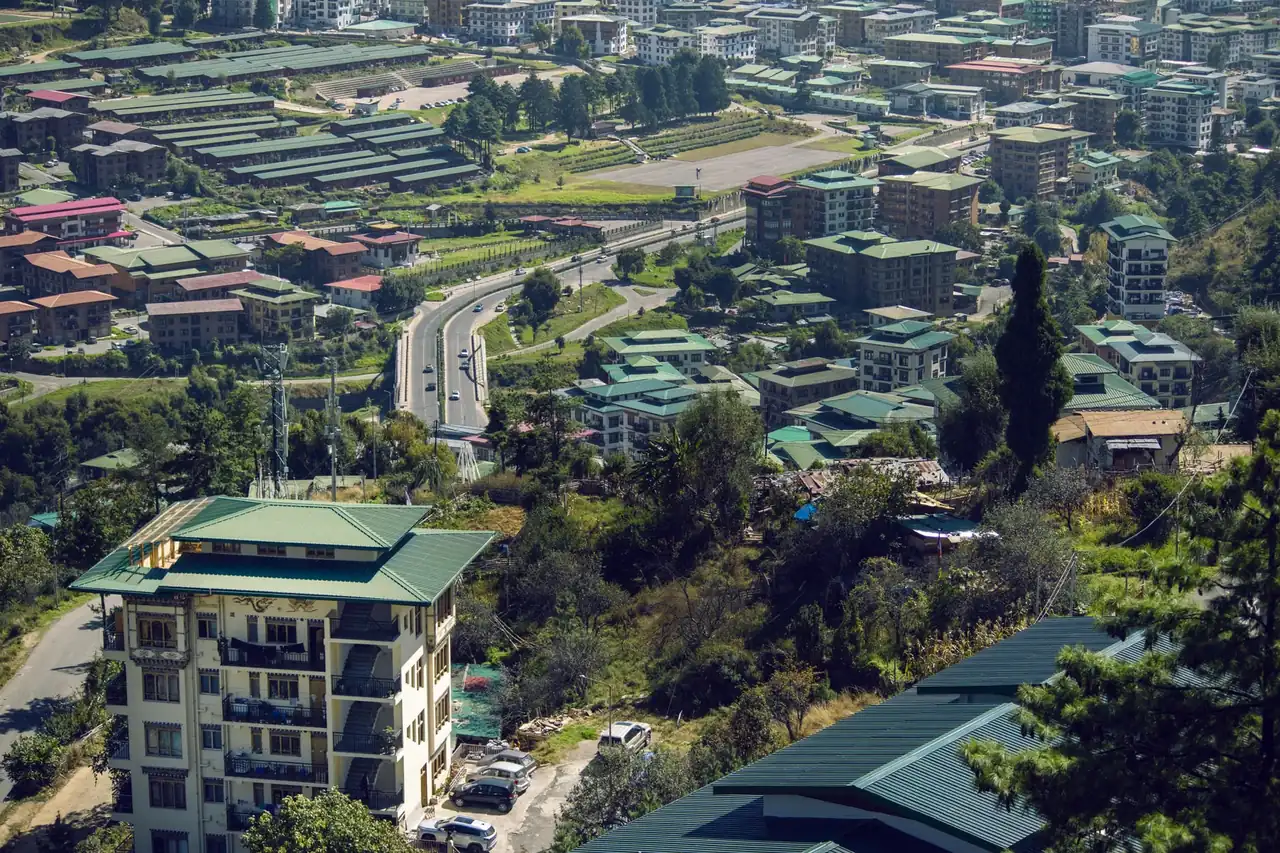
Thimphu Marathon puts Bhutan back on the international running map with a proposal that blends sport, scenery, and national storytelling. The second edition will take place on September 19, 2026 in the country’s capital, at an altitude of around 2,300 meters, with start and finish at Chang Lam SE, Thimphu, and with a script that goes far beyond simply adding up kilometers.
The event arrives with five official distances, from 2.5 kilometers to the full marathon, and with a very clear identity: peace, environmental awareness, and the philosophy of Gross National Happiness, the idea with which Bhutan measures progress not only by economic figures, but by collective well-being, culture, and harmony with the environment. In a calendar saturated with urban races that all look alike, this event offers a high-mountain setting, thin air, and a distinctive narrative, almost like a manifesto.
A race born to tell something more than times
The organizers present this race as a symbol of unity, resilience, and international friendship. That statement is not just marketing decoration. The course and the event concept are designed to connect the runner’s effort with the message of a country that has made sustainability and attention to detail a central part of its public image. Bhutan also sells itself to the world as a high-value, low-impact tourism destination, and the race fits that line with unusual naturalness.
The setting helps too. Thimphu does not resemble the textbook sporting capitals. There are no endless avenues or a skyline of skyscrapers blocking the horizon. Here the race moves among valleys, riverbanks, monasteries, chortens, and Himalayan views, with an orography that makes it impossible to forget for a second where you are running. The landscape is not a backdrop; it is part of the effort, as if every climb reminds you that, in this case, sport is contested at a different pace and under different rules.
The 2026 edition also builds on the idea of Gelephu Mindfulness City, a concept Bhutan has turned into one of its major future bets. Although runners will only notice it indirectly, the message is clear: the race wants to align itself with a vision of the country that embraces modernity without giving up its identity. Few races can claim that their institutional message carries so much weight in the sporting experience.
Altitude changes the way you run
One of the defining features of the Thimphu Marathon is its high-altitude setting. The capital sits at approximately 2,300 meters above sea level, a level that does not affect every runner in the same way. Effort becomes sharper, heart rate rises sooner, and breathing loses some margin. This is not a race for improvising your sensations or assuming that your usual pace will work unchanged.
In a race like this, altitude does not hit dramatically from the first step, but it does act like an invisible incline. More experienced runners know that the air feels heavier and that the body begins asking for concessions sooner than usual. That is why the full marathon and the half marathon have a special appeal: they offer a demanding experience, with an almost alpine feel, without crossing into extreme territory.
The elevation and difficulty of the course reinforce that character. The reference information describes the route as hilly and road-based, though with stretches through natural and rural surroundings. In practice, that means a race where asphalt and open landscape coexist, with the mountains always close and the sense that every kilometer requires a small negotiation with the terrain.
The official distances and the profile of each one
The event offers 5 kilometers, 10 kilometers, half marathon, and marathon, plus a 2.5-kilometer distance that opens the door to less experienced runners and participants looking for a more symbolic than competitive experience. That variety means the event is not limited to a very specific type of runner. There is room both for those chasing performance and for those seeking a more accessible experience.
The full marathon, at 42.195 kilometers, is designed for runners willing to take on the big challenge at altitude. The half marathon, at 21.097 kilometers, offers a more manageable version without giving up the appeal of the setting. The 10K, known as the Peace Run, is presented as an inclusive and vibrant format, while the 5K Green Run and the 2.5K Memorial Run open the experience to families, first-timers, and participants of more varied ages.
The age requirements also help explain the event design. The marathon and half marathon require runners to be 18 years old, the 10K is set at 12 years old and above, and the 5K and 2.5K events have no age restriction. The event architecture is designed to broaden participation without diluting the overall tone of the race, which remains clearly international and competitive over the longer distances.
A route that passes through Thimphu’s landmarks
The start of the marathon and half marathon is located near Buddha Dordenma, one of the city’s major visual icons, and the finish is on Chang Lam SE. That choice is no accident. The course turns the race into a moving postcard, with a sequence of points that help you read Bhutan from the inside: the city, the Wang Chhu River, traditional buildings, religious compounds, and the mountainous backdrop.
The route also passes by places of strong cultural value, such as Tashichho Dzong, a fortress-monastery that sums up much of Bhutan’s imagined identity: spirituality, administration, and tradition living together in one place. In a conventional road race, such a building would be just a photographic background. Here it acts almost like a permanent reminder that the event is woven into a living geography, not into a neutral circuit designed to be timed without context.
The 2.5-kilometer distance, linked to the Memorial Run, also carries a special symbolic weight because of its connection to the Memorial Chorten. The site is not just an urban landmark; it is part of the city’s daily and spiritual life. That stretch gives the event a depth that goes beyond the stopwatch, and explains why this race has begun to attract runners drawn to experiences that combine sport and culture with an intensity that is hard to find in other destinations.
Price, registration, and what the bib includes
The data observed for 2026 place the entry fees in a very specific and accessible range within the event’s international context. The 2.5-kilometer distance costs 4 euros, the 5-kilometer distance 7 euros, the 10-kilometer distance 11 euros, the half marathon 14 euros, and the marathon 21 euros. These are striking figures compared with many European races, although the full picture must take into account travel, logistics, and the particularities of access to Bhutan.
Registration includes much more than the bib. Listed services include a finisher medal, event T-shirt, medal engraving, timing chip, prize money, pacers, medical support, hydration and nutrition stations, baggage storage, toilets, changing rooms, photography, expo entry, and post-race food. Parking is also mentioned, along with a five-night, six-day travel package with hotels, transportation, and meals, plus visa fee and Bhutan’s SDF per day.
That last point is important. The event is not limited to a simple sports entry fee, but is integrated into a travel structure that reflects the way Bhutan manages tourism. In other words, running here is not just about paying a fee and showing up at the start line. There is a broader logistical and administrative framework, with country entry costs, visa requirements, and travel conditions that are a real part of the experience.
Start, bib pickup, and confirmed schedules
The available information for this edition indicates that the BIB Expo will take place on September 18, 2026 at Changlimithang Football Stadium in Thimphu, from 10:30 to 19:00. The race itself will take place on September 19, 2026, with staggered starts by distance: marathon at 5:00, half marathon at 5:30, 10 kilometers at 6:00, and 5K and 2.5K at 6:30.
The schedule follows a sensible logic for a race at altitude. Starting early helps avoid some of the heat and manage the light better, especially in a city where the terrain and elevation already add plenty of complexity. It also fits the idea of a ritual race, a day that begins before the city does and gains shape with each start.
Bib pickup the day before, rather than on race day, is a very common sign of organization in international races with a certain volume of participants. In addition, the official communication indicates that updates will be sent by email to registered runners, a practice that may seem routine, but in an event with travelers from different countries it significantly reduces the risk of misunderstandings.
An event with environmental and cultural identity
The race is presented as an eco-friendly initiative and, in official discourse, as an event with a negative carbon footprint in line with Bhutan’s environmental image. Beyond the institutional language, what matters is that the race’s narrative is built on unusual coherence: the country wants to be seen as a conservation benchmark, and the event uses running as a vehicle to reinforce that brand.
The cultural component is not secondary either. The logo incorporates the figure of the Atsara Mask, associated with festivals and a tradition that blends joy, wisdom, and energy. It is a detail that reveals a clear intention: the race does not want to import a global format unchanged, but to dress it with local symbols. In an international market where many races look too much alike, that kind of identity has enormous narrative value.
The community dimension also matters. The first edition brought together runners from several countries and produced official results in the marathon and half marathon, a sign that the event has already begun to build its own memory. This is not an isolated novelty, but a race seeking to establish itself on the calendar of running destinations linked to mountains and travel experiences.
Which type of runner is best suited to this event
The Thimphu Marathon especially appeals to those who value races with context, scenery, and uniqueness. Runners looking for a flat, predictable, purely fast course will probably not find their best setting here. By contrast, those who enjoy sports travel, dawn starts, and culturally rich environments will find a proposal that is very hard to match.
The marathon and half marathon require specific preparation for altitude, although the event’s appeal does not end with the physical challenge. The 10K and 5K offer a less demanding way into the race, while still maintaining contact with the city and its symbols. Even the shortest distance preserves the feeling of taking part in something that resembles more a collective celebration than a simple ranking by times.
There is also a factor that matters more and more in international running: the search for meaning. Many runners no longer travel just for personal bests. They want a place that leaves a memory. In that sense, Thimphu offers a powerful combination of altitude, spirituality, atmosphere, and country narrative. This is not a race to collect medals mindlessly; it is a race that leaves questions, images, and the feeling of having run in another time.
What this second edition leaves on the international running map
The second edition of Thimphu Marathon arrives with a more solid proposal than a debut and enough personality to stand apart from other Asian and Himalayan races. Its schedule, distances, price, and context place it as a niche race, yes, but also as one of those events that gain value precisely because they do not try to look like all the others.
At heart, its strength lies in the mix: athletic effort, altitude, local culture, religious symbols, environmental messaging, and a vision of the country that seeks to unite well-being and development. That combination makes every technical detail read on a broader level. The date matters, but so does the place. The price matters, but so does what it includes. The distance matters, but even more so the story around it.
That is why interest in this race does not depend only on the ability of its runners. It depends on a broader idea: running can still be a way to measure the body, but also to read a territory. In Thimphu, that reading becomes especially clear. Between the cold air of the altitude, the white walls of the temples, and the mountains that seem to watch over the course, the race advances like a moving chronicle, the kind you remember long after crossing the finish line.
You may also like: Angkor Empire Marathon: complete guide to the Angkor marathon.



How to prevent thigh chafing: causes and real solutions

Women’s running windbreakers: seven jackets and how to choose

Do more workouts get rid of soreness? A guide for runners

Jaén Half Marathon 2026: Record 3,800 Runners Registered

Men’s short running tights: how to choose the right pair

World Triathlon confirms data breach involving medical data

Izan Edo targets podium at Miyazaki World Cup

María Pérez ranks ninth in World Athletics’ 2026 top ten

Dos Santos, Duplantis and Sawe: World Athlete of the Year finalists

San Silvestre Vallecana 2026: 42,000 places, prices and start times

 Races3 months ago
Valencia Half Marathon 2027: date and registration

 Races3 months ago
Valencia Marathon 2026: entry, ballot and course

 Reviews and Comparisons4 months ago
Asics Gel-Roadmiles 3 for men: review and current price

 Reviews and Comparisons4 months ago
Asics Gel Sonoma 8 Gore-Tex: complete analysis for trail and rain

 Sneakers3 months ago
Saucony Endorphin Pro 4: full review and verdict

 News5 months ago
Strava API 2026: what changes for clubs, challenges and runner apps?

 Reviews and Comparisons5 months ago
Nike Alphafly 3: opinions, sensations, and real key points

 Reviews and Comparisons4 months ago
Under Armour running shoes review 2025-2026: models and key features

 Sports Equipment4 months ago
Shoe sizes in cm: a clear guide to getting the right fit for your footwear

 Sneakers3 months ago
Skechers GO RUN Consistent 2.0 analysis: comfort and limits

 News5 months ago
Valencia Marathon 2026 route: key tips to train and run better

 Sneakers4 months ago
Adidas Adizero Boston 13 for men: review and verdict