Races
Talavera San Silvestre 2025: course, streets and finish
The route returns to the Prado Gardens, passes through the historic center, and maintains the festive rhythm of the end of the year.

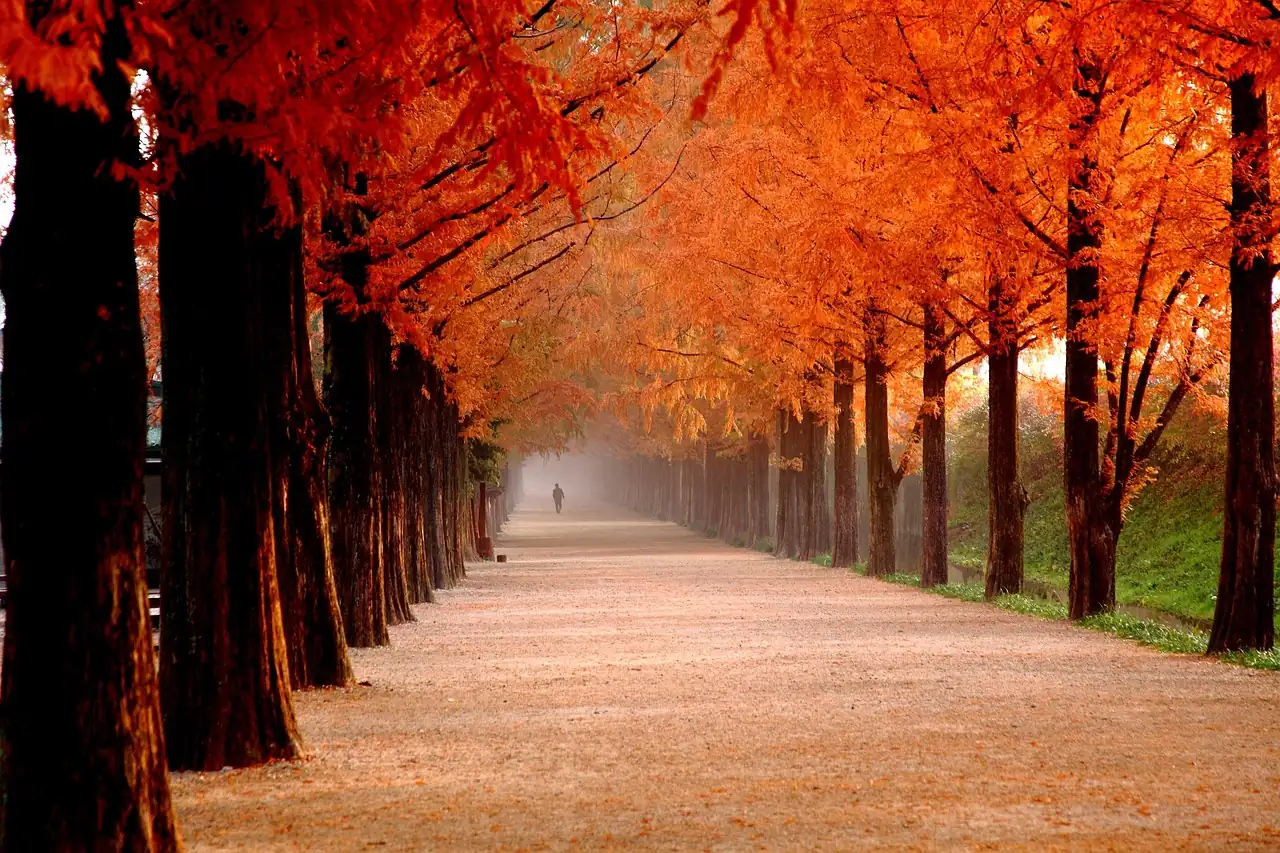
Imagen: KIMDAEJEUNG / Pixabay
The course of the 2025 San Silvestre de Talavera once again puts the focus on the heart of the city: a 5.7-kilometer urban circuit that links historic streets, iconic bridges, and the finish at the Jardines del Prado, a finale that restores to the race a very recognizable image for runners and residents alike.
The 2025 edition preserves the popular spirit of these year-end races, but with a more prominent route, designed to showcase Talavera in motion and to close the sports calendar with a fast, lively, and highly identifiable course. The start is set for December 31, on an afternoon when the city becomes both a showcase and a track.
A circuit that shows Talavera without leaving the urban pulse
The big novelty of this edition lies in the choice of the finish. After more than two decades without stepping on that space in the decisive stretch, the race brings back the Jardines del Prado as the finish line, a decision that gives the route personality and separates it from being just a Christmas stroll with a bib. In a San Silvestre, the route is not a secondary detail: it is part of the story of the day, the setting that turns each kilometer into a different postcard.
This return to the Prado also has a symbolic reading. Reaching such a recognizable place provides continuity between the race’s tradition and the memory of those who have run it for years. The circuit is not limited to adding meters; it seeks to stitch the city together with a showcase logic, displaying the historic center, the bridges, and the most representative streets in a compact urban route.
The route announced by the organizers and reported by the local press points to a 5.7-kilometer course, passing through areas such as Avenida Pío XII, the Reina Sofía Bridge, the Roman Bridge, Santa Catalina, the bullring, and the entrance to the Jardines del Prado through the gate opposite the Basilica of Our Lady of Prado. Overall, the route combines open sections with tighter stretches, which usually gives this kind of race a sense of constant visual change, almost as if the city were turning a page at every bend.
The structure of the circuit favors a lively pace, something many participants appreciate in a race of this kind. This is not a long-distance event or a mountain route where elevation gains rule. Here, the emphasis is on fluidity, atmosphere, and the chance to run through Talavera as the year draws to a close. That mix explains why San Silvestre races work more as a sporting celebration than as a mere competition.
The start, the passage through the historic center, and the finish at the Prado
The race takes place on December 31, 2025, and the adult start is scheduled for 6:00 p.m., according to the information released at the presentation of the event. Before that, the children’s races begin at 4:30 p.m., giving the afternoon a family-friendly, staggered rhythm, with the city center breathing athletics from early on. In events like this, the schedule matters as much as the route, because it affects the light, the temperature, and the kind of atmosphere created around the circuit.
The passage through the historic center is one of the most striking parts of the course. Running through streets with heritage value changes the perception of effort: the runner does not just see asphalt and a stopwatch, but also facades, bridges, and landmarks that are part of the local identity. In Talavera, that heritage element intensifies at the finish in the Jardines del Prado, where the final stretch gains a visual weight far greater than that of a conventional finish line.
The organizers have emphasized that the goal of the change is to include the main historical monuments and the city’s most notable streets. In journalistic terms, that means the race ceases to be solely a sporting event and becomes a kind of urban route narrated in strides. The runner moves forward and, at the same time, reviews a geography that is familiar to locals and intriguing to those discovering it on one of these mild winter afternoons.
The entrance to the Jardines del Prado, opposite the basilica, concentrates much of the emotional weight of the finish. Open spaces tend to amplify the sound of the race: voices, applause, the patter of shoes on the pavement, and that mix of relief and smiles that appears when the finish line is finally in sight. In a popular race, that atmosphere is worth almost as much as the final time.
Why this route works so well for a San Silvestre
San Silvestre races have their own language. They are not looking for the silence of an elite race or the toughness of a mountain event, but for the shared energy of a city going out to run while closing the year. That is why Talavera’s urban and relatively short course fits precisely into that logic: it allows experienced runners to take part, but also those who come for the atmosphere, the tradition, or simple holiday curiosity.
The 5.7-kilometer distance also helps maintain the event’s accessible character. It is not an intimidating course, but not so short that it becomes a mere symbolic lap either. That middle ground has value because it leaves room for personal competition without losing the playful spirit. In San Silvestre races, that balance is almost an art: if the circuit is too hard, the party falls apart; if it is too simple, it loses personality.
Talavera has found in this route a way to connect sport and city. The passage through bridges and historic areas gives the course an almost stage-like dimension, as if the circuit were a ribbon linking the city’s main settings. And the finish at the Prado acts as a natural finale, a kind of full stop and continuation that frames the effort against one of the municipality’s most recognizable spaces.
The choice of route also strengthens the event’s image compared with other popular races nearby. In a very crowded end-of-year calendar, competitions with a well-defined, distinctive, and easy-to-remember course tend to stand out over those that blur into one another. Here, the identity of the circuit is part of its value: you don’t run just to add kilometers, but to cross a city that reveals itself on a December afternoon.
Atmosphere, participation, and the weight of tradition
The San Silvestre de Talavera does not exist in isolation within the calendar, but is connected to a very widespread custom in Spain: saying goodbye to the year by running, often in costume, with family, or with the usual group. That festive component does not detract from the seriousness of the event; on the contrary, it gives it continuity. The race endures precisely because it mixes sporting enthusiasm, local identity, and an unavoidable dose of celebration.
The last edition held was met with notable participation. The local press reported 3,000 registered runners and a renewed finish at the Jardines del Prado, a fact that illustrates the race’s appeal when the course offers a clear incentive. In popular races, the final image matters a lot: a finish in an iconic place is remembered, shared, and helps build loyalty among those who return year after year.
The children’s races also matter, as they are part of the day and broaden the meaning of the event. The race is built in layers: first the children, then the adults, and around both, an atmosphere that blends sport, leisure, and tradition. That progression turns the afternoon of December 31 into something more than just a sports schedule. It is a civic ritual, a neighborhood and citywide event at the same time.
The San Silvestre works like a collective snapshot of what popular running means today: people with very different paces sharing the same space, without competitiveness erasing the race’s friendly character. Talavera, in that sense, has an advantage. The urban center, the heritage elements, and the finish at the Prado create a setting that reinforces the idea of shared celebration.
What is known about registration and the event format
Reference information points to registration managed through the event’s technical organization, with an online format and deadlines that in the previous edition extended through December. Although the exact details for 2025 depend on official confirmation, the usual model for these races follows a familiar logic: limited bib numbers, declared pace at the time of registration, and assigned start corrals to organize the start with some practical sense.
This system is not merely a formality. In popular races with lots of participants, ordering the start according to the expected pace helps prevent bottlenecks and makes the initial start safer. In short urban courses, where the first meters are often crowded, logistical flow is just as important as the route itself. A good circuit can be spoiled by poor runner placement; a normal circuit improves greatly when the organization works precisely.
It is also common for bib and race pack pickup to be concentrated in the days leading up to the event, as happened in the previous edition with collection at Centro Supera. These details do not define the race on their own, but they do shape the full experience for participants. The San Silvestre does not begin at the starting gun, but when the runner receives the bib, checks the schedule, and starts to realize that the year’s end is running too.
As for the price, the information seen in competitors’ reports mentioned an approximate range of 8 to 12 euros in the previous edition, although any financial figure should be taken cautiously until the organization publishes the confirmation for the current year. In a popular race, that range usually fits what many runners expect from a short, urban, holiday-themed event.
Talavera on the map of year-end San Silvestre races
The end-of-December calendar is full of races with a Christmas name, but not all offer the same balance between route, identity, and participation. Talavera occupies a very interesting middle ground: it has enough stature to attract a broad audience and, at the same time, retains a local tone that makes it recognizable within the popular race circuit of Castilla-La Mancha.
Its main strength lies in the relationship between route and urban landscape. It does not need a massive distance or spectacular altitude to generate interest. It is enough to have a well-designed circuit, a finish with symbolic weight, and a city that is easy to run through. That combination usually works better than events that try to resemble every other race and end up losing their own character.
In addition, Talavera shares with other San Silvestres a quality that runners appreciate even if they do not put it into words: the feeling of farewell. It is not just about competing, but about putting a physical full stop to the year, taking over the city, and leaving behind, for a few minutes, the routine of December. At that moment, the shoes do something similar to a pencil on the calendar.
On the map of popular running, this route has memory. It does not merely connect streets; it brings back a finish that had disappeared for more than twenty years and returns it to a space with emotional weight. This kind of decision not only improves the race’s aesthetics: it also strengthens the continuity of tradition and helps explain why some races survive the passage of time so easily.
A year-end finale that Talavera once again tells with short steps and a broad view
The 2025 edition leaves a clear image: an urban race, of moderate distance and with a renewed finish that returns prominence to the Jardines del Prado. The route sums up well what a good San Silvestre seeks to be: fast, accessible, and distinctive enough that every runner can mentally place where they passed and why that stretch makes sense.
With the historic center, the bridges, and the finish at the Prado, Talavera turns a popular race into a small year-end urban chronicle. The runner not only adds kilometers; they move through a city on the eve of farewell, with that unmistakable atmosphere of short afternoon, low light, and shared activity. That is where much of the route’s appeal lies: in its ability to unite sport, tradition, and landscape without the need for artifice.
For that reason, more than just a route, this course functions as a statement of intent. Talavera wants to end the year with a race that has memory, that can be seen from the outside, and that can be felt from within. And when a San Silvestre achieves that, the route stops being just a succession of streets and becomes a way of telling the story of the city.
You may also like: San Silvestre Segovia 2025 Route: Complete Guide.



How to prevent thigh chafing: causes and real solutions

Women’s running windbreakers: seven jackets and how to choose

Do more workouts get rid of soreness? A guide for runners

Jaén Half Marathon 2026: Record 3,800 Runners Registered

Men’s short running tights: how to choose the right pair

World Triathlon confirms data breach involving medical data

Izan Edo targets podium at Miyazaki World Cup

María Pérez ranks ninth in World Athletics’ 2026 top ten

Dos Santos, Duplantis and Sawe: World Athlete of the Year finalists

San Silvestre Vallecana 2026: 42,000 places, prices and start times

 Races3 months ago
Valencia Half Marathon 2027: date and registration

 Races3 months ago
Valencia Marathon 2026: entry, ballot and course

 Reviews and Comparisons4 months ago
Asics Gel-Roadmiles 3 for men: review and current price

 Reviews and Comparisons4 months ago
Asics Gel Sonoma 8 Gore-Tex: complete analysis for trail and rain

 Sneakers3 months ago
Saucony Endorphin Pro 4: full review and verdict

 News5 months ago
Strava API 2026: what changes for clubs, challenges and runner apps?

 Reviews and Comparisons5 months ago
Nike Alphafly 3: opinions, sensations, and real key points

 Reviews and Comparisons4 months ago
Under Armour running shoes review 2025-2026: models and key features

 Sports Equipment4 months ago
Shoe sizes in cm: a clear guide to getting the right fit for your footwear

 Sneakers3 months ago
Skechers GO RUN Consistent 2.0 analysis: comfort and limits

 News5 months ago
Valencia Marathon 2026 route: key tips to train and run better

 Sneakers4 months ago
Adidas Adizero Boston 13 for men: review and verdict