Races
Trail Montearagón 2026: course and registration
Quicena is warming up for an event that blends mountains, heritage, and a medieval atmosphere next to Montearagón Castle.

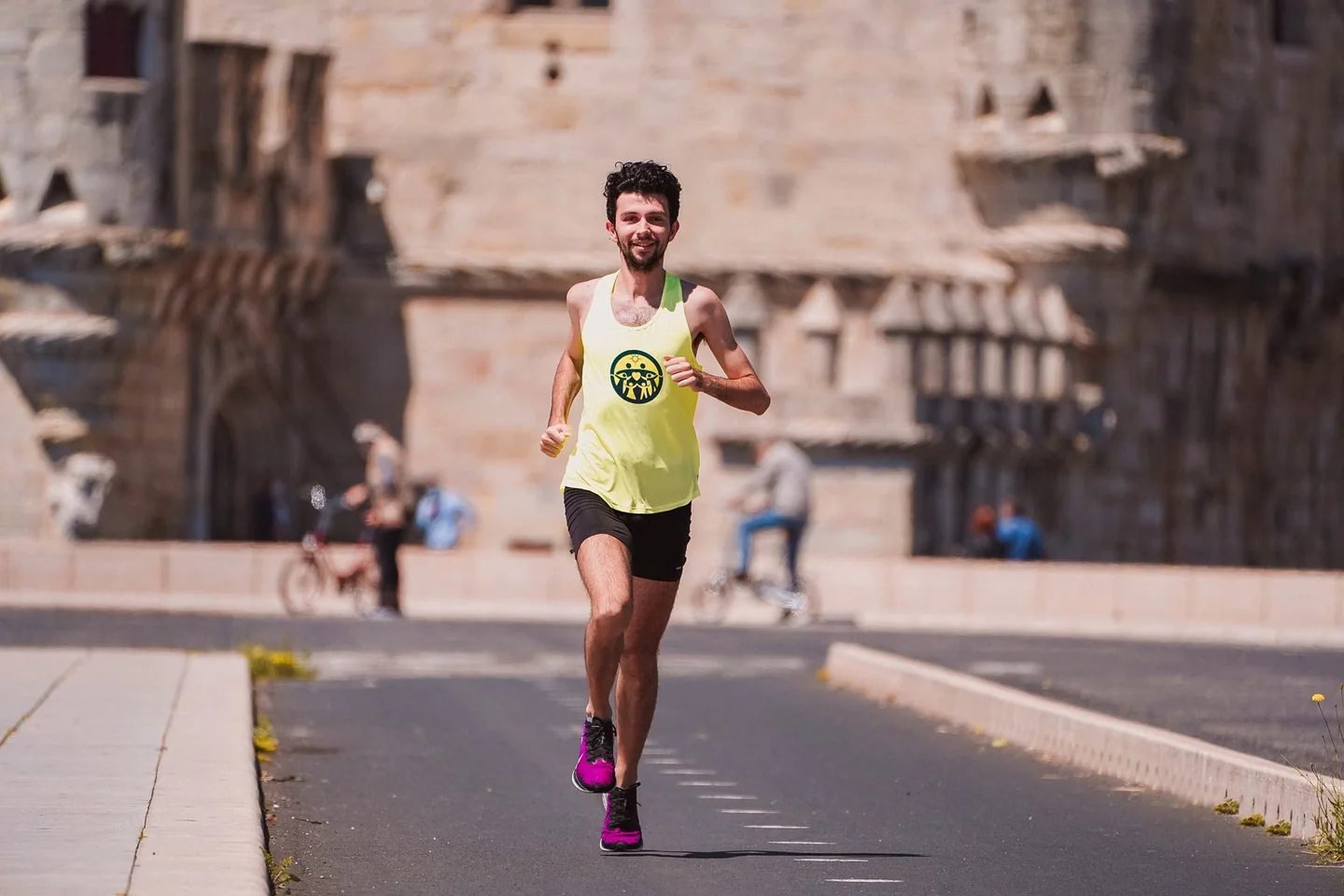
Quicena will once again look toward Montearagón Castle as if it were a stone lighthouse. The ninth edition of the trail will take place on September 26, 2026 with two mountain races, popular walks, children’s events, and a program that blends sport and heritage with a rare naturalness in the Aragonese calendar. It is not just a race: it is a full weekend in which the historical setting and a passion for the mountains intersect on the same trail.
The event brings together 700 bibs, individual aid stations, medical services, baggage storage, showers, and trophies for the best finishers, as well as a parallel schedule featuring a medieval market, a torchlit descent, and music. The result is an experience that goes beyond the format of a classic race and feels more like a local celebration with a sporting center, in the Hoya de Huesca, at the gateway to a landscape that combines trails, moderate elevation gain, and highly recognizable views of the castle.
An event that turns the castle into both starting and finishing point
The IX Trail Montearagón is the result of joint work by the Quicena City Council and the A Ixena Sports Club, two entities that have steadily consolidated an event with a very distinctive identity. Its value lies not only in the course, but in the way it places runners within a broader story: that of a territory determined to showcase its heritage and landscape. The castle is not just a backdrop; it serves as both the symbolic axis and the physical reference of the event.
The 2026 edition preserves that core idea and takes it a step further with a schedule that occupies almost the entire weekend. Friday opens with the Montearagón Rock Festival, free to attend, and Saturday concentrates the main sporting activity. This blend gives the event its own personality: the mountains are not separated from village life, but merge with it. In a crowded calendar of races, that nuance matters, because it explains why this event attracts runners as well as families, companions, and curious visitors.
Its location, in the heart of the Hoya de Huesca, adds a highly recognizable scenic element. The castle surroundings, Quicena’s proximity, and the presence of trails around the fortress create an ideal setting for a popular mountain race. The event does not seek the extreme epic of major ultras; it opts for something more accessible, though no less demanding, and that is a large part of its success.
Two trail distances and an explosive climb that captures the race’s character
The competitive side is structured around two mountain routes: 9 kilometers and 17 kilometers. Official reference figures place both routes at elevation gains that are modest for trail running, but still enough to demand pace, technique, and effort management. In the shorter format, the positive elevation gain is around 256 or 260 meters; in the longer one, it ranges between 455 and 614 meters depending on the source consulted. Beyond the exact difference between sources, the message is clear: this is not a flat route, but a race that demands both legs and mind.
The organizers note that about 90% of the course runs along trails around Montearagón Castle. That feature gives it a truly trail-running feel, with narrow sections, pace changes, and terrain that forces runners to watch their footing. In this kind of race, elevation gain does not always tell the full story; the continuity of the climb, the uneven surface, and the feeling of running surrounded by landscape, with not a single meter of asphalt to break the script, also matter.
One of the most distinctive features is the so-called explosive climb to the castle, dedicated to Raúl Lansac. It is 1,500 meters long with a 10% gradient, a short effort in distance but very intense in sensation. The organization sets aside a special classification and prize for the fastest runners, adding a touch of spectacle without turning the race into a festival of gimmicks. It is a section that sums up the spirit of the event well: brief, hard, highly visible, and connected to the place’s most powerful symbol.
The popular walk expands the event’s reach without losing its mountain spirit
The Trail Montearagón is not aimed only at those competing against the clock. The organizers have planned two popular walks of 5.5 and 10 kilometers, designed for walkers who want to take part in the atmosphere without facing the demands of a race. There are no trophies in this part of the program, as it is conceived as a non-competitive activity, but there is aid station support and the same logistical care as in the other events. That decision opens the door to very different participants and reinforces the family-friendly nature of the day.
This type of format works especially well in small and medium-sized towns, where the race is experienced not just as a competition, but as a way to fill streets, trails, and squares. In Quicena, that logic feels natural: those who run, those who walk, and those who accompany them are all part of the same collective story. It is a way to broaden participation without diluting the sporting character, something that is not always achieved when races grow.
The walks also make it possible to enjoy the surroundings at a different pace. Not everyone comes to a trail race to suffer on the climbs; some are looking for a well-organized walk, with scenery, conversation, and a sense of belonging to the event. The coexistence of both options explains why this event has built up such a loyal base of participants who return for the full experience, not just the bib.
Peque-Trail, family atmosphere, and a weekend that doesn’t end at the finish line
The children’s races complete the sporting offer with the Peque-Trail Montearagón. The presence of categories for the youngest is not a decorative add-on, but a key piece in understanding the event’s overall tone. While at other races children are reduced to mere companions, here they have their own space and are integrated into a day that aims to foster a love for the sport from an early age.
That approach fits a very specific vision of popular running: one that does not end at the finish arch. In Quicena, the Sunday or sports Saturday is surrounded by musical entertainment, services for runners, opportunities for socializing, and an environment designed to encourage people to stay longer. The finish line is only part of the route; the rest happens around it, among conversations, photos, changing clothes, and that mix of fatigue and satisfaction that comes from a well-run race.
The organizers also emphasize practical comfort. There will be signposted parking for cars, baggage storage in the Town Hall building, shower facilities, and medical assistance, including a staffed ambulance in the finish area. In events of this type, these details are not secondary: they determine the sense of safety and the logistical ease for those arriving from elsewhere. The runner’s experience begins long before the starting gun and ends well after crossing the line.
Entries, bibs, and what the race format reveals
The most repeated reference from the organizers is the limit of 700 bibs, distributed among the different categories. In addition, availability is noted at 150 bibs for each trail distance, a figure that suggests a controlled-capacity race carefully balanced in terms of the relationship between participants and available space. That balance helps prevent overcrowding on the trails and allows for a smoother experience on terrain that is not designed for large masses.
According to the reference information, registrations are already open on the official website, although no price is visible in the data provided by the sources analyzed. In any case, the race mechanics rest on a clear premise: the bib buys not just a race, but a package that includes a commemorative T-shirt, aid stations, civil liability and accident insurance, and access to a series of additional services. That package explains why this kind of event has a very different logic from a simple timed start.
The commemorative T-shirt is included in the registration for both runners and walkers, with the possibility of choosing a size during the process. That seemingly minor detail is also a way to gauge the race’s level of organization. In events that care about participation, the garment is not a generic giveaway, but a keepsake designed to accompany the experience. And in Montearagón, where local identity carries so much weight, these gestures help strengthen the memory of the day.
The value of the route and the type of runner it suits best
The Trail Montearagón profile is close to that of an introductory trail race with ambition. It is a suitable race for those approaching mountain running for the first time, but also for regular runners looking for a demanding morning without having to tackle long distances. The terrain combines trails, sustained climbing, and sections where pace changes constantly, requiring runners to proceed cautiously and read the effort well.
For those coming from road running, the appeal lies in the variety. The mountains introduce a kind of uncertainty that does not appear in an urban race: the ground changes, the stride shortens, the breathing adapts to the incline, and the scenery affects how the effort is perceived. One kilometer in trail running can feel like two on flat ground, not because of mathematics, but because the mind works differently. In Montearagón, that transition is especially approachable, since the course does not stretch too far in distance, yet still offers enough elevation to feel authentic.
The explosive climb and the passage through the castle trails add a layer of competitive identity. Not all runners seek the same kind of challenge: some want to accumulate meters, others want to compare themselves with the clock, and others simply want to complete a route in a good atmosphere. The strength of the event lies in allowing those three profiles to coexist without forcing a single interpretation of effort. That versatility is one of the reasons the race has maintained continuity and relevance.
An event that brings together sport, music, history, and local participation
The 2026 edition once again embraces a hybrid formula that elsewhere might seem overly ambitious, but here is already part of the event’s identity. The Montearagón Rock Festival on Friday, the torchlit descent from the castle, the medieval market, the food-related activities, and the photography contest create a layered weekend. Each element adds a different texture: sound, light, memory, community, and landscape.
The torchlit descent, in particular, has a visual power that is hard to ignore. It turns the castle into an almost theatrical scene, with the village as a natural extension of the fortress. That kind of initiative does more than liven up the program; it also reinforces the idea that trail running can be a cultural driver and not just a sporting one. In Quicena, that vision seems firmly established and explains why the event has grown without losing its local roots.
Fernando Vinué, race director, sums up that vocation with a simple and powerful idea: the Trail Montearagón is a unique event in Huesca that combines sport, culture, and society. The phrase is not just a promotional slogan; it works more as an accurate definition of what the event aims to be. In times of increasingly homogeneous calendars, that uniqueness has value. The runner is not just signing up for a distance: they are entering a scene that speaks to the territory, its history, and the people who support it.
Quicena, Montearagón, and the strength of races that think about the territory
The IX Trail Montearagón confirms that a popular race can have personality without giving up closeness. Its merit does not lie in chasing huge numbers, but in making sure every element makes sense: the castle as a symbol, the trail as a sporting vehicle, the walk as an opening for participation, and the parallel activities as a way to turn a day into an experience. That coherence, so rare at times, is what sustains interest in the race year after year.
The 2026 edition also arrives at a time when many races seek to stand out through volume, while others do so through difficulty. Montearagón chooses another path: it bets on the story of the place and on an organization that understands sport as part of a living community. In journalistic terms, that is the deeper news. This is not just another trail race on the calendar, but an event that knows how to turn a medieval fortress into a contemporary meeting point for runners, walkers, and neighbors.
That is why this race has earned its own place on the autumn calendar. On the map of Spanish trail running, there are longer, more technical, or more media-friendly races, but few offer such a clear combination of accessibility, atmosphere, and heritage character. Quicena is not selling a backdrop; it is offering a context. And in running, when the context is well told, the race stops being just a distance and becomes an experience that lingers long after the clock stops.
You may also like: Quarry Route 2025: date, categories, and new features.



How to prevent thigh chafing: causes and real solutions

Women’s running windbreakers: seven jackets and how to choose

Do more workouts get rid of soreness? A guide for runners

Jaén Half Marathon 2026: Record 3,800 Runners Registered

Men’s short running tights: how to choose the right pair

World Triathlon confirms data breach involving medical data

Izan Edo targets podium at Miyazaki World Cup

María Pérez ranks ninth in World Athletics’ 2026 top ten

Dos Santos, Duplantis and Sawe: World Athlete of the Year finalists

San Silvestre Vallecana 2026: 42,000 places, prices and start times

 Races3 months ago
Valencia Half Marathon 2027: date and registration

 Races3 months ago
Valencia Marathon 2026: entry, ballot and course

 Reviews and Comparisons4 months ago
Asics Gel-Roadmiles 3 for men: review and current price

 Reviews and Comparisons4 months ago
Asics Gel Sonoma 8 Gore-Tex: complete analysis for trail and rain

 Sneakers3 months ago
Saucony Endorphin Pro 4: full review and verdict

 News5 months ago
Strava API 2026: what changes for clubs, challenges and runner apps?

 Reviews and Comparisons5 months ago
Nike Alphafly 3: opinions, sensations, and real key points

 Reviews and Comparisons4 months ago
Under Armour running shoes review 2025-2026: models and key features

 Sports Equipment4 months ago
Shoe sizes in cm: a clear guide to getting the right fit for your footwear

 Sneakers3 months ago
Skechers GO RUN Consistent 2.0 analysis: comfort and limits

 News5 months ago
Valencia Marathon 2026 route: key tips to train and run better

 Sneakers4 months ago
Adidas Adizero Boston 13 for men: review and verdict