Races
Trail Sendero del Agua de Galifa 2026: date, route and prices
Galifa’s race weekend features a mountain run and a walk, with 800 metres of climbing and separate start times.

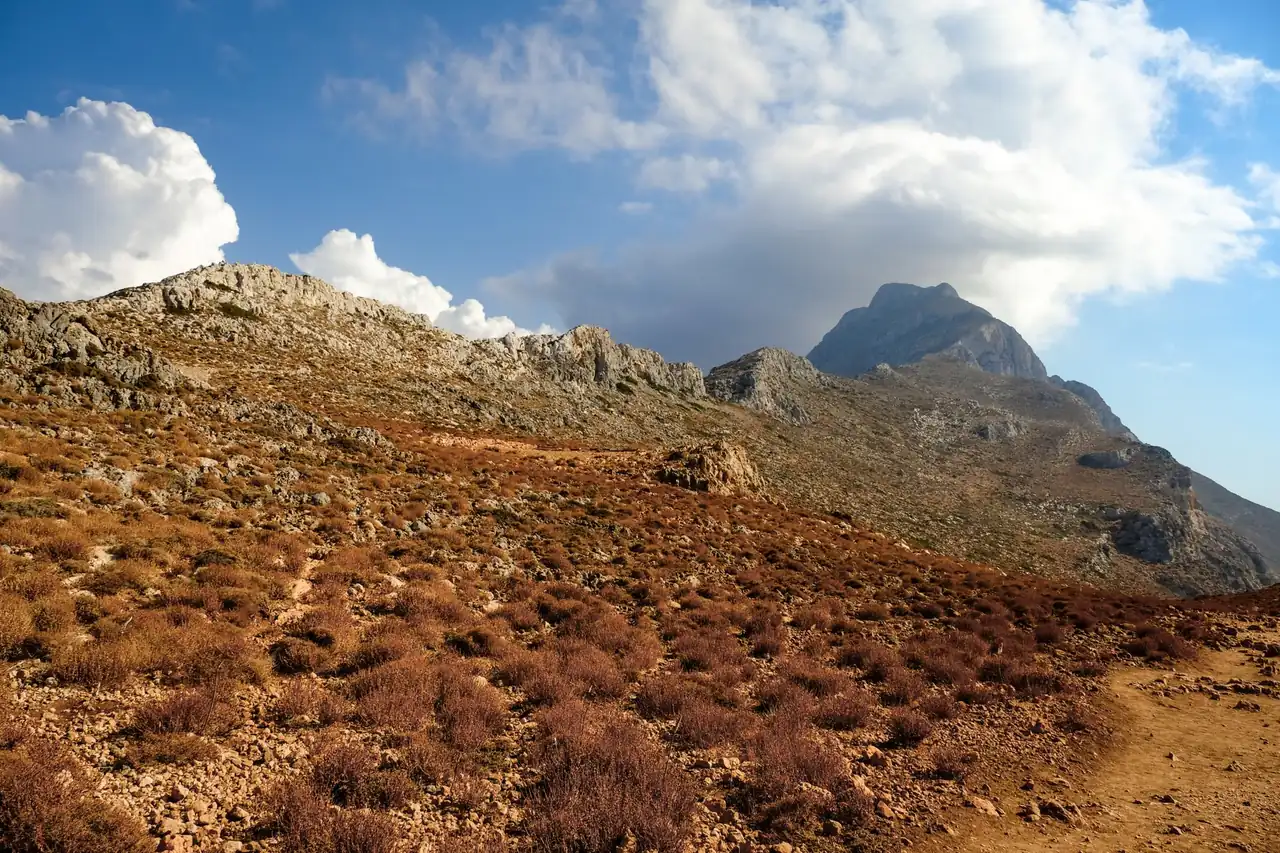
The seventh edition of Galifa’s Sendero del Agua trail race will take place on Sunday, November 8, 2026, in this community within the municipality of Cartagena, Murcia. The main race covers 16 kilometres with 800 metres of elevation gain and is scheduled to start at 9 a.m. from Galifa’s sports centre. The programme also includes a non-competitive 9-kilometre walk with 450 metres of cumulative ascent.
Published entry fees start at €27 for the race and €24 for the walk, although entry conditions must be distinguished from the festival’s accommodation packages. There is also an important discrepancy between the available schedules: the registration platform lists the walk’s start at 9:30 a.m., while TAIGA’s presentation gives 9 a.m. for Sunday’s activities. That difference matters when planning the day and needs to be resolved through the organisers’ final timetable.
The event is part of the second Cartagena Costa Cálida Trail Running Festival, which runs across Saturday, November 7, and Sunday, November 8. Sendero del Agua takes place on the festival’s second day; it is not a competition continuing into Monday, November 9. Its seventh edition brings the mountain race and walk to Galifa, while Saturday’s programme takes place around TAIGA Costa Cálida in El Portús.
Sunday’s meeting point is Galifa’s sports centre on Camino de los Gómez. Galifa belongs to Cartagena rather than being a separate municipality, a useful distinction when planning the journey or locating the start. For anyone travelling from the Valencian Community, the event is in the Region of Murcia, outside the Valencian race calendar but within southeastern Spain’s trail-running scene.
The race’s 16 kilometres do not tell the whole story. Its 800 metres of elevation gain refer to the total ascent accumulated along the route: they do not mean the finish is 800 metres above the start or that there is one continuous climb of that height. The figure describes the repeated work of gaining ground, an effort that substantially changes how runners should view a distance that might otherwise sound similar to a popular road race.
Dividing that ascent by the distance gives a reference figure of 50 metres of climbing per kilometre. This is an overall ratio, not an average gradient of 5%, because the route may combine flat sections, climbs and descents of different lengths. Without a detailed elevation profile, it is impossible to know where the effort is concentrated, how many climbs there are or how challenging each descent will be. Those two figures alone are not enough to estimate a finishing time either.
In the mountains, a short, sustained climb can demand more effort than several comfortable kilometres on a track. The descent then offers a chance to regain speed, but adds muscular work and requires careful foot placement. Galifa’s 16 kilometres should therefore be viewed as a mountain race in its own right, rather than a slightly slower version of a road distance. Experience on uneven ground matters as much as the ability to maintain a steady pace.
The walking option covers 9 kilometres with 450 metres of ascent, but a shorter distance does not make it an effortless stroll. In fact, it has the same overall ratio of 50 metres of climbing per kilometre as the race. The main differences are the total distance and the activity’s non-competitive nature, not a promise of flat terrain. Walking reduces the intensity of movement, but it does not remove the hills or the need for an appropriate level of fitness.
The festival presentation describes routes combining tracks and paths within the natural surroundings of La Muela, Cabo Tiñoso and Roldán. That setting places the experience in a protected Mediterranean mountain landscape, but it is not a substitute for the specific route of each event. The supplied information contains neither a detailed map nor a navigation file for this edition of Sendero del Agua, so individual passages, junctions and sections cannot be identified with certainty.
Aid-station distribution, checkpoints and the technical difficulty of the descents are not detailed either. These are important factors because two races with identical distances and elevation gain can make very different demands. A narrow, stony path requires careful foot placement; a broad track allows a more regular stride. For Galifa, the supported facts are the announced distance and ascent; adding trail percentages, maximum gradients or difficult passages without documentation would introduce unsupported information.
The registration platform identifies Club Deportivo Manzanicos and Asociación Deportiva Imagina Deporte as the organisers. The festival also names the Athletics Federation of the Region of Murcia among the bodies associated with the event. That structure separates sporting information from TAIGA’s accommodation offer: the race, festival and accommodation are connected, but the commercial conditions of one cannot automatically be applied to the others.
The calendar listing provided places the race within the Carthago Mountain League and describes it as the host of the Region of Murcia Trail Classic Championship. The registration platform also lists its place in the 2026 Trail Tour FAMU, including the TTF-Classic category. That federation-related dimension adds competitive interest, although the championship conditions, eligibility requirements and specific categories need to be established in the regulations for this edition.
Entering a race that hosts a championship does not automatically mean meeting every requirement to compete for that title. The reference material does not specify licence requirements, eligibility criteria or Sunday’s age categories. It also does not establish whether federation status affects the entry fee. Keeping race entry and championship classification separate avoids confusing an event open to runners with potentially distinct competitive requirements.
The registration platform gives an entry deadline of Wednesday, November 4, at 8 p.m. That falls four days before Sunday’s race and three days before the festival begins. A published deadline does not guarantee entries will remain available until then: the supplied documentation gives neither a participant limit nor an updated count of remaining places. It also does not establish refund terms, entry transfers or late-registration arrangements here.
For Sunday, the starting fee is €27 for the 16-kilometre race and €24 for the 9-kilometre walk. TAIGA’s presentation gives the same amounts, but identifies them as advance prices associated with its offer. The sporting registration platform lists them as starting prices for each event. Matching figures do not establish that every booking channel includes exactly the same services or that the fee will remain unchanged until entries close.
There is no complete schedule of pricing tiers or explanation of potential additional charges. Nor is there an accommodation rate from which to calculate the total cost of a weekend stay. The useful figure is therefore the starting entry fee, not a fixed travel budget. Transport, overnight accommodation and any supplements must remain outside those amounts unless the booking conditions expressly include them.
The festival also offers the Trail Weekend Experience challenge, combining both days. There is another difference between the published offers here: the registration platform advertises €45 for running and €42 for walking, while TAIGA’s advance offer lists €46 and €43 respectively. These are offers published through different channels; neither should automatically be treated as a correction of the other, and their benefits should not be combined into a package that neither has described.
Saturday’s distance requires the same careful reading. TAIGA presents the Costa Cálida Cross Trail as an 11-kilometre route with 250 metres of ascent, for both runners and walkers. The registration platform identifies it as 10 kilometres and calculates the challenge on that basis: a combined 26 kilometres for runners and 19 for walkers. Using TAIGA’s advertised 11 kilometres would produce totals of 27 and 20 kilometres. That discrepancy should not be concealed.
Sunday’s programme remains consistent across the listings: 16 kilometres for the race and 9 for the walk. Saturday’s discrepancy does not change those Sendero del Agua figures. It does prevent the two-day challenge from being described with one undisputed total distance. Completing both days also spreads the effort across a weekend, making recovery between events important; it is not the same as entering only Galifa’s race with fresh legs.
TAIGA’s presentation lists a bib, professional timing, a participant bag, a finisher’s medal, aid stations, a post-event meal and a concert. It also mentions medical services, accident insurance and public liability insurance. However, those benefits are introduced as the experience associated with its offer. Without equivalent general conditions for each independent entry, it should not be assumed that the entire package applies in precisely the same way to every Sunday participant.
Some benefits clearly depend on the accommodation booking: receiving a bib at the property, having a late checkout and accessing reserved parking in Galifa. These are logistical conveniences advertised for that offer, not universal entitlements attached to buying a race entry. Even the clothing in the participant bag is described as a technical T-shirt or sweatshirt, depending on the event. The distinction between race services and accommodation benefits is especially relevant when comparing prices that initially appear similar.
For those attending without a TAIGA stay, the supplied documentation does not specify the standard bib-collection procedure. It does not give collection hours, required documents or arrangements for collection by another person either. Having a bib waiting at the accommodation does not answer those questions for everyone else. Here, general logistics remain unspecified in the available material, and assigning an alternative location or time would mean inventing a practical instruction.
The race start is consistently listed as 9 a.m. on Sunday at Galifa’s sports centre. The walk requires more caution: the commercial programme groups Sunday’s activities under that time, but the event-specific registration listing gives 9:30 a.m. for walkers. That half-hour can affect arrival arrangements, bib collection and the separation of participants. For reporting purposes, the individual registration time is more specific, although the discrepancy should remain visible until a final announcement resolves it.
Saturday’s programme also includes youth races of 10 and 7 kilometres, advertised from €16. Children’s races are listed over 250, 500, 1,000 and 1,500 metres, from €6, with starts between 11:30 a.m. and noon. These activities belong to the El Portús programme; they should not be moved to Sunday’s schedule in Galifa. The festival may bring families together over the weekend, but each participant has a separate event and location.
TAIGA states that the full regulations would be available from September 1, 2026, on the regional athletics federation’s website. The supplied reference announces that publication but does not reproduce the document for this edition. It therefore does not confirm mandatory equipment or cutoff times. Nor does it provide enough evidence to establish age limits, permission to use poles, health requirements or specific withdrawal procedures, matters that should not be filled in using rules from previous editions.
General equipment for mountain running and gear required by race regulations are different issues. Footwear with suitable grip may improve stability on dirt and rock, but that does not establish a specific requirement for shoes, a pack or a water container. Similarly, carrying adequate supplies is sensible when the spacing of aid stations is unknown. Personal preparation does not replace official rules, and general guidance cannot be presented as a requirement of this race.
The elevation gain calls for attention on both climbs and descents. Alternating running and walking on slopes is a normal part of trail racing; walking a section does not turn a competitive entry into the separate walking event. On descents, fatigue can affect accurate foot placement and place particular strain on leg muscles. For this event, familiarity with uneven terrain provides more useful context than simply transferring a usual urban 10K pace without adjustment.
Food and hydration planning cannot be based on kilometres alone either. Actual time on the route will depend on terrain, fitness and conditions on the day. Because supply points have not been detailed, it is impossible to promise support at particular intervals. The available information confirms aid stations within the festival offer described, but their locations and provisions are not specified. That gap limits any precise calculation of how much a participant needs to carry.
The fact that the event takes place in November does not, by itself, establish the temperature, wind or trail conditions on November 8. A Mediterranean setting can vary considerably from one day to the next, and no supplied forecast supports claims of heat, rain or dry ground. The landscape is part of the sporting appeal, but the day’s weather remains uncertain. Describing guaranteed conditions would confuse the setting with a forecast that these references do not provide.
The protected surroundings bring responsibilities beyond reaching the finish. Staying on the authorised route and avoiding litter are basic principles of respectful participation in the mountains. A secondary listing claims that proceeds support environmental projects, but the other supplied references do not substantiate that statement. Consequently, the entry cannot be presented as a charitable donation, nor can a specific destination for the money be asserted without further documentation.
Galifa’s event offers two different ways to cover the mountains: racing over 16 kilometres or completing a non-competitive 9-kilometre walk. Both require sustained movement and attention to the ground; neither is adequately described by a landscape photograph alone. For the 2026 edition, the date, events and elevation gains are established, while the walking start time, route details and specific package conditions require a differentiated reading of the published announcements.
Sendero del Agua’s sporting character lies in its combination of a manageable distance and substantial climbing, within a weekend that allows participants to enter one day or link two together. On November 8, Galifa and its sports centre will be the focus of the event. Until then, the strongest available information describes a 16-kilometre race with 800 metres of ascent: enough to recognise its demands without exaggerating them, and to separate confirmed facts from conditions that remain unresolved.



How to prevent thigh chafing: causes and real solutions

Women’s running windbreakers: seven jackets and how to choose

Do more workouts get rid of soreness? A guide for runners

Jaén Half Marathon 2026: Record 3,800 Runners Registered

Men’s short running tights: how to choose the right pair

World Triathlon confirms data breach involving medical data

Izan Edo targets podium at Miyazaki World Cup

María Pérez ranks ninth in World Athletics’ 2026 top ten

Dos Santos, Duplantis and Sawe: World Athlete of the Year finalists

San Silvestre Vallecana 2026: 42,000 places, prices and start times

 Races4 months ago
Valencia Half Marathon 2027: date and registration

 Races4 months ago
Valencia Marathon 2026: entry, ballot and course

 Reviews and Comparisons4 months ago
Asics Gel-Roadmiles 3 for men: review and current price

 Reviews and Comparisons4 months ago
Asics Gel Sonoma 8 Gore-Tex: complete analysis for trail and rain

 Sneakers4 months ago
Saucony Endorphin Pro 4: full review and verdict

 News5 months ago
Strava API 2026: what changes for clubs, challenges and runner apps?

 Reviews and Comparisons5 months ago
Nike Alphafly 3: opinions, sensations, and real key points

 Reviews and Comparisons4 months ago
Under Armour running shoes review 2025-2026: models and key features

 Sports Equipment4 months ago
Shoe sizes in cm: a clear guide to getting the right fit for your footwear

 Sneakers3 months ago
Skechers GO RUN Consistent 2.0 analysis: comfort and limits

 News5 months ago
Valencia Marathon 2026 route: key tips to train and run better

 Sneakers4 months ago
Adidas Adizero Boston 13 for men: review and verdict