Races
Trail Sendero del Agua 2025: date and route
Galifa once again brings together trail running, hiking, and challenging scenery in an event with a charitable component and a festival atmosphere.

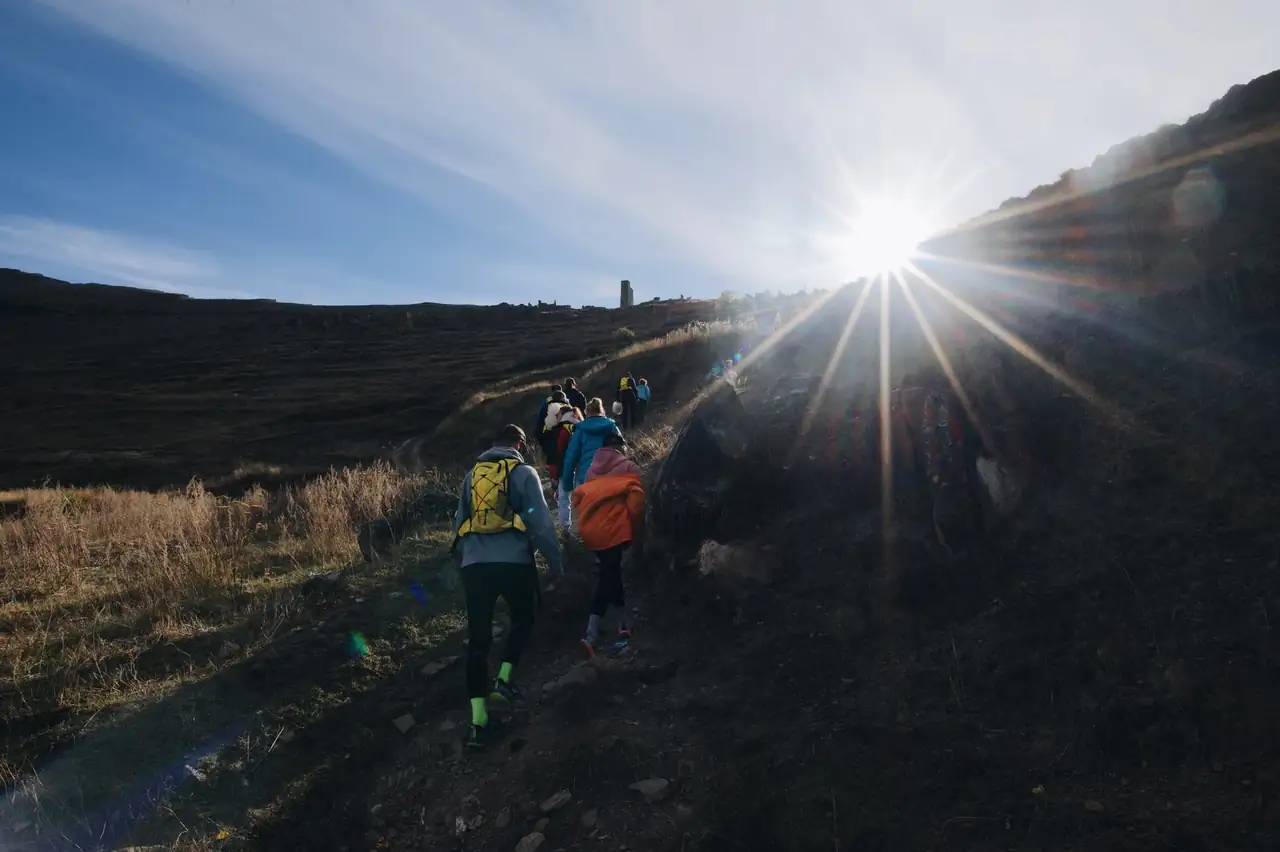
Galifa will once again be one of the headline names on the Murcia race calendar with a mountain edition that combines toughness, scenery and a strong social spirit. The event planned for 2025 has established itself as one of the most distinctive races in the Cartagena area thanks to its mix of technical trail, popular atmosphere and direct connection with the Sierra de la Muela.
The program features routes of 6, 9 and 16 kilometers, plus a hiking option, all on terrain that gives nothing away: tracks, paths and sections where the elevation gain forces runners to race smart. This is not just a sporting event; it is also a day for showcasing the territory, with proceeds aimed at local environmental projects and a format that brings trail running closer to runners, hikers and clubs.
An event that already carries weight on Cartagena’s calendar
The Galifa race has been steadily building its own identity edition after edition until it became a benchmark for anyone looking for an authentic mountain race without leaving the Cartagena area. Its setting, the Sierra de la Muela and the area around the so-called Water Trail, gives it a very recognizable character: this is not an urban course or a Sunday stroll, but a route with the feel of dry terrain, rock, sustained climbs and open horizons.
The event is organized by the Club Deportivo Manzanicos, an organization closely linked to promoting local trail running and highlighting the area’s natural spaces. That relationship with the territory explains much of the appeal of the event. Here the pavement quickly disappears and the experience is built on the landscape, respect for the environment and logistics designed to ensure the mountain remains the focus rather than the stopwatch.
The 2025 edition is also part of a broader format, the Trail Running Festival Cartagena Costa Cálida, which brings several activities together over the same weekend. That festival approach changes the atmosphere: there is not just a start and a finish, but an environment of gathered runners, groups of friends, families and enthusiasts moving between races, entertainment and sporting camaraderie.
Course, distances and effort profile
The main event remains the 16-kilometer long course, a distance that looks short on paper but is demanding in reality. The organizers themselves describe it as fast and tough, with a positive elevation gain that in the most recent reference reaches 800 meters. That figure is enough to understand that there is little room for error: in the mountains, 16 kilometers can feel like much more when the climbing starts from the first few steps.
Alongside that main race are the 9-kilometer route with around 450 meters of climbing and the 6-kilometer route with roughly 250 meters of positive elevation gain, designed as entry points into competitive trail running, especially for youth categories. A 9-kilometer hiking event is also included, non-competitive, allowing participants to cover the same surroundings at a different pace, more relaxed and less tied to race-day intensity.
The mixed terrain makes for a very recognizable race for Mediterranean mountain runners: fast tracks that tempt you to push, paths that slow the pace and sections where technique matters as much as legs. There are no great altitudes or alpine grandeur here, but there is very real demand, the kind that settles into your quadriceps like a stone in your shoe and forces you to manage every stride.
The race runs through the northern side of the Sierra de la Muela, and much of the route follows Galifa’s Water Trail, a path closely tied to the landscape identity of the area. That link between route and territory is key to understanding the event’s appeal: runners are not just competing, they are also crossing a natural space with local history, dryland vegetation and a geography that changes pace at every turn.
Start, finish and race atmosphere
The Galifa Sports Center serves as the start and finish point, a practical location that concentrates movement before and after the race. That kind of setting gives order to the day and allows the race to retain a close, almost village-like feel, despite the size it has gained within the regional calendar.
The organizers have emphasized finish-line services and a setup designed to extend the experience beyond the physical effort. Participants will receive a commemorative T-shirt and medal, along with reserved areas for clubs and teams. That detail says a lot about the event’s profile: it is not limited to individual runners, but encourages group participation and a sense of belonging to the local trail scene.
A post-race gathering with music and socializing is also planned, an increasingly common feature in this type of event, but one that fits especially well here because of the breadth of the offering. The result is a morning that mixes sport, sociability and scenery, with the physical strain still fresh while the finish area becomes a small camp of muddy shoes, folded bibs and quiet conversations.
More than a race: a weekend with a festival pulse
The 2025 edition comes as part of a full weekend that combines the Galifa race with another event in El Portús. That format broadens the focus and gives the event a different dimension, almost like a shared celebration of trail running. For Cartagena, it means becoming part of the map of mountain events with a sporting product that depends not only on performance, but also on the collective experience.
Within that context appears one of the most striking new features, the Desafío Trail Weekend Experience, an option designed for those taking part in both races and who want to experience the weekend as a single block. That kind of proposal strengthens runner loyalty and adds a narrative sense of continuity: one race prepares you for the next, and both are read as chapters in the same sporting story.
The formula is no small thing from an organizational standpoint. A well-designed trail festival spreads out participant flow, encourages clubs to travel, and turns the territory into a sporting showcase. In that sense, Galifa acts as the center of gravity for an event that doesn’t end at the start line, but continues through accommodation, socializing and a relationship with Cartagena’s coast and natural surroundings.
Solidarity, the environment and local identity
The solidarity component is one of the event’s defining traits. The organizers allocate the proceeds to environmental awareness and action projects in the Sierra de la Muela, a line of work that fits the current ethos of more responsible trail running. This is not a promotional extra, but a way of giving part of the value generated back to the very space that makes the race possible.
At a time when the mountain race calendar has multiplied, this approach provides a stronger story. The race does not simply use the environment as a backdrop; it places it at the center and recognizes its obvious fragility. That is why respect for the environment, waste management and the idea that the runner should leave no trace are so important.
Also contributing to this reading are the actions linked to neighborhood associations and Cartagena’s own local structure. The race is supported by the fabric of the place, its people and a network of collaboration that goes far beyond competition. That is one of the great strengths of local trail running: when it works well, it does not invade the territory, but integrates into it with limited resources and a pedagogical purpose.
What awaits runners in the mountains of Galifa
The race’s technical profile demands a cautious reading of the course. The tracks can create a false sense of ease, but the elevation gain and the succession of pace changes eventually take their toll. The dry, rough Mediterranean mountain does not forgive overconfidence. Anyone who starts too fast in the opening kilometers will probably pay for it once the terrain begins to climb more persistently.
In races like this, effort management matters more than the initial burst. The runner will find sections that can be run, but also stretches where stride economy and the ability to maintain a steady rhythm matter far more than raw speed. That mix usually produces very lively races for those who enjoy alternating jogging, climbing and technical control without the monotony of a flat circuit.
The hiking format offers another way of reading the same landscape. It is not a lesser version, but a different way to traverse the same scenery. For many participants, that balance between sport and active walking is precisely what gives the event meaning: the mountain can be enjoyed without the pressure of competition, but with the same attention to the surroundings and to the logistical work that supports the day.
An event that also looks to the running community
The presence of clubs, teams and youth categories reinforces the race’s community spirit. The organizers have set aside spaces for tents and created a structure that encourages group interaction, something that carries a lot of weight in trail running. Mountain races are not understood solely as individual effort; they are also organized outings with a shared identity, club colors, team photos and a support network that does not appear in the standings, but does shape the atmosphere.
The inclusion of shorter distances with competitive value for young runners also helps build continuity. In trail running, that orderly entry is important because it allows younger athletes to enter the discipline with a manageable course and a well-controlled setting. The talent pipeline is not born in the big ultras, but in races like this one, where the elevation gain becomes a school and the terrain teaches respect for the mountains.
That explains why this kind of race works as a barometer of the regional trail scene. When an event brings together different distances, hiking, competition, club atmosphere and a clear environmental logic, it is saying more than the day’s result. It is drawing a sporting culture, a way of running that is rooted in the coast, the mountains and the community that connects them.
Galifa as a showcase for Mediterranean trail running
The Cartagena landscape offers a very specific version of trail running: dry, bright, with strong contrasts and a geography closer to stone than to dense forest. Galifa fits naturally into that frame. It does not seek to impress with towering peaks, but with an honest, visible and demanding course, where the runner can see the effort coming before it arrives.
That Mediterranean character has become one of the strengths of trail running in the Region of Murcia. These races do not need long travel distances or high-mountain temperatures to be tough. A succession of short climbs, a narrow path and well-placed elevation gain are enough to turn the race into a test of patience, technique and pace management.
In 2025, the Galifa trail will once again serve that showcase function. It will be, at the same time, a race to compete in, a walk to discover the surroundings and a day to strengthen the bond between sport and territory. In an increasingly crowded calendar, that combination gives it a clear personality and a very specific place: that of an event that does not just add kilometers, but explains the mountain from within.
A date shaped by the terrain and the memory of the place
The appeal of this race lies not only in the physical challenge. It also comes from the continuity with previous editions, the accumulated memory and the feeling of belonging to a race that already has its own story. Every November, Galifa becomes a meeting point for those who understand trail running as a way of reading the territory, not just crossing it.
The 2025 edition confirms that evolution: more structure, more variety of formats and a more visible connection to the natural environment. In a discipline where noise can sometimes outweigh context, the Water Trail retains something valuable, almost artisanal: the feeling that the mountains can still be told through specific names, real paths and an environmental commitment that does not remain on paper.
That is why the event matters beyond its numbers. Because it turns a corner of Cartagena into a sporting stage, because it keeps alive a route closely tied to the territory and because it offers a race model where effort and environmental awareness move forward together. In Galifa, running is not just about arriving sooner; it is also about understanding where you are stepping.



How to prevent thigh chafing: causes and real solutions

Women’s running windbreakers: seven jackets and how to choose

Do more workouts get rid of soreness? A guide for runners

Jaén Half Marathon 2026: Record 3,800 Runners Registered

Men’s short running tights: how to choose the right pair

World Triathlon confirms data breach involving medical data

Izan Edo targets podium at Miyazaki World Cup

María Pérez ranks ninth in World Athletics’ 2026 top ten

Dos Santos, Duplantis and Sawe: World Athlete of the Year finalists

San Silvestre Vallecana 2026: 42,000 places, prices and start times

 Races3 months ago
Valencia Half Marathon 2027: date and registration

 Races3 months ago
Valencia Marathon 2026: entry, ballot and course

 Reviews and Comparisons4 months ago
Asics Gel-Roadmiles 3 for men: review and current price

 Reviews and Comparisons4 months ago
Asics Gel Sonoma 8 Gore-Tex: complete analysis for trail and rain

 Sneakers3 months ago
Saucony Endorphin Pro 4: full review and verdict

 News5 months ago
Strava API 2026: what changes for clubs, challenges and runner apps?

 Reviews and Comparisons5 months ago
Nike Alphafly 3: opinions, sensations, and real key points

 Reviews and Comparisons4 months ago
Under Armour running shoes review 2025-2026: models and key features

 Sports Equipment4 months ago
Shoe sizes in cm: a clear guide to getting the right fit for your footwear

 Sneakers3 months ago
Skechers GO RUN Consistent 2.0 analysis: comfort and limits

 News5 months ago
Valencia Marathon 2026 route: key tips to train and run better

 Sneakers4 months ago
Adidas Adizero Boston 13 for men: review and verdict