Races
Tramuntana Travessa: route, distances and key points of the race
The Mallorcan race combines mountains, self-sufficiency, and two very tough routes in the Serra de Tramuntana.

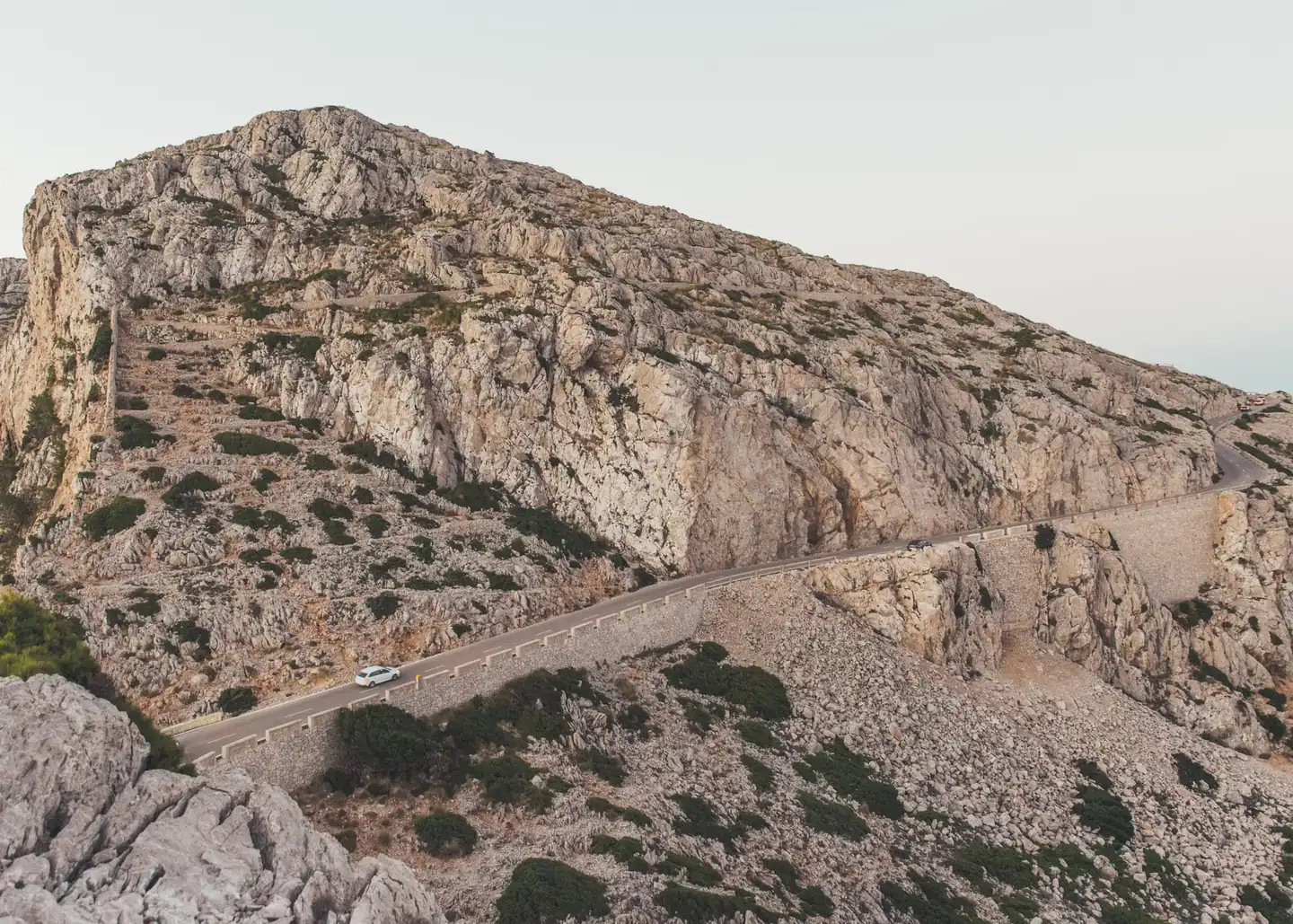
The Tramuntana Travessa is one of the great references in trail running in Mallorca because of its traverse format, its toughness and the weight the terrain has in every decision the runner makes. It is not just about adding up kilometers: here, elevation gain, wind, navigation and the ability to move for hours through the Serra de Tramuntana take charge, with much of the route on the GR-221 and under a self-sufficiency format.
The 2021 edition brought together two very different races in distance, but united by the same sporting idea: running in the middle of nature, with limited time and on a course that forces you to manage effort, gear and your head. The event was held on December 3 and 4, with 120 kilometers between Pollença and Andratx and a 65-kilometer format starting in Bunyola, both designed for experienced runners well used to the mountains.
A traverse that weighs on the legs and on the calendar
The identity of this race is very closely tied to the landscape that surrounds it. The Serra de Tramuntana, declared a UNESCO World Heritage Site, offers a setting of stone, ravines, tracks, trails and exposed sections that gives no respite. It is a beautiful territory, yes, but also a harsh one; the kind that forces you to measure every step like someone fine-tuning a compass in the middle of the mountains.
In practice, the event works more like a ultra-distance traverse than a conventional race. The organization offers two formats with a common rule set, support from mountain clubs and a strong safety component. Navigation is part of the challenge, the route is marked where needed and self-sufficiency means accepting that the runner will not find, at every turn, the comfort of an urban race or the steady pace of a road half marathon.
That character has made it a cult event for many Balearic trail fans. It is not a race designed for easy showmanship or for a token bib. Its appeal lies in the mix of physical demand, reading the terrain and changing weather, a combination that in December can change everything in a matter of minutes.
Two courses, two ways to suffer in the mountains
The long format, TTCMM120, offers 120 kilometers with 4,555 meters of positive elevation gain. It starts in Pollença and finishes in Andratx, with a 22:00 start and a 26-hour time limit to complete the course. It is a night race from the very first moment, something that adds another layer of difficulty: headlamp, sleep, cold and constant attention to every sign along the way.
The 65-kilometer format, TTCMM65, adds 2,205 meters of positive elevation gain and connects Bunyola with Andratx in a single start at 08:00 on December 4. The maximum finishing time was 14 hours. Even if the number is smaller, the effort is no less; in the mountains, a moderate distance can become immense when the climbing bites and the terrain punishes without pause.
Both races shared the same philosophy: free pace, a single stage and a time limit that forces you to manage your strength from the start. There are no shortcuts or tactical luxuries. The runner decides when to push, when to walk and when to protect themselves, but always within a context where the mountain sets its own hierarchy.
Mandatory gear, cold and caution in the Serra
The 2021 rules included an important change in mandatory gear: the 10,000 Schmerbers waterproof jacket was replaced by a windbreaker, with thermal clothing recommended because of the expected cold. This detail, which may seem small from the outside, is very revealing in a mountain race: it is not all about carrying more weight, but about carrying what is necessary to survive a long and changing day.
In races of this kind, gear has a role almost as important as the legs. A windbreaker, a thermal layer and the ability to keep the body dry or at least protected from the wind can make the difference between a controlled race and a nightmare of mild hypothermia, clumsy hands and loss of focus. In December, in the Serra de Tramuntana, the cold is not a detail; it is a main actor.
The organization also asked for maximum attention on road sections and strict respect for DGT traffic rules. There were specific route adjustments because of a landslide near Valldemossa, changes to the aid station in Esporles and a new location for the cut-off point in Estellencs. All of this reinforces a basic idea in mountain trail running: the route is never a fixed line, but a living structure that depends on the terrain, safety and the actual condition of the paths.
Self-sufficiency, navigation and limited time
Self-sufficiency is one of the traits that best explain the DNA of this race. It is not enough to run; you have to know how to eat, hydrate, manage stops and anticipate what comes next. In a long traverse, the runner who does not read their needs well ends up paying for it in the final sections, when the body no longer negotiates and only sends the bill.
Navigation adds a very mountain-specific layer of tension in the Balearics. The GR-221 appears as the backbone, but the specific marking and the need to follow the route carefully mean the race is not reduced to an automatic succession of strides. Here, the eye works as much as the pulse. A wrongly interpreted trail can cost valuable minutes, and in a time-limited race every minute becomes expensive currency.
The time limit of 26 hours in the long race and 14 in the short one forces a very particular kind of effort. You are not racing against the clock in an explosive way, but against accumulated fatigue. Some runners handle a steady pace better, others float on the runnable sections and sink on the climbs; all of them, without exception, need to understand that the mountain only rewards those who accept its logic.
Dates, times and registrations in a closely watched edition
The 2021 edition was held on December 3 and 4, with a registration window open from September 15 at 20:00 and closed on November 30 at 23:59. In practice, that left a relatively wide margin to complete the process, although places were limited and demand usually came from runners already familiar with the race or with the Mallorcan mountains.
The prices were clear: 75 euros for the TTCMM65 and 110 euros for the TTCMM120. The organization set a maximum of 400 participants per format and required runners to be licensed in mountain running in any Spanish autonomous community or, failing that, to purchase a one-off insurance policy. For foreign participants, a policy covering this type of activity was required.
A medical certificate proving the runner’s physical fitness was also required, a very logical requirement when the race takes place on terrain where fatigue, cold and exposure do not accept excuses. The race also included a pre-race briefing in several languages and downloadable technical documentation, a sign that the event was managed with a serious mindset and with attention to operational safety.
The 2023 cancellation and the fragility of running in the mountains
The recent history of the Tramuntana Travessa also reminds us how much a race like this depends on the state of the environment. In 2023, the organization canceled the planned edition because of the damage caused by Storm Juliette. Fallen trees, damaged paths and difficulties in guaranteeing emergency services led to the event being suspended for safety reasons.
That episode was not an isolated anecdote, but a very clear lesson about the relationship between sport and territory. In the mountains, a race does not exist in a vacuum. If a trail breaks down, if a slope becomes unstable or if emergency access becomes complicated, the competition changes nature. What was meant to be a sporting challenge becomes a logistical problem and, sometimes, an unacceptable risk.
The decision to cancel and refund registrations showed the real priority of any responsible race: safety comes before the calendar. In an environment like the Serra de Tramuntana, where the weather can hit hard and the terrain responds to erosion or a storm with brutal speed, that caution is not an administrative gesture. It is part of the common sense that holds the whole event together.
What makes this event different within Spanish trail running
The Tramuntana Travessa does not compete only on distance or elevation gain. Its value lies in the whole package: the landscape, Mallorca’s mountain culture, the sum of the clubs involved and the feeling of moving through a natural corridor that keeps memory in every stone. Anyone who has run through the Serra knows it does not offer a soft postcard aesthetic, but a rugged beauty, with sharp edges.
It also stands out for the way it forces the runner to live with uncertainty. Time, night, cold and route changes for safety reasons are all part of the script. That moves it away from a simplified idea of trail running as a romantic adventure. There is beauty here, of course, but there is also discipline, control and a toughness that is not hidden behind the epic tone.
That balance between sporting challenge and respect for the territory explains why the race continues to appear among the references on the Balearic calendar. It does not need too much embellishment: its numbers, Mallorca’s relief and the reputation of an organization that has had to adapt to changing conditions are enough to understand that this traverse belongs to the category of races that are won first in the head and only then in the legs.
A name that sums up mountain, endurance and territory
The strength of this race lies in its ability to condense an entire place into a measurable effort. Pollença, Andratx, Bunyola, Valldemossa, Esporles, Estellencs… the names are not just points on a map; they are emotional stations in a race where every step crosses local history, rural architecture and a landscape shaped over time by paths, walls and slopes.
That is why the Tramuntana Travessa matters beyond the result. It speaks about the evolution of trail running in the Balearics, about how a race can adapt to safety without losing its identity and about why the most valued mountain races are not necessarily the fastest or the most media-friendly. Sometimes, the most lasting mark is left by a demanding route that forces you to listen to the terrain and respect its timing.
In that mix of toughness and beauty you can understand why the event has kept its weight on the calendar. It does not sell ease, it does not promise softness and it does not need gimmicks. Its story is in the wind of the mountains, in the trails of the GR-221 and in that invisible line that separates a memorable traverse from a day that should be taken with all the seriousness in the world.
You may also like: Mancor Xtrem 2026: route, schedules, registration and key details.



How to prevent thigh chafing: causes and real solutions

Women’s running windbreakers: seven jackets and how to choose

Do more workouts get rid of soreness? A guide for runners

Jaén Half Marathon 2026: Record 3,800 Runners Registered

Men’s short running tights: how to choose the right pair

World Triathlon confirms data breach involving medical data

Izan Edo targets podium at Miyazaki World Cup

María Pérez ranks ninth in World Athletics’ 2026 top ten

Dos Santos, Duplantis and Sawe: World Athlete of the Year finalists

San Silvestre Vallecana 2026: 42,000 places, prices and start times

 Races4 months ago
Valencia Half Marathon 2027: date and registration

 Reviews and Comparisons4 months ago
Asics Gel-Roadmiles 3 for men: review and current price

 Races4 months ago
Valencia Marathon 2026: entry, ballot and course

 Reviews and Comparisons4 months ago
Asics Gel Sonoma 8 Gore-Tex: complete analysis for trail and rain

 Sneakers4 months ago
Saucony Endorphin Pro 4: full review and verdict

 News5 months ago
Strava API 2026: what changes for clubs, challenges and runner apps?

 Reviews and Comparisons5 months ago
Nike Alphafly 3: opinions, sensations, and real key points

 Reviews and Comparisons4 months ago
Under Armour running shoes review 2025-2026: models and key features

 Sports Equipment4 months ago
Shoe sizes in cm: a clear guide to getting the right fit for your footwear

 Sneakers3 months ago
Skechers GO RUN Consistent 2.0 analysis: comfort and limits

 News5 months ago
Valencia Marathon 2026 route: key tips to train and run better

 Sneakers4 months ago
Adidas Adizero Boston 13 for men: review and verdict