Races
Ultra Sierra Nevada 2025 standings: results and podiums
Chavet and Medina dominated an epic edition in Granada, with times, podiums, and the full context of the event.

The 2025 edition of the Unicaja Ultra Sierra Nevada offered a very clear snapshot of high-mountain trail running: foreign dominance in the long race, very strong Spanish performances across several distances, and a day marked by snow, elevation gain, and accumulated fatigue. Frenchman Cédric Chavet and Alicante native Pilar Medina secured the most high-profile victories in a race that brought together more than 1,700 runners from 50 nationalities and once again placed Granada at the center of the European ultratrail map.
The Ultra Sierra Nevada 2025 results also confirmed the competitive depth of the event. Chavet went under 12 hours in the marquee distance, Medina solved a very demanding women’s race, and the other formats produced wins for José María Garrido, Maud Combarieu, Antonio Alfonso Ruiz, and Gemma Arenas, in an edition that combined athletic toughness with a high-mountain landscape that changed appearance with the light of dawn.
An edition that reinforced Sierra Nevada’s prestige
Ultra Sierra Nevada once again showed why it is one of the most recognizable events on Spain’s mountain calendar. This is not just a long race; it is a narrative climb, a line that connects the urban heart of Granada with the heights of Pradollano after a night of effort, cold, and meticulous energy management. The 2025 edition, the eleventh, added a particularly appealing nuance: snow on some sections, something that intensifies the visual beauty but also makes every stride harder.
The night start from Paseo del Salón once again gave it that classic sense of adventure that sets the race apart. The protocol is sober, almost ceremonial: headlamps on, runners silent, nerves in check, and a city left behind as the group heads toward Dehesa del Generalife and the Darro basin. From there, Sierra Nevada grants no respite. Elevation gain becomes the main character, and the mountain ends up deciding as much as the legs do.
In 2025, the organizers also brought together formats for different runner profiles, from the 100-kilometer Ultra to the Trail, Marathon, Half, and Relay categories. That variety helps explain the scale of the event: it is not just an extreme race for specialists, but a full mountain weekend in which very different paces, ambitions, and strategies coexist.
Chavet and Medina, two victories with very different stories
Cédric Chavet won the marquee race with authority and stopped the clock at 11:55:31, becoming the only runner to go under 12 hours. His performance had an almost surgical level of control. He started fast, maintained the pace while the field was still compact, and ultimately built a lead that already seemed clear before the final major climb. It was a victory of endurance, but also of the mind, because in Sierra Nevada a miscalculation costs minutes, and sometimes hours.
The men’s podium was completed by his compatriots Antoine Guillon and Nicolas Riviere, both in 12:37:12. That tie reinforced the image of a very tight race at the front and, at the same time, one that was far behind the winner. Chavet finished with a solid margin, the kind that usually separates someone who turns an ultra into a display of composure rather than just endurance.
In the women’s category, Pilar Medina handled the challenge in 15:29:16. Her win had a different tone, less about the gap to her rivals and more about how she endured a particularly brutal final section. The climb to Veleta, already demanding in itself, became decisive in that final phase where fatigue carves into the legs and forces runners to move with almost handmade efficiency. Medina knew how to survive that stretch and turn hardship into a competitive advantage.
The reading of both victories points to one common idea: in Sierra Nevada, being fast is not enough. Runners must manage calories, altitude, temperature, and changes in terrain. They have to know when to push and when to let the mountain set the pace. That tactical intelligence often goes unnoticed in the results, but it is what explains why some victories look clean, almost inevitable, while others fade on the most exposed sections.
The podiums in the ultra, trail, and marathon
The Ultra distance, 100 kilometers with 5,500 meters of positive elevation gain, drew the main attention. Chavet dominated among the men, followed by Guillon and Riviere, while in the women’s race Medina finished ahead of Piedad Quesada and Argentine Gabriela Vieitez. The most striking fact was not only the winner’s time, but the breadth of the context: a very large international field and a race that forced runners to squeeze every bit of physical reserve from the very first sector.
In the Trail category, 60 kilometers and 3,800 meters of positive elevation gain, José María Garrido took the men’s win in 6:19:35. He was followed by Jairo Sánchez and Víctor Galiana, in a race that held a very high pace and where the gaps between places were considerably tighter than in the marquee distance. In the women’s race, French runner Maud Combarieu won in 7:45:28, ahead of Miriam García and Lidia Szekely. That mix of national and international names underscores the event’s competitive dimension, with a notable Spanish presence in almost every classification.
The Marathon category, 40 kilometers and 2,700 meters of positive elevation gain, offered another intense storyline. Antonio Alfonso Ruiz won the men’s race in 4:04:18, followed by David Pérez and Aarón Romagüera. In the women’s race, Gemma Arenas once again showcased her experience and mountain strength with 4:26:20, a mark that keeps her among the discipline’s benchmarks. Natalia Máñez and Cristina Ortiz completed the women’s podium.
These results do more than list winners: they also reveal the kind of runner Sierra Nevada demands. Anyone racing there must be able to change gears on terrain that alternates between roads, trails, rocky sections, and, depending on the weather, remnants of snow. Every placement reflects a sum of tiny but decisive details: a well-used aid station, a safe downhill, a pole used at the right time, or a climb managed without overexertion.
What explained the true difficulty of the course
The Ultra Sierra Nevada route is a prolonged ascent toward altitude, and that is precisely its trap. It does not punish only through steepness; it does so through accumulated effort. The start in Granada has an almost deceptive quality: at first, the race moves through runnable sections and creates a certain sense of control. But then comes the part where the Genil River and the surrounding villages mark the transition toward true mountain terrain, and that is where the serious wear and tear begins.
The most demanding stretch leads runners to elevations above 3,000 meters, with Veleta serving as a visible and psychological reference point. It is not merely a summit; it is a symbol that appears and disappears in the distance, like a sign that seems near and then recedes again. That visual relationship with the mountain influences mental effort. The runner can see the finish in Pradollano, but first must work through a long conversation with the incline, the cold, and the altitude.
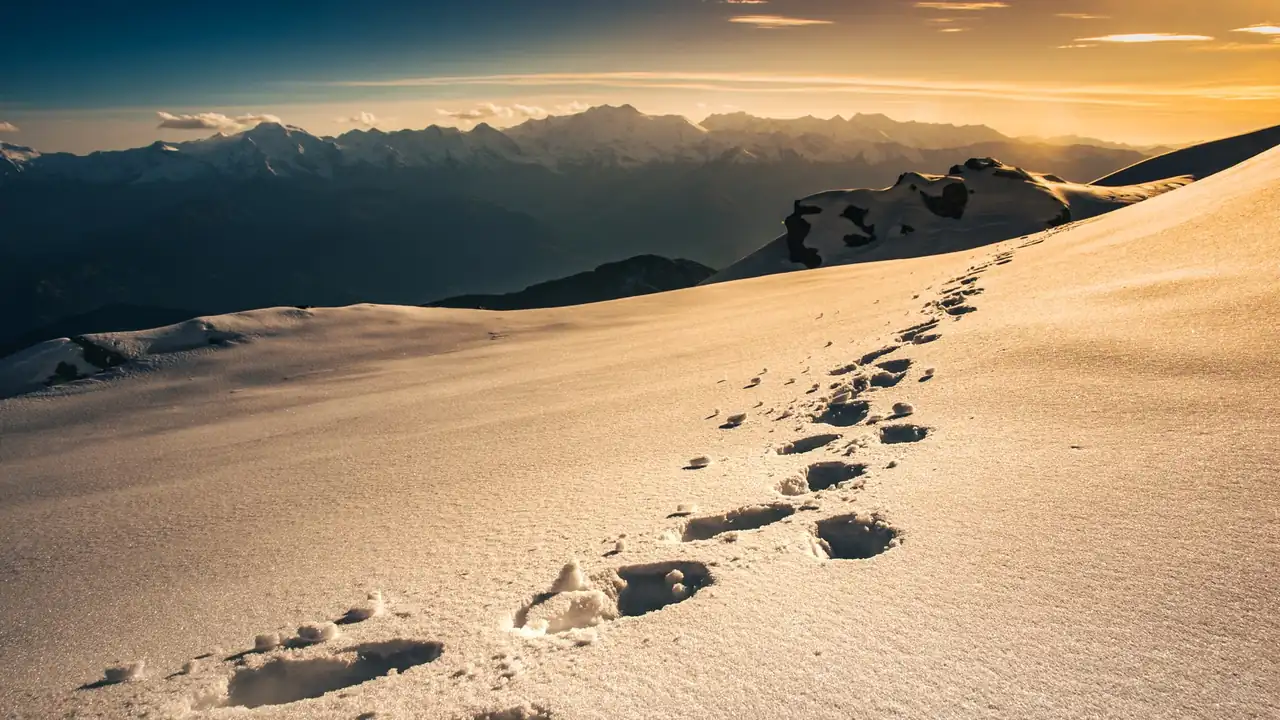
Snow added a very concrete dimension to the 2025 edition. It was not a scenic ornament, but a race variable. Running on snow alters foot placement, demands more stability, and changes the thermal sensation abruptly. Dawn also transformed the experience completely: the night brought hardship, but the light opened a scene of white peaks and clear skies that explained, by itself, why this race has such pull among ultratrail specialists.
The final result also reflects a frequent truth in mountain racing: beauty and hardship always go hand in hand. The very stretch that delivers a memorable postcard can drain the legs in just a few minutes. That is why the classifications of a race like this matter beyond the individual names; they show who managed best to live with a course that does not forgive improvisation.
The weight of the numbers and what they say about the race
The 2025 numbers help quantify the event precisely. More than 1,700 runners, 50 nationalities, 100 kilometers for the Ultra category, 60 for Trail, 40 for Marathon, and a half-distance race that completed the competitive program. The total positive elevation gain in the Ultra was around 5,500 meters, a figure that in practice means several races inside one. Every climb changes the script, every descent demands concentration, and every transition between terrains can alter the time table.
It is also important to note the difference between the winners’ marks and those of the athletes who completed the podium. Chavet finished in 11:55:31, while the next two men arrived together almost 42 minutes later. In the women’s race, Medina beat Piedad Quesada by almost an hour. That gap not only marks hierarchy, but also a very harsh natural selection, typical of alpine ultras, where mental endurance and pace management often matter as much as raw talent.
In shorter distances, by contrast, the times were much tighter. The men’s marathon was decided by just seconds among the front runners, and that points to a more explosive race, less prone to big gaps and more sensitive to positioning from the early stages. The Trail maintained that balance between effort and competitive tension, with victories that required running very close to the limit.
Overall, the Ultra Sierra Nevada 2025 results make one thing clear: the race is no longer just a major national event, but a firmly established international benchmark. The foreign participation, the quality of the podiums, and the severity of the setting raise the event’s level and explain why each edition draws so much attention from those who follow mountain trail running.
Why this race still holds a unique place on the calendar
Ultra Sierra Nevada has a very distinctive identity within Spanish trail running. Its value lies not only in the elevation gain or the fame of its peaks, but in the way it turns a familiar territory into an almost total sporting experience. Granada is not just a starting point; it is part of the story. Pradollano is not just the finish; it is the physical and symbolic end of a journey that goes from the city to the high mountains without shortcuts.
Within that framework, the 2025 classifications function as a snapshot of the current state of ultratrail. The names Chavet, Medina, Garrido, Combarieu, Ruiz, and Arenas do not appear by chance: they are associated with runners capable of handling major efforts in complex environments. And although victory is always reduced to a time, in this race time only tells part of the story. The rest is written by the cold, the early hours, the snow, and the ability to keep moving when the body is already protesting.
The 2025 edition leaves both a journalistic and sporting certainty: Sierra Nevada remains a cathedral of trail running. It does not need exaggeration or embellishment to justify its prestige. Just look at the results, the times, and the makeup of the podiums to understand that, once again, the mountain ordered the race in its own way and rewarded those who knew how to read it best.
In a race like this, every result is also a scene: a runner arriving alone at the finish, a runner pushing through the final climb, a podium decided at dawn, or a weary glance upon crossing Pradollano. Ultra Sierra Nevada 2025 leaves those images and, above all, turns them into data that explain why its outcome matters so much to those who follow trail running with a reporter’s eye and a runner’s passion.
Official results: sportmaniacs.com.



How to prevent thigh chafing: causes and real solutions

Women’s running windbreakers: seven jackets and how to choose

Do more workouts get rid of soreness? A guide for runners

Jaén Half Marathon 2026: Record 3,800 Runners Registered

Men’s short running tights: how to choose the right pair

World Triathlon confirms data breach involving medical data

Izan Edo targets podium at Miyazaki World Cup

María Pérez ranks ninth in World Athletics’ 2026 top ten

Dos Santos, Duplantis and Sawe: World Athlete of the Year finalists

San Silvestre Vallecana 2026: 42,000 places, prices and start times

 Races3 months ago
Valencia Half Marathon 2027: date and registration

 Races3 months ago
Valencia Marathon 2026: entry, ballot and course

 Reviews and Comparisons4 months ago
Asics Gel-Roadmiles 3 for men: review and current price

 Reviews and Comparisons4 months ago
Asics Gel Sonoma 8 Gore-Tex: complete analysis for trail and rain

 Sneakers3 months ago
Saucony Endorphin Pro 4: full review and verdict

 News5 months ago
Strava API 2026: what changes for clubs, challenges and runner apps?

 Reviews and Comparisons5 months ago
Nike Alphafly 3: opinions, sensations, and real key points

 Reviews and Comparisons4 months ago
Under Armour running shoes review 2025-2026: models and key features

 Sports Equipment4 months ago
Shoe sizes in cm: a clear guide to getting the right fit for your footwear

 Sneakers3 months ago
Skechers GO RUN Consistent 2.0 analysis: comfort and limits

 News5 months ago
Valencia Marathon 2026 route: key tips to train and run better

 Sneakers4 months ago
Adidas Adizero Boston 13 for men: review and verdict