Races
Valls del Freser 2026: route, schedules and distances
The Ribes de Freser race returns with three courses, set schedules, and a high-mountain Pyrenean setting.

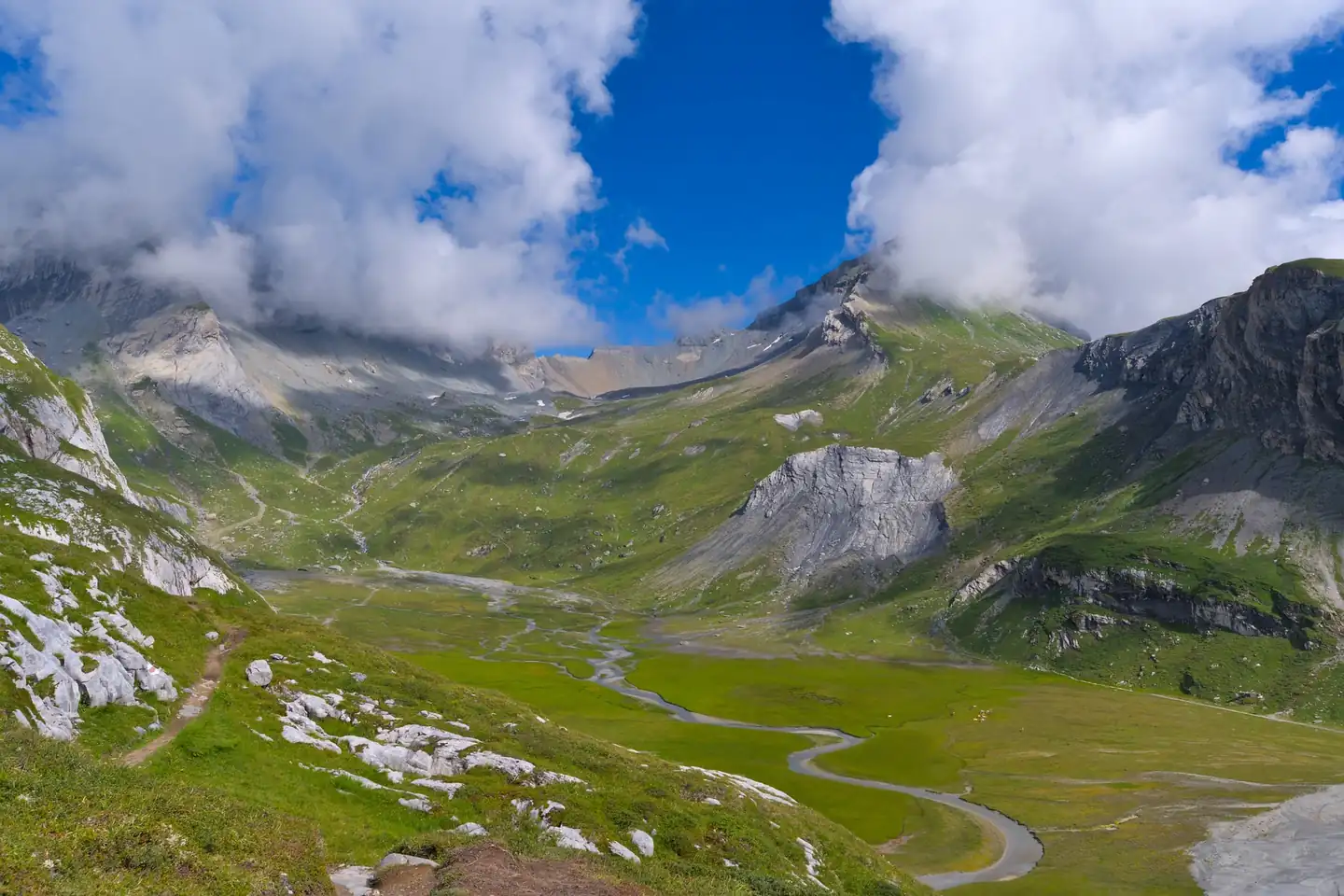
Valls del Freser returns to Ribes de Freser with the spirit of races that are born to tell the story of a territory. It is not just about adding mountain kilometers: the event maps out a sporting route through the eastern Pyrenees, among forests, mountain passes, gorges, and open views over the Ripollès. The 2026 edition is set for September 27 and brings together three distances in a single day with very different profiles, designed for runners looking for everything from a first taste of trail running to a long, demanding effort.
The appeal of this race lies in its balance between toughness and scenery. The start and finish are in Ribes de Freser, with an organization that has turned the town into an operations center for a high-paced mountain morning from the very first meters. The long, middle, and short distances share the same Pyrenean setting, but not the same reading of the terrain: one demands sustained strength on prolonged climbs; another, smart pace management; and the most accessible one lets you enjoy the mountain without it letting up.
A race that turns the valley into a sporting stage
Valls del Freser has established itself as a trail race with its own identity because it does not limit itself to offering a beautiful route. The course makes the most of one of the most recognizable areas of the eastern slope of the Catalan Pyrenees, with a landscape that alternates technical trails, runnable tracks, and mountain passages that force athletes to switch gears quickly. That variety is part of the runner’s appeal, but also of its difficulty: here, endurance alone is not enough, you have to read the terrain intelligently.
The race rests on a geography that feels like a natural amphitheater. The slopes of the Serra de Montgrony, the views toward the Vall de Núria, and the surroundings of the Freser Gorges provide a sense of openness that is uncommon in races of this size. The mountain does not appear as scenery, but as the central argument. Every climb opens up a new perspective, and every descent forces you to adjust stride, poles, footing, and legs. In trail running, that mix of beauty and demand is what separates a race from a lasting memory.
The context also matters. Ribes de Freser acts as a gateway to a high-mountain territory that in September usually offers more stable conditions than midsummer, although Pyrenean weather never offers absolute guarantees. In that setting, the race adds a practical dimension that matters to runners and a more symbolic one: running in the heart of these valleys is a way of entering a landscape that, on foot, remains the best way to understand it.
Distances, elevation gain, and the profile of each route
The 2026 edition offers three official options: 33 kilometers with 2,100 meters of positive elevation gain, 25 kilometers with 1,700 meters D+, and 17 kilometers with 950 meters D+. These figures place the race firmly in authentic trail territory, with no embellishment. The long distance calls for experience and endurance; the middle distance combines effort and pacing; the short distance is no walk in the park, but it is a sensible entry point for anyone wanting to debut in a serious mountain setting.
The most ambitious format, XTREM, is the one that brings the greatest physical toll. In races of this kind, the key is usually not flying uphill during the first hour, but pacing yourself. When the elevation gain approaches 2,100 positive meters, every climb comes at a price that is paid later, and the runner has to save muscle for what comes near the end. The organization sets a time limit of 6 hours and 30 minutes, a useful benchmark for understanding that the race welcomes good endurance, but demands real mountain competence.
The TRAIL of 25 kilometers, with 1,700 meters of positive elevation gain, is probably the most balanced distance for those seeking competition without excessive punishment. Its 5-hour and 30-minute cutoff leaves room, but also makes clear that this is not a minor format. The Xpress SHORT of 17 kilometers and 950 meters D+ has a 4-hour and 30-minute limit; it is the most accessible option in the program, although it still demands legs and a strong head. In trail running, short distance rarely means easy going; it more often means a higher density of effort per kilometer.
The long route and the logic of high mountain running
The information provided by the organizers places the long race as a major loop through the summits and passes of the Pyrenean surroundings. The route proposal includes very recognizable landmarks for anyone following Catalan trail running: Coll de les Barraques, Fontalba, the surroundings of the Núria sanctuary, the passage through Coma de Vaca, and the return toward Ribes through the area of the Freser Gorges. It is an itinerary that blends iconic, highly photographed places with quieter stretches, where the race becomes intimate and the sound of footsteps overtakes any other reference.
This kind of route usually punishes energy management especially hard. The opening climb sets the tone, but the real test comes when the course links passes and valleys without giving you a break. In a race of this profile, the runner needs more than good fitness: a sharp reading of effort is essential, knowing when to hold pace and when to protect yourself, when to eat and when not to force a change of gear that will later backfire. The mountain, on days like these, has a memory.
The very terrain helps explain why the long distance of Valls del Freser catches the attention of fans of technical trail running. There is no smooth, gentle succession of passages; there is a chain of slopes, ridges, and descents that force runners to alternate short strides, fast walking, and careful running. That alternation is almost the signature of the Pyrenees: a race becomes more complete when the runner stops thinking only about running and learns to move over changing ground.
The middle distance, where a lot gets decided
The 25-kilometer race occupies a very interesting place in the program. It is long enough to demand endurance, but not so long that every mistake becomes irreversible. That is why it tends to attract runners who already know the mountains and want a competitive challenge, but also those who prefer a less extreme experience than the long race. In a race like this, elevation gain matters almost as much as distance, and the runner’s mental approach matters just as much as preparation.
The reference of 1,700 meters of positive elevation gain makes it clear the route is not designed to save energy. Over a middle distance, the terrain usually breaks the race into very different sections: a climb where you lose contact with the group, a descent where you recover, a runnable trail where you pick up time again. That irregularity is one of trail running’s most attractive features and also one of its traps. Anyone who takes too many risks early on may pay for it in the second half; anyone who holds back too much may run out of chances to compete.
The middle race also stands out for its value as a benchmark within the event as a whole. In many mountain events, the 20- to 30-kilometer race ends up being the most popular because it captures the essence of the discipline without requiring the time and energy investment of an ultra. Something similar happens here: the middle distance serves as the heart of the event, the space where experienced runners, athletes moving up a category, and participants looking for an intense but manageable mountain day all come together.
The short option is not minor: this is also how trail is learned
The 17-kilometer format with 950 meters of elevation gain is the clearest entry point into the event, but accessibility should not be mistaken for ease. In the mountains, 950 meters of climbing can turn a short outing into an intense day, especially if the terrain alternates broken trails, fast tracks, and descent sections where the legs start to tremble long before the finish. It is a well-suited distance for runners making their debut in a race of this profile or for those who prefer to compete without completely emptying the tank.
Its value lies not only in the numbers, but in the experience. A race like this lets you get to know the landscape without the psychological weight of a longer distance, which makes it a logical option for clubs, solid first-timers, and enthusiasts who want to finish with good feelings. In this kind of route, the margin for error is smaller, but so is the barrier to enjoying the surroundings more closely: breathing stays high, the mind stays alert, and the mountain feels close.
In addition, the short format usually offers a very representative picture of what trail running in the Pyrenees is like. You do not need an epic journey to discover the elevation changes, the shifting terrain, and the need to manage your effort. It is enough to understand that every kilometer in this setting carries greater density than on a road race. The short race may be the smallest in the program, but it is not the least serious.
Schedules, logistics, and the rhythm of a compact race day
The 2026 program is clearly organized. Bib collection opens on Saturday, September 26 between 5:00 p.m. and 8:00 p.m. at the Pavelló de Ribes de Freser. On Sunday the 27th, bib pickup continues from 7:15 a.m. to 8:50 a.m., a time window designed to handle the last details before the start. The XTREM begins at 8:00 a.m., TRAIL starts at 8:30 a.m., and Xpress SHORT takes off at 9:00 a.m.. It is a compact, efficient schedule, very typical of mountain races that want to make the most of the morning.
The times also reveal well-tuned logistics. The organizers set the prize ceremonies for the short and middle distances at 12:30 p.m., while the long race awards are scheduled for 1:30 p.m.. The finish area closes at 2:30 p.m.. This order reveals something important: the event is designed to unfold with a continuous flow, without dead time, and for the experience to depend not only on the stopwatch, but on the coexistence of runners, companions, and the local crowd.
For participants, this format has a clear advantage: it allows you to travel, compete, and return on the same day or with only a short stay in the area. For the territory, meanwhile, the race becomes a living postcard of the valley, a way of showing the landscape not from a window, but from the trail itself. That combination of sport and destination is one of the reasons Valls del Freser fits so well into the September calendar.
Race services and the elements that shape the experience
The organization highlights a range of services that help define the race’s profile. There will be solid and liquid aid stations, chip timing, medical support, photo service, pre-race food, massage, baggage storage, restrooms, showers, and changing rooms. A finisher medal will also be awarded, and there is mention of prizes for different podiums. This is not just a list of extras; it is the infrastructure that allows a mountain race to operate solidly.
In trail running, these details are not secondary. A well-placed aid station can change the whole story of a long climb; reliable timing adds competitive value; medical support brings peace of mind in demanding terrain; and the logistics of showers or changing rooms soften the transition from the mountain back to real life. It is sometimes forgotten that a race is remembered as much for how it feels before and after the finish as for the course itself. Here, the organizers seem to be aiming for exactly that complete experience.
Also relevant is the reference to mandatory gear and safety conditions, although the exact list depends on the regulations. In the mountains, required equipment is not a bureaucratic whim, but a response to an environment where the weather can change in minutes and a simple fall becomes more serious if you are in high terrain with little margin. Pyrenean trail running, more than most, demands respect for the environment.
Registration, prices, and the status of the 2026 edition
The available information places the 2026 edition as open at the time of consultation, with limited spots and active early-bird registration. Observed prices range from 35 to 60 euros depending on distance and purchase timing. The short format starts at 35 euros, the middle distance at 40 euros, and the long race at 50 euros, with higher tariff references on some sales platforms. These amounts are in line with a mountain race that includes timing, insurance, and race services.
In this kind of event, price does not only reflect distance; it also speaks to the logistical deployment, the use of the territory, and the organizational work. In a high-mountain race, every aid station, every sign, and every safety device has a real cost. That is why the price differences between formats are not based solely on kilometers, but on the overall set of resources each course requires. The economic scale of a race is also part of its story.
The fact that registration is open and that there is an early-bird discount indicates a classic strategy for a well-structured sporting event: securing participant numbers with enough lead time. For runners, that means predictability. For the race, stability. And for the Catalan trail calendar, a new event that fits naturally among other late-summer and early-autumn offerings.
What it adds to the trail calendar in Catalonia
The arrival of a new race in the eastern Pyrenees always adds more than just a date. Valls del Freser expands the map of races in Catalonia with a proposal that does not compete only on toughness or scenery, but on personality. The combination of Ribes de Freser, the Vall de Núria, and the Serra de Montgrony creates a setting of high sporting and visual value, ideal for a trail that wants to carve out its place with a recognizable identity.
In an increasingly crowded calendar, that identity is gold. The races that endure are not necessarily the toughest or the longest, but the ones that make the runner remember where they were, what they felt, and why they would come back. In this case, the story is very clear: authentic mountains, well-graded distances, compact logistics, and a start from a town that functions as a true hub between valleys.
That is why the race appeals both to local runners and to visitors. For locals, because it turns familiar geography into a sporting challenge; for visitors, because it offers immersion in one of the most powerful settings in the Catalan Pyrenees without needing extreme formats. The race does not invent the landscape, but it does arrange it so that every step makes sense. And in trail running, that sense is almost everything.
Ribes de Freser, the Pyrenees, and the memory left by a finish at altitude
Some races end and vanish, while others stick in the memory like dried mud on a shoe. Valls del Freser belongs to that second group because of the way it combines sport and territory. The finish in Ribes de Freser does not just close a route; it closes a high-altitude experience in which the runner has passed through forests, passes, gorges, and natural viewpoints with an intensity that is hard to replicate in other types of races.
The September 27 date places the race at a particularly interesting moment in the calendar, when summer is easing off and the mountains begin to show cleaner, more slanted light, almost like the end of the season. That detail matters far more than it might seem. In mountain races, atmosphere is part of the competition. Temperature, clarity, and trail conditions shape the experience just as much as the technical profile of the course.
In that context, the 2026 edition arrives with a solid and well-defined proposal: three distances, specific start times, full race services, and a territory that makes every kilometer a statement of intent. There is no need to overdecorate reality when the place itself already carries the message. In Ribes de Freser, the mountain speaks for itself.
You may also like: Festival Cavalls del Vent 2026: complete guide to the hike.



How to prevent thigh chafing: causes and real solutions

Women’s running windbreakers: seven jackets and how to choose

Do more workouts get rid of soreness? A guide for runners

Jaén Half Marathon 2026: Record 3,800 Runners Registered

Men’s short running tights: how to choose the right pair

World Triathlon confirms data breach involving medical data

Izan Edo targets podium at Miyazaki World Cup

María Pérez ranks ninth in World Athletics’ 2026 top ten

Dos Santos, Duplantis and Sawe: World Athlete of the Year finalists

San Silvestre Vallecana 2026: 42,000 places, prices and start times

 Races4 months ago
Valencia Half Marathon 2027: date and registration

 Races4 months ago
Valencia Marathon 2026: entry, ballot and course

 Reviews and Comparisons4 months ago
Asics Gel-Roadmiles 3 for men: review and current price

 Reviews and Comparisons4 months ago
Asics Gel Sonoma 8 Gore-Tex: complete analysis for trail and rain

 Sneakers4 months ago
Saucony Endorphin Pro 4: full review and verdict

 News5 months ago
Strava API 2026: what changes for clubs, challenges and runner apps?

 Reviews and Comparisons5 months ago
Nike Alphafly 3: opinions, sensations, and real key points

 Reviews and Comparisons4 months ago
Under Armour running shoes review 2025-2026: models and key features

 Sports Equipment4 months ago
Shoe sizes in cm: a clear guide to getting the right fit for your footwear

 Sneakers3 months ago
Skechers GO RUN Consistent 2.0 analysis: comfort and limits

 News5 months ago
Valencia Marathon 2026 route: key tips to train and run better

 Sneakers4 months ago
Adidas Adizero Boston 13 for men: review and verdict