Races
Calais XXL Marathon 2026: route and schedules
Calais launches its first major marathon with three distances, a coastal landscape and a clear tourism-oriented focus.

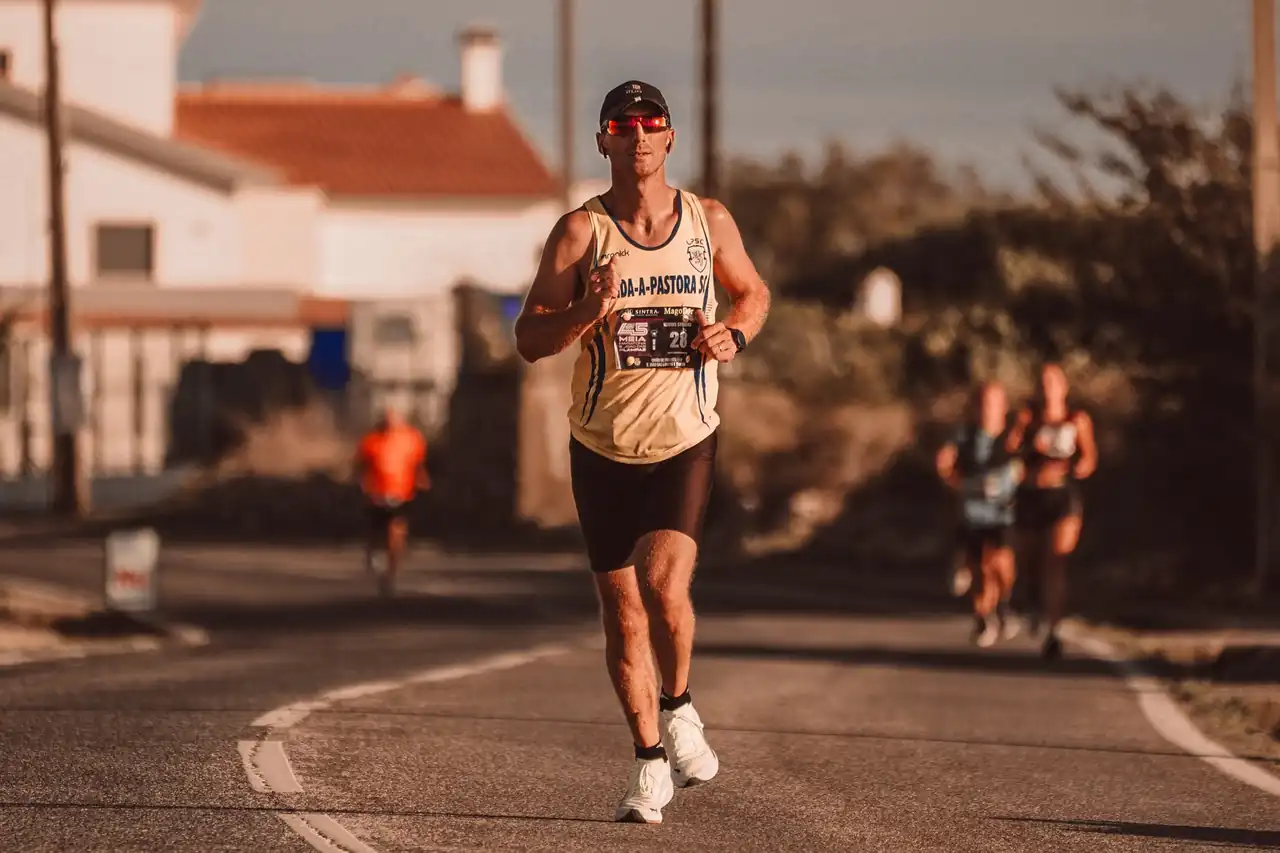
Calais launched its major athletic event in 2026 with a marathon designed to showcase the city at the pace of the stride, amid coastline, urban heritage and open landscape. The race was born with the ambition of becoming a benchmark event on the Opal Coast, a commitment that combines sport, tourism and territorial showcase in a single morning of racing.
The event is organized into three official distances — marathon, half marathon and 10 kilometers — and aims to attract both experienced runners and participants who prefer shorter formats. The result is a broad race day, with a main start in the Cap Blanc-Nez area, passage through Escalles, Sangatte, Coquelles, Blériot-Plage and a finish in Calais, plus a specific urban course for the shorter race.
A first edition with showcase ambition
The Marathon Calais XXL did not appear as just another competition on the calendar. Its design responds to a very clear idea: turning a port city and its surroundings into a long-distance racing stage. Instead of hiding the territory, the race puts it on display. The coast, the wind, the openness of the spaces and the silhouette of Calais are part of the sporting story just as much as the clock.
The organization, driven by local actors linked to tourism and running, identified a demand that already existed in the area. Urban races held in previous years had generated growing interest in a longer, more serious event with its own identity. From that comes a race that aims to establish itself without losing proximity, with an accessible, popular and at the same time demanding format.
The schedule was no coincidence. Holding the event at the end of June places it among other regional events and takes advantage of the long daylight hours at the start of summer. That time window benefits the runner’s experience and also that of the visitor, who finds a city ready to extend the stay beyond the race bib. In brand-image terms, the move is obvious: Calais wants to run in order to show itself.
What distances are offered and who they are aimed at
The sporting structure is one of the smartest aspects of this race. The marathon, with its 42.195 kilometers, preserves the prestige of the king distance. The half marathon opens the door to those looking for a serious challenge without going all the way to the classic limit. And the 10K provides a fast, mass-friendly and more approachable option for first-timers, clubs or groups of friends.
That combination greatly broadens the event’s reach. A single weekend can bring together very different profiles without forcing anyone out of their natural effort zone. There is room for the long-distance runner who wants to tackle a long race with character, for those who see the half marathon as a mid-season challenge, and for the recreational runner who wants to enjoy the atmosphere without facing such a demanding preparation.
The marathon was raced with a start at 8:00 in Cap Blanc-Nez. The half marathon also began in that area, while the 10K started from Quai de la Moselle, already within the urban fabric of Calais. This differentiation makes it possible to organize participant flow and, at the same time, give each distance its own landscape, something uncommon in newly launched events and very valuable for their identity.
The course: sea, city and open space
The marathon route is the piece that supports the entire project. The race moves between Cap Blanc-Nez, Escalles, Sangatte, Coquelles, Blériot-Plage and Calais, with a layout that alternates coastal sections, urban stretches and more open sectors. It is not a closed circuit or a studio set; it is a course with air, with horizon and with visible pace changes for those observing from outside as well.
In the half marathon, the return toward Calais includes the Sangatte seawall and the passage through Base Tom Souville before finishing on the seafront. The 10K, meanwhile, condenses the experience into a more direct and festive format, also with a finish in the seaside area. In all three cases, the finish line is linked to the coast, a decision that reinforces the symbolic character of the race.
The surroundings do not just decorate; they shape the race. The Channel wind can make some kilometers harder than expected, and the route profile, although not extreme, has enough variety to demand good judgment. That requires better effort management, especially in the most exposed sections. For the runner, the race is not just about moving forward; it forces you to read the landscape and negotiate with it.
A marathon that also tells the story of Calais
Calais has managed to build its own narrative around its maritime, industrial and cultural identity. The marathon fits into that logic and turns it into an athletic gesture. The city contributes not only streets and services; it contributes symbols. The Town Hall and its belfry, declared a UNESCO World Heritage Site, Rodin’s Bourgeois of Calais, the Citadelle, the Tour du Guet or the Courgain maritime district appear as references to a territory that wants to be read while running.
The city’s contemporary dimension also matters. The Compagnie du Dragon, the Cité de la Dentelle et de la Mode, the Museum of Fine Arts or the Channel give Calais an image of renewal that complements its port heritage. In a marathon, this kind of blend works especially well: the stride lets layers of history, local economy and open spaces pass by, almost as if the runner were crossing several cities in one.
That layering is one of the event’s greatest strengths. Not every marathon can boast such a clear reading of its territory. In Calais, the route is not merely a technical course; it is a statement of intent. The race showcases a city that looks to the sea, leans on its heritage and tries to project itself beyond its role as a gateway.
Schedules, registration and practical setup
The information available about the first edition made it clear that the organizers wanted to structure the day well. The marathon started at 8:00, early enough to make the most of the morning and reduce part of the thermal strain of late June. The half marathon was split into two waves, at 7:45 and 8:10, while the 10K was divided into two starts, at 9:00 and 9:15.
As for entry, the official billetterie offered a registration system based on time periods and distance. The marathon was priced at around 45 euros before February 15, 2026 and 50 euros until June 27. The half marathon cost 25 euros in the first period and 30 euros afterward. The 10K started at 15 euros. These fees are consistent with a first edition seeking to balance organizational cost, breadth of offering and accessibility for different budgets.
The logistical commitment also included the usual services at events of this level: timing, aid stations, finisher medal, medical areas, parking, photography and a finish souvenir. The race was born with a very clear intention to function as a complete experience, not just as a ranking or result. And in today’s popular athletics, that matters almost as much as the course itself.
A debut with massive participation and early reference performances
The first edition quickly moved beyond the scale of a local project. Nearly 4,000 runners took part across the three distances, a very significant figure for a debut and a sign that demand was already there before the start. Ultimately, that response confirms that the mix of scenery, novelty and multi-format appeal had real room on the calendar.
The 2026 podiums also added a competitive edge that helps fix the race in the athletic memory. In the women’s marathon, Caroline Sanson, Marion Savet and Justine Houteer Magni stood out. In the men’s category, the victory went to Baptiste Mertz, ahead of Alexis Papegay and François Sbardella. In the half marathon, Sélène Sibon dominated among the women and Yohann Pruvot did the same among the men. In the 10K, Louise Marcant and Jérôme Cugny set the main benchmarks.
The times help measure the tone of the race. The winning men’s marathon was completed in 2:40:12.81, and the women’s in 3:24:18.92. These are solid marks for a first edition with a course that combines beauty and a certain environmental toughness. Beyond the names themselves, the important fact is another: the race had enough level to reward the strongest without losing its open and popular profile.
What makes the Marathon Calais XXL unique compared with other coastal marathons
Many marathons by the sea promise beautiful views. Not all of them manage to make the landscape part of the event’s DNA. In Calais, the commitment goes a step further because the route is not limited to the seafront or the coastal cliché. There is design work to connect large open spaces, urban entry and heritage references, so that the race tells a story from start to finish.
There is also a very carefully calibrated tourism angle. The event is designed to attract visitors at a favorable time of year and to spread benefits among hotels, restaurants, shops and cultural activities. It is not just about gathering runners; it is about moving people, extending stays and strengthening the image of a destination that wants to stop being just a transit point. In that mission, the marathon works like a moving postcard.
The comparison with other major urban or coastal events is not exaggerated because the ambition communicated by the organizers is indeed at that level. Not in absolute size yet, but in concept. The race understands that today’s runner is looking for more than a medal: they want an experience with identity, a setting to remember, a story to tell when they get home. Calais offers exactly that, and with a very recognizable personality too.
What this race leaves for the future of running on the northern coast
The first edition of the Marathon Calais XXL left a powerful idea: there is room for new marathons if they bring character, coherence and scenery. Measuring 42.195 kilometers is not enough. There has to be a reason to run them there and not somewhere else. Calais has that reason in its mix of sea, city, heritage and Channel wind, a combination that is hard to copy exactly.
For the runner, that means something very concrete. The experience does not end with the result. The memory remains tied to the color of the sky, the salty air, the passage along the coast, the feeling of a city giving itself over to the event and a route that does not disguise its surroundings. Those are the kinds of races that create loyalty because they connect with memory, not just with a personal best.
In an increasingly crowded calendar, that difference is worth its weight in gold. Calais did not need to invent an extravagant formula; it was enough to organize its resources well and put them at the service of an event that is easy to understand at a glance. Between the tides, the heritage and the asphalt, the Marathon Calais XXL earned its place as a first edition that aims for more than survival: it wants to grow without losing the pulse of the coast that gave it life.
The final image is simple and powerful. A runner moving forward with the sea nearby, the city in the background and the wind setting the pace. Few scenes better sum up what this marathon wants to be: a big, open race with the ambition to stay.
You may also like: Finistère Marathon – La Transléonarde 2026: complete guide.



How to prevent thigh chafing: causes and real solutions

Women’s running windbreakers: seven jackets and how to choose

Do more workouts get rid of soreness? A guide for runners

Jaén Half Marathon 2026: Record 3,800 Runners Registered

Men’s short running tights: how to choose the right pair

World Triathlon confirms data breach involving medical data

Izan Edo targets podium at Miyazaki World Cup

María Pérez ranks ninth in World Athletics’ 2026 top ten

Dos Santos, Duplantis and Sawe: World Athlete of the Year finalists

San Silvestre Vallecana 2026: 42,000 places, prices and start times

 Races3 months ago
Valencia Half Marathon 2027: date and registration

 Races3 months ago
Valencia Marathon 2026: entry, ballot and course

 Reviews and Comparisons4 months ago
Asics Gel-Roadmiles 3 for men: review and current price

 Reviews and Comparisons4 months ago
Asics Gel Sonoma 8 Gore-Tex: complete analysis for trail and rain

 Sneakers3 months ago
Saucony Endorphin Pro 4: full review and verdict

 News5 months ago
Strava API 2026: what changes for clubs, challenges and runner apps?

 Reviews and Comparisons5 months ago
Nike Alphafly 3: opinions, sensations, and real key points

 Reviews and Comparisons4 months ago
Under Armour running shoes review 2025-2026: models and key features

 Sports Equipment4 months ago
Shoe sizes in cm: a clear guide to getting the right fit for your footwear

 Sneakers3 months ago
Skechers GO RUN Consistent 2.0 analysis: comfort and limits

 News5 months ago
Valencia Marathon 2026 route: key tips to train and run better

 Sneakers4 months ago
Adidas Adizero Boston 13 for men: review and verdict