Races
Vila-Seca Half Marathon 2026: route, schedule, and key points
A race of 5, 10, and 21 km, starting at the sports complex and following a route that combines the city center and the coast.

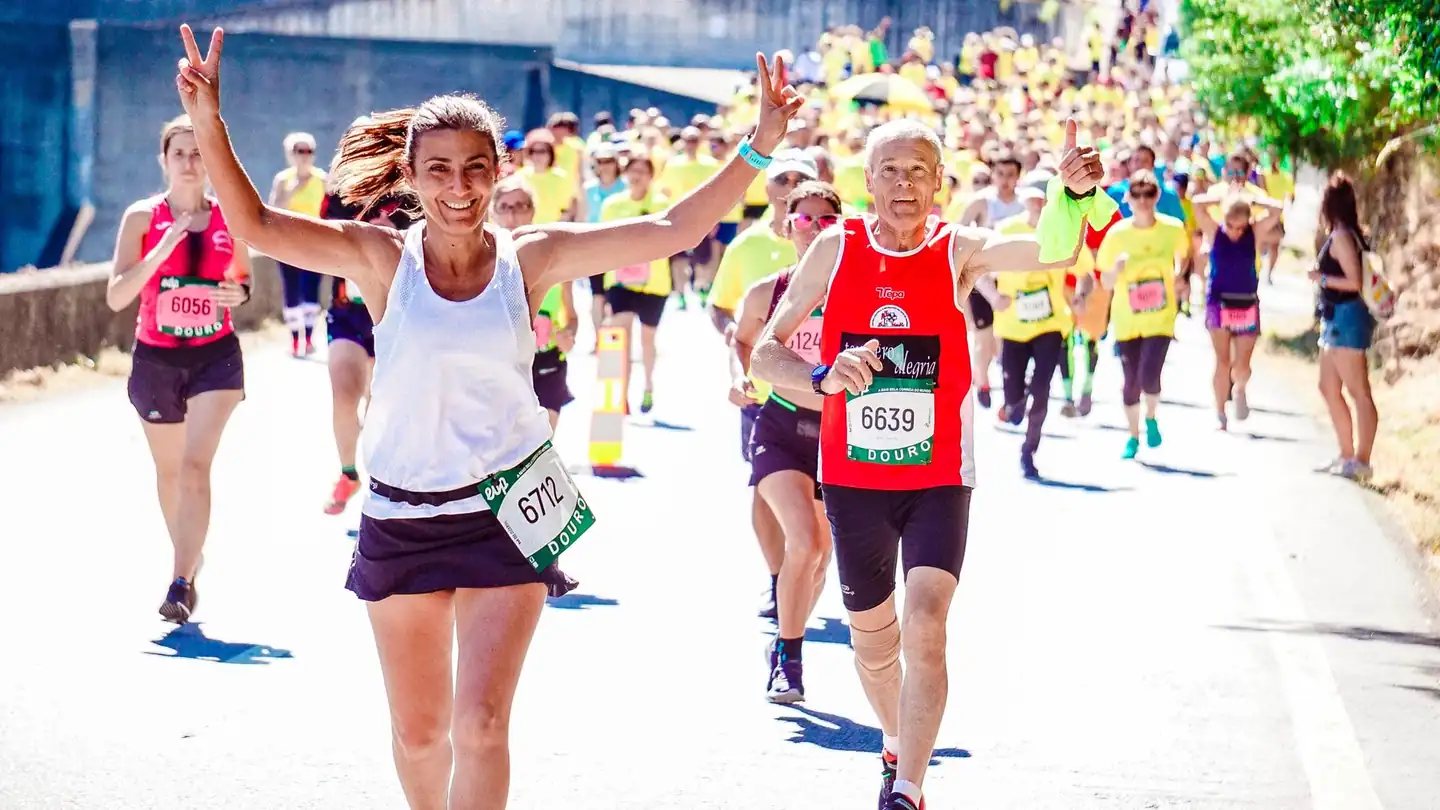
The Vila-Seca Half Marathon will be held on Sunday, October 18, 2026, in the province of Tarragona, with three official distances: 5 kilometers, 10 kilometers, and a half marathon. The start and finish are located at the municipal sports complex, a practical point for runners and spectators, and the event has established itself as one of the most recognizable autumn races in the Costa Daurada area.
The main attraction is the course: a combination of city center, historic areas, and sections close to the coast that gives the race a very different personality from a purely asphalt 21K along avenues. It is not just a race for chasing a personal best; it also works as a sporting excuse to read the city in motion, with a route that shows the profile of Vila-Seca from different angles and maintains a manageable level of demand for a wide range of runners.
An event that blends city, coast, and race pace
Vila-Seca offers a road race with a popular spirit, but with enough nuance to interest both first-time runners and those more accustomed to half marathons. The 21.097-kilometer circuit is not just a linear stroll; it starts in the urban core, opens toward coastal areas, and returns to the starting point with a contained positive elevation gain of around 54 meters, placing it among the friendlier terrain in Spanish half marathons.
The race also has a very clear territorial reading. Vila-Seca moves between the inland and the sea, between the historical imprint of the old town and the more open image of the coastline. That duality is carried onto the asphalt: first the urban reference, then the openness of the areas closer to the coast, and finally the return to a more recognizable part of the municipality. The result is a route that changes texture without ever leaving the road.
For runners, that change of scenery matters because it helps regulate effort. The opening stretch in the center can encourage a more controlled start; the transition to open areas invites a steady rhythm; and the return to the city requires good management of accumulated fatigue. In an October race, weather also usually plays a reasonable role: less heat than in midsummer, although humidity and coastal wind are always present as factors to watch.
Distances, profile, and race type
The range of distances is one of the event’s biggest strengths. The half marathon shares the spotlight with a 10K and a 5K, greatly expanding the potential audience. This approach prevents the race from being reserved only for experienced runners and allows the event to function as a small gathering of different levels, from someone aiming to complete their first 5 kilometers to someone seeking a serious 21-kilometer run in the autumn calendar.
The half marathon is clearly designed for road running and takes place on an urban circuit with sections through coastal surroundings. The 10K, meanwhile, appears as a faster and much more direct option, with an urban character and a profile that favors speed. The 5K is the most accessible of the three and, due to its length, concentrates effort into a short span, ideal for those who prefer a shorter race or want to get into the atmosphere of a race without taking on the demands of a longer distance.
In competitive terms, the elevation gain is moderate. The half marathon has around 54 meters of ascent, while the 10K is around 30 meters and the 5K has barely any noticeable elevation. That does not make the race completely flat, but it does keep it within parameters that are useful for consistent times, especially if the day is kind and the runner handles the direction changes and the more exposed sections well.
Schedules, start, and race-day atmosphere
The start is set at the municipal sports complex, in the venue’s parking area, a logical location for centralizing logistics, bib collection, and access to the finish. The planned start time for all distances is 9:30 a.m., a common slot for autumn races that allows running in sufficient daylight and avoids the harshest hours of the day.
Race bib pickup is usually organized the day before and also on race morning, making arrival easier for participants from outside the municipality. Although each edition may adjust small operational details, the 2025 reference makes a fairly stable setup clear: collection on Saturday afternoon and Sunday morning, at the sports complex itself. This structure reduces unnecessary travel and helps concentrate activity in one single area.
The race atmosphere is one of its least visible and most valuable assets. This is not a huge mass marathon, but a medium-scale event with a friendly spirit, where runners do not completely lose the sense of community. That size usually means less congestion at the start, a better reading of the course, and a cleaner experience for those who want to compete without the pressure of major crowded events.
The 21-kilometer course, explained precisely
The half marathon starts in the urban heart of Vila-Seca and uses the first kilometers to showcase part of its historical layout. From there, the route heads south, skirting more open spaces and moving closer to the coastal strip. In that transition appears one of the race’s identifying features: it is not an out-and-back course without a story, but a route with progression, almost like a series of small linked scenes.
The central portion of the route includes a stretch alongside Vila-Seca Golf and then a coastal section of about 3 kilometers along the Mediterranean edge. That is where the race gains visual openness. The runner goes from narrow streets to the open horizon, from urban hum to the line of the sea, and that transition changes the perception of effort. It does not make running easier, but it does make progress more manageable, especially when the body starts asking for references beyond breathing and the clock.
The return to the city center closes the design with very functional logic. The route heads back toward the center, passes near PortAventura Park, and guides the finish toward the sports hall. On that final stretch, pace management matters more than any aesthetic impression. The race, with moderate elevation gain and mostly asphalt, rewards consistency over an overenthusiastic start. Those who go out too fast may pay for it on the return; those who pace themselves well have room to maintain a solid average all the way to the finish.
The 10K and 5K as entry points to the event
The Vila-Seca 10K has its own identity, and should not be seen as merely a shortened version of the half marathon. It is an urban, fast, and fairly clean race in its approach, with a course designed to sustain high paces without too many interruptions. For those looking for a controlled race or a good benchmark time, it is probably the most rewarding distance on the card.
The 5K, by contrast, plays in another league. Its route is short, easier to tackle, and with barely any elevation, making it a very versatile option. It usually works well for beginners, for runners returning to competition, or for those who prefer an intense but brief effort. In practice, that distance democratizes the day: not everyone comes for a half marathon, but many can still feel part of the same event.
That coexistence of distances adds value to the whole event. One municipality hosts very different runner profiles without fully separating the experience. The half marathon demands preparation and patience; the 10K asks for pace and composure; the 5K, for well-managed courage. Three ways of reading the asphalt on the same day, with an organization centered around the sports complex as the natural hub of the event.
Prices, categories, and participation limits
Registration has moved through tiered price ranges in recent editions, with different fees depending on the distance and the registration date. For the half marathon, prices have been set at 20 euros in the first phase, 24 euros in the second, and 28 euros in the final stretch. The 10K has ranged from 14, 17, and 20 euros, while the 5K has moved between 10, 12, and 14 euros. These are figures that place the race in a reasonable bracket for the popular running calendar of the Comunitat and neighboring Tarragona.
Minimum ages have also been established: 16 years for the half marathon and the 10K, and 10 years for the 5K. That minimum threshold is not just administrative; it responds to the safety and sporting maturity required by each distance. The half marathon, because of its physical load and duration, requires a more solid base, while the 5K can accommodate a younger and less specialized profile.
Time cutoffs are also relevant. In previous references, the half marathon had a maximum time of 2 hours and 30 minutes, the 10K 1 hour and 11 minutes, and the 5K 40 minutes. These cutoffs fit a race that aims to be agile in its operations and reasonable in traffic control, without excessively prolonging the course closure.
What kind of runner will find a good opportunity here
The race is especially well suited to those seeking a half marathon without excessive toughness. It is not a mountain course or a trap of chained climbs, although it also does not promise a completely flat profile. Its balance makes it useful for adding a good competitive experience in autumn, when many runners begin building a schedule after summer or fine-tuning sensations for longer goals.
It also works for those who value context over the clock. Running through a city that combines heritage, coastline, and a manageable human scale always adds something extra. You do not need a mega-spectacle for a race to be memorable; sometimes a well-designed route, an orderly start, and a clear finish are enough. Vila-Seca offers exactly that, with the added benefit of an environment that can be read while running.
For clubs and training groups, the event is practical. The presence of 5K, 10K, and 21K distances allows different runners to share the same date, trip, and atmosphere without giving up their own goals. That flexibility often explains part of the success of these mid-sized events, where the calendar is organized not only around times but also around sporting togetherness.
Vila-Seca within the autumn calendar on the Costa Daurada
The mid-October date gives it a strategic position in the calendar. It is not so early that it carries the summer heat, nor so late that it falls in the heart of winter. That timing makes it a useful race for preparing later goals or for closing a training block with a serious but manageable distance.
It also does not stand alone. In the Tarragona, Salou, Cambrils, and nearby municipalities area, there is an ecosystem of races that makes this region a very active place for popular runners. That benefits occasional and regular participants alike, because it makes it possible to organize sports getaways, link nearby races, or build a coherent calendar without leaving the same geographic area.
The Vila-Seca Half Marathon is built on a clear idea: offer a well-located race, with multiple distances and a course that does more than just add kilometers. Its value is not in epic drama, but in the sum of concrete details. An orderly start, an urban-readable circuit, a coastal stretch, moderate elevation gain, options for several levels, and an environment that turns race morning into something more than a simple pass through the finish line.
A race that gains weight through its balance and surroundings
In a calendar saturated with options, the races that endure are the ones that offer balance. Vila-Seca achieves this with a simple formula: well-differentiated distances, a reasonably fast course, a convenient location, and an environment that does not require you to be a specialist to enjoy it. It does not aim to compete with the big showcases of Spanish running; it plays a different game, closer and more useful for much of the popular running pack.
That balance also explains its growing visibility in European calendars and specialized search engines. The combination of 5K, 10K, and 21K, together with the coastal and urban component, responds to a very specific demand: races that allow you to run, measure yourself, and remember the experience all at once. It is not a magic formula, but a well-thought-out construction, with its feet on the asphalt and its gaze on an environment that adds without distracting.
The Vila-Seca Half Marathon, in short, is an autumn event with its own identity. It offers a manageable half marathon, a competitive 10K, and an accessible 5K, all in a location that blends city center and Mediterranean coast. For anyone looking for a road race in Tarragona with a varied course and a contained atmosphere, the name Vila-Seca deserves to be highlighted in red on the calendar.



How to prevent thigh chafing: causes and real solutions

Women’s running windbreakers: seven jackets and how to choose

Do more workouts get rid of soreness? A guide for runners

Jaén Half Marathon 2026: Record 3,800 Runners Registered

Men’s short running tights: how to choose the right pair

World Triathlon confirms data breach involving medical data

Izan Edo targets podium at Miyazaki World Cup

María Pérez ranks ninth in World Athletics’ 2026 top ten

Dos Santos, Duplantis and Sawe: World Athlete of the Year finalists

San Silvestre Vallecana 2026: 42,000 places, prices and start times

 Races3 months ago
Valencia Half Marathon 2027: date and registration

 Races3 months ago
Valencia Marathon 2026: entry, ballot and course

 Reviews and Comparisons4 months ago
Asics Gel-Roadmiles 3 for men: review and current price

 Reviews and Comparisons4 months ago
Asics Gel Sonoma 8 Gore-Tex: complete analysis for trail and rain

 Sneakers3 months ago
Saucony Endorphin Pro 4: full review and verdict

 News5 months ago
Strava API 2026: what changes for clubs, challenges and runner apps?

 Reviews and Comparisons5 months ago
Nike Alphafly 3: opinions, sensations, and real key points

 Reviews and Comparisons4 months ago
Under Armour running shoes review 2025-2026: models and key features

 Sports Equipment4 months ago
Shoe sizes in cm: a clear guide to getting the right fit for your footwear

 Sneakers3 months ago
Skechers GO RUN Consistent 2.0 analysis: comfort and limits

 News5 months ago
Valencia Marathon 2026 route: key tips to train and run better

 Sneakers4 months ago
Adidas Adizero Boston 13 for men: review and verdict