Races
Vladivostok Marathon 2026: course and schedule
The great Vladivostok race combines bridges, various distances, and demanding logistics for thousands of runners.

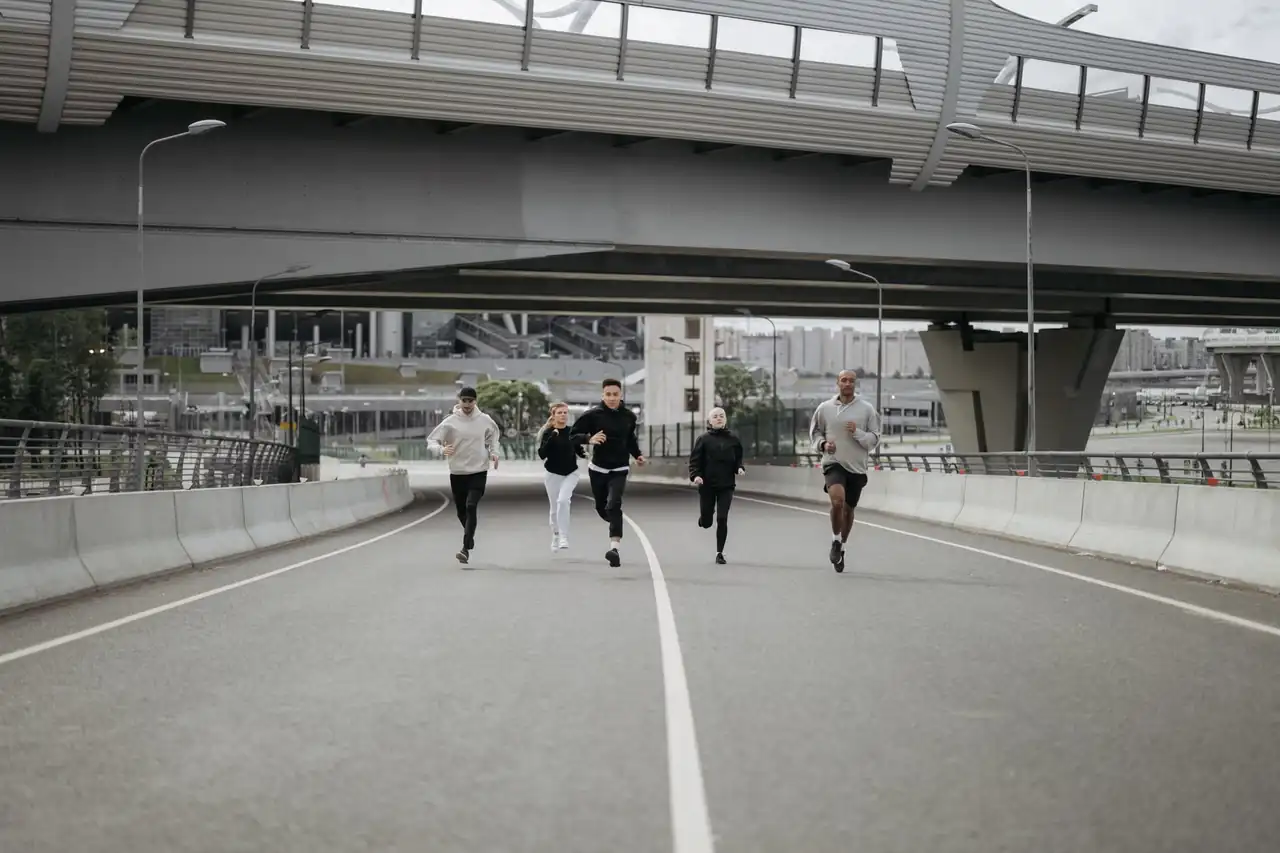
Imagen: cottonbro studio / Pexels
Vladivostok is preparing an edition defined by bridges, the sea, and a finish in the heart of the city. The Galaxy Vladivostok Marathon will once again bring together thousands of runners in a race that blends urban scenery, serious elevation gain, and a major-event atmosphere. The race is set for September 26, 2026 and keeps its base at Central Square, in Fighters of the Revolution Square, with the finish at the same point for the first time in this recent configuration.
The event goes far beyond the classic marathon. The program includes 3, 7, 10, 21.1, 28, and 42.2 kilometers, plus a children’s one-kilometer run and a paralympic segment. That makes this event a showcase of broad participation, from those aiming to complete their first short course to those chasing a demanding mark on an AIMS-certified course over the 10, 21.1, and 42.2 kilometer distances.
A marathon that defines Vladivostok
The Galaxy Vladivostok Marathon has established itself as the major running event in Russia’s Far East. Its appeal lies not only in the number of entrants, which the organizers place at around 6,000 participants, but also in a geography that gives it character: hills, bridges, wide avenues, and open views of the water. Running here is not a flat formality; it is an experience where the course matters as much as the clock.
The race is organized by the RunDnsRun club, with the DNS Group as principal partner, and has institutional coordination with the Government of Primorsky Krai and the Vladivostok administration. That backing explains the scale of the event, visible in the security deployment, traffic closures, and overall staging, which seeks to turn the city into a sports venue without losing its everyday rhythm.
Its status as the only marathon in the Far East included in the AIMS international calendar also stands out. That seal is not decorative: it speaks of standardized measurement of the main distances and of an organization designed to give real competitive value to finishing times. For those running for a result, that matters; for those running for the scenery, it adds a layer of legitimacy to the challenge.
The distances and what each one demands
The range of courses is one of the event’s biggest selling points. The 42.2-kilometer route is the most ambitious and also the toughest, with 906 meters of positive elevation gain and a cutoff time of 5 hours and 30 minutes. The profile alone explains why Vladivostok does not belong in the category of fast, flat marathons. Here runners must manage effort, tolerate climbs, and avoid letting early enthusiasm become a liability before the halfway point.
The 28-kilometer course accumulates 628 meters of elevation gain and shares much of the personality of the full marathon, with crossings over the iconic bridges as a major visual draw. The half marathon, at 21.1 kilometers, features 538 meters of elevation gain and a maximum time of 4 hours. These figures clearly explain the nature of the event: this is not a steady-pace race, but a succession of gradient changes that require smart running.
The shorter distances ease the strain, but they do not remove the challenge. The 10 kilometers add 224 meters of elevation with a 2-hour limit; the 7 kilometers, 163 meters, also with two hours; and the 3 kilometers, 50 meters, must be completed in 25 minutes. The children’s one-kilometer run has a 20-minute limit, while the paralympic distance of 500 meters follows an inclusive format, with a dedicated start and its own logistical support.
The route, between the city center and the bridges
Vladivostok’s great visual attraction is the crossing of the Rusky and Golden bridges, two structures that have made the city a recognizable postcard even for those who have never set foot in Russia’s Far East. On the longer courses, that passage sets the tone of the race: runners leave the centrality of the main square behind and enter a sequence of avenues, climbs, and broad horizons that change the feel of the run with every kilometer.
The 42.2-kilometer marathon goes from Central Square along Universitetskiy Avenue to a point near the aquarium turnoff before returning to the center. The 28-kilometer route follows a similar logic and reaches the ring road on Russky Island; the half marathon turns around in the Barkhatnaya Street area; the 10 kilometers go as far as Kalinina Street 295; the 7 kilometers advance to the Mariinsky Theatre area; and the 3 kilometers head toward Pushkinskaya Street 33a.
That map forces you to think of the race as more than a sum of distances. The elevation, the length of the bridges, and exposure to the wind turn each segment into a negotiation between legs and landscape. Anyone signing up in Vladivostok accepts that the surroundings are not a friendly backdrop, but an active part of the effort. That is a large part of this race’s prestige: the dialogue between beauty and difficulty.
Timetables, timing control, and discipline on the streets
The organizers follow an early and tightly packed schedule. On September 26, the paralympic one-kilometer start is set for 08:00. At 08:30, the 42.2 and 28 kilometers begin; the children’s one-kilometer run starts at 08:40; the 3 kilometers at 09:00; the 21.1 at 09:30; the 10 at 09:40; and the 7 at 09:50. The awards ceremony for the children’s and 3-kilometer races is scheduled for 12:30, and the finish line closure is expected at 14:00.
That precision is not a ceremonial whim. In a city where traffic must return to normal, the time limits are part of the coexistence between the race and the urban space. The 1,000-meter children’s race must be completed in 20 minutes; the 3 kilometers in 25; the 7 and 10 kilometers in 2 hours; the half marathon in 4 hours; and the 28 and 42.2 kilometers in 5 hours and 30 minutes. On the longer routes, there are also intermediate checkpoints that require maintaining a viable pace or dropping out.
The split checkpoints for the marathon and the 28-kilometer race are set at various points along the course, with cutoff times calculated so the operation can function smoothly. That means runners are competing not only against themselves, but also against a very specific logistical framework. In events like this, the clock is not an accessory; it is part of the rules, the landscape, and the strategy.
Registration, documents, and access to the start
Registration opens through the event system, and the organizers remind participants that demand may fill the available spots before race day. In recent editions, entry fees have varied by distance and registration phase, with references of up to 4,600 rubles and corporate rates increasing as the date approaches. For an event of this scale, the final price depends on when you sign up, which is common in marathons with limited capacity.
Access to the start kit requires medical documentation for every distance, without exception. The certificate must include the doctor’s signature and the relevant seals from the health center. For the 10, 7, 3, and 1-kilometer races, it is enough to state that the person is healthy; for 21.1, 28, and 42.2 kilometers, it must explicitly state that the participant is cleared to compete in cyclical sports at the corresponding distance. The maximum validity is six months, unless the document itself indicates a shorter period.
Race packs are handed out on dates before the event, and on race day only out-of-town participants may collect them at the Central Square registration area. The organizers also allow third-party pickup in certain cases, always with the required documentation. For minors, parental or guardian consent is required, along with the minor’s identification document and the corresponding medical certificate. The requirement is clear and leaves little room for improvisation, which is logical in an event that mobilizes thousands of people.
Race services: safety, aid stations, and finisher perks
One of the factors that most influences the reputation of a mass-participation race is the quality of its support. In Vladivostok, the organizers promise aid stations every 5 kilometers, with still water and bananas as the basics, along with toilets spaced at the same rhythm. There is also assistance for those who miss the cutoff, with special transport back to the start/finish area.
The safety coverage includes emergency services, police, ambulances, bicycle patrols, an operational response point, and volunteers. Together, these create a network that, in a large urban event, is just as important as the finish arch. The race is experienced as a celebration, but it is organized like a precision operation. It is this dual nature that sustains it.
Finishing does not end when the official time appears on the screen. Every participant who crosses the line receives a medal with the distance covered, and the finish area includes food, a rest zone, photo areas, and activities for the public. Medal engraving with the result is also offered, a detail that reinforces the value of an object earned through effort, almost as a tangible proof of having crossed the map and the fatigue.
Prizes, popular relay, and corporate quota
The race distributes a prize fund of more than one million rubles, with trophies, diplomas, and sponsor gifts for the top finishers. On the longer distances, the prize distribution often extends to several overall positions, for both men and women. That incentive does not define the experience for most runners, but it does underline that Vladivostok is not a recreational race without competitive ambition.
The corporate format adds another layer. The Corporate Cup pits teams from companies and institutions against each other in a points-based ranking, with a minimum of ten members per team. Different distances are allowed, and both the fastest squad and the largest one are rewarded. It is a mechanism that turns the race into a kind of internal league, useful for companies that want to project presence while also sharing an experience.
That collective component, combined with the children’s one-kilometer run and the paralympic distance, makes the event broader than an elite marathon. There is room for debuts, family challenges, office relays, and chasing personal bests. Few races manage to bring together so many profiles without losing their identity. Vladivostok does so through a simple idea: running as a way of occupying the city.
Why this race carries so much weight on the calendar
The Galaxy Vladivostok Marathon name has become strong because it combines three ingredients that rarely coexist so clearly: a unique urban setting, logistics that aim for international standards, and a highly recognizable visual story. The bridges, the coast, and the central square become symbols of the event, and that image has become almost inseparable from the race itself.
Added to that is the value of its date, at the end of the Russian summer, when the climate still often allows for a long sporting day, though with the uncertainty typical of a city open to wind and water. That is no small detail. In a race like this, weather can tip the day toward epic drama or toward caution. The organizers seem to accept that with a structure designed to handle both scenarios.
In that context, the marathon works as a kind of public test for the city and for those on the start line. It is not just a distance; it is a way to read Vladivostok at human pace, kilometer by kilometer, with the body as an instrument of observation. Few races transform a territory into a direct experience so strongly.
A finish that leaves its mark on the Pacific coast
The finish-line image at Central Square captures well what this race aims for: breadth, visibility, and a sense of returning to the center after crossing several worlds in just a few hours. The runner leaves a square, crosses bridges and avenues, feels the elevation in the legs, and returns to the same point with a medal and a story that, in Vladivostok, often weighs more than the raw time.
That is why the Galaxy Vladivostok Marathon continues to grow as a reference event on the Russian and international calendar. It does not attract because it is easy, but for the opposite reason: because of the character of its course, the force of its setting, and the balance between city festival and serious competition. In a marathon landscape that is increasingly uniform, this one retains a personality that cannot be mistaken for any other.
On September 26, 2026, the race will once again put thousands of people before the same physical and mental question: how much can the body endure when the city becomes a sequence of bridges, climbs, and open horizon? The answer, as in running so often, will be written at once in the legs, the clock, and the memory.



How to prevent thigh chafing: causes and real solutions

Women’s running windbreakers: seven jackets and how to choose

Do more workouts get rid of soreness? A guide for runners

Jaén Half Marathon 2026: Record 3,800 Runners Registered

Men’s short running tights: how to choose the right pair

World Triathlon confirms data breach involving medical data

Izan Edo targets podium at Miyazaki World Cup

María Pérez ranks ninth in World Athletics’ 2026 top ten

Dos Santos, Duplantis and Sawe: World Athlete of the Year finalists

San Silvestre Vallecana 2026: 42,000 places, prices and start times

 Races3 months ago
Valencia Half Marathon 2027: date and registration

 Reviews and Comparisons4 months ago
Asics Gel-Roadmiles 3 for men: review and current price

 Races3 months ago
Valencia Marathon 2026: entry, ballot and course

 Reviews and Comparisons4 months ago
Asics Gel Sonoma 8 Gore-Tex: complete analysis for trail and rain

 Sneakers3 months ago
Saucony Endorphin Pro 4: full review and verdict

 News5 months ago
Strava API 2026: what changes for clubs, challenges and runner apps?

 Reviews and Comparisons5 months ago
Nike Alphafly 3: opinions, sensations, and real key points

 Reviews and Comparisons4 months ago
Under Armour running shoes review 2025-2026: models and key features

 Sports Equipment4 months ago
Shoe sizes in cm: a clear guide to getting the right fit for your footwear

 Sneakers3 months ago
Skechers GO RUN Consistent 2.0 analysis: comfort and limits

 News5 months ago
Valencia Marathon 2026 route: key tips to train and run better

 Sneakers4 months ago
Adidas Adizero Boston 13 for men: review and verdict