Races
Zarautz Triathlon 2026: course, schedule, and key points
Zarautz returns with a tough, historic, and very unique triathlon: distances, schedules, atmosphere, and course.

The Zarautz Triathlon is not just another event on the Basque calendar: it is a race with its own identity, a mix of the Bay of Biscay, serious climbs, and a crowd that turns every kilometer into a human corridor. The 2026 edition also carries a special symbolic weight as it reaches its 40th edition since its debut in 1987, a longevity that very few middle-distance competitions can display with the same popular recognition.
The formula is well known and, precisely for that reason, so feared: 2.8 kilometers of swimming between Getaria and Zarautz, 80 kilometers of cycling with mountain passes and steep ramps, and 20 kilometers of running through the streets of the coastal town. This is not a race to seek relief in the profile or to count gentle meters; here the terrain bites, the atmosphere pushes, and the final prestige weighs as much as the elevation gain.
A date with history, character, and an emotional waiting list
The fame of the Zarautz Triathlon has not been built with grandiose campaigns, but with repetition, toughness, and a reputation earned through decades of effort. It was born in 1987 and, apart from the forced pause caused by the pandemic, it has maintained a continuity that has made it one of the major benchmarks in Spanish middle-distance triathlon. It is no coincidence that it is referred to as the dean, the mecca, or the king of the north; each nickname conveys part of its cultural weight.
That tradition is reflected in the type of athlete it attracts. In Zarautz, veterans hungry for an iconic experience, first-timers looking for a race with its own story, and specialists drawn to a course that gives away not a single meter all come together. The 2026 edition has arrived with 650 sold-out bibs, a fact that confirms the race’s pull and the strength of a sporting brand that already functions as a destination in itself.
The symbolic value also lies in the date. The organizers set the start for June 13, 2026, on a day that usually brings warmth, a beach atmosphere, and a very lively coastline. That combination is not just scenery: it changes the tactical reading of the race, affects effort management, and turns every transition into a sequence where precision matters as much as the legs. In a triathlon like this, the athlete is not only racing against rivals; they are racing against the terrain, the air, and the incline.
A course that offers no respite
Swimming becomes the first statement of intent. The 2.8-kilometer open-water stretch between Getaria and Zarautz forces athletes to read the water intelligently, tolerate the uncertainty of the swell, and begin the race with already-awakened heart rates. There is no pool to structure the day or buoy line to soften the landscape; the Cantabrian Sea imposes its character and sets the tone from the start.
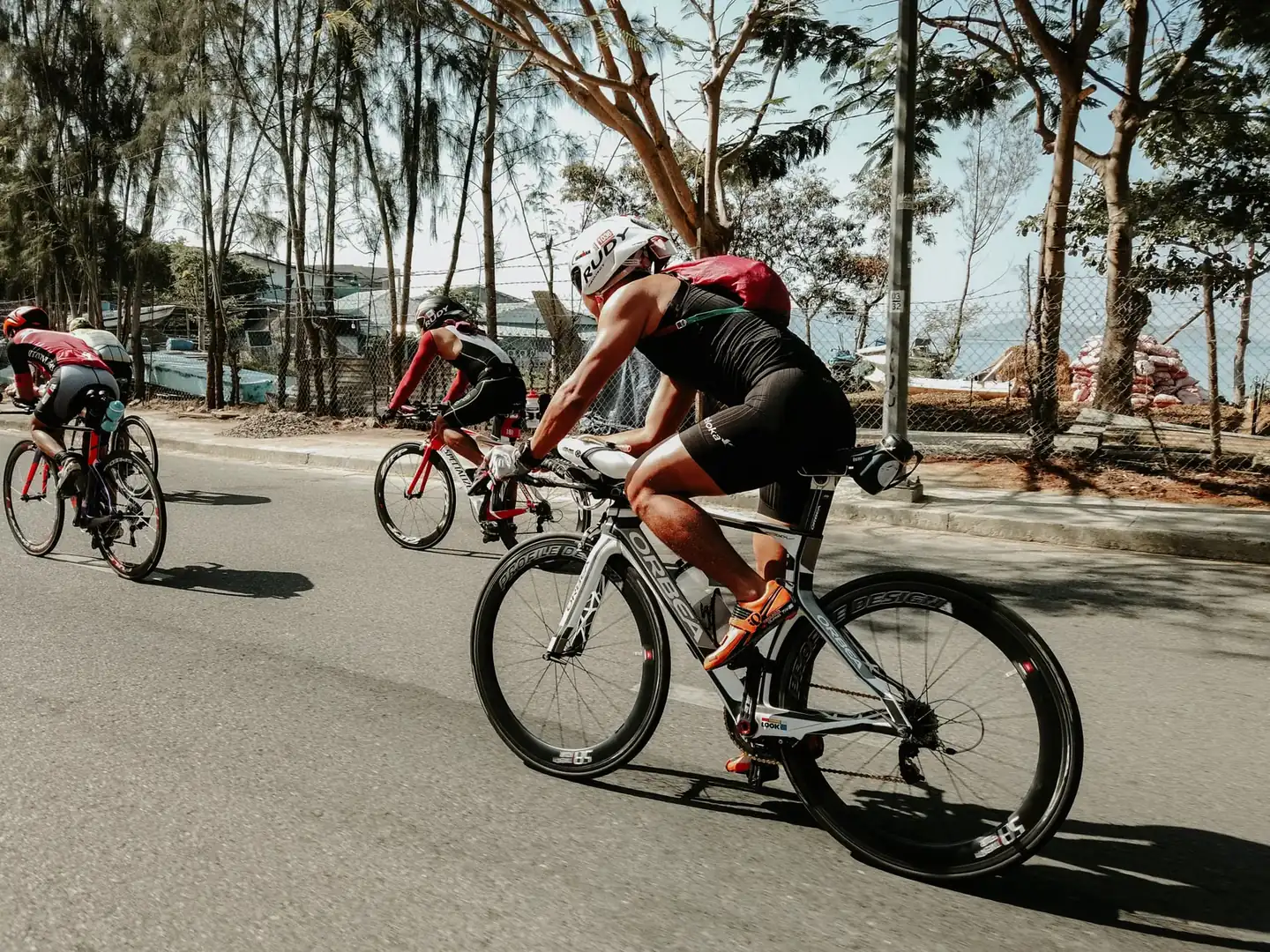
Then comes the segment that usually separates contenders from the tough ones. The bike leg adds 80 kilometers with three climbs to Meagas and the ascent to San Blas as the most delicate point, with ramps reaching 20%. That figure is not a technical flourish: in practice it means abrupt changes of pace, short gearing, prolonged muscular strain, and a constant need to pace yourself. The bike here is not ridden, it is negotiated.
The run, finally, adds 20 kilometers through the streets of Zarautz and its seafront promenade, a setting where fatigue has already arrived with a name of its own. The urban course allows the public to gather at multiple points and turns the waterfront into a corridor of noise, flags, and constant encouragement. The final straight is not a carpet of calm; it is an exam of clarity when the legs begin speaking another language.
Schedules, women’s start, and projected finish time
The 2026 organization sets the women’s start at 2:00 p.m. and the men’s start ten minutes later, a brief gap that keeps competitive tension very high from the first minute. That small margin alters the strategic reading of the race, especially in the water and in managing the cycling pack, where every gap can become decisive later on.
The arrival of the first finishers is expected around 6:00 p.m. in the town hall square, a finish that concentrates much of the event’s symbolic weight. The urban setting, the proximity of the public, and the visible exhaustion of those crossing the line make the finish more than a mere chronological formality. In Zarautz, the end of the race works as a collective scene, almost a small summer ritual.
That schedule also speaks to the toughness of the day. This is not an event settled early in the morning, when the body is still fresh and the breeze seems more benign. The afternoon goes on, the coast changes temperature, and the effort stretches out for hours. For many participants, finishing in that time slot means having gone through several races within one: the survival swim, the endurance bike leg, and the final run of pure mental management.
What makes Zarautz different from other middle-distance races
The Zarautz middle-distance race stands out for an unusual combination of beauty and harshness. There are faster races, more predictable ones, and many more comfortable options for chasing a time. This one, however, takes place in a territory of contrasts: sea and mountain, festive atmosphere and technical demands, sporting heritage and real toughness. That mix gives it a personality that depends not only on performance, but also on the story each athlete takes back home.
The constant reference to Basque culture is not an empty tourist add-on. It is part of the human frame of the race and explains why so many participants speak of Zarautz as a complete experience. The crowd, the food, the landscape, and the local identity all come together during the day without displacing what matters most: the triathlon remains, above all, a demanding test. But the atmosphere makes the memory last beyond the clock.
The sense of community also carries weight. The organizers and the local environment have built an image of a vibrant race, strongly supported by volunteers, the club, and fans. That human network does not soften the course, but it does surround it. In an era when many sporting events look alike, Zarautz maintains its own texture, almost handcrafted in the way it connects with the athlete.
The triathlete’s guide and the mechanics behind the event
The so-called Triathlete’s Guide is one of the most useful documents for understanding how the race works, because it brings together schedules, services, and logistical details that, in an event of this profile, matter as much as training. The organizers themselves indicate that this guide is published well in advance to help structure the participant’s experience and reduce improvisation in an event where every minute counts.
Behind the sporting showcase is Zarauzko Triatloi Elkartea, a club presented as a community of people united by triathlon and friendship. That associative dimension matters because it explains the tone of the race: this is not an event conceived merely as a product, but as a local tradition that has matured over time. The organization, the main sponsorship, and institutional support have made it possible to sustain an event that already belongs to the Basque sporting imagination.
The structure of the event also shows a desire to serve the athlete. The official website repeatedly provides access to the program, course, rules, standings, tourism, and news. That architecture is no small thing: it organizes the experience of those competing, those accompanying them, and those following the race from afar. In triathlons as established as this one, information is not an extra; it is part of the event’s value.
The crowd, the landscape, and the weight of racing away from home
Zarautz offers a singular stage for triathlon. The open-water start, the hilly bike segment, and the run through the historic center mean the athlete passes through three different landscapes in just a few hours. That visual variety, almost cinematic, does not reduce the effort; it intensifies it, because it forces constant adaptation to different sensations without any pause for comfort.
The local crowd adds a layer of pressure and motivation that many participants value as decisive. The streets fill with voices, the climbs become true walls of sound, and the finish in the city center takes on the air of a shared celebration. From the outside, that warmth may seem like a decorative detail, but in the race it works like a tide that pushes or demands, depending on the moment.
It is also worth measuring the psychological effect of competing in a place so closely associated with triathlon. Zarautz is not a neutral stage; it carries decades of history, illustrious names, and a reputation that precedes the athlete. For many, that adds prestige. For others, an extra dose of respect. In both cases, the race demands a focused mind, because the setting leaves no room for distraction.
A challenge measured in legs, head, and the ability to suffer well
The Zarautz Triathlon is best understood as a race of management rather than a simple sum of kilometers. The clock matters, of course, but here the difference between finishing strong or empty often depends on how the effort is managed in each segment. The swim opens the door, the bike punishes the muscles, and the run finishes the job with a fatigue that is already structural, not temporary.
That is why its prestige is so strong. It is not enough to be fast; you have to be resilient, read the terrain, and accept that the course will ask for payment. That combination explains why the event continues to sell out and attract top-level athletes. In the end, the race preserves a rare value in modern sport: it demands respect for effort and offers a reward proportional to the sacrifice.
The 2026 edition reinforces that idea. The 40th anniversary does not turn the event into a nostalgic tribute, but into a confirmation of its relevance. Zarautz remains a benchmark because it keeps intact the ingredients that made it different: a tough course, a powerful local identity, and a finish earned with patience, head, and a lot of ability to suffer well.
The prestige of a finish line that still carries weight
In Spanish triathlon there are fast races, mass-participation races, and races that function as maturity tests. Zarautz belongs to the last group. Anyone who crosses its finish line does more than complete a middle-distance race; they forge a relationship with an event that demands respect from the first aid station to the final turn on the seafront promenade. That is why its name keeps growing on the calendar and why the 2026 edition is being watched so closely.
The blend of history, setting, and sporting demand gives this event an uncommon density. It does not rely on trends or fireworks, but on a solid identity renewed every year. The result is a triathlon that preserves the strength of the classic and the toughness of the authentic, two virtues that rarely coexist so naturally.
In the end, Basque triathlon still reminds us of something essential: the races that endure are not the ones that promise the most, but the ones that leave the most behind in those who finish them. And in Zarautz, that can be felt in every stroke, every ramp, and every step toward the town hall square.
You may also like: Kos Xtreme: complete guide to the extreme triathlon of La Palma.



How to prevent thigh chafing: causes and real solutions

Women’s running windbreakers: seven jackets and how to choose

Do more workouts get rid of soreness? A guide for runners

Jaén Half Marathon 2026: Record 3,800 Runners Registered

Men’s short running tights: how to choose the right pair

World Triathlon confirms data breach involving medical data

Izan Edo targets podium at Miyazaki World Cup

María Pérez ranks ninth in World Athletics’ 2026 top ten

Dos Santos, Duplantis and Sawe: World Athlete of the Year finalists

San Silvestre Vallecana 2026: 42,000 places, prices and start times

 Races3 months ago
Valencia Half Marathon 2027: date and registration

 Races3 months ago
Valencia Marathon 2026: entry, ballot and course

 Reviews and Comparisons4 months ago
Asics Gel-Roadmiles 3 for men: review and current price

 Reviews and Comparisons4 months ago
Asics Gel Sonoma 8 Gore-Tex: complete analysis for trail and rain

 Sneakers3 months ago
Saucony Endorphin Pro 4: full review and verdict

 News5 months ago
Strava API 2026: what changes for clubs, challenges and runner apps?

 Reviews and Comparisons5 months ago
Nike Alphafly 3: opinions, sensations, and real key points

 Reviews and Comparisons4 months ago
Under Armour running shoes review 2025-2026: models and key features

 Sports Equipment4 months ago
Shoe sizes in cm: a clear guide to getting the right fit for your footwear

 Sneakers3 months ago
Skechers GO RUN Consistent 2.0 analysis: comfort and limits

 News5 months ago
Valencia Marathon 2026 route: key tips to train and run better

 Sneakers4 months ago
Adidas Adizero Boston 13 for men: review and verdict