Routes
Photos of the Route of the Fortresses 2025 in Cartagena
The 2025 edition left a very complete gallery of effort, people, and scenery in Cartagena.

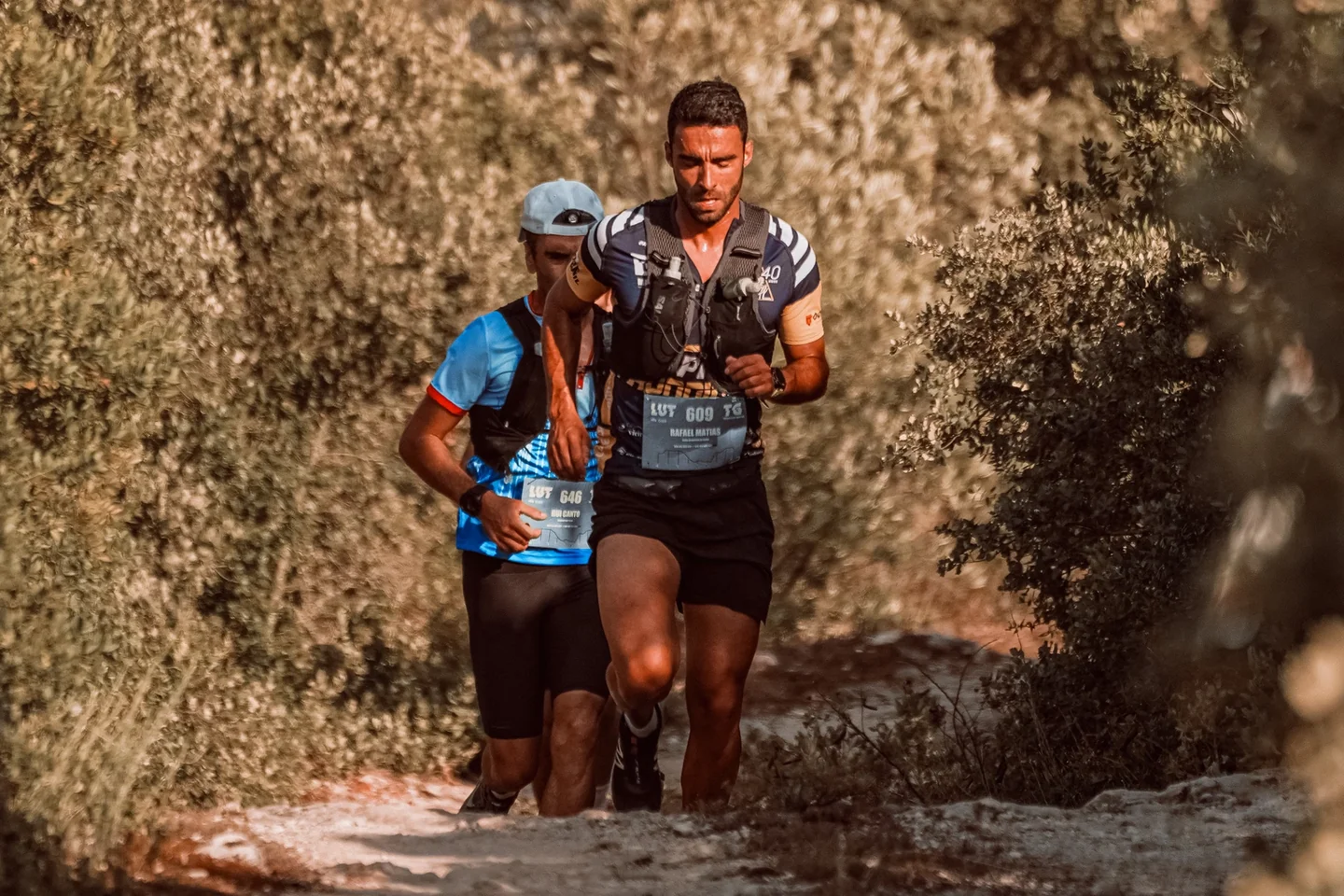
The Ruta de las Fortalezas 2025 once again painted a very familiar scene in Cartagena: runners stretching at the start, compact groups moving along the coastline, faces of fatigue on the climbs, and the clean April light falling on San Julián and Cala Cortina. The day left a collection of images that not only document a race, but a way of understanding effort in the city: long, demanding, and highly visual.
The photographs from this edition condense everything that makes the race unique: the military and sporting atmosphere at the start, the passage through historic sites, the tension of the first kilometers, and the reality check of the final stretch. In a 53-kilometer race with elevation changes that take their toll from the outset, each image works as a piece of reportage, with bodies in motion and the landscape in the background as if Cartagena itself were pushing the race along.
A gallery that explains the race better than any summary
Not every race can be understood the same way in a still image. The Ruta de las Fortalezas can. Its route, which links fortifications, trails, climbs, and urban areas, offers a sequence of scenes that is almost cinematic. That is why the 2025 photographs are so useful both for those who followed the race from afar and for those who experienced it on the streets: they place the story, set the pace, and reveal the strain without needing too many words.
In the galleries published after the race, the visual sequence usually organizes the day quite faithfully. First comes the start, still with restrained expressions and fresh legs; then the early sections, where the pack stretches out and the favorites begin to find their place; later, the terrain gets tougher, and the final stretch, with the descent through San Julián and Cala Cortina, offers images of almost physical harshness, highly expressive even for those who do not know the course in detail.
This photographic journey has clear journalistic value: it allows the race to be read in layers. A snapshot at the start is not the same as one in the final kilometers, when fatigue sticks to the face like dust to a jersey. In a race of this length, the camera captures not only positions or times, but the runner’s transformation over more than five hours of effort in many cases.
The start: nerves, order, and a very recognizable tension
The first block of images from the 2025 edition captures the most electric moment of the day. The start of a race like this does not have the chaos of a huge marathon or the dispersion of a popular walk; here there is a particular solemnity, almost ceremonial, in which the runner tries to appear calm while adjusting the bib, looking at the watch, and glancing at rivals out of the corner of the eye. The photographs capture that contrast between discipline and nerves with great precision.
In Cartagena, the scene itself also gains weight thanks to the setting. The Ruta de las Fortalezas does not merely set the participants in motion; it places them before a city with military memory, with walls, forts, and a horizon that blends stone, sea, and incline. In the start images, that shared identity between race and territory is palpable, as if the race were born already connected to the place’s history.
The early morning light also helps set the visual tone. April usually offers a sun that is still gentle, with cleaner shadows and less harsh colors than in the height of summer. That gives the photographs a special sharpness, almost like a sports postcard, where uniforms, shoes, and gestures stand out clearly. In such a long event, this first photographic stretch works as a threshold between anticipation and the real battle.
Early kilometers and landscape: when the race still seems manageable
The images from the early sections can be a little deceptive, and that is part of their appeal. The runner still maintains a compact stride, the group is more orderly, and the terrain, from a distance, seems forgiving. But anyone who knows the Ruta knows that appearance does not last long. The photos from that moment, precisely because of that relative calm, reflect the instant when the race has not yet shown all its cards.
In 2025, the visual coverage showed that initial balance between focus and landscape. There are photos in which the bib still shines cleanly and the effort seems contained; in others, the strategy is already apparent, with runners sheltering from the wind, finding position, or conserving energy. They are small details, but in such a long race every gesture counts, and the camera makes them readable.
Cartagena’s surroundings act here as a very active backdrop. The coastline, access paths, embankments, and fortifications frame the participants’ passage and turn the race into a sequence of rhythmic postcards. This is not a race enclosed in a neutral circuit, but a journey with personality, and that is especially evident in the photographs from the first kilometers, where the movement of the group and the breadth of the setting are in constant dialogue.
The course’s difficulty shows on the face
As the day goes on, the images from the Ruta de las Fortalezas 2025 change language. The initial smiles become harder looks, hands reach for the waist, and the stride stops being elastic and becomes more measured. No stopwatch is needed to understand that the runner has already entered the serious part of the race; you only need to look at the faces.
That change is one of the great strengths of a well-constructed photo gallery. It allows the wear and tear to be followed in almost documentary fashion. The sweat on the forehead, the open mouth on a climb, the shadow under the eyes, or the way the arms are held say as much as a split time. In an ultradistance or near-ultradistance event, the body’s expression matters as much as the standings.
Photos of pure effort also have a value especially appreciated by sports readers: they are not looking for perfection, but for the truth of the moment. A runner bent over by fatigue halfway up a climb, another moving forward with a determined expression through a narrow section, a third receiving encouragement from the crowd at a critical point. They are simple scenes, but full of meaning, because they return sport to its most human side.
San Julián and Cala Cortina: the finish that concentrates the epic
The final stretch of the Ruta is, photographically, one of the most intense. The descent through San Julián and the passage through Cala Cortina offer a very particular mix of beauty and punishment. When the runner already has dozens of kilometers in the legs, the final slope becomes a test of will. In that context, the camera finds gestures that do not appear elsewhere in the course: stiff legs, slumped shoulders, and eyes fixed on the ground so as not to think too much.
That final stretch also yields some of the most valuable images from a storytelling point of view. Not only because the landscape is powerful, with the sea nearby and the coast as a reference, but because that is where the emotional narrative of the race is decided. Some participants arrive with clenched faces, others still carry a fighting expression, and some, when they spot the finish, recover an almost surprising burst of energy. All of that is captured in a series of photos that speak of resilience with brutal clarity.
In a race like this, the finish is not an ending, but a statement of intent. The images of Cala Cortina and the final descent are usually the most shared because they bring together what the public expects from an event like this: fatigue, landscape, overcoming adversity, and a sense of arrival that is not exactly relief, but a blend of private victory and total exhaustion. It is a scene that sports photography understands very well.
The finish and the emotional reading of every gesture
The moment of crossing the finish line concentrates all the tension accumulated over hours. The 2025 galleries capture that instant with a variety of gestures that go far beyond the podium. Some enter with their arms raised, some fold over themselves as they stop the clock, some look for a family member, and some simply stand still for a few seconds, unsure whether to laugh or catch their breath. That emotional ambiguity is one of the great visual riches of the race.
In endurance races, the finish is often a laboratory of contained emotions. Not everything is loud celebration; sometimes the most powerful thing is the silence of someone who has just emptied themselves completely. The finish images in Cartagena show exactly that: the transition from battle to rest, from a hard expression to release. Sports photography gains a great deal when it manages to capture that second before the embrace or the dropping of the shoulders, because there the body tells the whole story.
The crowd also plays an important role in those final photographs. The applause, the greetings, and the waiting at the edge of the finish line give the scene a choral dimension. The Ruta de las Fortalezas is not understood only as an individual effort; it is a citywide event, and the finish images make that clear. The runner finishes the race, yes, but also enters a shared celebration in which Cartagena recognizes those who have survived the course.
What the images add to a race that is already very visual
The Ruta de las Fortalezas has the rare virtue of being understandable even in a single photograph, but a complete gallery allows for much more. The reader sees the difference between the first kilometers and the final stretch, perceives the group’s evolution, identifies the harshness of the terrain, and recognizes the importance of the surroundings. It is a race that, by its nature, needs to be told with images as much as with data.
That is why a well-curated photo gallery does not act as a minor supplement, but as a parallel chronicle. Where the text talks about distance, elevation, or standings, the image adds texture, rhythm, and atmosphere. A stride falling apart while climbing a hill is worth more than a long explanation about the course’s difficulty. A runner looking out to sea from the edge of effort sums up in one second the mix of beauty and suffering that defines the race.
In 2025, that combination was especially strong once again. The coverage captured the start, early sections, final stretch, and finish with a sequence that allows the whole day to be reconstructed without losing the human pulse. For running fans, local readers, and anyone who simply appreciates good visual storytelling, the photos offer more than information: they show why this race has so much personality within the sports calendar of the Region of Murcia.
A race that continues to leave scenes hard to forget
The strength of the Ruta de las Fortalezas lies not only in its difficulty, but in the way that difficulty becomes an image. Few events so naturally combine historical symbolism, physical challenge, and Mediterranean landscape. That mix means that each edition leaves a very marked visual imprint, and 2025 was no exception. Its photographs speak of a long effort, a very present territory, and a multitude of small personal victories that do not always appear in the standings.
Cartagena offers in this race something that goes beyond sport. Its geography, fortifications, and coast turn the route into a kind of emotional map where each section has a distinct character. The images from the 2025 edition capture that diversity quite faithfully, from the tension of the start to the final fatigue, including the moment when the runner begins to understand that the race has already left a mark.
And there lies, in the end, the real value of a good sports gallery: it does not only show who arrived first or who suffered most, but how a great race is lived from within. The photos of the Ruta de las Fortalezas 2025 offer exactly that: a complete portrait of a day in which Cartagena once again went out to run with its fortifications as witnesses and with the Mediterranean, sometimes serene and sometimes relentless, facing every effort head-on.



How to prevent thigh chafing: causes and real solutions

Women’s running windbreakers: seven jackets and how to choose

Do more workouts get rid of soreness? A guide for runners

Jaén Half Marathon 2026: Record 3,800 Runners Registered

Men’s short running tights: how to choose the right pair

World Triathlon confirms data breach involving medical data

Izan Edo targets podium at Miyazaki World Cup

María Pérez ranks ninth in World Athletics’ 2026 top ten

Dos Santos, Duplantis and Sawe: World Athlete of the Year finalists

San Silvestre Vallecana 2026: 42,000 places, prices and start times

 Races4 months ago
Valencia Half Marathon 2027: date and registration

 Races4 months ago
Valencia Marathon 2026: entry, ballot and course

 Reviews and Comparisons4 months ago
Asics Gel-Roadmiles 3 for men: review and current price

 Reviews and Comparisons4 months ago
Asics Gel Sonoma 8 Gore-Tex: complete analysis for trail and rain

 Sneakers3 months ago
Saucony Endorphin Pro 4: full review and verdict

 News5 months ago
Strava API 2026: what changes for clubs, challenges and runner apps?

 Reviews and Comparisons5 months ago
Nike Alphafly 3: opinions, sensations, and real key points

 Reviews and Comparisons4 months ago
Under Armour running shoes review 2025-2026: models and key features

 Sports Equipment4 months ago
Shoe sizes in cm: a clear guide to getting the right fit for your footwear

 Sneakers3 months ago
Skechers GO RUN Consistent 2.0 analysis: comfort and limits

 News5 months ago
Valencia Marathon 2026 route: key tips to train and run better

 Sneakers4 months ago
Adidas Adizero Boston 13 for men: review and verdict