News
Fortresses Route 2025 course: complete route guide
Cartagena is transformed with 54 km, fortresses, elevation gain, and a route that blends sporting toughness and heritage.

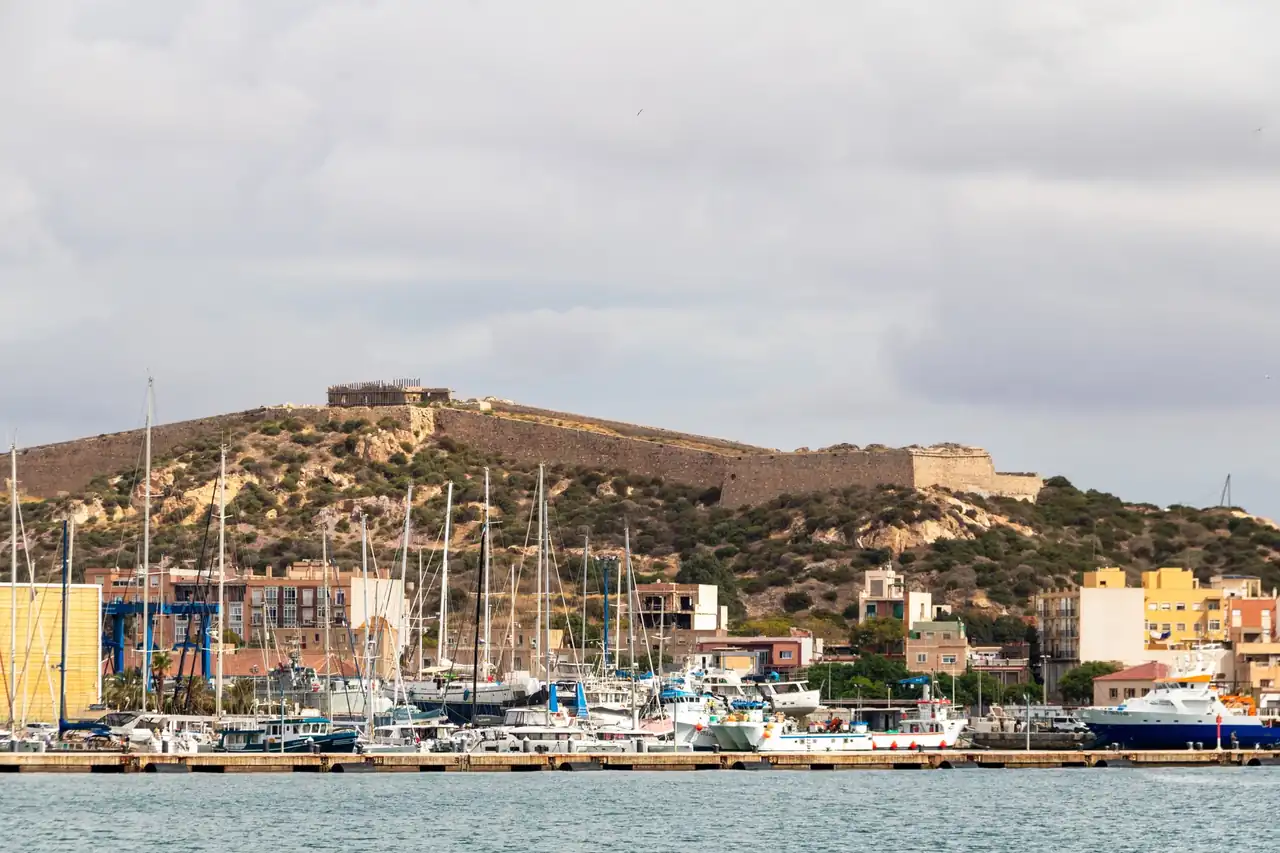
The Ruta de las Fortalezas 2025 once again drew Cartagena as a living map of stone, sea, and elevation gain. The event brought together around 5,000 participants and featured a 54-kilometer route in the long-distance category, starting next to Héroes de Cavite and Santiago de Cuba square and finishing at the General Albacete Fuster Marine Infantry School in Tentegorra. It was not just a mountain race: it was a physical journey through walls, castles, batteries, and mountain ranges that condense centuries of history into a single day.
The 2025 course confirmed the blend that defines this event: endurance, heritage, and organization designed to sustain an enormous effort. The main race took place on April 5, 2025, shortly after 8 a.m., and once again placed Cartagena at the center of Spain’s ultradistance calendar. The main distance, 54 kilometers, coexists with a half route of about 27 kilometers and other smaller categories, turning the day into a kind of spectrum of efforts on the same urban and military stage.
A route that turns Cartagena into one big climb and descent
The race profile leaves no room for doubt: the Ruta de las Fortalezas is designed to demand legs, mind, and patience. The terrain alternates between asphalt, dirt tracks, and trails, with long climbs, descents that punish the quadriceps, and technical sections where the runner must look at the ground without losing sight of the horizon. The course takes advantage of Cartagena’s geography with an almost theatrical logic, linking high points, military areas, and archaeological sites overlooking the city and the Mediterranean.
The full 54-kilometer distance is not just about circling Cartagena; it crosses it and lifts it. In the 2025 edition, organizers highlighted a route through emblematic places such as the castles of Galeras and Atalayas, and the Cerro de la Concepción, as well as Sierra Gorda, the Roman Archaeological Park of Molinete, and the Punic Wall. Added to this are batteries and fortifications that remind us why this city has been a strategic enclave for centuries. The result is a route with the character of an ultratrail, but also with historical depth.
That heritage component is not decorative. It is part of the sporting experience and explains much of the race’s appeal. Running among fortifications, ramps, and viewpoints forces you to manage effort very differently from a flat urban race. Here, the runner faces an accelerated course in local geography: each climb opens up a panorama, each descent returns to narrower streets, and each fortress adds another layer to the story of the effort.
The key points along the route and what they add to the effort
The start in the city center creates an immediate contrast with what comes next. Cartagena wakes up to the sound of bib numbers, quick steps, and a start-line atmosphere that mixes tension with a certain solemnity. From the port area, the race leaves the flat ground behind and enters terrain where the landscape calls the shots. Passing through the historic center and the slopes surrounding the city helps explain why this race has earned its reputation as a tough one without needing any embellishment.
One of the most distinctive features of the course is the succession of defensive sites. Coastal batteries, castles, and hills do not appear as isolated points, but as a chain of landmarks that force runners to change pace and stride. Climbing Galeras, reaching the top of Atalayas, or seeking the profile of the Cerro de la Concepción is not just a physical challenge; it is a way of reading the city from above, as if the runner were turning the pages of a stone book. In terms of effort, these areas concentrate the most visible wear and tear of the route.
Passing through Molinete and the Punic Wall adds a powerful archaeological counterpoint. These are spaces that remind us of Cartagena’s historical depth and give the race an identity difficult to replicate in other mountain events. While many races rely solely on natural scenery, this one combines city, coast, hill, and military heritage. That mix of settings makes the route feel longer than the kilometers suggest, because each change of environment forces the body to readjust.
The long distance and the half route do not tell the same story
The main event was the 54-kilometer race, but the half distance also has its own character. In 2025, a 27-kilometer half route was held, an option that retains part of the mountain character and strategic feel of the main event without demanding the same level of wear and tear. It is a distance that, although shorter, should not be mistaken for a walk in the park: the organizers place it within the logic of trail running and keep the demanding sections, with elevation gain and mountain stretches.
The half route offers a more compact reading of the same landscape. It reduces exposure to heat, accumulated fatigue, and the mental strain imposed by ultradistance racing, but it preserves the essence of the day: climbing, linking fortifications, and reaching the finish with the body working at the edge of what is reasonable. In 2025, that distance also helped bring the experience closer to runners who do not take on the full distance but still seek an intense day with lots of elevation.
The coexistence of both distances explains part of the event’s success. The Ruta de las Fortalezas is not limited to a single way of competing. It opens itself to different participant profiles and allows the route to have several narrative speeds. For some, it is a controlled survival test; for others, a long route with scenic appeal; for many, a way to discover Cartagena from a perspective no conventional tourist walk can offer.
An event that started moving weeks before the start
The race machinery got underway well before April 5. For the 2025 edition, the pre-registration process opened on January 9 and closed on the 23rd of the same month. On January 24, the bib draw was held, a system that once again highlighted the huge demand for places. This was not an open registration in the usual sense, but a staggered process that filtered participants before the fee was finalized.
The fee for the main race was 45 euros, with a 2-euro discount for people with a federated athletics license. That detail, far from minor, helps explain the logistical and sporting scale of the event: we are talking about a race that needs timing, aid stations, medical support, baggage storage, showers, and a considerable human network to function precisely. The organization does not just sell an experience; it sustains a complex operation across an entire city.
The scale of the operation was as visible as the route itself. More than a thousand people worked around the event, including military personnel, local police, civil protection, firefighters, municipal staff, and volunteers. This invisible infrastructure supports what runners see for only a few hours. Without it, there would be no safe passage through military areas, no time control, no finish-line logistics, and no assistance at difficult points along the course.
Aid stations, transport, and the practical realities of a long day
In a race of this kind, logistics weigh almost as much as the legs. The organizers set up aid stations along the route, with fluids at all of them and solid food at some, spaced roughly every 5 to 7 kilometers. That distance between points may not seem extreme on paper, but in the context of a mountain race with elevation gain and potential heat, it can completely shape how effort is managed.
The finish line was in Tentegorra, and from there free shuttle buses were activated to the park-and-ride lot next to the Sports Palace and the Rambla shopping center. The Tentegorra stop on bus line 3 was also free, a useful measure to ease the return journey and decongest the finish area. At the same time, taxis operated normally throughout the day, as the usual rest requirement was suspended. These are details that may seem minor, but in reality they shape the full experience of a city race.
The post-finish area also played an important role in the day. After the effort, participants found free drinks and food, a gesture that has become almost inseparable from popular long-distance events. It is not just about refueling; that small pause at the finish line is part of the emotional language of the race, the moment when sweat gives way to conversation, to memories of the route, and to each runner’s private assessment of the day.
What changed the role of the race in 2025
The 2025 edition added a new element that broadened its media reach: live broadcasting. For the first time, the race could be followed from anywhere in the world with aerial cameras, footage taken from the runners themselves, and a production that combined sport and history with commentary from José Luis Conesa of the Runtriton Sports Club and Juan Lorenzo Gómez-Vizcaíno of the Aforca association. The central portion was also broadcast by La 7 Televisión, and the full race was made available on YouTube.
This audiovisual leap reinforces the uniqueness of the Ruta de las Fortalezas. Many mountain races remain confined to the experience of those who are there, but Cartagena has begun turning its route into content. That changes how the race is perceived: it is no longer just a local or regional challenge, but an open window onto a heritage that gains intensity in motion. Watching runners pass through a castle or a battery makes the true scale of the effort even more apparent.
The broadcast also helps organize the sporting narrative. Rankings, splits, and the names of the protagonists no longer circulate only among participants and local fans. In 2025, Marine brigadier Francisco González Sierra won the overall race in 3 hours, 57 minutes, and 1 second, while Cartagena nurse Carmen Martínez Sáez was the first woman in 4 hours, 54 minutes, and 40 seconds. In the half distance, Pedro Manuel Paredes and Rebeca Pacheco led the men’s and women’s finishes. These details are not part of the route itself, but they help measure the toughness of a course that gives nothing away.
A race with sporting meaning and military memory
The Ruta de las Fortalezas cannot be understood without its link to the Spanish Navy and the City Council of Cartagena. The joint organization between these institutions gives it a rare identity on the Spanish calendar. The military setting is not just a symbolic backdrop; it shapes the start, the finish, part of the narrative, and much of the race’s imagery. Running through these spaces means entering a city where defense has left a very visible material mark.
That connection also explains why the race has become a fixture with a strong collective dimension. The 2025 poster spoke of shared effort and moving forward together, an idea that fits well with the mix of civilians and military personnel that makes the event possible. In a sport as individual as running, this race highlights something less common: the sum of many wills behind every bib number and every kilometer.
The historical dimension is not left in the background, but accompanies the runner throughout the entire course. Cartagena offers 3,000 years of history condensed into fortifications, hills, and defensive remains, and the race uses that legacy as a guiding thread. That turns the route into something more than a test of endurance. It is, in a sense, a street-level reading of the city, with the body as the instrument and the landscape as the archive.
Cartagena continues to measure its identity through elevation gain
The Ruta de las Fortalezas 2025 made it clear that the route is the true argument of the race. The organization, the broadcast, and the large turnout help explain its growth, but the heart of everything remains in the course: a demanding, beautiful, and tough route where heritage blends with the sweat of a long race. That is why it attracts athletes, trail running enthusiasts, and participants looking for a different kind of day, with an almost ceremonial feel.
Cartagena found in this race a way to tell its own story without grandiloquent speeches. A hill, a wall, a coastal battery, and a finish in Tentegorra are enough to understand it. The route forces you to see the city through fatigue, which is sometimes the best way to see it clearly. Where other events repeat the aesthetics of asphalt or isolated mountains, this race offers a complete geography, as if the map were rising beneath the runner’s feet.
And there lies its most enduring strength: the route is not only run, it is also interpreted. Each edition adds names, times, and anecdotes, but the course preserves its essence: a corridor of stone and effort crossing Cartagena’s history at the speed of breath. In 2025, that combination once again worked with military-clock precision and the kind, rugged toughness of great races that leave a mark.



How to prevent thigh chafing: causes and real solutions

Women’s running windbreakers: seven jackets and how to choose

Do more workouts get rid of soreness? A guide for runners

Jaén Half Marathon 2026: Record 3,800 Runners Registered

Men’s short running tights: how to choose the right pair

World Triathlon confirms data breach involving medical data

Izan Edo targets podium at Miyazaki World Cup

María Pérez ranks ninth in World Athletics’ 2026 top ten

Dos Santos, Duplantis and Sawe: World Athlete of the Year finalists

San Silvestre Vallecana 2026: 42,000 places, prices and start times

 Races4 months ago
Valencia Half Marathon 2027: date and registration

 Races4 months ago
Valencia Marathon 2026: entry, ballot and course

 Reviews and Comparisons4 months ago
Asics Gel-Roadmiles 3 for men: review and current price

 Reviews and Comparisons4 months ago
Asics Gel Sonoma 8 Gore-Tex: complete analysis for trail and rain

 Sneakers3 months ago
Saucony Endorphin Pro 4: full review and verdict

 News5 months ago
Strava API 2026: what changes for clubs, challenges and runner apps?

 Reviews and Comparisons5 months ago
Nike Alphafly 3: opinions, sensations, and real key points

 Reviews and Comparisons4 months ago
Under Armour running shoes review 2025-2026: models and key features

 Sports Equipment4 months ago
Shoe sizes in cm: a clear guide to getting the right fit for your footwear

 Sneakers3 months ago
Skechers GO RUN Consistent 2.0 analysis: comfort and limits

 News5 months ago
Valencia Marathon 2026 route: key tips to train and run better

 Sneakers4 months ago
Adidas Adizero Boston 13 for men: review and verdict