Routes
Hiking routes near Madrid: five easy getaways
Five very affordable getaways in the Madrid mountains, with access by public transportation and useful tips.

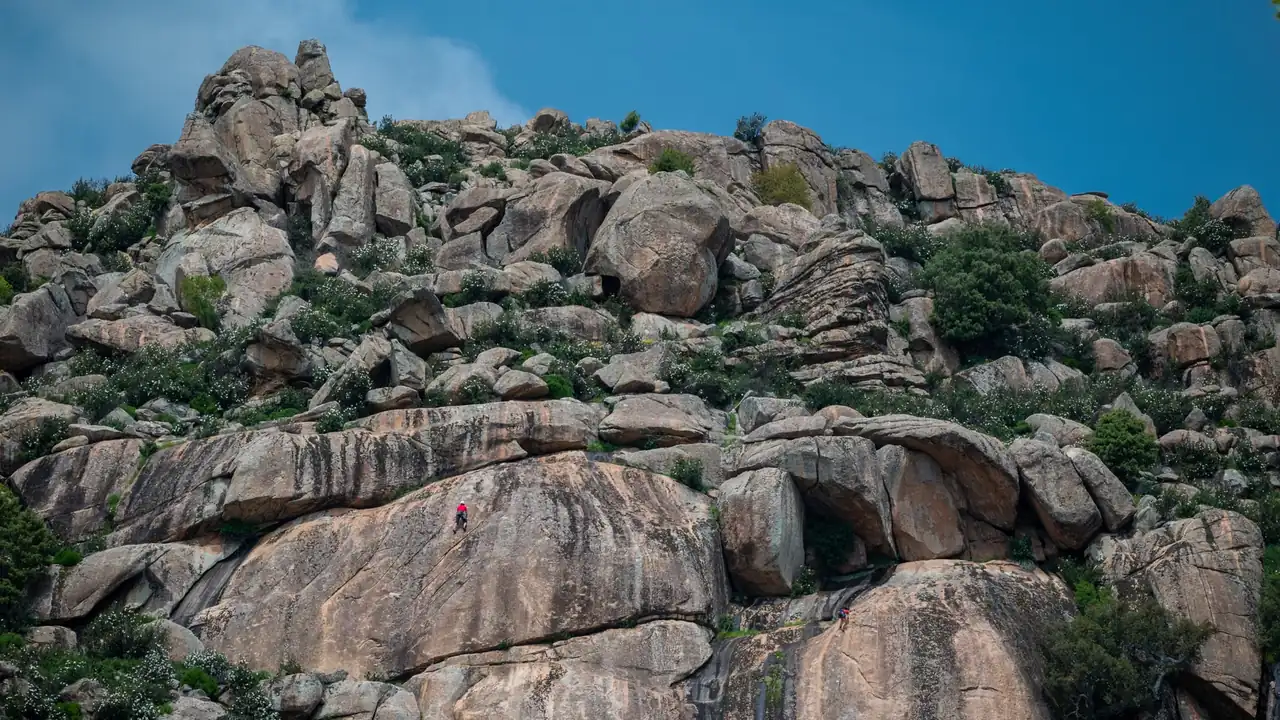
The Sierra de Guadarrama acts like a lung half an hour from the capital: pine forests, granite outcrops, cool valleys, and viewpoints that completely change the tone of an ordinary Saturday. Around Madrid there are routes for those looking for a gentle walk, for those who want some elevation gain, and for those who prefer a long day out, but almost all share a decisive advantage: in several cases, you can get there without a car, especially by commuter rail and intercity buses.
That easy access has made these getaways a very Madrid habit. The plan fits in a backpack, a train ticket, and a pair of comfortable shoes. The key is choosing the route well according to fitness level, the season, and the time available, because the nearby mountains are not measured only in kilometers, but also in shade, orientation, heat, snow, and visitor numbers. Less than an hour away, the landscape can shift from urban to alpine with almost cinematic speed.
La Pedriza and the magnetism of granite
Talking about La Pedriza is talking about the most recognizable face of hiking in the Community of Madrid. Its granite blocks, rounded by erosion over millions of years, create a landscape that looks hand-sculpted. Manzanares el Real serves as the gateway to an area where easy routes, demanding trails, and paths that require careful reading of the terrain all coexist. Elevation gain, heat, and sun exposure change the experience a great deal, so looking only at the distance in kilometers is not enough.
Those visiting for the first time usually focus on the classic routes from Canto Cochino or on the paths that run along the river, but La Pedriza’s value lies in its variety. There are days when the granite shines as if it were wet even without rain, and others when the clear air lets you see every fold of the sierra with postcard sharpness. It is not a casual urban stroll, even if it is sometimes treated that way out of habit. It requires respect for the rock, for weather changes, and for the signage, especially when the trail narrows or mixes with rocky sections.
Logistics also matter. The bus from Plaza de Castilla takes you to Manzanares el Real, opening the door to a full day without moving the car. The reward is twofold: the scenery and the feeling of being far from everything without having left your everyday map. That is why La Pedriza remains almost an essential reference when talking about hiking routes near Madrid.
Where to stay near Cercedilla
Accommodation in the area, with prices. Choose your dates on the map.
Affiliate links: if you book through this map we earn a commission, at no extra cost to you.
Cercedilla and the Fuenfría Valley, the gentle sierra
Cercedilla offers a gentler version of the mountains, with pine forests that muffle the noise and trails that invite you to walk at a steady pace. The Fuenfría Valley is one of those places where the rhythm changes immediately: the air becomes fresher, the ground softer, and the light comes filtered through the treetops. It is a very rewarding option for those who want to start without facing technical terrain, but also for anyone looking for a peaceful walk without major surprises.
The area also has a historical value that is not always emphasized. The old Roman road, the remains of traditional infrastructure, and the forest paths give the route a special texture, as if the trail had accumulated layers of time. That mix of heritage and nature works very well in an area close to the capital, because it lets you leave the city without giving up a walk with a story to tell. Walking here is not only about moving forward, it is also about reading the landscape.
Access by commuter rail makes Cercedilla one of the most convenient gateways to the Madrid mountains. That ease explains why so many short excursions end up at this point on the map. The route does not require prior experience, but it does require something basic: bringing water, checking the forecast, and accepting that the sierra cannot be domesticated. On hot days, the shade of the pine forest is worth gold; in autumn, the color of the mountains changes the mood of the day.
Barranca Valley, the refuge for beginners
Barranca Valley, near Navacerrada, is one of the most balanced outings for a relaxed excursion. The terrain is friendly, the path is intuitive, and the sound of the water, when the flow helps, adds a very unurban calm. It is the route that best sums up the word accessible in the sierra near Madrid, with a route that lets you walk without every section feeling like a test of endurance.
Its appeal is not in the epic scale, but in the sum of small certainties: shade, trees, clear paths, and an environment that invites group outings without imposing a single pace. It is a rewarding route for families, for people just starting out in hiking, or for those looking for a morning of fresh air before returning to the city. A walk does not need to become a feat to make sense. Sometimes the achievement is going out, not reaching the top.
Navacerrada adds the context of high mountain without forcing you to reach a summit. That makes it possible to adjust the length of the walk according to the energy of the day, something very useful on a weekend getaway. In addition, the area offers a clear reading of the season: in summer, the shade is welcome; in winter, the cold is felt quickly; in autumn, the tones of the forest make the walk much more photogenic. That versatility explains its enduring success.
Monte Abantos, forest, history, and views over El Escorial
Monte Abantos combines two attractions that rarely come together so well: a moderate climb and a finish with visual reward. From San Lorenzo de El Escorial, the trail climbs through pine stands and more open areas until it offers sweeping views over the monastery and the surrounding mountain landscape. The reading of the landscape here is inseparable from history, because the monument, the mountain, and the route together form a highly recognizable whole.
The route usually charms people because of its balance. It is not as harsh as other itineraries in the sierra, but neither is it a flat stroll. There are uphill sections that require pacing your effort and moments when the forest gathers the sound and leaves the walker in near silence. That silence is very valuable in an area so close to Madrid, where the contrast with the city is felt almost in the breathing. Abantos offers landscape and pause at the same time.
Train access to El Escorial makes the excursion much easier. That advantage, together with the presence of the Luis Ceballos Arboretum in the area, turns the region into a very complete destination for a day of hiking without a car. It is a solid choice for anyone who wants a route with some elevation gain, panoramic views, and a heritage backdrop that adds depth to the walk.
Hayedo de Montejo, the most singular forest in northern Madrid
Among the hiking routes near Madrid, few generate as much anticipation as the Hayedo de Montejo. It is not just any forest, but a biogeographic relic at the southernmost edge of the beech tree’s distribution in Europe. That alone would be enough to justify its fame, but the place also adds a sense of seclusion that sets it apart from the rest of the sierra. The visit is guided and requires advance booking, a necessary measure to protect a very fragile environment.
The route is especially interesting in autumn, when the leaves shift from green to yellow, copper, and red with an intensity that seems almost unreal. But spring also offers a very appealing version, fresher and brighter. The scale of the forest is different: here conservation takes priority, not haste. The limited access, the walk accompanied by the guide, and the absence of large crowds give the place an atmosphere almost like a natural laboratory. It is a lesson in environmental protection as well as a hike.
Because of its uniqueness, it is worth planning the excursion well in advance and accepting that it does not work as a spontaneous getaway. Access by public transport exists, but schedules and availability need to be checked carefully. That small extra effort, far from diminishing its appeal, reinforces the experience: getting to Hayedo de Montejo remains a way of entering an exceptional and delicate place, not just another outing.
The sierra within reach of public transport
One of the reasons so many people look for hiking itineraries near Madrid is that the connection to the mountains is very direct. Commuter rail and buses open the door to full-day escapes without the hassle of driving, parking, or relying on multiple vehicles. That changes planning a lot, especially on weekends, when access to some points in the sierra fills up early.
The most useful combination is usually simple: Cercedilla for a comfortable train-based outing, Manzanares el Real for grand granite scenery, Navacerrada for a gentle route, and El Escorial to combine forest and heritage. Each offers a different texture and all allow you to return to the city the same day. Closeness does not diminish the experience; it makes it more frequent, which is what ultimately turns an excursion into a habit.
It is important, however, not to underestimate the mountains just because they are nearby. A short route can become complicated because of heat, ice, fog, or mud. The routes near Madrid change character quickly, and that variability is part of their charm. Preparing an outing well does not mean making it rigid, but going with enough margin to adapt the walk to the real terrain, not the one imagined from the sofa.
Which route suits each kind of excursion best
La Pedriza works best for those who want powerful scenery and do not mind more demanding terrain. Cercedilla and the Fuenfría Valley suit people who prefer shade, history, and moderate elevation gain. Barranca is ideal for beginners or for those who want a peaceful day, while Monte Abantos offers a balance between forest, views, and some physical effort. Hayedo de Montejo is reserved for those who value the forest as a delicate and exceptional experience.
That division helps explain that there is no single way to hike in Madrid. There are more contemplative outings, more photogenic ones, and more sporty ones, though none needs to be sold as an extreme adventure. The Madrid sierra has the virtue of being diverse and close, a very uncommon combination in a major European capital. The diversity of the terrain is what sustains its appeal all year round.
The group you go with also matters. The gentler routes favor long conversations and shared pacing; the more technical ones demand attention and more silence; those requiring reservations or regulated access call for a bit more organization. That variety turns the sierra into a living catalog of possibilities, not a single destination repeated under different names.
The mountains that reset your sense of time
Going for a walk near Madrid has something of a mental reset. The city sets the pace with traffic lights, schedules, and constant noise, while the sierra imposes another rhythm, older and simpler. An hour on the trail is enough to notice the change of scale: the air cools, sounds separate, and the body regains an attention that dissolves in the city.
That is why these routes are more than just a list of pretty destinations. They are a smart way to use the territory, taking advantage of the mountains’ proximity without turning the getaway into a major trip. A few kilometers from the capital, the granite, pines, and beech forests remind us that Madrid is also understood from outside the asphalt. The sierra is not far away; it is within reach of a well-chosen morning.
And that is, in the end, the value of these escapes: they return a physical dimension to the weekend that urban life easily erases. Walk, breathe, look far away, and return the same day. Nothing more is needed to understand why so many people repeat the same trails again and again, or try new ones, always seeking that moment when the city is left behind and the mountains begin to organize the noise.
You may also like: Hiking departures calendar in Madrid: routes and dates.



How to prevent thigh chafing: causes and real solutions

Women’s running windbreakers: seven jackets and how to choose

Do more workouts get rid of soreness? A guide for runners

Jaén Half Marathon 2026: Record 3,800 Runners Registered

Men’s short running tights: how to choose the right pair

World Triathlon confirms data breach involving medical data

Izan Edo targets podium at Miyazaki World Cup

María Pérez ranks ninth in World Athletics’ 2026 top ten

Dos Santos, Duplantis and Sawe: World Athlete of the Year finalists

San Silvestre Vallecana 2026: 42,000 places, prices and start times

 Races4 months ago
Valencia Half Marathon 2027: date and registration

 Races4 months ago
Valencia Marathon 2026: entry, ballot and course

 Reviews and Comparisons4 months ago
Asics Gel-Roadmiles 3 for men: review and current price

 Reviews and Comparisons4 months ago
Asics Gel Sonoma 8 Gore-Tex: complete analysis for trail and rain

 Sneakers3 months ago
Saucony Endorphin Pro 4: full review and verdict

 News5 months ago
Strava API 2026: what changes for clubs, challenges and runner apps?

 Reviews and Comparisons5 months ago
Nike Alphafly 3: opinions, sensations, and real key points

 Reviews and Comparisons4 months ago
Under Armour running shoes review 2025-2026: models and key features

 Sports Equipment4 months ago
Shoe sizes in cm: a clear guide to getting the right fit for your footwear

 Sneakers3 months ago
Skechers GO RUN Consistent 2.0 analysis: comfort and limits

 News5 months ago
Valencia Marathon 2026 route: key tips to train and run better

 Sneakers4 months ago
Adidas Adizero Boston 13 for men: review and verdict