Sneakers
Can sneakers be washed in the washing machine: a safe guide
Which models support washing, what settings to use, and how to dry them to avoid damage and bad odors.

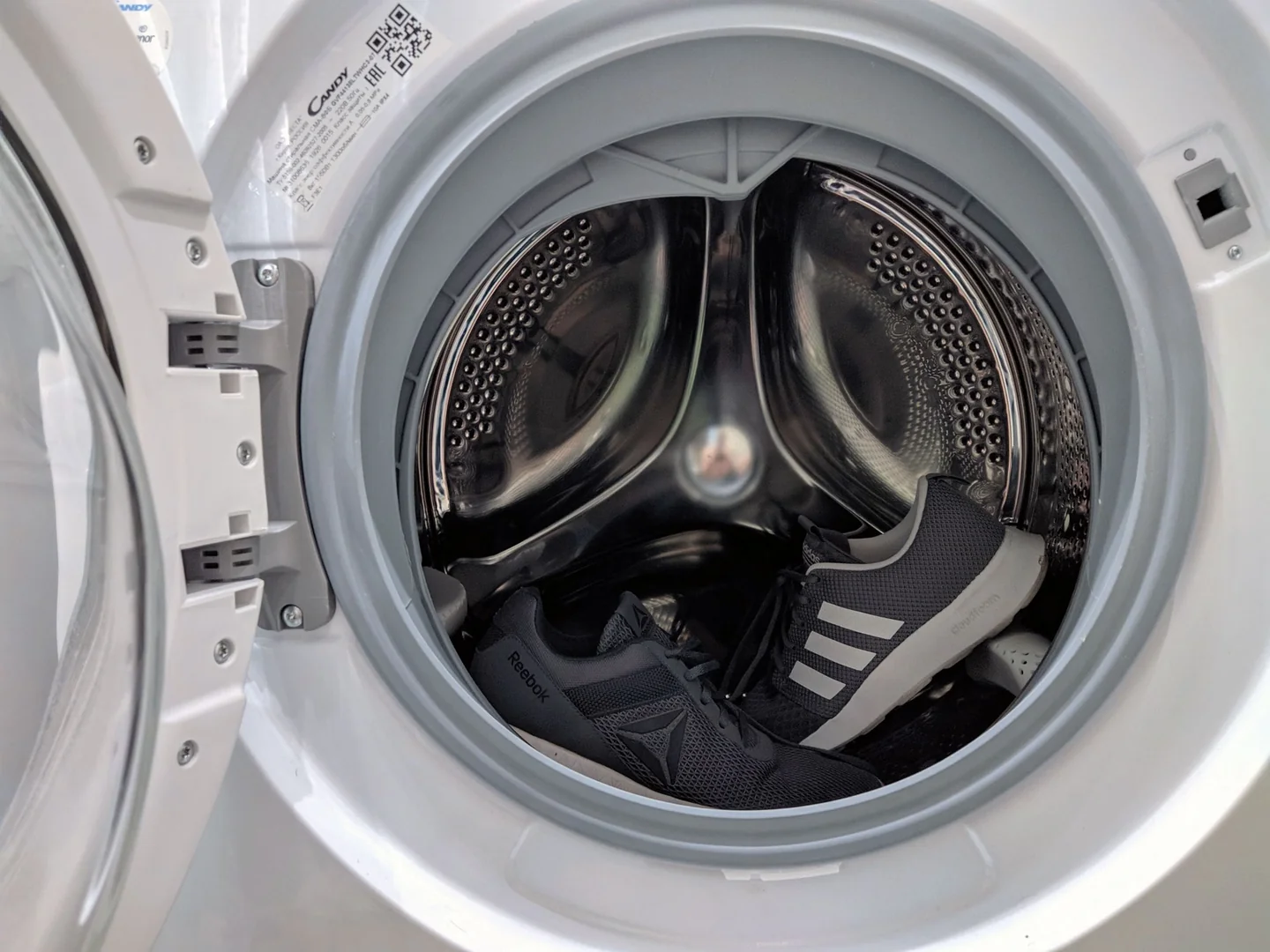
The washing machine can be an effective ally when it comes to restoring freshness to a pair of running shoes or everyday sneakers, but not all of them respond the same way to water, the spin cycle, or heat. The line between clean footwear and a deformed pair usually depends on three simple decisions: the material, the chosen cycle, and the way they are dried. When those limits are respected, the result is good and, above all, predictable.
The short answer is yes, in many cases they can be washed, although it is not a good idea to treat all sneakers as if they were the same. Canvas, mesh, or synthetic-fabric shoes usually handle it better; leather, suede, jute, or pairs with delicate parts require a different strategy. In running, where dirt gets into the outsole, the midsole, and the upper mesh, knowing these differences prevents a quick clean from shortening the life of the footwear.
Which sneakers withstand an automatic wash better
Mesh, canvas, nylon, or polyester athletic shoes are the most reasonable candidates for the washing machine. Those materials usually withstand gentle cycles without easily losing their shape, as long as they are not accompanied by fragile embellishments, weakly glued parts, or special finishes. In running shoes, the textile upper is usually more forgiving than the midsole or outer rubber, which can suffer if too much heat or spinning is used.
The problem arises when the footwear combines materials. A technical-fabric upper may seem suitable, but if it includes leather reinforcements, exposed foam, reflective details, or delicate adhesives, tolerance changes. That is why the inner label and the manufacturer’s instructions matter more than any home trick. The washing machine does not distinguish between a sturdy sneaker and a sensitive one; everything depends on what you put inside the drum.
By contrast, there are materials that almost never deserve the trip. Suede, natural leather, jute, and artisanal finishes usually deform, dry out, or stain easily. In that type of footwear, water and friction can raise the texture, loosen seams, or leave marks that are hard to correct. If the pair has high monetary, sentimental, or economic value, caution matters more than convenience.
Preparation before washing makes more difference than the cycle
Before putting them in the drum, it is advisable to remove mud, sand, and small stones with a soft brush or a cloth. That step is not just a household habit; it is a way to protect the washing machine itself. Hard debris can get stuck in the filter, scratch the door, or act like tiny pieces of sandpaper against the fabric during the wash. In running shoes, where the sole picks up dirt from parks, sidewalks, and tracks, this step avoids surprises.
Then it is time to separate the parts. The laces should come out, and the insoles too if they can be removed without forcing them. Laces can be washed separately, and insoles, in most cases, clean better by hand with neutral soap. That way they dry faster and the risk of bad odors is reduced, since those are usually the spots where the foot accumulates sweat and pressure. On a damp morning, poorly dried insoles can smell worse than the outside of the shoe itself.
It also helps to place the shoes in a laundry bag or mesh cover. If there is no bag, some home guides suggest using old towels to cushion the blows, and that idea makes sense: less impact means less wear. The drum of a washing machine is not designed for a pair of sneakers to bounce around like a stone in a metal box, and each repeated hit shows up in the seams.
Which program to use so the footwear does not deform
The delicate or gentle cycle is the most sensible option for this type of wash. The logic is simple: lower temperature, less sudden movement, and controlled spinning. Manufacturer and expert recommendations coincide on a range of 30 degrees as a prudent point, and in some cases even cold water. Going beyond that does not provide a decisive cleaning benefit, but it does increase the risk of soles coming loose or adhesives weakening.
The spin cycle deserves its own attention. Between 600 and 800 revolutions per minute is usually enough to remove water without excessively punishing the structure. A higher spin can twist the shape, open seams, or mark the inner foam. In running shoes, where fit and heel geometry matter a lot, a bad choice is later noticeable in the feel, as if the shoe had lost its memory.
Detergents matter too. Mild liquid detergent is preferable to powder, because it dissolves better and leaves fewer white residues between seams, mesh, and sole grooves. Fabric softener, on the other hand, adds little and can leave a film that affects breathability. For a very dirty pair, a light pre-treatment with neutral soap is often more useful than an aggressive product full of perfumes.
Drying well matters just as much as washing well
Air drying is the golden rule. The dryer, radiators, and direct sunlight concentrate heat where it is least convenient: on the rubber, the adhesives, and the fabrics. The result can be a collapsed toe, dried-out midsole, or a sole that starts to separate. The safest option is to leave them in a ventilated space, without rushing and without nearby heat sources.
To help them keep their shape, it is useful to stuff them with newspaper or absorbent paper. That dry interior acts like a sponge and speeds up the process without damaging the material. It is advisable to replace the paper if it becomes too soaked, because retained moisture only prolongs the wait. A good drying process can take between 12 and 24 hours, and sometimes longer if the shoe has multiple layers or a lot of padding.
It also helps to leave the laces loose and open the tongue so air can circulate. That small but effective detail reduces the stale smell and prevents the inside from staying damp in hidden folds. In running, where sweat comes in like a fine rain on every workout, post-run ventilation is almost as important as the run itself.
What to do with laces and insoles separately
Laces hold up better to a separate wash than being crammed into the same cycle as the shoes. They can go in a mesh bag on a gentle program, or even in a general wash of light clothing if they are not extremely dirty. Their big advantage is that they dry quickly and do not deform anything, so it is not worth leaving them trapped in the shoe while the drum spins.
Insoles require more care. The safest option is to wash them by hand with warm water and neutral soap, rubbing gently. Afterward, they should dry out of the sun and without direct heat, because they are sensitive to foam collapse and sudden changes. If they have persistent odors, regular cleaning works better than an occasional heavy wash.
In athletic shoes, separating these parts has a double benefit: cleanliness improves and internal hygiene does too. The inside of the shoe accumulates sweat, moisture, and bacteria more easily than the visible surface. That is why, when laces and insoles are properly handled, the whole pair feels fresher and odors take longer to return.
Common mistakes that end up taking a toll
The most common mistake is using too much heat. Hot water seems like a strong solution, but in athletic footwear it is usually counterproductive. Glues soften, rubber can lose firmness, and the whole structure becomes more vulnerable. Another typical mistake is overloading the drum and mixing the shoes with heavy clothing or garments that rub excessively.
It is also wise to avoid the temptation of washing a very dirty pair without pre-cleaning. If there is dry mud, gravel, or stuck sand, the drum turns into an abrasive grinder. The washing machine cleans, but it does not work miracles; it needs the footwear to arrive reasonably prepared. If the dirt is embedded in the outer sole, an initial brushing greatly improves the result.
Another common mistake is thinking that all models tolerate the same treatment. That is not the case. A training shoe in mesh does not age the same way as a competition shoe with lighter parts, nor does an urban sneaker behave like a trail shoe with hard reinforcements. Patience, in this regard, saves disappointments that later show up in the stride and appearance.
When it is best to avoid the washing machine altogether
There is footwear that should never go into an automatic wash. Suede, leather, and jute are the clearest cases, but there are also shoes with electronic elements, very delicate membranes, or special treatments that do not tolerate immersion well. If the manufacturer advises against it, the warning is not decorative. It usually comes from real wear tests, not from a marketing whim.
It is also better to keep out of the washing machine shoes with very compact mud, field debris, or abundant organic dirt. In the running world, a trail workout can leave the sole covered in clay, leaves, and small stones. In those conditions, the first job is to remove solids, not to start an automatic program. The washing machine is not meant to handle a handful of muddy trail.
If the pair has a complex construction or high-value foam, manual cleaning offers more control. It does not always clean more thoroughly, but it does reduce the risk of irreversible damage. In technical footwear, sometimes the best wash is the one that is not done, or is done only on specific parts.
The relationship between shoe care and lifespan in running
Clean sneakers do not last longer just because they look better; they last longer because maintenance slows accumulated wear. Trapped dirt hardens fabrics, clogs ventilation, and speeds up visual deterioration. For regular runners, leaving too much time between cleanings can cause the mesh to lose elasticity or the inner insole to degrade sooner than expected.
That does not mean they should be put in the washing machine frequently. In fact, excessive mechanical washing also wears materials down. A reasonable balance consists of removing surface dirt after the most demanding outings and reserving a full wash for occasional moments, when the shoes no longer recover their appearance with a brush or a damp cloth. Less aggression, more consistency is usually the more durable formula.
In the context of running, where many shoes are used several times a week, the outside care says a lot about the inside. A clean sole is easier to inspect, mud-free mesh breathes better, and a well-dried pair reduces odors. Here, appearance is not a luxury; it is a sign of sensible maintenance.
How to clean the washing machine after washing shoes
After washing sneakers, it is a good idea to check the drum and the filter. Even if you did a good pre-cleaning, there may always be sand, lint, or small stones left in places you cannot see at first glance. Cleaning the filter from time to time prevents clogs and helps preserve the appliance’s performance, which is important if the footwear arrived heavily covered in dust or mud.
It is also useful to run a maintenance cycle from time to time, especially if the washing machine is often used for sportswear. There is no need to turn it into a ritual, but it does help to understand that washing shoes leaves a different trace than a normal load of laundry. A clean machine works better and smells better, and that shows up in the next washes.
If a persistent smell appears, ventilating the drum and cleaning the detergent drawer help a lot. It is not a complex issue, just a matter of routine. Just as sneakers need air after a run, the washing machine also appreciates being left open for a while so it can dry inside.
A practical gesture that requires more judgment than force
Washing sneakers in the machine is possible, but not automatic in the literal sense. It is not enough to press a button and forget the rest. A good result depends on reading the material, removing solid debris, choosing a gentle cycle, limiting heat, and drying without rushing. When those pieces fit together, the wash does its job without leaving visible scars.
For someone who runs often, that combination of cleaning and caution has double value. It keeps the footwear looking more presentable and helps preserve its performance for longer, something especially useful in training models, where the combination of intense use and sweat punishes the inside. The best cleaning is the one that does not alter the shape or response of the shoe.
In the end, judgment matters more than speed. Some sneakers go through the washing machine with ease; others only need a brush, warm water, and patience. Understanding that difference avoids costly mistakes and turns a household chore into sensible care, almost invisible, that extends the life of the pair and keeps every stride in rhythm.
Este artículo contiene enlaces de afiliado: si compras a través de ellos, se genera una pequeña comisión sin coste adicional para ti. Más información.



How to prevent thigh chafing: causes and real solutions

Women’s running windbreakers: seven jackets and how to choose

Do more workouts get rid of soreness? A guide for runners

Jaén Half Marathon 2026: Record 3,800 Runners Registered

Men’s short running tights: how to choose the right pair

World Triathlon confirms data breach involving medical data

Izan Edo targets podium at Miyazaki World Cup

María Pérez ranks ninth in World Athletics’ 2026 top ten

Dos Santos, Duplantis and Sawe: World Athlete of the Year finalists

San Silvestre Vallecana 2026: 42,000 places, prices and start times

 Races4 months ago
Valencia Half Marathon 2027: date and registration

 Races4 months ago
Valencia Marathon 2026: entry, ballot and course

 Reviews and Comparisons4 months ago
Asics Gel-Roadmiles 3 for men: review and current price

 Reviews and Comparisons4 months ago
Asics Gel Sonoma 8 Gore-Tex: complete analysis for trail and rain

 Sneakers4 months ago
Saucony Endorphin Pro 4: full review and verdict

 News5 months ago
Strava API 2026: what changes for clubs, challenges and runner apps?

 Reviews and Comparisons5 months ago
Nike Alphafly 3: opinions, sensations, and real key points

 Reviews and Comparisons4 months ago
Under Armour running shoes review 2025-2026: models and key features

 Sports Equipment4 months ago
Shoe sizes in cm: a clear guide to getting the right fit for your footwear

 Sneakers3 months ago
Skechers GO RUN Consistent 2.0 analysis: comfort and limits

 News5 months ago
Valencia Marathon 2026 route: key tips to train and run better

 Sneakers4 months ago
Adidas Adizero Boston 13 for men: review and verdict