Sneakers
How to wash sneakers in the washing machine without a bag and without damaging them
Practical guide to cleaning sneakers in the washing machine without a bag, with safe cycle, temperature, and drying.

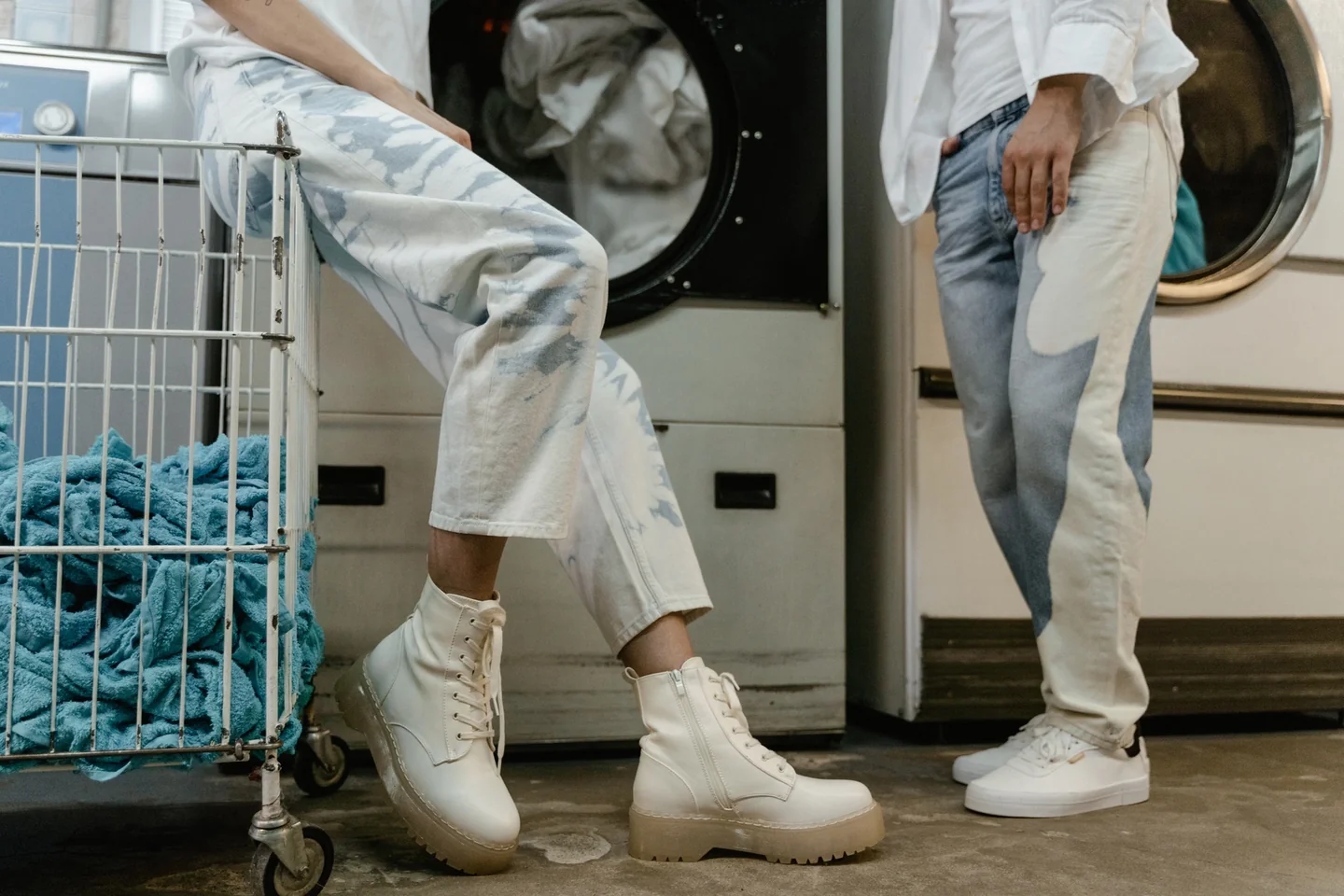
Putting sneakers in the washing machine without a bag can work, but only if the footwear allows it and fairly specific conditions are met. The right combination is usually a gentle cycle, cold or at most lukewarm water, a mild liquid detergent, and a balanced load so the drum does not hit too hard. In the case of running shoes, the safety margin depends mainly on the material: mesh, polyester, or canvas handle washing better than leather, suede, or models with delicate technical parts.
The most important point is understanding that the washing machine cleans, but it also takes a toll. If they are put in without protection, direct rubbing against the drum can deform the toe box, open seams, or wear down the foam of the midsole. Even so, when no bag is available, there is a reasonable alternative: wash only one pair, remove laces and insoles, cushion the load with towels, and then dry them patiently. Done well, the result is usually acceptable and enough to restore a clean appearance without compromising their useful life.
Which footwear can withstand this wash and which cannot
Not all sneakers respond the same to water, soap, and the spin of the drum. Running shoes made of mesh, nylon, or polyester usually tolerate this process better because their fabrics release moisture sooner and withstand friction better. Canvas shoes and many everyday athletic shoes can also go through a home washing machine if the program is gentle and there are no fragile embellishments, weakened adhesives, or very rigid soles. By contrast, natural leather, suede, nubuck, and espadrille-style materials degrade easily, stain unevenly, or lose texture.
In running footwear there is another important nuance: very technical shoes, with soft foams, plates, waterproof membranes, or premium finishes do not always tolerate the same treatment as a simple sneaker. Prolonged moisture can affect adhesives, reinforcements, and internal padding. That is why the manufacturer’s label remains the main reference, even if many models allow occasional home washing. If the care symbol advises against it, machine washing stops being a sensible option.
It is also worth checking the overall condition of the pair. A shoe with a sole already coming loose, open seams, or worn-out foam does not improve in the washing machine; on the contrary, a wash cycle can speed up the deterioration. At that point, surface cleaning by hand is usually more prudent. The washing machine does not repair; it only cleans, and sometimes a little too enthusiastically.
Pre-wash preparation: the step that prevents most problems
Before pressing start, the shoe should go into the drum free of the heaviest dirt. Shaking off the sole, removing dried mud, stones, or sand, and brushing the outer surface with a soft brush reduces wear inside the machine. That dirt acts like sandpaper during the wash, so leaving it in there is a bad idea. For road runners this is usually limited to dust and urban residue; for those who run in parks, trails, or dirt paths, the pre-cleaning matters much more.
Normally, laces and insoles should be removed. Laces tangle easily, and insoles concentrate sweat, odors, and dirt in a piece that is more delicate than the upper itself. Washing them separately improves the result and prevents deformation. If there is no mesh bag, laces can go inside the shoe itself or with other soft garments; insoles are better washed by hand with warm water and mild soap, without soaking them for too long.
The absence of a bag is partly compensated by old towels or sturdy cotton garments. Placing them in the drum with the shoes cushions impacts and stabilizes the load. There is no need to fill the washing machine; in fact, it is best for the load to have space, but not be unbalanced. A pair of loose sneakers inside the drum creates noise, bouncing, and excessive movement, something especially uncomfortable for the machine and unkind to glued parts.
Program, temperature, and detergent that fit best
The delicate program is the safest option. On many washing machines it also appears as fine wash, sensitive items, or a short cycle with reduced spin. The ideal temperature is usually 30 degrees, enough to remove everyday dirt without putting adhesives or synthetic fabrics under strain. Raising it to 40 degrees may seem harmless, but it increases the risk of deformation, fading, or weakening of glues and reinforcements.
As for detergent, the safest choice is a mild liquid one, without bleach or aggressive additives. Powder detergents can leave visible residue in seams, eyelets, or sole textures if they do not dissolve completely. Nor is it a good idea to add fabric softener, because it leaves a film that can affect the breathability of the fabric and brings no real benefit to the shoes. Less is more: a small dose, a short cycle, and a gentle wash.
Spin deserves special attention. Ideally it should be low or, if the machine allows it, almost nonexistent. Between 600 and 800 revolutions per minute is often an acceptable range in many cases, although the less aggressive the spin, the better. Too much force can twist the last, separate glues, or leave the shoes with an odd bend in the toe. The goal is not to get a dry pair in a minute, but a clean and stable shoe.
How to place them inside the drum without a bag
The position inside the washing machine matters more than it seems. The ideal is to put in only one pair, never several at once, and arrange them so the weight is balanced. If the drum is too empty, banging will be greater; if it is too full, water and soap will not circulate properly. Towels help correct that balance and also reduce the clattering typical of washing shoes without protection.
There is a simple trick that usually works well: put the shoes in with the laces already removed and the tongue open, so the water reaches all areas. If the insoles go in separately, even better. The shoe should be as exposed as possible to the water, but without turning the drum into a resonating box. A clumsy arrangement is obvious right away by the noise, but also by the result: clean areas and others still gray.
In washing machines with a very pronounced steel drum, direct contact causes more damage. That is why an old pillowcase can serve as a temporary workaround if there is no washing bag, although it is not as effective as a dedicated mesh one. Even so, the main resource remains the cushioning load of towels. The key is not complete isolation, but softening the impact and preventing the shoes from bouncing hard inside the cylinder.
What changes with each material
Mesh sneakers and classic running shoes are the most forgiving in this kind of wash. Their outer fabric usually dries faster and withstands going through the drum better, provided the program is gentle and the water is not hot. Even so, if they have heat-bonded reinforcements, glued logos, or reflective parts, caution remains the rule. Occasional washing is one thing; making it a routine is something very different.
Canvas shoes also usually come out well, especially if they are not very old. Canvas absorbs quite a lot of water, so drying afterward will take longer, but machine washing is usually not a problem if the spin is controlled. In the case of white sneakers, the accumulated dirt on the toe and sole stands out more, so a prior brushing with mild soap greatly improves the final result before they go into the drum.
Leather, suede, or mixed-material shoes with delicate finishes do not fit this method. Even some urban sneakers with synthetic leather panels can warp or lose their shine. If the material wrinkles easily in your hand, the washing machine will not treat it kindly. In the world of running and sports fashion, outward appearance can be misleading: two similar pairs may require completely different care.
Proper drying matters as much as washing
The dryer is not an option for sneakers. Intense heat can loosen soles, wrinkle foam, shrink fabrics, or alter color. Nor should they be placed on a radiator or next to a direct heat source. The ideal drying method is slow, air-dried, in a ventilated place and in the shade. Patience here is not just a polite suggestion; it is part of the cleaning process.
To speed things up safely, the inside can be stuffed with absorbent paper or newspaper, without compacting it too much. That paper absorbs moisture and helps keep the shape. It is advisable to change it several times during the first few hours, especially if the shoes were very soaked. When the outer fabric no longer drips, the paper is less necessary, but ventilation remains important.
Direct sunlight is not a good companion either. It can yellow rubber, stiffen synthetic parts, and warp certain foams. If the pair hangs on a clothesline on a balcony or terrace, it is better that it be in a shaded area with air circulating. Proper drying prevents that damp smell, which often appears not because of a lack of soap, but because the shoes were put away too soon.
Laces, insoles, and odors: the invisible wash
The small parts often hold more dirt than is visible at first glance. Laces collect dust, sweat, and abrasion residue; if washed separately, they recover their color better and do not leave residue in the shoe. Insoles, for their part, absorb moisture with every run and are a critical point for odor. Cleaning them by hand with warm water and mild soap is usually enough in most cases, followed by a complete air dry.
In running shoes used frequently, interior odor does not always disappear with exterior washing alone. Daily ventilation matters more than any perfume or deodorizer. Letting the pair air out after training, avoiding storing it damp, and alternating its use with another model reduces the risk of the inside becoming a small moisture chamber. Machine washing cleans, yes, but it does not fix a poorly ventilated wearing routine.
If the inside still smells bad even after washing, the cause may lie in the insole material or in the internal foam itself. In those cases, frequent washing is not always the most effective solution. Sometimes it is better to focus less on water and more on air circulation, because bad odor is often a drying problem, not visible dirt.
Common mistakes that end up taking their toll
The most common mistake is using a normal program as if the footwear were just any garment. A cotton or heavy-duty cycle can be excessive, with strong spin and abrupt movement. It is also common to add too much detergent, thinking that more soap equals more cleaning. In reality, residue is left behind, it is hard to rinse out, and the fabric can end up stiff or looking dull.
Another repeated mistake is putting in very wet shoes or ones with recent mud without cleaning them first. That multiplies the dirt inside the drum and can end up spreading stains rather than removing them. It is also wise to avoid washing footwear with delicate clothes, because a sole with traces of sand or stones can damage T-shirts, sweatshirts, or fine fabrics. The washing machine does not distinguish priorities: it hits everything equally.
Finally, machine washing should not be overused. Even if a pair handles an occasional cycle well, frequent use wears down adhesives, padding, and exterior finishes faster. In many shoes, especially training models, it is enough to alternate between spot cleaning by hand and a full wash only when needed. The best washing machine for a pair of shoes is not the most powerful one, but the one used wisely.
How it affects running shoes
In the case of running, washing is linked to sweat, asphalt, and the buildup of fine dust. Training shoes get dirty inside and out quickly, especially in summer or during long sessions. Salty sweat leaves marks on the insoles and lining, while mud or sand from parks and trails gets embedded in the sole. That is why cleaning is not just an aesthetic matter; it also affects comfort and the perception of the pair’s condition.
A well-maintained shoe keeps its feel better and usually smells less, but that does not mean it lasts forever. The foams lose responsiveness with the miles and the washing machine does not stop that wear. What it does do is help keep the exterior presentable and delay the buildup of dirt that, over time, hardens fabrics and gives an impression of neglect. For someone who runs several times a week, that makes a difference in daily use.
In practice, the best approach combines moderate cleaning, natural drying, and alternating use. There is no perfect ritual or magic frequency, but there is a useful rule: wash only when the condition calls for it and do it in the least aggressive way possible. In running shoes, reasonable cleaning extends visible life; prudence protects the invisible.
A final criterion before pressing the button
The washing machine without a bag is not forbidden, but it is not an innocent solution either. It works best with fabric or mesh footwear, cold or 30-degree cycles, little detergent, and no rush when drying. If the pair has high technical, sentimental, or economic value, the margin for error narrows. And if the material is delicate, the usual answer remains the same: hand cleaning is better.
The act of putting sneakers in the drum seems trivial, almost domestic and quick, but in reality it concentrates a chain of small decisions. What material it is made of, how much dirt it carries, how the load is balanced, which program is chosen, how long it takes to dry. The difference between useful cleaning and a mess often lies in those details. In footwear that carries miles, rain, and sidewalks, that matters far more than the convenience of pressing a button and forgetting about it.
The sensible approach is to treat the washing machine as an occasional resource, not as an automatic habit. That way, the shoes come out clean, the drum suffers less, and the pair keeps its shape better. And when it comes to running, where every part matters and every bit of wear counts, that moderation ends up being the real difference between cleaning and wearing out.
You may also like: Can sneakers be washed in the washing machine: a safe guide.
Este artículo contiene enlaces de afiliado: si compras a través de ellos, se genera una pequeña comisión sin coste adicional para ti. Más información.



How to prevent thigh chafing: causes and real solutions

Women’s running windbreakers: seven jackets and how to choose

Do more workouts get rid of soreness? A guide for runners

Jaén Half Marathon 2026: Record 3,800 Runners Registered

Men’s short running tights: how to choose the right pair

World Triathlon confirms data breach involving medical data

Izan Edo targets podium at Miyazaki World Cup

María Pérez ranks ninth in World Athletics’ 2026 top ten

Dos Santos, Duplantis and Sawe: World Athlete of the Year finalists

San Silvestre Vallecana 2026: 42,000 places, prices and start times

 Races4 months ago
Valencia Half Marathon 2027: date and registration

 Reviews and Comparisons4 months ago
Asics Gel-Roadmiles 3 for men: review and current price

 Races4 months ago
Valencia Marathon 2026: entry, ballot and course

 Reviews and Comparisons4 months ago
Asics Gel Sonoma 8 Gore-Tex: complete analysis for trail and rain

 Sneakers4 months ago
Saucony Endorphin Pro 4: full review and verdict

 News5 months ago
Strava API 2026: what changes for clubs, challenges and runner apps?

 Reviews and Comparisons5 months ago
Nike Alphafly 3: opinions, sensations, and real key points

 Reviews and Comparisons4 months ago
Under Armour running shoes review 2025-2026: models and key features

 Sports Equipment4 months ago
Shoe sizes in cm: a clear guide to getting the right fit for your footwear

 Sneakers3 months ago
Skechers GO RUN Consistent 2.0 analysis: comfort and limits

 News5 months ago
Valencia Marathon 2026 route: key tips to train and run better

 Sneakers4 months ago
Adidas Adizero Boston 13 for men: review and verdict