Sneakers
Hoka Clifton Pro: analysis and new features of the new premium shoe
The most advanced Clifton adds supercritical foam, greater fluidity, and a more durable sole to rack up miles.

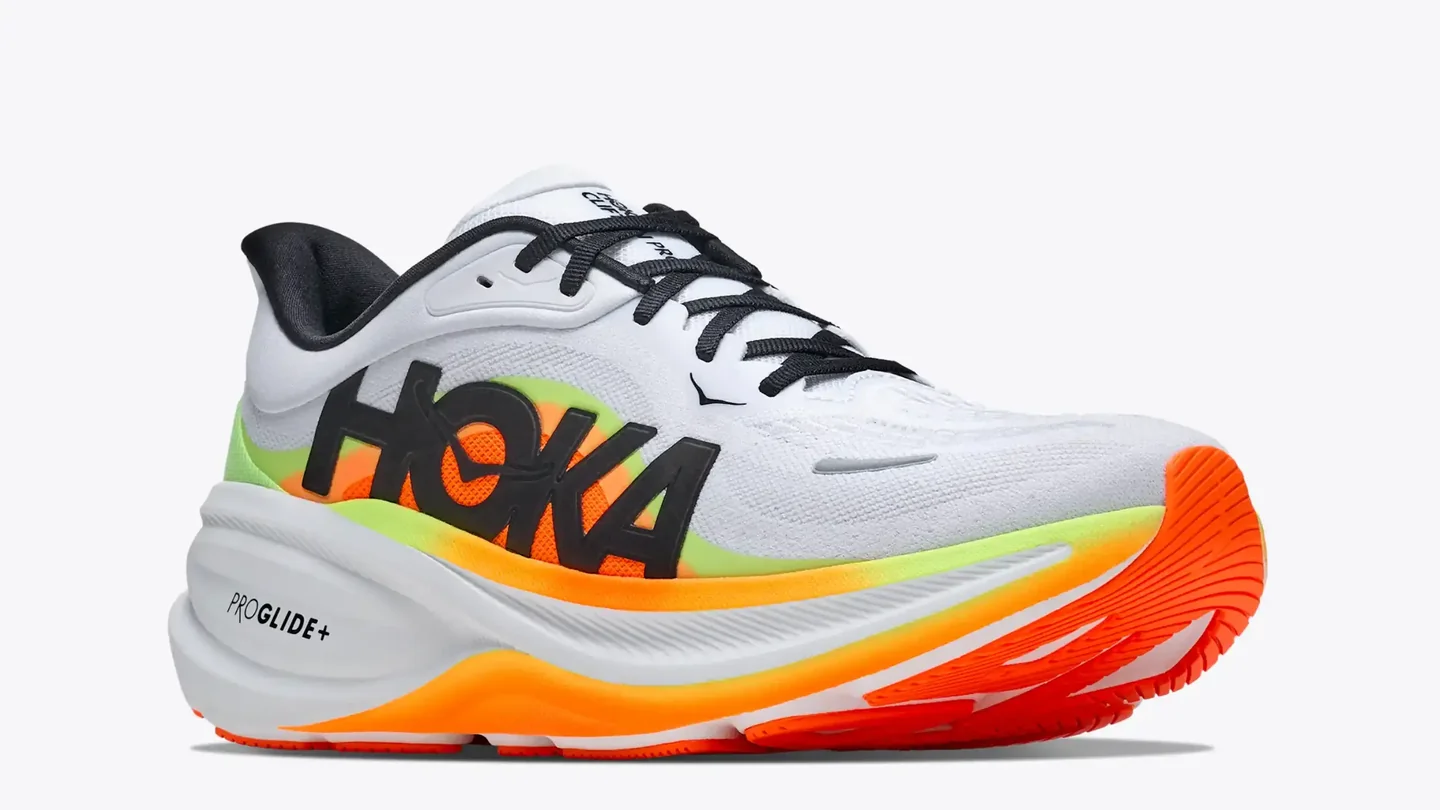
Imagen de la web oficial de Hoka
Hoka makes a move with the Clifton Pro, an evolution of its most recognizable franchise, aimed at the road runner who wants to rack up miles with a softer, livelier, and better-resolved ride in everyday use. It is not a competition model or an extreme-feeling shoe; it is a premium-focused training tool, designed for easy runs, long runs, and heavy training weeks in which comfort stops being a luxury and becomes a necessity.
The big difference lies in the midsole. Hoka replaces the saga’s more classic approach with SCF supercritical foam within the PROGLIDE+ series, a compound that seeks more energy return without losing the high cushioning that has made Clifton a familiar name for many runners. To that, it adds a more pronounced MetaRocker, a outsole with greater rubber coverage, and a clean, breathable upper with comfort details so the shoe not only cushions, but also better supports the stride.
A more refined Clifton for week-in, week-out training
The Clifton story has always revolved around balance. Hoka built its reputation on high profiles, a very recognizable protective feel, and a transition that invited you to run without thinking too much about the clock. The Clifton Pro keeps that foundation, but sharpens it. The goal is no longer just comfort; it also wants to provide a more efficient sensation, as if the shoe helped you spend less energy with every step. That subtlety marks the difference between a comfortable shoe and a comfortable shoe that also pushes a little more.
That change in focus is noticeable as a whole. The new version takes a step forward in materials, construction, and dynamic behavior. It is still a daily training shoe, but it no longer gives off the same feeling as a purely conservative model. The platform is high, yes, with 42 mm at the heel and 34 mm at the forefoot, but the geometry and compound are designed so the ride feels smoother, less clunky, and somewhat more agile when the pace rises without really demanding speed.
In practice, that places the Clifton Pro in a very specific territory: for the runner who wants a road shoe to rack up volume with protection, but does not give up a more modern response. In that coexistence of softness and dynamism lies its value proposition. It does not seek to dazzle with radicalism; it seeks to convince through consistency.
The midsole: where the real evolution happens
The midsole is the heart of the model and the argument that carries the most weight in its technical reading. Hoka introduces SCF foam, a supercritical foam which, in simple terms, is processed to create a lighter structure with better rebound capacity than conventional EVA. It does not work magic, but it does change the feel of the ride: the shoe returns a better portion of the energy it receives and offers more pleasant cushioning on repeated landings.
That nuance matters because the Clifton line has always lived on the border between comfort and lightness. With the Clifton Pro, Hoka tries to make that border less rigid. The stride feels more continuous, with a rounder transition from landing to toe-off. The MetaRocker, the brand’s signature curvature, becomes more prominent and helps the foot roll forward with less friction. It does not turn the shoe into a racer, nor does it need to, but it does deliver a more consistent sensation and a less flat feel than many classic training shoes.
The high profile may scare off anyone looking for a close-to-the-ground feel, although in this category the opposite is true: the more miles you log, the more you appreciate that generous base. The combination of 42/34 mm and an 8 mm drop gives it a geometry that is comfortable for a wide range of runners, especially heel strikers or those who prefer a guided transition, almost as if the shoe were pushing the stride along a smooth, well-laid lane.
There is also a detail worth noting: the rebound sensation does not come from excessive firmness, but from a more finely tuned balance between compression and return. That usually translates into less perceived fatigue on long sessions, something valuable in base training and in weeks when the body is already carrying a load. In other words, the shoe does not just absorb impact; it tries to make every step cost a little less.
Outsole, grip, and durability: a more serious bet for heavy use
If the midsole defines the character, the outsole determines how long it can sustain it. Hoka leans here on a more generous rubber coverage than in models where the foam is more exposed. Durabrasion Rubber in the forefoot and a highly abrasion-resistant compound in the heel protect the areas that suffer most in contact with asphalt, something especially useful for heel strikers or for those who make a daily trainer their companion for almost everything.
That wide coverage is not just about longevity; it also brings a sense of security. Road running is repetitive, sometimes monotonous, and any reinforcement that keeps the outsole’s behavior more stable as the miles go by adds points. The Clifton Pro is designed for intensive use, so it is no surprise that Hoka emphasizes a construction that can withstand a lot of wear without the foam degrading visually too soon.
The podular-designed outsole also aims to smooth the transition. This is not a showroom detail. In daily training shoes, the step from contact to toe-off can be the difference between a shoe that helps and one that gets in the way. Here, continuity rules. The end result is a cleaner, less abrupt, and more homogeneous ride throughout the cycle.
In urban settings, moreover, the combination of rubber and reflective details adds a bit of functionality. The goal is not to turn the shoe into a specialized nighttime tool, but to improve visibility on dawn or dusk runs, when the asphalt changes color and traffic imposes different rules.
Upper and fit: comfort without gimmicks
The upper follows Hoka’s line in its serious training models: breathable technical mesh, a clean structure, and a build that aims to hold the foot without making it feel rigid. There are no unnecessary flourishes. The goal is simple and demanding at the same time: let the foot breathe, keep it well secured, and avoid pressure points when the run gets longer or when the temperature rises and humidity starts to weigh on you.
Hoka adds a padded ankle collar to improve comfort on longer efforts and reduce the risk of chafing. It is one of those elements that can go unnoticed at first glance, but that you appreciate when a workout stretches beyond what you expected. In high-volume models, the ankle and Achilles tendon end up telling you more than they seem to.
The overall fit points to a last with an enveloping feel, friendlier than aggressive. It does not hug the foot in an extreme way or try to lock it down like a racing glove; it prefers to accommodate it. That choice fits the rest of the design: the Clifton Pro wants to be a mileage shoe, not a declaration of war on the stopwatch.
Reflective details complete a sober upper that prioritizes functionality. It is a build that conveys confidence through simplicity, something increasingly uncommon in a market obsessed with attracting attention. There are no unnecessary displays here. There is judgment.
Which type of runner is the best fit for this model
The Clifton Pro is aimed mainly at neutral runners who train on asphalt and value high cushioning over extreme lightness. It makes sense for those who string together easy runs, base sessions, and long outings, especially if the body appreciates a broad platform and a smooth transition. Its technical profile places it in a very specific segment: daily training with a certain performance-minded vocation, but without entering the realm of fast shoes.
Its behavior favors runners at easy or moderate paces. Hoka and several product analyses place it in usage ranges compatible with sustained, not explosive, paces, and with distances ranging from maintenance runs to half-marathons or marathons within a broad training plan. It is not designed for short intervals or for seeking a sharp ground feel. Its language is different: protection, continuity, and leg savings.
It can also suit medium- to heavier-weight runners who need a solid base underfoot. The 296-gram figure in a reference size places it above what many would associate with a traditional Clifton, but that weight reflects a more robust build and a clear commitment to durability. In a mileage shoe, that trade-off can be reasonable if the priority is to accumulate kilometers with less punishment.
On the other hand, it is not the best option for anyone who prefers a closer-to-the-ground sensation or for anyone looking for a shoe for lively paces, tempo changes, or racing. Its character is stable, predictable, and protective. In a market full of models shouting speed, the Clifton Pro speaks in a low voice, but with measurable arguments.
Weight, drop, and price: the data that helps place it
Numbers matter because they help translate sensations into context. The Clifton Pro comes in at 296 grams, with an 8 mm drop and a high profile of 42 mm at the heel and 34 mm at the forefoot. These are coherent numbers for a cushioned training shoe, designed to protect and support you for a long time. They are not secondary details; they explain why the model works better on the run than on acceleration.
The launch price is set at 170 euros, a premium-tier price within Hoka’s catalog. That figure places it in a market zone where shoes compete with a lot of technology, more elaborate materials, and a clear intention to last longer and perform better in everyday use. It is not an entry-level model, but neither is it a rarity reserved for very specific profiles. It sits in that range where runners compare cushioning, return, and lifespan before drawing conclusions.
The absence of a plate also helps explain its positioning. It does not need a rigid piece to support the structure or guide the stride. Its bet is on geometry, foam, and rocker flow. That approach sets it apart from other training shoes with similar ambitions, but more dependent on artificial propulsion elements.
Overall, the numbers paint a serious shoe geared toward consistency. It is not trying to be light above all else, nor to respond like a track shoe. It wants to last, protect, and make consistency easier. In today’s market, that is already a statement of intent.
How the experience changes compared with a conventional Clifton
The comparison with a classic Clifton is inevitable because the line has always been a benchmark for comfortable training. The Pro does not break with that idea, but it does refine it. The overall feel points to a ride that is softer, more responsive, and better finished, with foam that improves rebound and a more decisive geometry. The result is not a revolution, but a perceptible evolution for anyone familiar with the family.
In a conventional Clifton, part of the appeal lay in the blend of comfort and simplicity. The Pro adds a layer of sophistication. The ride remains friendly, but the sensation feels more current, less dependent on classic EVA and more in line with what today’s runner expects from a high-end training shoe. That modernization may especially appeal to those who use one model for almost everything and want to feel an improvement without changing philosophy.
The greater rubber coverage also makes a difference. Where other versions leave more foam exposed, the Clifton Pro protects impact zones better. That decision does not only affect lifespan; it also conveys a more complete, more mature product feel. It is the kind of detail you don’t see in the main photo, but you do notice after the workouts.
The price of that improvement exists: the weight goes up and the high profile remains. But within the category, the balance feels coherent. Those looking for the classic Clifton experience, with a more refined reading and better suited to frequent training, will find a logical step up here. Those wanting something lighter or more direct will keep looking elsewhere.
What Hoka brings to the road running shoe market
The launch of the Clifton Pro fits a clear market trend: training shoes that no longer settle for being soft, but want to be soft and efficient. The key word is no longer cushioning alone. Return, transition, and the ability to maintain a fresh feel when you use the shoe three, four, or five times a week now matter too.
Hoka has spent years refining that technical language. The brand is associated with wide platforms, generous profiles, and a very recognizable geometry. With the Clifton Pro, that DNA is updated without losing identity. Runners still get the protection they expect from Hoka, but inside a more sophisticated product with a reading that is closer to performance than to simple at-home comfort.
That positioning matters because the road market has become crowded with options featuring increasingly eye-catching foams. In that context, the Clifton Pro does not try to compete in extravagance; it competes in continuity. Its argument is not the immediate effect, but the accumulated benefit. And in real running, the kind that fills training calendars and dawn streets, that benefit is often worth more than a flashy first-step sensation.
That is why the new version makes sense beyond just being new. It updates a well-known franchise, reinforces the sense of durability, and makes more visible an idea road runners understand well: not all comfortable shoes are the same. Some only cushion. Others, like this one, try to make cushioning help you run better too.
A journalistic look at its real place in the rotation
The Clifton Pro does not seem designed to be a runner’s only shoe, but rather one of the most reliable pieces in the rotation. Its natural place is alongside more agile models for faster days or other softer options for recovery, but with one clear advantage: it can absorb a lot of use without losing its purpose. That versatility, when combined with a friendly platform, makes it especially interesting for long seasons.
Its proposal makes sense for consistent runners, not necessarily the fastest ones. A moderate- or high-volume training plan needs products that do not punish the legs. That is where the Clifton Pro has room to work. On hard asphalt days, on long outings with accumulated fatigue, or in weeks when the body asks for a break, a shoe of this profile works like a well-tensioned mattress: it absorbs, returns, and lets you keep going.
The key, in the end, is understanding that evolution does not always come from turning up the volume, but from ordering the pieces better. The Clifton Pro does not need flashiness to stand out. It is enough for it to improve the midsole, reinforce the outsole, and polish the upper to become a more complete version of a familiar idea. That is, probably, its greatest virtue: it does not break with the Clifton, it makes it more grown-up.
And that is where its appeal lies. In a market where eye-catching but fleeting novelties abound, a shoe that improves the essentials, protects better, and keeps a clear identity has more depth than a first glance suggests. The Clifton Pro presents itself that way: as an asphalt shoe with ambition, yes, but also with craftsmanship.
An evolution that changes the feel without losing the Clifton DNA
The arrival of the Clifton Pro confirms that Hoka still sees its most popular line as a laboratory for balancing comfort and progression. The new supercritical foam, the more pronounced rocker, and the reinforced outsole point to a more mature shoe, designed to respond to runners who no longer just want to go far, but to get there with better sensations. It does not aim to impress through excess; it aims to convince through consistency.
That is its big message. With high cushioning, an 8 mm drop, 296 grams, and a price of 170 euros, the spec sheet already makes clear the space it occupies. But the most interesting thing is how it combines those figures: not as a sum of concessions, but as a serious attempt to build a premium-leaning daily training shoe. In that mission, the Clifton Pro finds its best version: a more polished, more efficient Clifton, and one better prepared to accompany the trickle of miles that defines a well-worked running season.



How to prevent thigh chafing: causes and real solutions

Women’s running windbreakers: seven jackets and how to choose

Do more workouts get rid of soreness? A guide for runners

Jaén Half Marathon 2026: Record 3,800 Runners Registered

Men’s short running tights: how to choose the right pair

World Triathlon confirms data breach involving medical data

Izan Edo targets podium at Miyazaki World Cup

María Pérez ranks ninth in World Athletics’ 2026 top ten

Dos Santos, Duplantis and Sawe: World Athlete of the Year finalists

San Silvestre Vallecana 2026: 42,000 places, prices and start times

 Races3 months ago
Valencia Half Marathon 2027: date and registration

 Races3 months ago
Valencia Marathon 2026: entry, ballot and course

 Reviews and Comparisons4 months ago
Asics Gel-Roadmiles 3 for men: review and current price

 Reviews and Comparisons4 months ago
Asics Gel Sonoma 8 Gore-Tex: complete analysis for trail and rain

 Sneakers3 months ago
Saucony Endorphin Pro 4: full review and verdict

 News5 months ago
Strava API 2026: what changes for clubs, challenges and runner apps?

 Reviews and Comparisons5 months ago
Nike Alphafly 3: opinions, sensations, and real key points

 Reviews and Comparisons4 months ago
Under Armour running shoes review 2025-2026: models and key features

 Sports Equipment4 months ago
Shoe sizes in cm: a clear guide to getting the right fit for your footwear

 Sneakers3 months ago
Skechers GO RUN Consistent 2.0 analysis: comfort and limits

 News5 months ago
Valencia Marathon 2026 route: key tips to train and run better

 Sneakers4 months ago
Adidas Adizero Boston 13 for men: review and verdict