Sneakers
Men’s ASICS running: size, cushioning and use with useful tips
Models, prices, and real differences between the most sought-after ASICS running shoes for running with purpose.

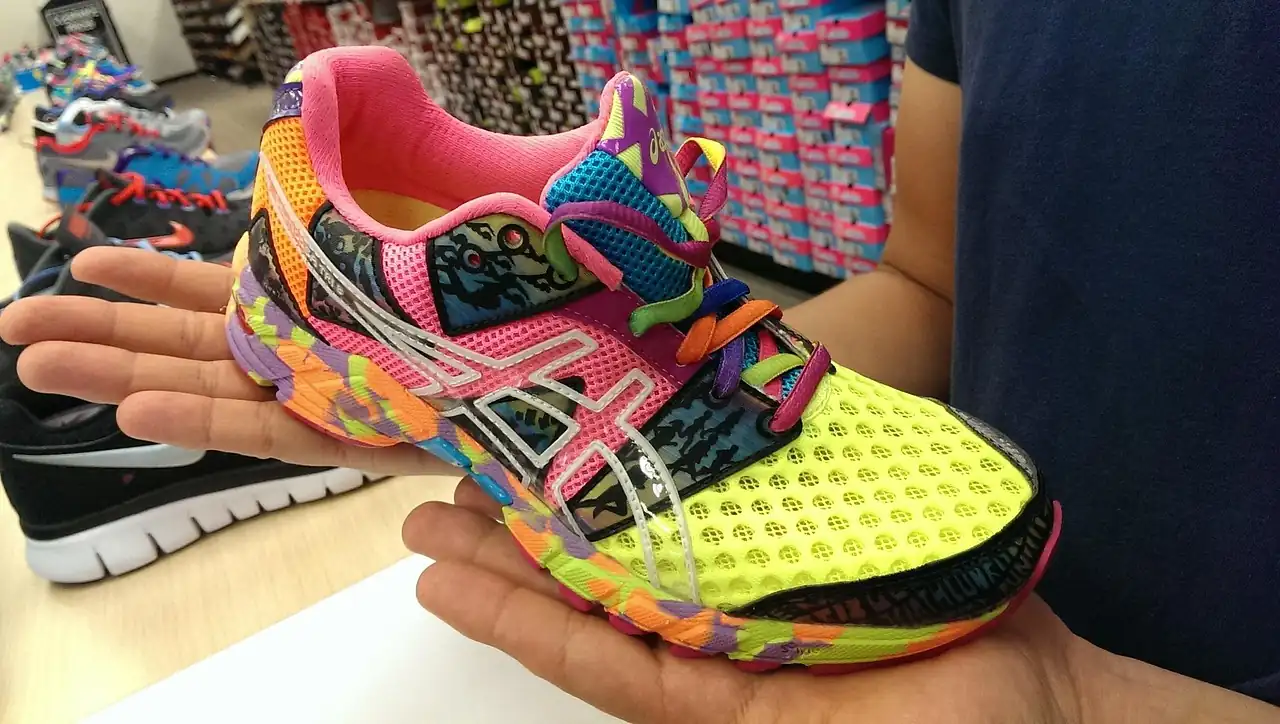
Imagen: rigotar23 / Pixabay
ASICS maintains a very solid presence in men’s running because its catalog covers almost every profile: from the runner looking for a comfortable shoe to rack up miles to the one who needs more stability, more response, or a trail option with serious grip. In market searches, names like Novablast 5, Gel-Nimbus 28, Gel-Kayano 32, GT-2000 14, Gel-Cumulus 28 or Gel-Excite 11 keep appearing again and again, a pretty clear snapshot of where demand is concentrated today.
The price range also draws the map quite well. In Spain, entry-level models usually move between 50 and 80 euros, daily training and mid-range pairs are often placed between 100 and 160 euros, and the more advanced or competition-oriented options easily go beyond 180 euros. That range helps explain why the brand remains one of the favorites: it offers options to start out, to train every day, and to look for performance without leaving the same technical ecosystem.
The ranges that concentrate the runner’s attention
The ASICS family is not understood through a single model, but through a system of ranges that solves very different needs. The wearing experience changes a lot between a Gel-Contend 9, designed as an entry point, and a Gel-Nimbus 28, built to offer abundant cushioning, or a Gel-Kayano 32, aimed at those who want more support. That diversity explains why the brand appears both in beginner searches and in comparisons by advanced users.
At the top end of the catalog, Novablast 5 has earned a reputation as a versatile shoe with a lively feel; Gel-Nimbus 28 represents maximum comfort on asphalt; Gel-Kayano 32 remains a benchmark for those who prioritize stability; and Magic Speed 5 moves into a more spirited territory, with a pace and racing focus. They are different models, but they share the same brand logic: cushion well, support with judgment, and don’t turn the stride into a rigid block.
In the more affordable zone, there are names that have been working for years as true workhorses. Gel-Contend 9, Jolt 5, Patriot 14 or Versablast 4 often appear in stores with clearly lower prices and very high ratings among those looking for a simple shoe to train, walk, or start running without making too big a leap in budget. They don’t compete with premium models in feel, but they do in the balance between cost and usefulness.
What each of the most searched lines offers
Novablast 5 is one of the most complete shoes in the current catalog because it brings together reasonable lightness, abundant cushioning, and a rebound feel that makes it very versatile. In the Spanish market it appears with prices around 149.99 euros, with frequent discounts that bring it down to around 112 to 126 euros. That price flexibility has made it one of the most visible, both in specialty stores and on major platforms.
Gel-Nimbus 28 plays in another league. Its official price is around 199.99 euros, although in offers it can drop into the 139 to 169 euro range. It is designed for those who want a very protected feeling underfoot, especially on easy runs, long steady efforts, and frequent use. It is not trying to be the fastest, but one of the kindest to joints and muscles when training volume takes over.
Gel-Kayano 32 remains ASICS’ support reference. It also sits close to 199.99 euros at list price, with common discounts placing it between 140 and 165 euros. Its natural ground is that of runners who need more guidance in the stride or who value a more stable base. The important point is not only stability, but that the brand has softened the concept: it is no longer about heavy, clunky structures, but about a more integrated and less aggressive kind of support.
GT-2000 14 and GT-1000 14 complete the stability zone with a more accessible approach. The GT-1000 14 is usually seen around 129.99 euros and with discounts close to 77 to 103 euros; the GT-2000 14 steps up in feel and price, approaching 159.99 euros and with offers around 121 euros. They are two very useful models for anyone who wants support without going straight into the brand’s top range.
Cushioning, stability and response: three ways of understanding the same stride
ASICS’ great virtue is that it does not interpret cushioning in a flat way. Not all of its shoes are looking for the same feel. Some prioritize a softer, more relaxed stride; others, a more dynamic sensation; and others, a firm base so the foot doesn’t move around too much. That variety is key to choosing well and avoids the common mistake of thinking that more foam always means a better shoe.
In third-party testing labs, models like Gel-Nimbus 28 appear as especially protective, with high impact absorption, while Novablast 5 stands out for combining comfort with a more lively response. At the other end, Gel-Kayano 32 offers a more guided and stable experience, but without falling into the heavy-block feeling that support shoes had years ago. That nuance matters a lot for anyone running several times a week.
Response or energy return is more noticeable in models aimed at faster paces. Magic Speed 5 and Noosa Tri 16 move in that territory, with lighter and more efficient sensations for tempo changes, intervals, or popular races. They are not as plush as pure daily trainers, but they make sense when the goal is to move forward with less effort in each stride.
Weight, drop and fit also change the experience
The weight of a shoe remains a decisive factor, even if it is not always obvious at first glance. A lighter pair helps move the legs with less inertia, something that is especially noticeable in pace changes and races. That is why a shoe like Metaspeed Edge Tokyo plays in a different dimension, with a clearly competitive focus, while a model like Gel-Nimbus 28 accepts more mass in exchange for more protection.
In ASICS, the drop usually sits in a middle ground, with many models between 8 and 12 mm. That range favors a broad profile of runners, especially those who strike more on the heel. That is why brands like the Japanese one have earned so much loyalty: they offer a relatively predictable and comfortable geometry for much of the market, without demanding extreme adaptation.
Fit deserves attention, because ASICS is usually consistent in sizing, but not identical to Nike or Adidas. In practical terms, the foot should sit firmly in the midfoot with enough room in the toe box, without squeezing the toes on descents or creating lateral looseness. In addition, the brand has expanded the width options in several models, something appreciated by runners with wide feet or a high instep.
Road, trail and rainy days: the terrain decides
The vast majority of ASICS running shoes are designed for asphalt, and that is where they perform best. Treadmills, sidewalks, urban parks and smooth roads suit less aggressive, lighter and more breathable outsoles. In that context, models like Gel-Cumulus 28, Novablast 5 or Versablast 4 shine, each with its own personality, but all with the road as their natural stage.
When the terrain changes, the recipe changes too. Gel-Venture 11 and Trabuco 14 GTX are aimed at trail with more aggressive outsoles, more protection and a build designed to grip dirt, loose rock or wet areas. In trail running, a difference of 1 or 2 millimeters in the lugs already alters traction and behavior on mud or compact ground, so it is not a good idea to choose by aesthetics what the mountain asks for in functionality.
For rainy days, ASICS has consolidated versions with Gore-Tex membrane in several families, such as Gel-Pulse 17 Gore-Tex or GT-1000 14 Gore-Tex. Those versions are useful in winter or in areas where humidity is routine. The trade-off is well known: more water protection usually means less ventilation and a bit more weight.
The technologies that explain its reputation
ASICS has built much of its reputation around cushioning, and the old Gel remains a brand icon even though it has evolved. Today, the presence of PureGEL in many models has shifted the classic concept toward a more discreet integration within the midsole. The sensation is less visible, but the protection is still there, especially on heel landings.
The other major family is that of the foams. FF Blast, FF Blast+ and FF Blast MAX appear in several mid-range and high-end models, providing a feel that can range from firm to springy depending on the design. At the more ambitious end, some super shoes incorporate high-performance compounds such as FF Leap or solutions with a carbon plate, reserved for those looking to squeeze the clock.
On the outside, the ASICSGRIP outsole has gained prestige for its grip and durability. That is no small detail: a good outsole not only prevents slips, it also extends the shoe’s lifespan. In many comparative tests, this rubber shows above-average durability and helps mid-priced models compete better in overall value, not just in immediate feel.
Which models make the most sense depending on the type of runner
For someone just starting to run, the logic is usually simple: comfort, reasonable price and a gentle transition. That is where Gel-Contend 9, Jolt 5, Patriot 14 and Versablast 4 fit well. They are shoes that don’t intimidate, work for easy paces and can also be used for walking or very occasional urban wear. They don’t promise elite performance, but they do offer a sensible entry into running.
For someone training with some regularity, the range widens. Gel-Cumulus 28 sits as a very balanced option; Novablast 5 brings more energy and versatility; Gel-Nimbus 28 adds more comfort; and GT-2000 14 or Gel-Kayano 32 better solve support needs. Here the choice no longer depends so much on price as on the feeling the runner wants to repeat three or four times a week.
For racing or running fast, the brand has established more aggressive models. Noosa Tri 16 is known for its lightness and more spirited personality; Magic Speed 5 adds plate and agility; and Metaspeed Edge Tokyo represents the performance extreme within the house. They are not shoes for everyone, but they are for those who already have experience and know exactly what they are looking for in an intense outing or on race day.
The relationship between price and real value
ASICS is not usually cheap, but it doesn’t live only off the premium label either. The brand works with a very clear ladder: entry, mid-range, high-end and competition. That allows runners to find a balance point according to their use and not have to jump straight to the most expensive range to get a decent experience.
In the Spanish market, frequent offers can be seen that change the positioning of the models. A Gel-Contend 9 can drop into the 53 to 56 euro range; a Gel-Excite 11 moves close to 64 euros; a GT-1000 14 can appear around 84 to 103 euros; and a Gel-Nimbus 28 shifts between 139 and 169 euros on promotion. That margin means the purchase stops being a fixed snapshot and becomes a matter of timing.
The reader who compares is not looking only for the lowest price. They are looking for durability, comfort, real use and consistency with the way they run. A shoe that lasts between 500 and 800 kilometers, depending on the model and wear, usually offers better return than another that is cheaper but less durable. It is in that silent calculation that ASICS usually defends its ground well.
What market demand reveals in Spain
Searches and sales show a clear preference for recognizable models. Novablast, Nimbus, Kayano, Cumulus, Excite and Contend appear repeatedly because they cover most of an amateur runner’s needs. It is no coincidence: the Spanish user usually combines training, walking and daily use, so they value a shoe that is not locked into a single function.
The presence of versions for different widths and the ease of finding larger sizes also matter a lot. In online retail, that translates into fewer returns and a more approachable brand perception. ASICS doesn’t win only through technology; it wins because it turns sizing, cushioning and price range into a relatively easy experience to understand.
The popularity of stability models also has a technical and a cultural component. For years, the average runner has associated ASICS with confidence, support and reliability. That legacy is still alive, even though the aesthetics have changed and midsoles are now higher, softer and more eye-catching. The brand has modernized the packaging without completely breaking with its DNA.
A broad catalog that demands careful choice
ASICS’ men’s offering is powerful precisely because it does not try to solve everything with the same mold. Each family in the catalog responds to a specific scenario and a different way of running. Choosing well is not about going for the most expensive model or the one you see most in stores, but about finding the balance between weight, support, cushioning, use and budget.
That is where the strength of this brand in the market becomes clear: the same company can outfit a beginner, a long-distance runner and someone chasing race paces without leaving a recognizable technical language. That continuity, together with stepped pricing and models that repeat in shop windows season after season, explains why ASICS still dominates so much of the men’s running conversation.
In such a broad showcase, the key is not to pile up names, but to read them as clues. Novablast suggests versatility, Nimbus comfort, Kayano stability, Cumulus balance, Excite accessibility, Noosa speed and Trabuco tough terrain. When those clues are matched with the runner’s weight, stride and usual terrain, the purchase stops being a gamble and becomes a much more refined decision.
The current picture is clear: ASICS remains one of the most complete references for men’s running because it has managed to keep the trust of the past while also renewing foams, geometries and outsoles so it doesn’t fall behind. The result is a broad, recognizable and fairly well-tiered catalog, where the difference between getting it right or wrong does not depend on the brand, but on knowing how to read what each model really offers.



How to prevent thigh chafing: causes and real solutions

Women’s running windbreakers: seven jackets and how to choose

Do more workouts get rid of soreness? A guide for runners

Jaén Half Marathon 2026: Record 3,800 Runners Registered

Men’s short running tights: how to choose the right pair

World Triathlon confirms data breach involving medical data

Izan Edo targets podium at Miyazaki World Cup

María Pérez ranks ninth in World Athletics’ 2026 top ten

Dos Santos, Duplantis and Sawe: World Athlete of the Year finalists

San Silvestre Vallecana 2026: 42,000 places, prices and start times

 Races4 months ago
Valencia Half Marathon 2027: date and registration

 Races4 months ago
Valencia Marathon 2026: entry, ballot and course

 Reviews and Comparisons4 months ago
Asics Gel-Roadmiles 3 for men: review and current price

 Reviews and Comparisons4 months ago
Asics Gel Sonoma 8 Gore-Tex: complete analysis for trail and rain

 Sneakers3 months ago
Saucony Endorphin Pro 4: full review and verdict

 News5 months ago
Strava API 2026: what changes for clubs, challenges and runner apps?

 Reviews and Comparisons5 months ago
Nike Alphafly 3: opinions, sensations, and real key points

 Reviews and Comparisons4 months ago
Under Armour running shoes review 2025-2026: models and key features

 Sports Equipment4 months ago
Shoe sizes in cm: a clear guide to getting the right fit for your footwear

 Sneakers3 months ago
Skechers GO RUN Consistent 2.0 analysis: comfort and limits

 News5 months ago
Valencia Marathon 2026 route: key tips to train and run better

 Sneakers4 months ago
Adidas Adizero Boston 13 for men: review and verdict