Sneakers
Puma Deviate Nitro Elite 2: analysis, price and key usage tips
Carbon fiber, reactive foam, and stable grip in a racing shoe designed for competing in middle- and long-distance events.

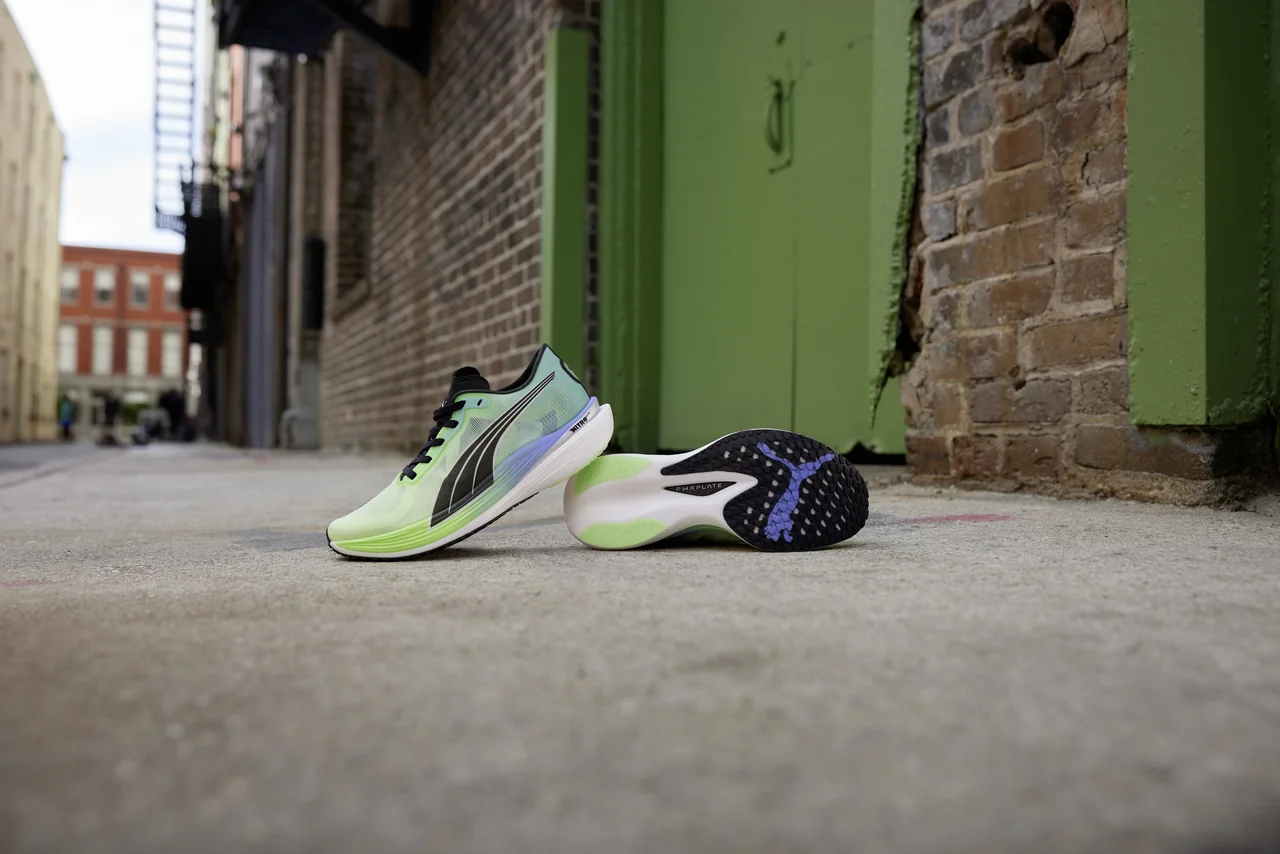
Image: PUMA
The Puma Deviate Nitro Elite 2 has earned its place in the fast-shoe conversation thanks to an unusual mix: plenty of rebound, a fairly stable ride for a plated shoe, and a lightweight feel that doesn’t punish too much at high paces. It’s not an ultra-aggressive racer with a harsh feel, but rather a competition model with enough margin for runners looking for speed without giving up friendly cushioning in the final stretch of the race.
In practice, that places it in a very interesting spot in the market. Compared with more aggressive options, Puma’s proposal leans toward a balance between propulsion, grip, and containment. The combination of NITRO Elite foam, the PWRPLATE carbon-fiber plate, and PUMAGRIP outsole explains why this model keeps showing up among the references when talking about half marathons, marathons, and quality sessions on asphalt.
A racer with distance-runner character
The key to the model is that it doesn’t try to be a lab shoe disconnected from the road. The Deviate Nitro Elite 2 is designed to race, yes, but also to offer a transition that is clean enough for the runner to feel the boost without feeling like every stride is going over a rigid board. In a race, that difference comes through as a kind of elastic push that accompanies rather than dictates.
The category it belongs to is that of plated racing shoes, but with a less flashy personality than other direct rivals. Its behavior favors runners who already have a relatively efficient technique and a body weight that is not especially high or is mid-range, although that doesn’t mean it only works for lighter profiles. What it mainly asks for is the intention to run fast and a cadence capable of taking advantage of the midsole rebound.
That balance has been a constant in the model’s evolution. Puma didn’t aim for a visual revolution here, but for a more refined internal improvement: a more compact plate and a cleaner upper, with the idea of fine-tuning the transition and keeping the foot better secured. The result is a shoe that doesn’t just promise speed; it organizes it neatly underfoot.
What NITRO Elite foam brings
NITRO Elite foam is the heart of the package. It’s a lightweight, responsive compound designed to return energy quickly without making the ride feel harsh. That quality matters because in a racing shoe the usual temptation is to squeeze performance at the expense of comfort. Here the formula tries to avoid that, with cushioning that absorbs enough and a response that shows up almost immediately.
On the run, that foam gives a lively-surface sensation, as if the foot sinks in just enough before springing forward. It’s neither sofa-soft nor a bare plate where every impact feels sharp. It sits in the middle ground so many runners look for over middle and long distances: enough firmness to hold pace and enough elasticity to avoid feeling wrecked at the end.
Technical specs seen in several listings place the drop at 6 mm and the cushioning level as maximum. That helps explain its profile. It’s not a minimalist racer or a shoe for anyone who wants a low, flat feel, but rather a model with a bit more protection under the metatarsals and heel, useful when form starts to fall apart in the decisive stretch.
The PWRPLATE and the feeling of propulsion
The carbon plate, called PWRPLATE, fulfills the classic function of this kind of technology: stabilize the midsole and direct energy forward. In the Deviate Nitro Elite 2, the piece has been refined compared with the previous generation and feels more compact. The goal is not just to run faster, but to make the transition from landing to toe-off more efficient and less scattered.
The real effect of a plate usually depends on the runner using it. In this case, the shoe delivers clear propulsion, but not in an overly aggressive way. There’s a kind of controlled spring, less flashy than in radical models and more usable for anyone racing 10K, half marathon, or marathon. Running efficiency increases especially when the pace is already brisk and technique is solid, because that’s when the platform gets the most out of its design.
The combination of plate and foam also has a practical side: the shoe feels secure. In very soft plated models, some runners feel that everything floats too much; here the structure seems more grounded, easier to read with each footstrike. That nuance may seem minor, but in a long race it becomes decisive when the runner is trying to save energy without losing control.
Upper, fit, and sense of security
The upper uses a lightweight mono-mesh that lets the foot breathe well and helps reduce weight. The sensation is of a thin construction, designed to lock the midfoot without adding unnecessary bulk. In a racing shoe, that matters as much as the foam: if the foot moves around, performance leaks out through the edges.
There’s also a rear reinforcement with a TPU spoiler that helps contain the heel. The collar includes some padding around the Achilles area, a smart concession to soften contact in a model that, by nature, was going to spend many hours at high intensity. That attention to the rear of the foot doesn’t make the shoe soft, but it does make it friendlier on the run.
The overall fit feels snug and competitive, without being suffocating. The last is aimed at a runner who wants to feel wrapped by the shoe, not floating inside it. That precision is especially useful when pace rises and even a few millimeters of looseness in the hold can translate into rubbing, unnecessary movement, or mental fatigue. Puma, here, has aimed for a clear reading of the stride rather than a flashy aesthetic.
PUMAGRIP outsole and real asphalt traction
One of the model’s strongest arguments is the PUMAGRIP outsole. This compound has built a reputation for providing consistent traction without adding too much weight. In a fast shoe, grip is no minor detail: it’s the ground on which the whole promise of speed rests. If the outsole fails, the plate loses purpose and the foam stops feeling efficient.
In the Deviate Nitro Elite 2, that rubber delivers very reliable performance on asphalt, with good behavior in dry conditions and an honest enough response when the surface isn’t perfect. It doesn’t behave like an outsole meant for mixed terrain or mountains, although it can handle varied surfaces within urban and road use. Its purpose is clear: compete on regular pavement, where contact with the ground becomes almost a quick conversation between rubber and road.
Relative durability also deserves credit, within the limits of a racer. No shoe of this type is made to rack up hundreds of slow kilometers, but the use of a durable rubber helps extend service life somewhat when specific workouts are alternated with the occasional very controlled easy run. The grip and durability of PUMAGRIP are part of why the model still has appeal years after its release.
Best pace and distance fit
Usage experience and market data point to a shoe aimed at middle and long distances. That’s where it finds its best territory, because it combines enough lightness with cushioning that doesn’t collapse as the kilometers pass. In a 5K it may even feel more stride-oriented than some runners need, while in a 10K, half marathon, and marathon it shows its fullest side.
Some references place the ideal use below 3:45 per kilometer, but that should be read as guidance, not a hard boundary. More than the exact pace, what matters is the kind of runner: someone who already runs fluidly, wants a race-day shoe, and appreciates a platform that doesn’t punish when fatigue starts to bite. The Deviate Nitro Elite 2 doesn’t demand perfection, but it does ask for the intention to run fast.
In that sense, it’s a good candidate for those who don’t feel comfortable in extremely soft or unstable supershoes. Its response is more contained, easier to manage in turns, pace changes, and long straight sections. It’s not a shoe for jogging by inertia or for daily training without restraint; its natural place is on the days when the clock matters and every footstrike counts.
Weight, drop, and figures that help place it
Available figures place the model at around 217 grams, with a launch price close to 220 euros. These are numbers that put it in the upper range of the racing segment, though not outside the norm for a carbon-plated shoe with premium materials. Weight, however, doesn’t tell the whole story: the feel on the run is usually more important than the exact number on the scale.
The 6 mm drop favors a relatively balanced posture, without shifting too much load to the heel. That helps midfoot and forefoot runners, although the shoe doesn’t force a specific technique in an extreme way. Added to that is the fact that cushioning is described as maximum, which softens impact and allows the effort to be handled with less harshness underfoot.
Another useful figure for understanding it is its status as a model for neutral runners. It’s not a support shoe or a corrective solution, but a proposal aimed at runners who don’t need extra structure. That neutrality matters because it lets the plate and foam work without added interference, preserving a clean feel in each transition.
How it compares with other fast shoes
Within the ecosystem of plated racers, the Deviate Nitro Elite 2 occupies an intermediate place between pure aggressiveness and reasonable comfort. Compared with softer models, it offers a more recognizable base; compared with drier ones, it provides better protection and a somewhat more everyday feel. That position explains why some runners prefer it for racing, but also for occasional quality workouts.
Its character feels like a well-tuned tool, not an over-the-top gadget. It doesn’t try to impress with massive midsole volume or impossible shapes, but with the way it combines responsiveness, stability, and grip. That makes it especially interesting for anyone running on asphalt and wanting a fluid stride without the sensation of standing on an excessively high or unstable platform.
Also, compared with rivals of the same cut, it stands out for a certain restraint. It may not be the flashiest on the shelf, but it is one of the most coherent in real use. That coherence, over long efforts, is often worth more than any visual promise. There are shoes that look like a parked race car; this one, instead, tries to make the driver feel comfortable when the road truly starts to rise.
Which runner gets the most out of this Puma
The Puma Deviate Nitro Elite 2 is especially well suited to runners looking for a versatile racing shoe, with a neutral ride and the ability to squeeze out lively paces without giving up a degree of control. It tends to work best for those who already have some experience with plated models and know when to let the shoe work for them and when to ask less of it.
It’s also appealing for anyone who values balance over excess. If the runner appreciates a reliable outsole, very responsive but not wild foam, and a last that holds the foot without squeezing it, the package makes a lot of sense. On the other hand, someone looking for maximum plush cushioning or an extremely flat feel may find other options closer to their taste.
Its profile, ultimately, sits between serious competition and reasonable usability. It’s not a shoe for everything, but it is for much more than its Elite name might suggest at first glance. That may be its main virtue: it looks sharp, but it doesn’t bite too much. And in a market full of shoes that promise the sky, that well-understood moderation ends up being an advantage.
What its evolution reveals within Puma
The second generation of the Deviate Nitro Elite family consolidated several ideas Puma had been working on: better foam, a more coherent plate, and a more refined upper. It wasn’t necessary to change everything for the model to gain maturity. It was enough to fine-tune the key pieces so the shoe felt more secure and more ready to compete seriously.
That kind of evolution is often more valuable than a radical break. Subtle improvements in the midsole, weight reduction through thinner materials, and changes to the carbon reinforcement all respond to a very clear logic: make the stride more efficient without upsetting the overall behavior. Runners don’t always need surprises; sometimes they need everything to fit together a little better.
Along that path, Puma has strengthened a distinct identity within the speed segment. The Deviate Nitro Elite 2 doesn’t just compete on performance, but also on personality. It has a certain technical sobriety that sets it apart from the noise and brings it closer to the kind of product that, when it works, seems less spectacular than it really is. And in high-level running, that is usually a good sign.
An option that still makes sense in today’s lineup
The fast-shoe market changes rapidly, but not every new release leaves older models behind. The Deviate Nitro Elite 2 is one of those proposals that remain relevant because its approach is still solid: responsive foam, carbon plate, reliable grip, and a chassis that doesn’t fall apart when the effort ramps up. It doesn’t need to shout to compete.
For anyone looking for a racing shoe that combines excitement and control, it remains a very valid reference. Its original price placed it in the premium segment, but its proposition never depended only on the launch: it depended on a well-executed idea. And that idea still works in the conversation around marathons, half marathons, and fast road races.
At its core, the Puma Deviate Nitro Elite 2 represents a very specific way of understanding speed: less showmanship and more precision. A racer that accelerates, yes, but also accompanies, supports, and inspires confidence. In times when many shoes seem to be chasing the surprise effect, that blend of efficiency and balance has something of a rare sporting luxury.
You may also like: Puma Deviate Nitro Elite 4 HYROX: the carbon shoe for competition.
Este artículo contiene enlaces de afiliado: si compras a través de ellos, se genera una pequeña comisión sin coste adicional para ti. Más información.



How to prevent thigh chafing: causes and real solutions

Women’s running windbreakers: seven jackets and how to choose

Do more workouts get rid of soreness? A guide for runners

Jaén Half Marathon 2026: Record 3,800 Runners Registered

Men’s short running tights: how to choose the right pair

World Triathlon confirms data breach involving medical data

Izan Edo targets podium at Miyazaki World Cup

María Pérez ranks ninth in World Athletics’ 2026 top ten

Dos Santos, Duplantis and Sawe: World Athlete of the Year finalists

San Silvestre Vallecana 2026: 42,000 places, prices and start times

 Races3 months ago
Valencia Half Marathon 2027: date and registration

 Races3 months ago
Valencia Marathon 2026: entry, ballot and course

 Reviews and Comparisons4 months ago
Asics Gel-Roadmiles 3 for men: review and current price

 Reviews and Comparisons4 months ago
Asics Gel Sonoma 8 Gore-Tex: complete analysis for trail and rain

 Sneakers3 months ago
Saucony Endorphin Pro 4: full review and verdict

 News5 months ago
Strava API 2026: what changes for clubs, challenges and runner apps?

 Reviews and Comparisons5 months ago
Nike Alphafly 3: opinions, sensations, and real key points

 Reviews and Comparisons4 months ago
Under Armour running shoes review 2025-2026: models and key features

 Sports Equipment4 months ago
Shoe sizes in cm: a clear guide to getting the right fit for your footwear

 Sneakers3 months ago
Skechers GO RUN Consistent 2.0 analysis: comfort and limits

 News5 months ago
Valencia Marathon 2026 route: key tips to train and run better

 Sneakers4 months ago
Adidas Adizero Boston 13 for men: review and verdict