Sneakers
Girls’ running shoes: models, foot strike and buying with a runner’s approach
Current models, indicative prices, and key points for choosing children’s footwear with a good fit, grip, and cushioning.

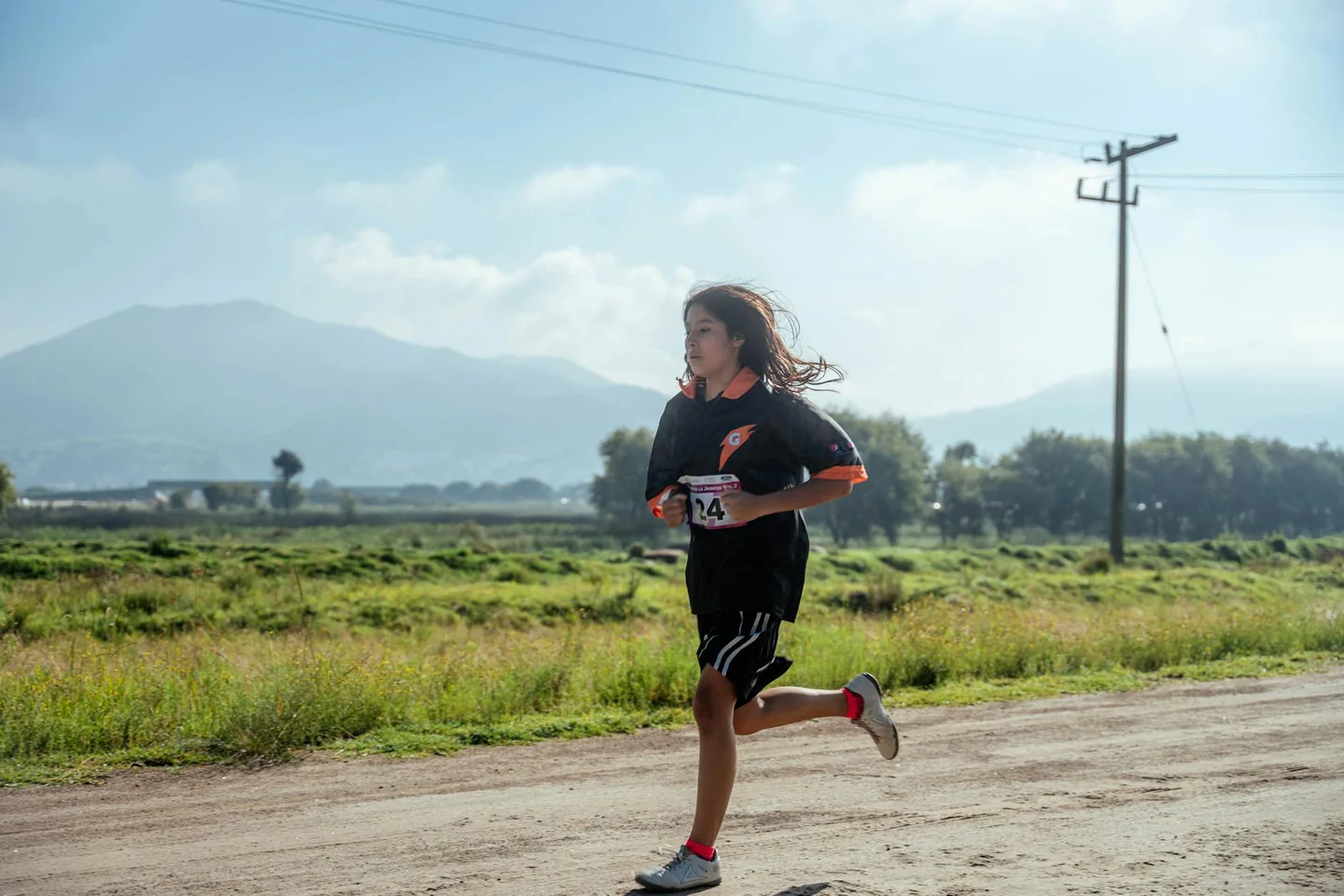
Imagen: Pexels LATAM / Pexels
Choosing running shoes for a girl is not just about color, brand, or aesthetics. Children’s footwear has to support a foot that is still growing, protect it through everyday play, and respond smoothly when training sessions, PE classes, or first races come along. Almost everything comes down to that balance: comfort, support, durability, and a fit that neither squeezes nor slips around.
The current market offers a very wide range, with models designed for road running, mixed use, and even easy trails. Prices generally move between 20 and 120 euros, with very affordable entry-level options and more technical proposals with better cushioning, recycled materials, or a more stable structure. The key is understanding what they’re going to be used for and how the little runner’s foot is growing.
What a good children’s model should offer
A running shoe for a girl does not behave like a scaled-down adult version. A child’s foot has different mobility, less body mass, and a stage of development in which it’s best not to force rigid shapes or unnecessarily aggressive profiles. That’s why the first filter should always be the combination of flexibility, stability, and lightness, beyond whatever brand appears on the tongue.
Cushioning matters, but not as a soft mattress without any criteria. At early ages, what matters is enough impact absorption for running on asphalt or playground surfaces, while still keeping a sole that allows some contact with the ground and doesn’t turn every step into a high platform. Brands have refined this point a lot, with softer foams, durable rubber outsoles, and mesh uppers that let the foot breathe.
The shape of the shoe also matters. Children’s models often feature wide openings, Velcro or elastic laces, and padded collars to minimize rubbing. A good fit at the heel and real space in the forefoot usually matter more than a very eye-catching look. If the toe hits the front or the midfoot feels loose, the shoe is already starting to fail even if it’s light or has a big name.
Models setting the pace in 2026
Among the most visible options on the market are very varied proposals, from daily training models to versions more focused on lively paces or all-purpose use. Nike, adidas, and Asics account for a large part of the offer, but there are also solid alternatives from New Balance, Saucony, Under Armour, Salomon, Reebok, Puma, or sports retail brands with very competitive junior ranges.
In the most popular segment, the Nike Cosmic Runner and the Star Runner 5 have gained ground thanks to their combination of contained price and versatile use. The first is around 49.99 euros and the second sits at about 56.99 euros before discounts, with reduced versions often dropping into the 40-euro range. These are shoes designed for running, playing, and handling everyday wear, with a simple profile and a durable rubber outsole.
In adidas, the Runfalcon 5 remains one of the most repeated references in stores by volume and color variety. It has been seen from 45.99 euros, with discounts that even place it below 35 euros in some campaigns. Alongside it, the Duramo SL2 appears as a slightly more technical alternative, also around 49.99 euros, while the Supernova Ease 2 steps up in comfort and is already moving close to 86.99 euros. The price difference usually reflects more foam, more structure, and a more refined feel.
Asics maintains a very solid profile in children’s footwear. The GT-1000 14 GS usually appears from 69.99 euros and offers a base that is especially interesting for girls looking for stability and frequent use, while the Gel-Cumulus 27 and the Novablast 5 point to a more cushioned experience, with prices starting at roughly 79.99 and 86.99 euros, respectively. The Patriot 14 GS and the X-Patriot 13 GS bring the bill down quite a bit, sitting around 60 euros or less depending on sizes and promotions. Asics does a very good job balancing support and a comfortable feel, something highly valued in school-age stages.
Which models fit best depending on real use
For running around the playground, going to school, doing sports class, and adding easy miles with the family, versatile shoes are the most sensible choice. Here, the Runfalcon 5, the Cosmic Runner, the Star Runner 5, or the Tenth Start Run fit well, a very affordable option that can be found around 19.99 euros. These options are not trying to impress with technology, but to get through the day with enough comfort and a contained cost.
When the girl is already running with some frequency or doing longer outings, it’s worth looking at models with better cushioning and a more stable base. The Nike Pegasus 41, the Vomero 18, and the New Balance Fresh Foam Roav enter that territory of greater comfort, although the price goes up. The Pegasus 41 has been seen around 96.99 euros, the Vomero 18 can exceed 119.99 euros, and the Roav, depending on channel and size, can also move into the higher range. In return, they offer a softer ride and a more mature shoe feel.
For mountains or dirt paths, the conversation changes completely. The Salomon Alphacross Blast CSWP and the Saucony Peregrine 11 Shield are aimed at more demanding terrain, with more pronounced outsoles and better grip. Traction becomes the star when the ground gets dirty, slopes, or mixes stones, leaves, and moisture. In children’s trail running, an extreme outsole isn’t necessary, but a more aggressive tread and materials that handle dirt better are.
If the girl practices triathlon or combines disciplines, the Asics Gel-Noosa TRI 13 GS and its more recent evolution, the Gel-Noosa TRI 16 GS, are names to keep very much in mind. They’re usually noted for a quick entry, a lively look, and a lightweight structure that favors agile transitions. That kind of shoe works well when performance matters as much as how easy it is to put on.
Price, discounts, and value for money
In the children’s segment, price can be misleading if you only look at the final figure. There are models from 25 to 35 euros that work very well for school use and play, while other options close to 100 euros bring finer comfort, better response, and higher-quality materials. Value for money does not always match the cheapest model, but it doesn’t require going all the way to the top end either.
Retail brands have pushed the market hard. Decathlon, for example, shows references like the Kalenji AT Flex Run from 25 euros and the Start Run at around 19.99 euros, figures that are attractive when the foot grows quickly and use will be intense but not technical. Décimas also places the Tenth Start Run and the Begin Run at very tight prices, a sign that children’s sports consumption is increasingly looking for a balance between spending and durability.
In the mid-range, between 40 and 70 euros, you’ll probably find the most sensible purchases for many families. That’s where the adidas Duramo SL2, the Runfalcon 5, the Asics Patriot 14 GS, the Nike Cosmic Runner, or the Puma Skyrocket Intense Lavender fit in. They’re serious enough models to run with moderate frequency and, at the same time, quite pleasant for everyday wear. When the girl grows fast, that range usually feels less like a big leap when changing size or season.
Above 80 euros, you’re already entering shoes with more technical ambition. Nike Pegasus 41, Vomero 18, Asics Novablast 5, Supernova Ease 2, or some New Balance models with more advanced foam offer a finer experience, but they only really pay off if they’re going to be used consistently. It doesn’t make much sense to pay for premium cushioning if the shoe will be worn twice a week and for short distances.
How to get the size and fit right
The right size matters more than any product sheet. In children’s footwear, a margin of around one centimeter between the longest toe and the front helps prevent bumps and leaves room for growth. That margin should not be confused with excessive looseness. If the shoe lets the foot slide too far forward, stability is lost and the stride becomes imprecise.
The last shape also changes the experience a lot. Some models are narrower, like certain Asics or Nike shoes with a snug profile, which can fit very well on slim feet but feel uncomfortable on high insteps. Other options, like several New Balance models or some everyday adidas shoes, usually offer a friendlier fit. The feeling when trying them on matters more than the size label, because two models with the same number can behave very differently.
It’s worth trying them on with the usual sock and at the end of the day, when the foot is a little more swollen. It also helps to walk a few meters and flex the toe by hand. If the front bends naturally and the heel stays secure, that’s a good sign. An easy closure, whether Velcro or elastic laces, adds a lot in school use, because it avoids awkward adjustments in the middle of the day.
Materials, breathability, and resistance to daily wear
The girl who runs, plays, and goes back and forth to school puts footwear through much more wear than a single session would. That’s why the combination of breathable mesh, toe reinforcements, and an outsole that won’t wear out right away matters so much. Ventilation prevents heat and moisture buildup, while reinforcements protect the areas where the foot drags the most.
In several recent models, the use of recycled materials keeps appearing, a detail that is increasingly important in the commercial offer. Nike has pointed to percentages of recycled content in some junior models, and adidas has also incorporated reused materials in lines like Ultraboost Primeblue in versions from other seasons. Sustainability has stopped being a marketing extra and has become a visible part of the product, although it does not replace the essentials: fit, durability, and comfort.
You can also feel the difference between shoes designed only for asphalt and those made to combine activities. An outsole that is too smooth loses its purpose on a wet playground or in a park with loose dirt. A very aggressive one, on the other hand, can feel clumsy on pavement. The most useful model is usually the one that adapts best to the dominant setting, not the one that promises to do everything at once.
The brands that are gaining the most ground
Nike continues to set the commercial pace with very recognizable names and a broad youth offer, from Cosmic Runner to Pegasus and Vomero. Adidas responds with a very balanced range in price and availability, where Runfalcon and Duramo have found their place thanks to their simplicity and constant rotation. Both brands dominate through visibility, variety, and ease of finding sizes.
Asics keeps a very solid reputation for long-wear comfort and the consistency of its lasts. New Balance brings a friendly shoe feel and, at times, a more understated but very functional look. Saucony, although less present in children’s footwear, usually appears linked to agile or trail models, such as Ride, Kinvara, or Peregrine. Under Armour, Reebok, and Puma complete a more diverse map, especially when the goal is to find good deals or different designs.
In the most economical range, private-label or retail-owned brands have gained visibility. Tenth, Kalenji, and other distribution labels have become a logical entry point for girls who are just starting out or for families that need to replace shoes often. Their main strength is clear: enough performance at prices that don’t blow up the budget.
What really changes between running and playing
A girl doesn’t use running shoes only to run in a straight line. She jumps, turns, brakes, crouches, chases a ball, or climbs onto a curb. That reality means the footwear has to handle more lateral movement, more torsion, and repeated contact with hard surfaces. That’s why a children’s running shoe must be, besides comfortable, reasonably stable.
Models that are too soft and high may feel pleasant on the first step, but sometimes they’re less secure in mixed activities. By contrast, a shoe with a slightly wider base, a well-secured heel, and a durable outsole usually performs better in everyday use. The feeling of confidence when moving quickly matters as much as cushioning.
There are also differences in how weight is perceived. A lightweight shoe encourages more movement, but if too much structure is sacrificed to achieve that, the benefit fades. In children’s footwear, the ideal is to find a middle ground: light enough not to get in the way and solid enough to last. That boundary often separates a smart purchase from a pair that ends up forgotten in a drawer.
The right time to buy and the logic behind size rotation
A child’s foot grows in spurts. Sometimes it seems stable for months and then, suddenly, changes half a size or more in just a few weeks. That dynamic explains why many families pay so much attention to price. It’s not just about buying cheap, but about buying with timing in mind, knowing that a size may become too small before wear even becomes visible.
In that context, sales and outlet deals really matter. When a model that costs 70 or 80 euros drops to 45 or 50, the purchase becomes much more reasonable. Usual discounts in specialty stores range from 10% to 34% and, in some cases, more. The difference between paying full price or a reduced price can be decisive if the shoe is going to have a limited lifespan because of growth.
It’s also worth remembering that a children’s shoe should not be handed down without checking its condition and size. The outsole may still be intact, but the foam may already have compacted or the upper may have given too much. What looks like a simple size change is, in reality, a renewal of geometry, fit, and support. In running, that shows up in every stride, even if the distance is short.
A sensible purchase for next season
The current catalog of children’s running shoes mixes technology, fashion, and functionality with a breadth that didn’t exist a few years ago. There are models for getting by and others for training with some continuity, options for asphalt, park, and light mountain use, and a price range so wide that it forces you to look beyond the display window. The best choice is not the flashiest one, but the one that fits the foot, the pace of use, and the usual terrain.
In a well-thought-out purchase, fit, ventilation, grip, and durability matter, but so does the context: how much she runs, where she moves, and how often she’ll need to replace them. Models like the adidas Runfalcon 5, Nike Cosmic Runner, Asics GT-1000 14 GS, Nike Pegasus 41, or Saucony Ride 14 represent different levels of ambition within the same universe. The range is broad because the needs are too, and that is precisely why it’s useful to look with criteria.
The children’s market follows a very specific logic: grow fast, wear out a lot, and change size before the product has fully aged. In that scenario, a good pair of shoes is not a luxury or a whim, but a basic part of everyday life. When footwear supports well, running feels more like playing and less like correcting discomfort. And in that difference, small as it may seem, a large part of a girl’s sports experience is decided.
The best decisions, in the end, are usually the most understated: a correct fit, coherent cushioning, and an outsole that doesn’t fail when the day gets long. With that as the foundation, the rest — the color, the logo, the season’s new release — takes the place it belongs in.
Este artículo contiene enlaces de afiliado: si compras a través de ellos, se genera una pequeña comisión sin coste adicional para ti. Más información.



How to prevent thigh chafing: causes and real solutions

Women’s running windbreakers: seven jackets and how to choose

Do more workouts get rid of soreness? A guide for runners

Jaén Half Marathon 2026: Record 3,800 Runners Registered

Men’s short running tights: how to choose the right pair

World Triathlon confirms data breach involving medical data

Izan Edo targets podium at Miyazaki World Cup

María Pérez ranks ninth in World Athletics’ 2026 top ten

Dos Santos, Duplantis and Sawe: World Athlete of the Year finalists

San Silvestre Vallecana 2026: 42,000 places, prices and start times

 Races3 months ago
Valencia Half Marathon 2027: date and registration

 Races3 months ago
Valencia Marathon 2026: entry, ballot and course

 Reviews and Comparisons4 months ago
Asics Gel-Roadmiles 3 for men: review and current price

 Reviews and Comparisons4 months ago
Asics Gel Sonoma 8 Gore-Tex: complete analysis for trail and rain

 Sneakers3 months ago
Saucony Endorphin Pro 4: full review and verdict

 News5 months ago
Strava API 2026: what changes for clubs, challenges and runner apps?

 Reviews and Comparisons5 months ago
Nike Alphafly 3: opinions, sensations, and real key points

 Reviews and Comparisons4 months ago
Under Armour running shoes review 2025-2026: models and key features

 Sports Equipment4 months ago
Shoe sizes in cm: a clear guide to getting the right fit for your footwear

 Sneakers3 months ago
Skechers GO RUN Consistent 2.0 analysis: comfort and limits

 News5 months ago
Valencia Marathon 2026 route: key tips to train and run better

 Sneakers4 months ago
Adidas Adizero Boston 13 for men: review and verdict