Health and Nutrition
Foot sizes in cm: a clear guide to choosing the right footwear
Measure your feet accurately and convert the measurement into a reliable size to buy shoes with fewer mistakes.

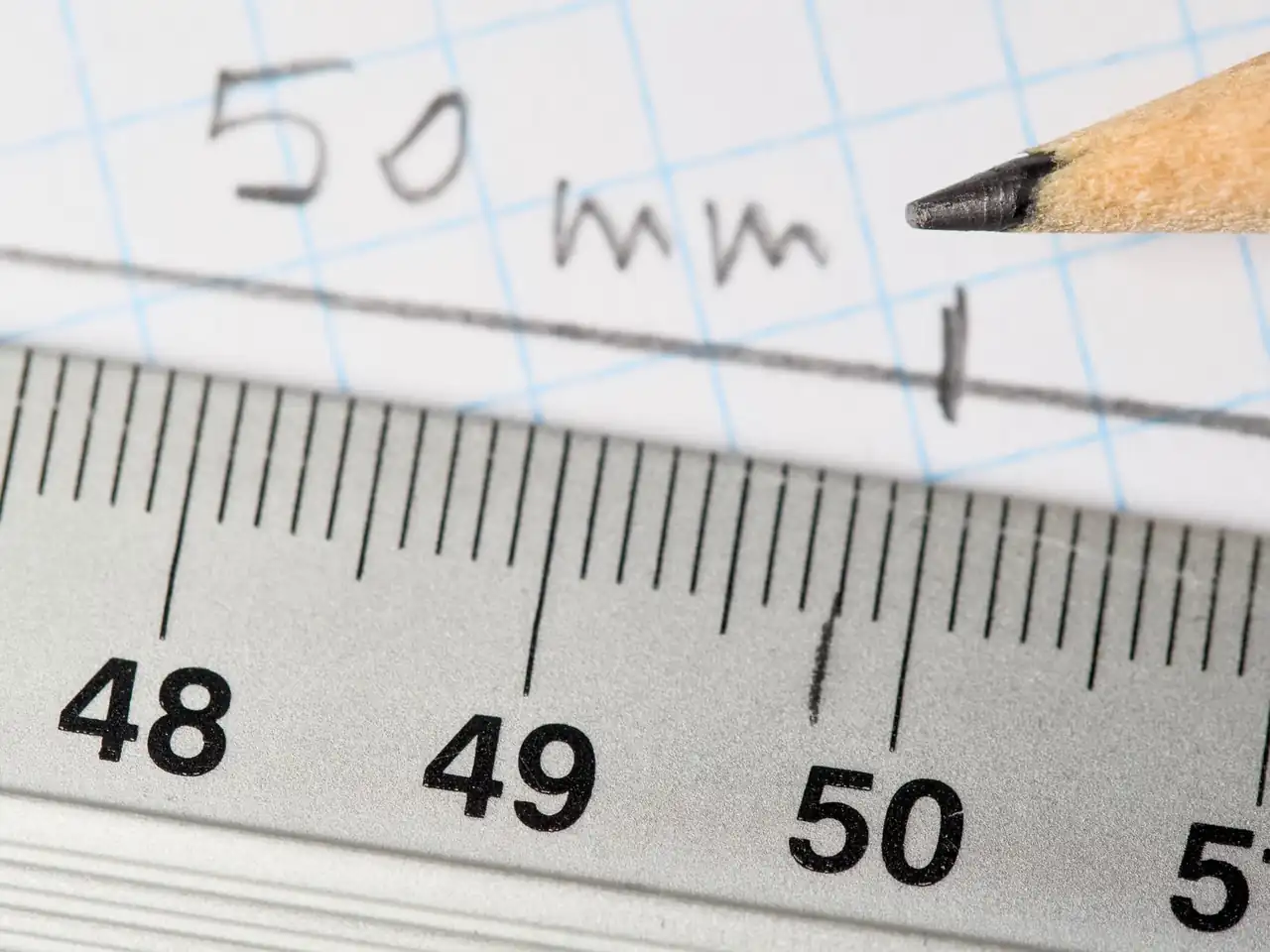
The measurement of the foot in centimeters remains the most reliable reference for getting footwear right, above a usual size that changes depending on brand, last, and country. The actual length of the foot, measured properly and with the right context, reduces returns, rubbing, and blind purchases; it is the most useful basis for translating sizes between systems that do not speak exactly the same language.
In practice, centimeters matter more than it seems. A European 41, a British 8.5, or an American 9.5 do not mean the same thing if the manufacturer cuts the model with a narrow toe box, if the material gives little, or if the foot is wide. That is why measuring well is not a household detail, but the most reliable way to guide fit when buying street, athletic, or children’s footwear.
The foot measurement that really matters
The confusion begins because the number printed on the box does not measure the foot, but a manufacturing reference. Each sizing system was born with different criteria: the European one uses the Paris point, the British one is based on inches, and the American one adds variants between men and women. The result is a fragmented map in which the same length can yield different numbers depending on the country and the brand.
That is why talking about feet in centimeters is more useful than memorizing isolated equivalents. A foot of 24.5 cm may lead to a size 39, 39.5, or 40, depending on the manufacturer and the internal allowance of the shoe. The centimeter measurement does not eliminate variation, but it reduces and organizes it. It is a compass. It does not replace trying the shoe on, but it helps you avoid going into the store or website completely in the dark.
That internal allowance also explains why two models from the same brand can fit differently. A shoe with a wide last allows more room in the forefoot; a boot with a pointed toe concentrates length into less usable volume; a leather shoe may stretch somewhat with use, while one made of rigid synthetic materials keeps more of its original shape. The ideal size is not just length: it is also space, width, and material behavior.
How to measure your foot accurately at home
Home measurement works well if done calmly and without improvising. All you need is a sheet of paper, a well-held pencil, a ruler or measuring tape, and a straight wall. The foot should rest with the heel firmly against the wall, the body upright, and the weight distributed naturally. It is advisable to mark the longest point of the foot, which does not always coincide with the big toe; in many cases the second toe extends a little farther.
Then measure the distance from the edge of the sheet, where the heel rests, to the mark of the longest toe. Record the result in centimeters and repeat with the other foot. You should always use the measurement of the larger foot, because the difference between the two is usually small, but enough to change the fit and avoid uncomfortable pressure on the longer one.
The time of day also matters. In the morning, feet are usually somewhat more compact; at the end of the afternoon or at night, after walking and bearing weight, they expand slightly. That variation may seem minimal, but in snug footwear it can feel like half a size, sometimes more. Measuring at the end of the day offers a more realistic reading of the size the shoe will need to accommodate.
There is one detail that often goes unnoticed: socks. A bare foot is not measured the same as a foot with technical, winter, or padded socks. For sports footwear or everyday use, it makes sense to measure with a type of sock similar to the one that will normally be worn. In sneakers, that decision changes the final feel as much as a few millimeters of difference in the insole.
What each centimeter means in practice
Conversion tables serve as a bridge, not a verdict. In men, a length close to 25.1 cm usually falls around a European 39; 25.4 cm approaches 40; 26.3 cm often hovers around 41; 26.7 cm usually lands at 42; 27.6 cm tends to sit around 43; 28.0 cm comes close to 44; 28.9 cm usually leads to 45; and 30.1 cm can take you to 47. These are useful guidelines, but not a universal guarantee.
For women, a measurement close to 22.9 cm usually fits near a European 36; 23.4 cm is around 36.5; 23.8 cm is close to 37; 24.3 cm to 38; 24.6 cm to 38.5; 25.1 cm to 39; 25.4 cm to 40; 25.8 cm to 40.5; 26.3 cm to 41; and 26.7 cm to 42. The key is to understand that the exact number does not come from chance, but from a relationship between length, sizing system, and internal room in the model.
In children’s footwear, reading the numbers requires even more care because the margin for growth matters more than it does for adults. A foot of 15.7 cm may correspond to a European 25; 17 cm usually brushes 27; 18.4 cm can equal 29; 19.7 cm to 31; 20.4 cm to 32; 21 cm to 33; 22.4 cm to 35; and 24.4 cm can reach 38. For children, shoes should not be bought to last too long, but to follow the foot without deforming it.
The figures are also useful for translating systems. In the United Kingdom, the scales start from a different pattern and the jump between numbers does not match the European one. In the United States, women’s sizes are usually about one and a half sizes higher than men’s for similar lengths, although the real offset depends on the manufacturer. That is why the same length can seem logical in one chart and strange in another.
Conversion between systems and why it is never completely exact
Converting from centimeters to size is an exercise in controlled approximation. The foot does not change, but the environment does: wider lasts, rounded toe boxes, thicker insoles, or less flexible materials alter the result. That is why the chart works as a first reading and the brand as the final adjustment. The equivalence is a still photo; real footwear is a movie.
In running, this variation is even more noticeable. A sports shoe usually requires a bit more room than a dress shoe, especially in the toe area. The foot expands during exercise and needs a small reserve of space to avoid black toenails, sore nails, or pressure on the forefoot. That is why an exact foot length should not always be translated into an exact purchase size.
There are also differences by gender and design. Many men’s models are slightly wider than women’s in the same nominal size, and some women’s brands reduce width without changing the insole length proportionally. This explains why two people with the same foot length may need different sizes in the same European number, or why one specific model fits long and another short within the same product family.
In the case of sneakers, the ideal fit usually leaves between 1 and 1.5 cm of free space at the front. The goal is not to buy something too large, but to reserve room for the natural movement of the toes and the expansion of the foot. That simple rule avoids many of the usual doubts in online shopping, especially when the user only has the measurement in centimeters and not the chance to try the shoe physically.
What changes depending on the last, width, and material
Length is only one part of the equation. There are narrow feet that move around inside a technically correct size and wide feet that do not fit well even if the number seems perfect. In those cases, the problem is not length but width. A shoe can measure correctly and still be wrong because of lateral pressure, especially on the instep or at the base of the toes.
Manufacturers in the United States often indicate widths with letters such as B, D, E, or EE, while in other markets that information is not even shown clearly. In men’s footwear, the average width is usually close to D; in women’s, the average is usually around B. The wider the foot, the more useful it becomes to check that data instead of relying only on the nominal size. A compressed foot is not just uncomfortable: it alters posture, changes the stride, and encourages rubbing and deformation with repeated use.
Material matters too. Leather tends to adapt somewhat over time; canvas gives differently; technical mesh molds quickly; rigid materials, on the other hand, hardly forgive at all. Thus, two pairs with the same number can feel very different after an afternoon of wear. The printed size alone does not explain how the shoe will behave in motion.
This difference is especially noticeable in children’s footwear and in heavily used models. A child who grows quickly needs enough room, but not excessive looseness, because a shoe that is too big can cause tripping and alter the way they walk. In adults, too much size can also be problematic: the heel slips, blisters appear, and stability suffers. Sometimes the mistake is not buying too small, but buying too large to be safe.
A useful guide to reading size charts without falling into traps
Size charts work best when read methodically. First locate the foot measurement in centimeters; then find the corresponding column and cross it with the desired system. If the result falls between two numbers, the sensible thing is to review the intended use of the footwear. For sports and long wear, a little extra room is usually better; for dress shoes, precision matters more than width.
It also helps to be skeptical of the idea that all brands follow the same rule. Some manufacturers size short, others long, and others narrow. That variation is not an isolated flaw, but a market reality. The industry works with different lasts and manufacturing methods that do not always line up to the millimeter. That is why a correct size in one brand may not be correct in another, even if the number is identical.
In online shopping, the product’s own charts are usually more valuable than any generic equivalence. If a specific sneaker offers its own centimeter guide, that reference is usually closer to reality than a universal chart. By contrast, when that information does not exist, the foot measurement becomes the best starting point for choosing cautiously.
There is another little-mentioned issue: size changes between models from the same manufacturer. A runner may wear one size in a training shoe and another in a competition shoe, not because of an error, but because the internal construction changes. The fit sensation can vary by half a size, or even a bit more, because of midsole thickness, insole curvature, or instep rigidity.
Children, growth, and the margin that should not be exceeded
In children’s footwear, the measurement in centimeters becomes especially important because the foot changes quickly. Buying with some margin is logical; buying with excess is not. A shoe that is too big may seem like a way to extend its useful life, but in reality it can make support difficult, encourage rubbing, and cause the child to adopt an unstable stride. Growth needs room, not uncontrolled looseness.
As a general rule, the child needs freedom to move the toes and some room at the front, but not an exaggerated void. That reserve allows for everyday use, small swellings, and wearing socks, but it should not turn the shoe into a boat. In children’s sneakers, stability is as important as size, because the growing foot learns to support itself through the shoe as well.
Charts by centimeters help track this growth with some regularity. A foot that goes from 16.7 cm to 17.2 cm, for example, may seem to advance barely at all, but in practice it can mean the transition between two shoe sizes and the moment to change size. Periodic measurement, done correctly, avoids both premature buying and excessive delay.
In this segment, width and toe-box shape matter even more than they do for adults. Footwear that is too narrow can mark the foot, press the big toe, and cause discomfort. Footwear that is too rigid, on the other hand, leaves little room for natural movement. Length remains the best reference, yes, but always read alongside the actual shape of the foot.
The foot, the afternoon, and the small margin that improves fit
The body changes during the day, and the foot is no exception. After hours of standing, walking, or running, the muscles and soft tissues expand a little. That expansion is small, but enough for a shoe that feels snug in the morning to feel tight at night. That is why experienced salespeople often insist on trying footwear later in the day. The afternoon usually tells the truth that the morning softens.
There is also a practical principle that rarely fails: try both feet, walk for a few minutes, and check whether the heel stays secure. If the heel lifts too much, there is too much space; if the forefoot hits the front, there is not enough room. The toe box should not feel compressed, but neither should it be oversized. The goal is a lively fit, not a suffocating hug or an empty box.
In sports footwear, especially running shoes, a slightly more generous length can be the difference between finishing a run comfortably or with battered toes. The foot widens when running, the muscles work repeatedly, and impact accumulates. That is why the centimeter measurement should be interpreted with some functional spirit, not as a rigid number to be followed to the letter.
The usefulness of this guide lies precisely there: turning a figure into a decision. The centimeter, when read properly, is not only useful for comparing charts; it helps explain why the same number can fit well in a sandal, badly in a boot, and so-so in a technical sneaker. Measuring the foot in centimeters is the first step toward buying with less guesswork and more judgment, which in the end is what separates a comfortable pair from one condemned to the back of the closet.
When a size seems correct but the shoe is not
Some purchases are misleading because of their apparent accuracy. The number matches, the foot goes in, and yet the walking experience is poor. This usually happens when the last squeezes the instep, when the toe narrows too much, or when the shoe’s arch does not follow the natural support. In those cases, length has only solved part of the problem. Real fit depends on the relationship between shape, volume, and the foot’s path.
Use and context also matter. A dress shoe is tolerated one way; a walking or running sneaker another. In sports, the small extra room makes sense because the foot moves, impacts, and changes size with activity. In fashion, by contrast, the margin is usually smaller, though excessive tightness still should not be the norm. The right balance is less striking than a tight fit, but far more sensible.
Underlying all of this is the same idea: the foot measurement in centimeters provides a stable anchor in a market full of differences. From there, each brand, each model, and each activity add layers of fit that can only be resolved with judgment. Those who understand this logic buy better, return less, and walk more comfortably. The number is the beginning; the feel of the fit is the real test.
Medical reference: Foot growth and shoe size, Cleveland Clinic.



How to prevent thigh chafing: causes and real solutions

Women’s running windbreakers: seven jackets and how to choose

Do more workouts get rid of soreness? A guide for runners

Jaén Half Marathon 2026: Record 3,800 Runners Registered

Men’s short running tights: how to choose the right pair

World Triathlon confirms data breach involving medical data

Izan Edo targets podium at Miyazaki World Cup

María Pérez ranks ninth in World Athletics’ 2026 top ten

Dos Santos, Duplantis and Sawe: World Athlete of the Year finalists

San Silvestre Vallecana 2026: 42,000 places, prices and start times

 Races3 months ago
Valencia Half Marathon 2027: date and registration

 Races3 months ago
Valencia Marathon 2026: entry, ballot and course

 Reviews and Comparisons4 months ago
Asics Gel-Roadmiles 3 for men: review and current price

 Reviews and Comparisons4 months ago
Asics Gel Sonoma 8 Gore-Tex: complete analysis for trail and rain

 Sneakers3 months ago
Saucony Endorphin Pro 4: full review and verdict

 News5 months ago
Strava API 2026: what changes for clubs, challenges and runner apps?

 Reviews and Comparisons5 months ago
Nike Alphafly 3: opinions, sensations, and real key points

 Reviews and Comparisons4 months ago
Under Armour running shoes review 2025-2026: models and key features

 Sports Equipment4 months ago
Shoe sizes in cm: a clear guide to getting the right fit for your footwear

 Sneakers3 months ago
Skechers GO RUN Consistent 2.0 analysis: comfort and limits

 News5 months ago
Valencia Marathon 2026 route: key tips to train and run better

 Sneakers4 months ago
Adidas Adizero Boston 13 for men: review and verdict