Sneakers
Shoes for the Camino de Santiago: a guide to getting it right
Real tips for choosing comfortable, breathable, and durable footwear on the Camino de Santiago, without common mistakes.

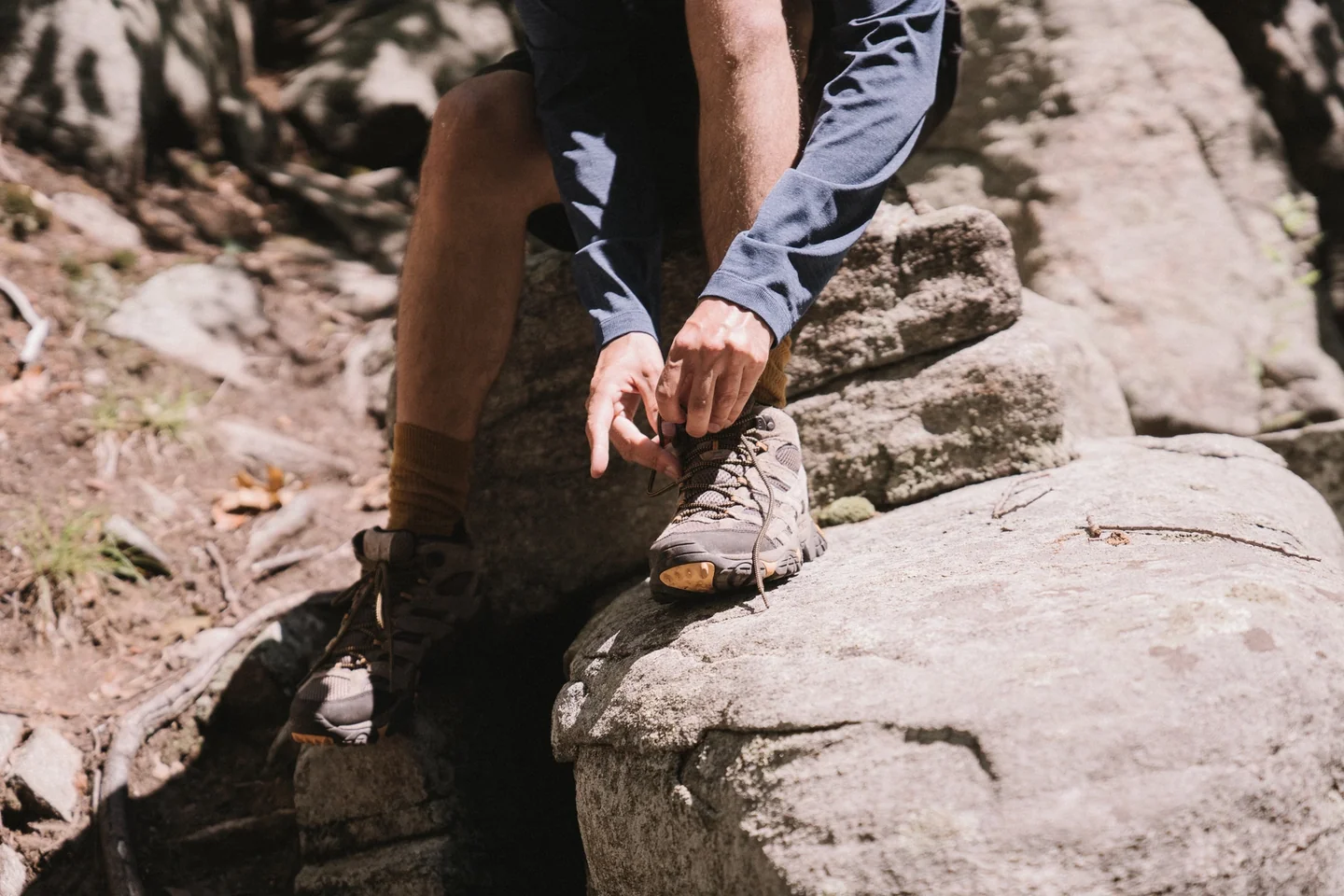
Footwear makes the difference between a manageable stage and an endless day. On the Camino de Santiago, the feet endure hours of repeated impact, changes in terrain, heat, rain, and minimal breaks. That is why choosing the right pair of shoes is not the same as buying trainers for the gym or simply looking for a sturdy boot: fit, ventilation, cushioning and, above all, how the foot responds after many kilometers in a row all matter.
The right decision depends less on the brand than on the route, the time of year, and the way you walk. It is not the same to cover mostly paved sections, as happens on some stages of the Portuguese Way, as it is to move along stony trails or forest tracks on the Primitive Way or the French Way. In practice, the best footwear for the Jacobean route usually sits somewhere between a lightweight trail shoe and a hiking shoe, with a balanced relationship between protection and comfort.
What the foot really needs on the Jacobean route
The foot asks for stability, space, and sweat management. That combination, which seems simple, prevents a large share of the usual discomfort: blisters, black toenails, chafing, and a burning sensation on the sole at the end of the day. Skin softens with heat, sweat and humidity, and when the shoe does not properly ventilate that inner environment, friction multiplies as if the foot were walking inside a small steam chamber.
Cushioning matters too, but softness should not be confused with real comfort. Very plush footwear may feel pleasant during the first few minutes and yet become unstable as the hours go by. On a long route, what matters is a stride that spreads impact without the ankle wobbling or the sole turning into a board. The balance is usually found in medium-profile models, with a sufficiently generous midsole and a base that provides security on descents and uneven ground.
The last is one of the least noticeable and most important details. When the foot swells from heat or the accumulation of kilometers, a narrow toe box becomes a serious problem. By contrast, a slightly roomier front gives the toes space to spread out while walking. That little extra room may seem insignificant in the shop, but by the fifth day it is the difference between moving naturally and starting to walk halfheartedly.
Why trail shoes usually work better than heavy boots
The current trend favors lighter, more flexible footwear. For years, the Camino de Santiago was associated with high, sturdy boots, as if weight were synonymous with protection. The experience of many walkers and the evolution of the market have shifted the pendulum toward trail or lightweight trekking shoes, which protect enough and punish the muscles less. After several days, that savings in grams is noticeable in the calves, hips, and the sole of the foot.
High-cut boots still make sense on very wet terrain, when carrying heavy loads, or for people who need a clear extra level of support, but for many pilgrims they are unnecessary. The Camino mixes asphalt, compacted dirt, loose stone, and urban stretches; in that context, footwear that is too rigid can be like wearing armor to take a long walk through a city: it does provide defense, yes, but it reduces agility and brings fatigue earlier.
The key is versatility. A good shoe for the Jacobean route should roll well over mixed terrain, grip confidently on wet paths, and not turn into an oven in summer. That is why people look for models with moderately lugged soles, breathable uppers, and reinforcements only where they add value. You do not need a pure mountain shoe to reach Santiago; you need one that accompanies the foot for days without making itself too noticeable.
Materials and construction: what really matters
Breathability remains a priority along much of the route. In spring and summer, a technical mesh upper allows heat and sweat to escape more effectively, which is especially useful on long stages and on hot days. Waterproof membranes such as Gore-Tex make sense if frequent rain, mud, or persistent cold are expected, but in warm months they can retain more heat than desired. There is no universal answer; there is a reasoned choice based on the climate.
The sole deserves almost surgical attention. On the Camino, you want a tread that grips dirt and stone but is not excessively aggressive on asphalt, because many urban stretches and secondary roads punish deep lugs heavily. Rubber compounds with a good balance between durability and traction usually perform better than those designed only for technical mountain use. If they also include a stable base, even better: the foot does not only want to stop slipping, it also wants to trust every step.
Another decisive detail is the drop and the walking feel. You do not need to obsess over numbers, but it helps to understand that a very low profile demands more from the calves and soleus, while a higher one offers a gentler transition for many walkers. On the Camino, where repetition rules, a smooth transition helps keep the stride from becoming harsh at the end of the day. Simply put: the less the body has to fight with the footwear, the easier it will be to maintain the pace for weeks.
How to choose according to the route and the season
The French Way does not require exactly the same thing as the Portuguese or the Primitive Way. On the French Way, with long stretches and a wide variety of surfaces, versatile shoes win out, capable of alternating between track, dirt, and village without surprises. On the Portuguese Way, where asphalt plays a larger role in the overall route, a smoother-rolling model with good cushioning under the heel usually works better. On the Primitive Way, which is more demanding and mountainous, the bar for protection and grip rises several notches.
The season completely changes the type of recommendation. In summer, the priority is usually ventilation; in autumn and spring, the balance between breathability and water resistance; in winter, thermal protection and waterproofing gain ground. There is no single ideal shoe for all months because the Camino is not a fixed setting: it changes with the rain, the mud, and the time of day, just as a trail changes color when evening falls.
Physical condition and body weight also play a role. A person carrying more weight or not used to walking many kilometers may benefit from a slightly softer midsole and a more stable structure. Someone with hiking or trail experience, by contrast, may prefer a lighter, more dynamic feel. The same model can be perfect for one walker and harsh or unstable for another. In this area, size and last matter as much as the technology in the spec sheet.
Mistakes that turn a good trip into a collection of blisters
Wearing brand-new shoes on departure is still one of the costliest mistakes. Shoes need breaking in, even if they feel comfortable during the first test. The foot changes how it behaves from the third or fourth day of intensive use, and the material also adapts to the way you walk. Taking shoes that have already been worn, with several walks and at least one longer outing, reduces the likelihood of unpleasant surprises.
Another common mistake is choosing a size that is too tight, thinking that way the foot will be more secure. In practice, the foot swells, the toes hit the front, and the toenail suffers. It is worth leaving a little room at the front and checking the fit with the type of sock that will be used on the route. Nor does it help to have a shoe that pinches over the instep or slips at the heel, two different problems that ultimately produce the same result: friction and fatigue.
Underestimating the weight of the shoe is also expensive. An excessively heavy model penalizes every step. It seems like a tiny difference in the shop, but after 25 or 30 kilometers the conversation changes. The Camino punishes accumulation, not isolated gestures; that is why lightweight footwear, well cushioned and sufficiently durable, often wins by the accumulation of advantages, not by one spectacular virtue.
Socks, insoles, and small allies not to ignore
The right sock can be almost as important as the shoe. Technical models, without irritating seams and with good moisture-wicking capacity, help reduce chafing. Cotton, by contrast, holds sweat and dries slowly, which promotes maceration. On a trip lasting many days, that difference in behavior is noticeable from the first stretch of the morning to the last rest stop.
Insoles can be useful when the fit is not quite perfect or when a more even support is desired. They are not a magic solution, but they are a way to fine-tune the stride. For people with very low arches, sensitive feet, or previous injuries, a well-chosen insole can distribute pressure better and soften problem areas. That said, the shoe-insole combination should be tested before the trip, not during the first stage.
Basic foot care remains just as important as the gear. Short toenails, dry skin at the end of the day, nighttime moisturizing, and early checking of hot spots are simple habits that prevent bigger problems. The Camino rewards those who listen to small signs: a minor discomfort today often becomes a forced stop tomorrow if it is left to grow. The right footwear helps, but it does not do all the work on its own.
Shoe models and families that usually fit well
Light trail shoes are usually the most balanced category. Within that group are models with good cushioning, moderate lugs, and a construction designed for mixed terrain. They usually perform better than pure running shoes, which can sometimes fall short in protection, and than rigid mountain boots, which are too heavy for prolonged daily use. It is an intermediate zone that, when chosen well, fits like a glove.
Some lightweight trekking shoes with good ventilation and stable soles also work well. They are an interesting option for those who prioritize walking rather than running and want a slightly more structured feel. In wet season, waterproof membrane models have their place, especially on northern routes or in cold months; in the middle of summer, however, too much protection can backfire in the form of heat and accumulated sweat.
Well-known outdoor and trail brands have refined their ranges a lot for long distances. Among the families that usually work well are offerings from Adidas Terrex, Salomon, Merrell, Hoka, Asics, New Balance, Mizuno or La Sportiva, each with different nuances in fit and feel. Some prioritize cushioning and others the precision of support; some cradle the heel better and others leave more room in the toe box. There is no universal winner, but there are clearly profiles more suitable for long-distance walking than others.
What to do about rain, mud, and hard asphalt sections
Rain does not always call for a membrane, but it does call for a strategy. If the weather is highly unstable and the ground turns muddy, a shoe with some water protection can save hours of discomfort. However, if the route is going to take place in heat or with strong sun exposure, waterproofing can become a thermal trap. On the Camino, drying your feet well after getting wet is almost as important as avoiding getting them wet in the first place.
Asphalt wears down the foot in a quieter way than stone. It does not hurt immediately, but it gradually wears away the sole of the foot and the shoe. That is why shoes with good shock absorption and a base that does not swallow up impact on every stride are important. Pilgrims often think about mountains or rain, but the most constant enemy is often the straight, long stretch that seems harmless.
When the path mixes surfaces, versatility beats specialization. Footwear that is too aggressive can feel clumsy on pavement; footwear that is too urban falls short on gravel or wet dirt. Balance is the most valuable virtue on this route. As with a well-cut key, it does not need to be spectacular: it only needs to fit the right lock day after day.
What matters most when choosing: comfort, grip, or durability
The top priority is usually comfort, followed by fit and then durability. The order matters. A very durable but uncomfortable shoe may get you through the trip and ruin the experience. On the other hand, a comfortable model that is too fragile also loses meaning if it does not reach the end of the route in good condition. The goal is not to buy the toughest pair in the catalog, but the one that best supports the planned walk.
Grip deserves special attention on descents and wet surfaces. That is where part of the day is decided. A mediocre sole does not always cause a fall, but it does create insecurity and makes the body tense up. That tension accumulates in the shoulders, lower back, and calves. On such a long route, stability is not only a matter of safety; it is also a matter of energy.
Durability, for its part, depends on distance and walking technique. Some walkers wear down the outer edge of the sole quickly, while others wear down the inside because of pronation. Some highly ventilated models offer freshness at the cost of more open fabrics and therefore less resistance. That is a reasonable trade-off if the trip lasts a few weeks, but it is worth accepting it before setting off. What matters is knowing what you are buying: not a perfect object, but a tool with specific priorities.
The criterion that works best in a real purchase
The best choice is almost always the one most honest about the route to be walked. A short summer Camino calls for lightness, freshness, and a reliable sole on mixed stretches. A long route in spring or autumn can better tolerate a bit more protection and, if needed, waterproofing. Someone coming from trail running may feel comfortable in a more technical model; someone who walks more than runs may prefer a gentle trekking shoe, with visible cushioning and a simple fit.
It is better to look at the whole than at the label. The ideal pair is the one that does not force you to think about it every ten minutes, the one that does not pinch going downhill or soak up water like a sponge at the first puddle, the one that lets the foot arrive at the hostel without that electric feeling of fatigue rising from the toes to the knee. On a route where the scenery changes but the motion repeats, the right footwear becomes almost invisible, and that invisibility is precisely its greatest virtue.
The Camino does not reward grand gestures, but rather the sum of prudent decisions. Choosing shoes that fit well, have been tested, and match the season matters more than chasing the fashionable model. In the end, the real surprises usually come from elsewhere: a climb at dawn, a brief shower over the fields, a tired but whole arrival in the Obradoiro square. And there, right then, the true success of the footwear is easy to measure: it allowed you to walk without becoming a story inside your own feet.
Este artículo contiene enlaces de afiliado: si compras a través de ellos, se genera una pequeña comisión sin coste adicional para ti. Más información.



How to prevent thigh chafing: causes and real solutions

Women’s running windbreakers: seven jackets and how to choose

Do more workouts get rid of soreness? A guide for runners

Jaén Half Marathon 2026: Record 3,800 Runners Registered

Men’s short running tights: how to choose the right pair

World Triathlon confirms data breach involving medical data

Izan Edo targets podium at Miyazaki World Cup

María Pérez ranks ninth in World Athletics’ 2026 top ten

Dos Santos, Duplantis and Sawe: World Athlete of the Year finalists

San Silvestre Vallecana 2026: 42,000 places, prices and start times

 Races4 months ago
Valencia Half Marathon 2027: date and registration

 Races4 months ago
Valencia Marathon 2026: entry, ballot and course

 Reviews and Comparisons4 months ago
Asics Gel-Roadmiles 3 for men: review and current price

 Reviews and Comparisons4 months ago
Asics Gel Sonoma 8 Gore-Tex: complete analysis for trail and rain

 Sneakers4 months ago
Saucony Endorphin Pro 4: full review and verdict

 News5 months ago
Strava API 2026: what changes for clubs, challenges and runner apps?

 Reviews and Comparisons5 months ago
Nike Alphafly 3: opinions, sensations, and real key points

 Reviews and Comparisons4 months ago
Under Armour running shoes review 2025-2026: models and key features

 Sports Equipment4 months ago
Shoe sizes in cm: a clear guide to getting the right fit for your footwear

 Sneakers3 months ago
Skechers GO RUN Consistent 2.0 analysis: comfort and limits

 News5 months ago
Valencia Marathon 2026 route: key tips to train and run better

 Sneakers4 months ago
Adidas Adizero Boston 13 for men: review and verdict