Training
Strength for runners in summer: keep muscle without really wearing yourself out
Heat doesn’t force you to throw in the towel: adjust the work and take advantage of summer to build a stronger foundation.

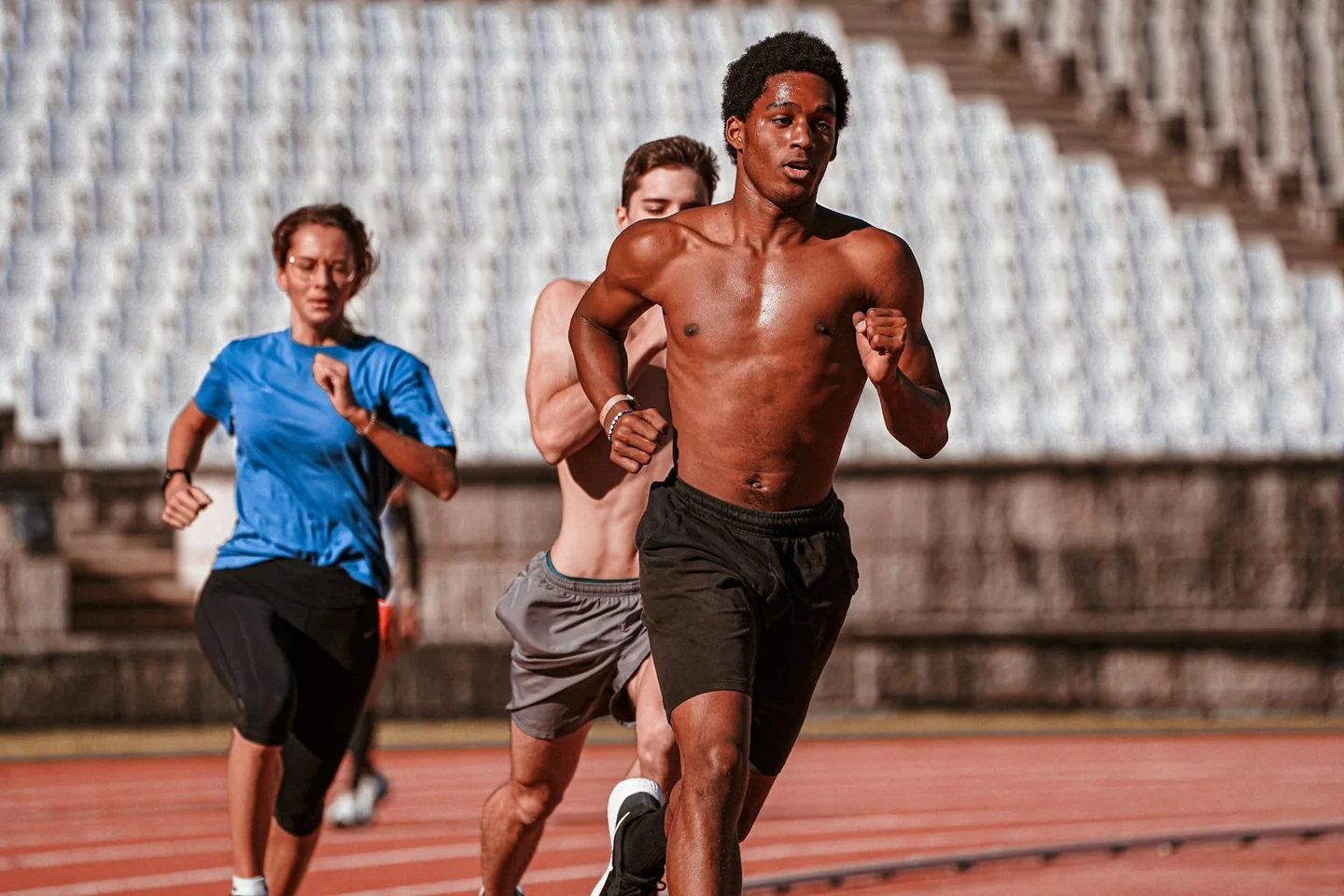
Imagen: RUN 4 FFWPU / Pexels
Summer doesn’t just test your pace. It also lays bare the underlying shortcomings that go more unnoticed for the rest of the year. With high temperatures, more humidity, and poorer recovery between sessions, strength for running in summer stops being a complement and becomes a central piece for maintaining fitness without punishing the body.
The logic is simple: when the asphalt burns and your heart rate rises sooner than usual, the body tolerates technical mistakes, long strides, and abrupt changes in load much worse. That’s why, at this time of year, strengthening the legs, hips, and trunk offers more room for safety and also more efficiency. It’s not about training harder, but about training with a different intention.
Heat changes the rules of the game
Training in July or August is not the same as doing it in April or November. The body works under extra pressure: it dissipates heat less effectively, dehydrates more easily, and needs more energy to keep body temperature stable. That context explains why many runners feel that the same easy run costs more, even if the watch shows a slower pace.
In that scenario, well-planned strength acts like insurance. A body with active glutes, a stable core, and resilient ankles handles effort fluctuations better, controls posture more effectively, and distributes load in a smarter way. The improvement is not always visible in a single session, but it shows across the whole summer: less fragility, less mechanical fatigue, and a more contained stride when tiredness starts to bite.
There’s also a matter of timing. Summer usually opens an ideal window to adjust training between seasons, especially for those coming off a spring with races or preparing for a demanding autumn. That in-between phase allows you to build a stronger base without the pressure of chasing immediate times. It’s the moment to add without drama, like reinforcing the foundations before adding another floor.
The strength that helps runners most is not always the heaviest
In running, strength doesn’t necessarily mean lifting heavy loads or spending hours in the weight room. It means, above all, that the body is able to sustain the repetition of the movement with less energy leakage. Often, runners break down not because they lack lung capacity, but because a muscle chain arrives late, locks up, or doesn’t stabilize the foot strike properly.
That’s why, during the warmer months, it makes sense to prioritize functional strength: controlled squats, lunges, unilateral work, calf raises, glute bridges, planks, and stability exercises. They’re simple movements, but very effective for running economy, because they teach the body to absorb impact and return it with more order. In plain language: less noise, more efficiency.
Summer also invites a less aggressive, more consistent approach. There’s no need to chase failure or empty yourself out. It’s better to leave one or two reps in reserve, take care of technique, and finish each session with the feeling that you’ve activated the body, not punished it. That’s a decisive difference when the thermometer already forces you to negotiate with every effort.
Why strength work becomes even more useful in the heat
The runner who trains in the heat usually suffers two kinds of decline at once: one cardiorespiratory and one mechanical. The first is obvious, because heart rate rises sooner and pace becomes harder to hold. The second is quieter, but just as important: with thermal fatigue, technique loosens, the pelvis drops, the arm swing loses order, and ground contact lasts too long.
That’s where strength comes in. Better-prepared muscles make it possible to maintain posture when energy drops. The glutes stabilize the hips, the core keeps the trunk from collapsing, the hamstrings help in the propulsion phase, and the calves help respond with more elasticity. That sum, invisible at first glance, makes a difference when the session runs longer than expected or when the heat turns an easy run into a kind of constant negotiation.
On top of that, strength work brings an advantage that becomes even more valuable in summer: it reduces the cost of each stride. If the movement is more efficient, the runner needs less energy to move forward. And when the body is already spending part of its resources on cooling itself down, every bit of savings matters. It’s like driving with a half-full tank on a long road with no shade.
Which exercises work best in summer
The selection should be practical, safe, and not too cumbersome. Summer is not the time to complicate things with endless routines or exercises that require too much technique if there isn’t a solid base. The sensible thing is to go for movements that can be done at home, in a park, in a hotel room, or in a small gym area.
Squats help load the lower body with purpose; lunges correct imbalances between legs; glute bridges wake up an area that often switches off in people who sit too much; front and side planks work the stability of the trunk; calf raises strengthen the ankle and foot; and gentle jumps or short strides add reactivity without too much impact. The key is not to do a lot, but to do it well.
Unilateral work also deserves attention, because running is a succession of single-leg supports. Exercises that force you to stabilize on one leg while the other moves reproduce the reality of the movement better. That detail, seemingly minor, has a powerful effect: it teaches the body not to collapse when fatigue throws coordination off.
How to fit strength in without breaking the week
The best plan is the one that doesn’t get in the way of the rest of the training. In summer, when recovery gets slower, strength usually works better in short, repeated doses than in heavy, sporadic blocks. Two sessions a week can already provide a very valuable stimulus for most runners, as long as consistency is maintained.
A short 20- to 30-minute session can be enough if the content is good. Ideally, it should be placed on easy run days or separated from the harder sessions. If it happens to fall on a day of extreme heat, it’s better to cut volume than to force it. The priority in summer is to accumulate quality without sinking recovery, because the body is already working overtime to dissipate heat.
It also helps to think of strength as a medium-term investment, not a quick fix. A runner who reaches August with better muscle tone not only runs better that month; they’ll probably handle autumn better, adapt to pace changes sooner, and cope with the increase in mileage when races return. Summer, used well, doesn’t take away: it prepares.
The gym isn’t mandatory, but consistency is
Some runners feel more comfortable in the gym and others prefer not to set foot in one. Neither option is a problem if the goal is clear. Strength for running in summer can be built with bodyweight, resistance bands, low boxes, stairs, short hills, or simple machines. Equipment helps, but it isn’t essential.
What matters is respecting a basic idea: the stimulus must be enough to trigger adaptation, but not so much that it leaves the legs destroyed the next day. In a hot climate, the margin between useful work and useless work gets narrower. If the body ends up too beaten up, the next day’s run loses quality or turns into a dragged-out formality.
It’s also worth paying attention to the order of loads. A heavy strength workout right before a long run or a speed session can alter mechanics and increase the risk of overload. That’s why it makes more sense to place that work around easy runs or on days clearly separated from quality sessions. Summer appreciates restraint.
Technique is trained when it’s hot too
One of the biggest summer mistakes is confusing slowing down with stopping care for form. The reality is the opposite: when the body feels the heat, technique needs more attention than ever. A clean stride, a stable cadence, and an upright posture can do more for performance than pushing a few seconds per kilometer harder.
Strength helps precisely with that. A stable trunk keeps the run from falling apart, a firm hip makes it easier for the knee not to cave inward, and active feet improve ground contact. Technique is not decoration; it’s the way to run with less wear and tear. And in August, wear and tear always tries to collect its toll.
That’s why short technique drills, moderate strides, and gentle hills make sense, as long as they’re done with judgment. On short uphill sections, for example, the body learns to push better without the punishment of fast flat-ground impact. On gentle downhills, it learns to coordinate and control braking. They’re small nuances that, added together, build a more complete runner.
Signs it’s better to ease off early
Heat doesn’t always warn you in the same way. Sometimes it shows up as a sudden drop in energy; other times, as a heart rate that shoots up for no apparent reason; and other times, as a feeling of clumsiness that turns any movement into hard work. In those cases, pushing on usually isn’t a brilliant idea. The body is already saying enough.
It’s also worth watching for dehydration, repeated cramps, dizziness, and the feeling of very hot skin with unusual sweating. In those situations, strength stops being a stimulus for improvement and becomes an added risk if you try to keep the planned session. Reading the body matters more than the paper plan, especially in the most stifling weeks.
That adjustment doesn’t mean losing fitness. On the contrary, it helps preserve it. A runner who knows how to cut back in time usually reaches the end of summer better than someone who keeps pushing out of pride and ends up piling on fatigue, bad feelings, or small niggles that drag on for weeks. Useful discipline isn’t the one that always pushes harder, but the one that knows when to turn the wheel.
Summer as a phase of quiet building
In a running season, summer often gets a bad reputation because it doesn’t offer flashy times or heroic sessions. Yet it’s precisely that discreet character that gives it value. While other parts of the year focus on racing, this stage allows you to reinforce the structures that later support performance. Legs don’t get stronger by accident; they need repetition, rest, and a reasonable load.
That quiet building shows up months later. It shows when a demanding race leaves fewer aftereffects, when the final part of a long run doesn’t turn into a collapse, and when technique stays firmer at kilometer 15 than at kilometer 5. Improvement doesn’t always arrive with a bang. Sometimes it comes in slowly, like light moving through a half-open blind.
That’s why thinking of strength only as a winter complement is an incomplete view. In the hot months, that work takes on a strategic role: it protects, organizes, and prepares. And in a sport as dependent on repeated impact as running, taking care of structure is also a way of taking care of future speed.
The balance between caution and ambition makes the difference
The summer runner doesn’t need to become a gym athlete or give up running just because they sweat more. They need a smarter view of what their body can tolerate and of what the heat is taking away. That’s where strength fits in: as a lever to hold fitness together when the environment isn’t helping.
The most sensible combination is usually simple: more controlled runs, well-chosen strength work, some technical drills, and serious attention to hydration and rest. That mix doesn’t promise miracles, but it does promise something more valuable: continuity. And in running, especially in summer, continuity matters more than any spectacular gesture.
One final, very down-to-earth but useful idea remains: heat doesn’t prevent improvement; it forces you to improve in a different way. Whoever understands that stops fighting the season and starts using it. There, in that shift in perspective, strength for running in summer stops being an uncomfortable obligation and becomes a background tool, almost a craft, for arriving more intact at the next block of the season.
Este artículo contiene enlaces de afiliado: si compras a través de ellos, se genera una pequeña comisión sin coste adicional para ti. Más información.



How to prevent thigh chafing: causes and real solutions

Women’s running windbreakers: seven jackets and how to choose

Do more workouts get rid of soreness? A guide for runners

Jaén Half Marathon 2026: Record 3,800 Runners Registered

Men’s short running tights: how to choose the right pair

World Triathlon confirms data breach involving medical data

Izan Edo targets podium at Miyazaki World Cup

María Pérez ranks ninth in World Athletics’ 2026 top ten

Dos Santos, Duplantis and Sawe: World Athlete of the Year finalists

San Silvestre Vallecana 2026: 42,000 places, prices and start times

 Races3 months ago
Valencia Half Marathon 2027: date and registration

 Races3 months ago
Valencia Marathon 2026: entry, ballot and course

 Reviews and Comparisons4 months ago
Asics Gel-Roadmiles 3 for men: review and current price

 Reviews and Comparisons4 months ago
Asics Gel Sonoma 8 Gore-Tex: complete analysis for trail and rain

 Sneakers3 months ago
Saucony Endorphin Pro 4: full review and verdict

 News5 months ago
Strava API 2026: what changes for clubs, challenges and runner apps?

 Reviews and Comparisons5 months ago
Nike Alphafly 3: opinions, sensations, and real key points

 Reviews and Comparisons4 months ago
Under Armour running shoes review 2025-2026: models and key features

 Sports Equipment4 months ago
Shoe sizes in cm: a clear guide to getting the right fit for your footwear

 Sneakers3 months ago
Skechers GO RUN Consistent 2.0 analysis: comfort and limits

 News5 months ago
Valencia Marathon 2026 route: key tips to train and run better

 Sneakers4 months ago
Adidas Adizero Boston 13 for men: review and verdict