Training
Running technique in summer: efficient stride with real heat now
Heat alters your stride and forces you to fine-tune posture, pace, and exercises in order to run more efficiently and with less risk.

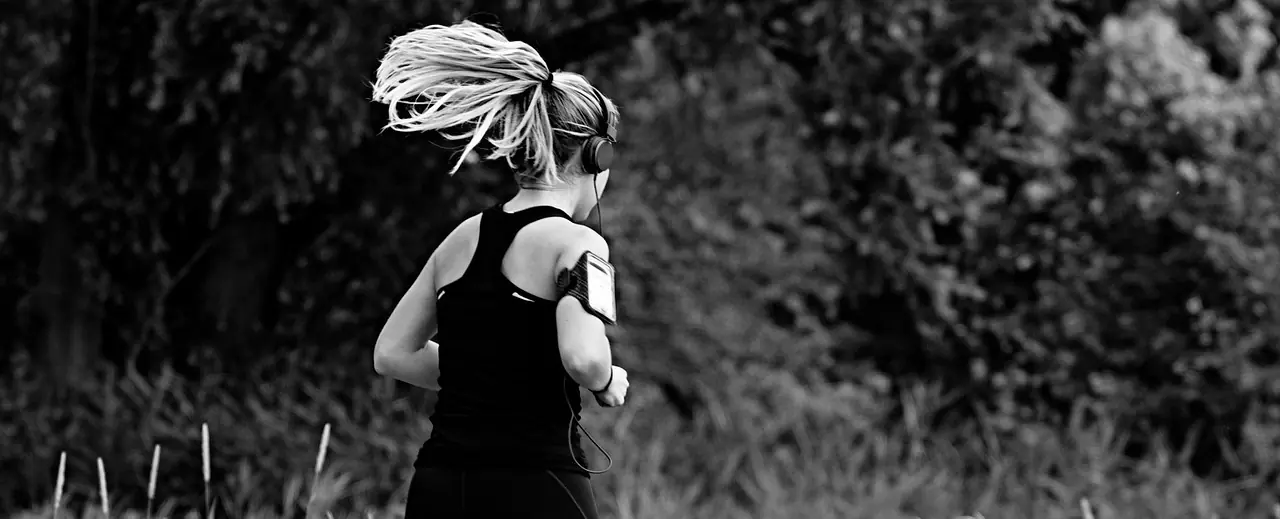
Imagen: MabelAmber / Pixabay
Summer changes the way you run. The asphalt gives back more heat, the pulse speeds up sooner, and the stride loses its natural feel when the body tries to shed temperature at the same time as it moves forward. In that context, technique is not a decorative part of training: it’s a tool for running with less effort, protecting the joints, and keeping a stable mechanics when the thermometer climbs.
The key is not doing more repetitions or forcing flashy movements. In the warmer months, it makes sense to prioritize short, controlled movements with good transfer to real running, especially at the start of the session or at the end of easy runs. Running technique in summer works better when it’s integrated with purpose, without turning the work into an artificial choreography that adds useless fatigue.
Why heat alters the stride
When the temperature rises, the body splits its resources between running and cooling itself down. Part of the blood is diverted toward the skin to promote sweating and heat loss, which reduces the margin available to hold high paces. The result is felt right away: the stride shortens, the torso tends to collapse, and heart rate shoots up sooner than usual.
That change is not just a feeling. In hot and humid conditions, running economy gets worse because the body spends more energy for the same speed. That’s why a pace that felt comfortable in April can feel heavy in July. The runner thinks they’re going slower, but in reality they’re paying a physiological extra cost that shows up in every footstrike, every arm swing, and every breath.
That’s where technique comes in. A more orderly movement reduces unnecessary oscillations, helps keep the center of gravity stable, and prevents the stride from becoming a succession of harsh impacts. In summer, running well is more about holding form than chasing pace. That difference, though it may seem subtle, separates a useful workout from a session that only leaves you tired.
What really changes in a session with heat
Heat punishes fine coordination above all. When the body gets tired, shoulders rise, arms stiffen, impact becomes excessive, and the footstrike loses elasticity. All of that multiplies the cost of every kilometer. It’s not a problem exclusive to beginners; it also affects experienced runners, especially in intervals, progression runs, or hill work if intensity is overdone.
The good news is that technique can be trained without turning every session into an exam. In summer, the most useful stimuli are the short ones that improve posture, cadence, and ankle reactivity, rather than long blocks with a high lactate demand. The goal is to run looser, not tighter. When the movement is simplified, breathing usually settles better and the thermal sensation is tolerated with less wear.
Perception of effort also changes. In the heat, the same pace demands more. That’s why it’s advisable to measure technical work by execution quality rather than by the stopwatch. A 30- or 40-meter straight done well gives more than a succession of poorly coordinated meters. Summer rewards precision and punishes rushing.
The exercises that work best at this time of year
Not every exercise works the same when the sun is beating down. The most useful ones are those that activate the ankle, hip, and trunk, and those that prepare the body for a quick but controlled stride. Skipping, butt kicks, lateral movements, reactive ankle drills, and progressive strides remain classics for a simple reason: they sharpen mechanics without demanding disproportionate fatigue.
Skipping, done with lively cadence and without exaggerated bounce, helps lift the knees and improve frequency. Butt kicks, when done properly, remind you of the importance of leg recovery. Straight-leg bounds, or strides with extended legs, wake up propulsion and hip mobility. Wall drills, with support against a wall, are useful for checking posture and torso lean before running. They’re simple exercises, but they correct habits that easily get messy in summer.
It’s also worth adding short strides at 80% or 90%, not as a display of speed, but as a bridge between training movement and real running. That transfer matters more than the exercise looking spectacular. On moderately hot days, just a few well-executed repetitions are enough to maintain coordination without emptying the runner before the main block.
When to fit them into the week
The best moment depends on the type of session, not on a fixed recipe. On a day with intervals or fartlek, technique fits into the specific part of the warm-up, when the body is already active but still fresh. Ten or fifteen minutes are usually enough to wake up the muscles, fine-tune posture, and reach the main workout with a sense of control. If the session is very demanding, there’s no need to turn the technical block into a long class; just stimulate what’s necessary.
On easy-run days, the logic changes. After running at a comfortable pace, technical work can be done more calmly and with a bit more volume, because the goal is no longer to prepare for an intense effort but to consolidate movement patterns. That format is especially valuable in summer, when many runners use easy sessions to add quality without adding too much thermal stress.
Distribution also depends on the time chosen. Early in the morning, the body usually responds better and tolerates more coordination work. At the end of the day, when the heat starts to drop, strides and technique drills transfer better than at midday. Between 10:00 and 18:00, except in very favorable settings, the safety margin is smaller and mechanics break down sooner.
How to do them without losing effectiveness
In running technique, less is more when the weather is harsh. The exercises should be brief, clean, and with a sense of control. A sequence of 30 or 40 meters per exercise, followed by a 30- or 40-meter stride, is usually enough to achieve activation and transfer. If the sequence goes on too long, the movement gets messy and the body enters a zone of fatigue that doesn’t teach as much anymore.
Execution matters more than variety. Knee lift without tension in the shoulders, quick support without excessive heel striking, stable torso, and eyes forward: small details that, together, change the quality of movement. Good technique looks like a well-oiled mechanism; it doesn’t draw attention, but it makes everything flow with less noise and less wear.
You also have to respect the surface. In summer, grass, tartan, or a compact dirt path are usually better allies than hot asphalt. Softer ground cushions, encourages a finer footstrike, and reduces the feeling of impact. It’s not about seeking unstable terrain for the sake of it, but about choosing an environment that favors coordination and not the constant fight with the heat reflected by the road.
Useful technique doesn’t always look spectacular
One of the most common mistakes is confusing a flashy movement with an effective one. There are runners who lift their knees too much, exaggerate the arm swing, or turn skipping into a vertical jump with no forward motion. That may give the impression of intensity, but it doesn’t always improve running. In summer, with more environmental fatigue, those excesses usually punish even more.
The useful stride is the one that keeps ground contact brief, a torso slightly inclined from the ankles, and an arm swing that helps without tensing the upper body. Summer invites simplification. The less mechanical noise there is, the better pace is held in the heat. That economy shows up in breathing, cadence, and the ability to finish the session feeling good.
There’s another important nuance: technique isn’t corrected only with isolated drills. It also improves by running with judgment, by not starting too fast, by choosing the right hours, and by hydrating properly. An efficient stride is the result of many small decisions. In the warmer months, each one weighs more than it seems.
The role of strength and mobility
Without strength there is no solid technique. Summer can be a good window to strengthen glutes, calves, hips, and core with short general-strength sessions. You don’t need complex loads to notice benefits; it’s enough to maintain a base that supports posture and prevents the torso from falling apart when fatigue rises. A runner with a stable core usually keeps alignment better in the last minutes of a hot session.
Mobility also matters. Stiff ankles, locked hips, or a lack of extension in the front of the body limit the movement and force compensations. A few minutes of joint mobility before technical drills can make the difference between a clumsy movement and a smoother run. In summer, the apparent elasticity of the muscle does not replace real mobility.
This pairing, strength and mobility, shouldn’t be seen as a decorative add-on. When the heat hits hard, it’s precisely the structure that holds efficiency together. That’s why runners who use summer to sharpen these foundations often return in autumn with a more stable mechanics and less tendency toward overload.
Hydration, heat, and movement: an inseparable relationship
Technique gets worse when the body dehydrates. Fluid loss affects thermoregulation, increases perceived effort, and can alter coordination. The runner who starts drying out on the inside not only performs worse; they also move worse. The stride becomes less elastic, ground contact gets harsher, and concentration drops.
That’s why in summer hydration is part of technique, even if you can’t see it. Drinking before, during, and after long or demanding sessions helps preserve movement. In short workouts, it may not be necessary to carry water, but it is necessary to arrive well hydrated. The loss of mechanical fluidity usually starts long before the clear feeling of thirst appears.
In races or longer runs, the heat of the Valencian Community, with high humidity on many days, demands even more caution. Mineral salts and isotonic drinks can be useful in prolonged efforts, because sweating doesn’t just mean losing water. When internal balance is altered, mechanics suffer immediately, even if the clock keeps showing the same pace.
Signs that technique is breaking down
There are clear signs that the movement is no longer being held together well. The shoulders start to rise, the arm swing crosses too much in front of the body, the hips drop, and the feet hit harder than normal. Sometimes the runner thinks they’re just tired, but the real problem is that form is falling apart. In summer, it’s worth spotting that moment early, because pushing on blindly only adds wear.
It also helps to pay attention to breathing. If the rhythm becomes abrupt and the cadence gets messy, technique is probably giving way. There’s no need to dramatize: just slow the pace by a few seconds, regain composure, and keep going. The intelligence of summer lies in adjusting before breaking. That small concession usually saves the workout.
Another useful indicator is the feeling of impact. When the footstrike becomes heavy, the session stops feeling elastic and starts to feel like a succession of blows, something isn’t right. At that point, it’s no longer about adding more drills or more speed. It’s about going back to softness, economy, and energy conservation.
Why summer can improve mechanics if it’s used well
When approached well, summer is not just a season of survival; it can also be a stage of building. By easing off a little on the obsession with pace, many runners are forced to listen more to their bodies. That listening improves awareness of footstrike, cadence, and posture. By running less focused on the stopwatch, there’s room to train the movement more calmly.
In addition, the conditions force better choices. Shorter sessions, kinder surfaces, complementary work, and sensible schedules create an environment where technique has more space. It’s not unusual that, after several weeks of well-dosed work, the runner notices a lighter stride when returning to milder temperatures. The improvement doesn’t come by magic, but through the accumulation of small adjustments.
That is, in the end, the value of summer for someone who runs regularly: it teaches you to give up haste and organize movement. Running technique becomes more visible when the body suffers. And once it becomes visible, it can also be corrected more precisely.
A season that rewards consistency and punishes excess
Summer does not forgive improvisation. The combination of heat, humidity, and fatigue forces you to take care of every detail: the time you go out, the clothing, hydration, intensity, and the way you move. Within that framework, running technique takes on a leading role because it helps you run with less effort and more control, just when the environment invites movement to become disordered.
Sticking only to the idea of doing drills would fall short. Real improvement appears when technique is mixed with a sensible reading of the weather and physical condition. The runner who adjusts stride, pace, and load enters into a smarter relationship with summer. And that relationship, discreet but decisive, is usually felt much later, when the first autumn races arrive.
In practice, the best image is not the runner who challenges the heat as if nothing were happening, but the one who keeps form, protects the body, and turns every outing into a lesson in economy. That’s the difference between piling up kilometers and building a more refined running base. Summer, when worked well, leaves a silent but powerful mark.



How to prevent thigh chafing: causes and real solutions

Women’s running windbreakers: seven jackets and how to choose

Do more workouts get rid of soreness? A guide for runners

Jaén Half Marathon 2026: Record 3,800 Runners Registered

Men’s short running tights: how to choose the right pair

World Triathlon confirms data breach involving medical data

Izan Edo targets podium at Miyazaki World Cup

María Pérez ranks ninth in World Athletics’ 2026 top ten

Dos Santos, Duplantis and Sawe: World Athlete of the Year finalists

San Silvestre Vallecana 2026: 42,000 places, prices and start times

 Races3 months ago
Valencia Half Marathon 2027: date and registration

 Races3 months ago
Valencia Marathon 2026: entry, ballot and course

 Reviews and Comparisons4 months ago
Asics Gel-Roadmiles 3 for men: review and current price

 Reviews and Comparisons4 months ago
Asics Gel Sonoma 8 Gore-Tex: complete analysis for trail and rain

 Sneakers3 months ago
Saucony Endorphin Pro 4: full review and verdict

 News5 months ago
Strava API 2026: what changes for clubs, challenges and runner apps?

 Reviews and Comparisons5 months ago
Nike Alphafly 3: opinions, sensations, and real key points

 Reviews and Comparisons4 months ago
Under Armour running shoes review 2025-2026: models and key features

 Sports Equipment4 months ago
Shoe sizes in cm: a clear guide to getting the right fit for your footwear

 Sneakers3 months ago
Skechers GO RUN Consistent 2.0 analysis: comfort and limits

 News5 months ago
Valencia Marathon 2026 route: key tips to train and run better

 Sneakers4 months ago
Adidas Adizero Boston 13 for men: review and verdict