Training
Glute Stretching: Techniques and Mistakes to Avoid While Running
Keys to release tension, gain hip mobility, and reduce discomfort while running with well-executed stretches.

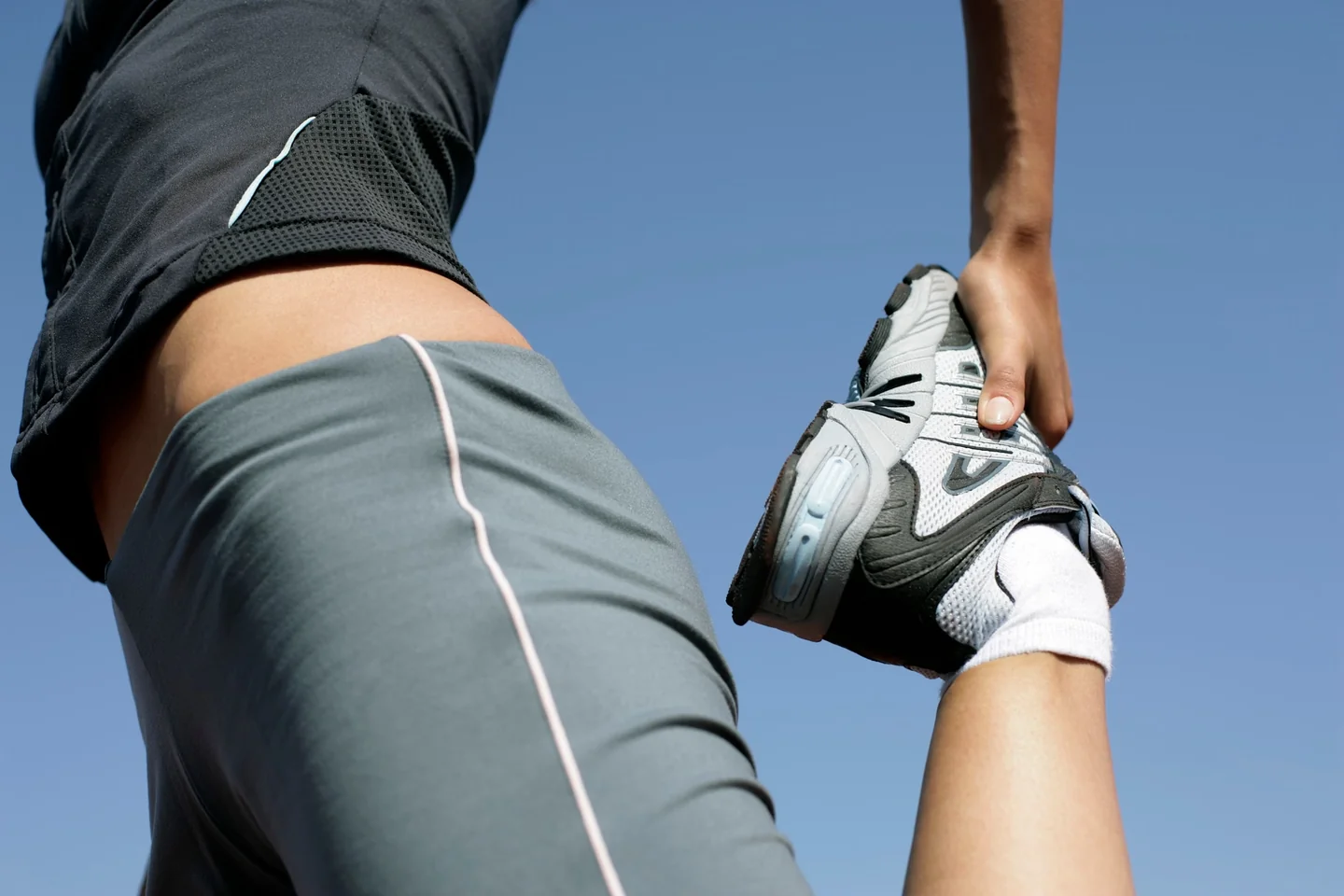
Tight glutes do more than just load the stride: they also alter hip mechanics, pull on the lower back, and can end up taking a toll on the knee. In runners, that stiffness usually appears after many hours sitting, intense interval sessions, or long runs where technique starts to fall apart. Stretching the glute thoughtfully is not a decorative gesture; it is a way of restoring useful length to a muscle group that works as both stabilizer and engine at the same time.
The problem is usually not the stretch itself, but doing it too late, badly, or with an overly simplistic idea of what is happening at the hip. The gluteus maximus drives backward with each push-off; the middle and smaller gluteal muscles support the pelvis, control the body’s drop to one side, and help the knee track more cleanly. When this area tightens up, the sensation can travel into the piriformis, the lower back, or the outer thigh. That is why it is worth understanding what you are trying to achieve when stretching the glute and when that gesture makes sense within a running routine.
What role do the glutes play in running
The gluteus maximus is one of the runner’s main engines, because it takes part in hip extension, the movement that propels the body forward. Without that drive, the stride becomes shorter, heavier, and more dependent on other muscle groups that end up being overloaded. The gluteus medius and minimus, meanwhile, act as silent guardians: they stabilize the pelvis and help each support phase stay more balanced, which is key when the terrain changes, climbs, or becomes uneven.
When those muscles do not have adequate mobility, the body compensates. Compensation is the favorite language of running aches: the lower back works overtime, the hamstrings pull where they should not, and the knee starts absorbing forces that should be better distributed. You do not need a major injury to notice the effect; sometimes a feeling of tightness when climbing stairs, a dull pinch when getting up from a chair, or a persistent discomfort after running is enough.
The gluteal muscles also respond to a daily life that is not very kind to them. Spending hours sitting shortens and stiffens the posterior chain, reduces muscle activation, and leaves the hip like a spring half-cocked. That contrast between sedentary habits and repeated effort explains why many runners feel their glutes like a stone, even when their aerobic training is going well. The body runs, yes, but not always freely.
When it is worth stretching and when it is better to stop
Normal muscular stiffness is not the same as an injury. A feeling of load, tightness, or fatigue in the glutes after a demanding session is expected, especially if there were hills, pace changes, or strength exercises. In that context, gentle stretching can help restore mobility and calm things down. The sensible goal is to find a gradual tension, never a sharp pain or an alarm that forces you to stop the movement.
The warning sign appears when discomfort clearly radiates, persists at rest, or shows up together with weakness, tingling, or pain traveling down the leg. At that point, we are no longer talking about a simple overload. It is also wise to be suspicious of discomfort that gets worse when bending the trunk, sitting for long periods, or finishing each run with a kind of hip lock. In those cases, aggressive stretching does not fix anything and may worsen irritation.
The practical difference is simple: a tight muscle accepts movement; an injured area rejects it. If the gesture feels fluid after a few seconds and breathing helps release it, that is usually a good sign. If, on the other hand, the body resists, contracts, or triggers pain, the problem is not lack of stretching but tissue tolerance. In running, that distinction matters more than it seems, because it prevents a useful routine from becoming a pointless battle with the body.
How to perform a glute stretch with good technique
The quality of the movement matters more than the intensity. For a stretch to do its job, the hip has to be positioned carefully, breathing must support it, and the back should stay long, without collapsing or over-arching. The goal is not to fold like a hinge, but to create space around the hip and let the muscle yield gradually.
In practice, that means entering the position slowly, looking for moderate tension, and holding it for 20 to 30 seconds instead of bouncing. Breathing through the nose, exhaling slowly, and relaxing the jaw helps more than it seems. The body interprets short, rapid breathing as a threat signal; by contrast, a gentle exhale encourages the tissue to stop protecting itself so much. That seemingly small difference often separates a useful stretch from a gesture that merely decorates the routine.
It is also worth remembering that the hip does not work alone. Knee, ankle, pelvis, and lower back form a chain. If one of those pieces is out of place, the stretch loses effectiveness. That is why pelvic position and spinal neutrality are just as important as the crossed leg. In stiff runners, forcing range only makes tension move from one place to another, like a wave changing coastlines without disappearing.
The figure-four pose, one of the most useful for runners
The figure-four is one of the most rewarding stretches for the gluteus maximus and piriformis. It can be done lying down, seated, or standing, and that versatility makes it a very practical tool after training or on recovery days. In the lying version, the ankle rests on the opposite knee and the supporting leg is gently brought toward the torso. In the standing version, balance adds a small stability challenge that engages more of the core and the supporting leg.
The great virtue of this position is that it allows you to fine-tune intensity very well. A runner with limited mobility can stay in a gentle, almost floating version, while someone with more flexibility can move a bit deeper without losing control. That adaptability makes it especially valuable for mixed groups, from someone who just wants to loosen up after 10 kilometers to someone carrying weeks of overload from too much volume.
The most common mistake is pushing the knee outward or pulling hard on the opposite leg in search of a quick sensation. That effort usually loads the hip and lower back instead of releasing the glute. The figure-four works best when the movement comes from the hip and not from haste. If the body falls short of range, that is fine; improvement comes with calm repetition, not violence.
The pigeon pose and its value for opening the hips
The pigeon pose is probably the most intense of the classic options for releasing the glutes and hips. In a stiff runner, it can feel like an old key beginning to turn, first with resistance and then with gradual opening. It works not only the gluteus maximus, but also the medius, minimus, and part of the piriformis, which often complains when the hip has spent too many weeks closed by repeated impact.
In this pose, the usual trap is to distort the spine in search of more range. That trick steals effectiveness from the stretch and adds tension to the lower back. The hip should be the star, not the back. It is wise to distribute weight symmetrically, descend patiently, and accept that in some bodies the range will be modest at first. That does not mean the exercise is not working; it means the tissue needs time.
The pigeon pose is usually more useful at the end of a session or on a low-load day, because it requires a certain calm and an unhurried setting. In runners who spend many hours sitting, the effect is noticeable quickly: the pelvis no longer feels jammed, stride support improves, and part of that tight seam feeling in the upper thigh disappears. It is not magic, but well-applied mechanics.
Seated and floor stretches to loosen up without fighting the balance
Seated versions are especially valuable when the hip is very stiff or balance is not on your side. They allow the area to be isolated better without demanding as much postural control, making it easier to hold the position a few more seconds and breathe calmly. For many runners, that simplicity is what turns stretching into a habit, and that is a big part of the real benefit.
One useful option is to sit tall, place the ankle over the opposite knee, and keep the pelvis stable while the trunk leans slightly forward. The key is not to round the back. When the chest collapses or the lower back curves too much, the stretch shifts and stops focusing on the glute. The stacked-glute variation can also help, in which the legs are crossed more distinctly and the body is allowed to sink gently into the fold.
These positions are interesting because they let you feel the tension clearly without requiring a large range of motion. For someone coming off a long run, the effect is almost like laying a damp towel out in the sun: first it weighs down, then it starts to feel lighter. The sensation should be one of gradual release, not battle. If the front of the hip or the lower back takes all the load, the setup is not right.
The glute bridge does not stretch, but it changes the game
The glute bridge is not a pure stretch, but rather an activation and hip-extension exercise. Even so, it deserves a place alongside any mobility routine because it helps wake up the gluteus maximus and place the pelvis in a more efficient pattern before stretching. For runners, this combination makes a lot of sense: first activate what tends to sleep, then release what lacks length.
Lying on your back with knees bent and feet on the floor, the movement consists of lifting the hips while pushing into the ground through the heels. The torso should stay stable and the abdomen somewhat engaged, so that extension does not fall onto the lower back. When the bridge is done well, the gluteal muscles respond clearly and the pelvis stops behaving like a boat in the wind.
This exercise works well before a strength session or as part of the warm-up. In runners with sleepy glutes, the prior activation makes the later stretch more effective because the muscle has already received a signal to work. It is not about choosing between strengthening and stretching, but about understanding that both gestures complement each other like two sides of the same coin.
Reasonable frequency and the best time of day to do it
Stretching the glutes two to four times per week is usually enough for most runners, although frequency may increase if training load is high or if you spend a lot of time sitting. The important thing is not to turn it into a mechanical obligation, but into a useful habit. A few minutes after running, on a mobility day, or after a strength session can make a real difference in how the hip responds.
The best timing depends on the goal. After training, stretching helps reduce tension and recover a sense of openness. Before running, it is better to prioritize gentle activation and dynamic movements over long passive holds. Cold muscles appreciate progressive mobility, not sudden tugs. That is why not every stretching routine fits every moment.
On long office days, a brief session at the end of the day can be almost more useful than a heroic attempt after an exhausting run. The hip arrives less closed to nighttime rest and the feeling of morning stiffness decreases. Consistency matters more than intensity. Just like in easy running, progress here is built by small, repeated gestures, not by the drama of one single afternoon.
Mistakes that turn a good stretch into a bad habit
The first mistake is looking for pain instead of tension. A useful stretch does not need to be a test of endurance. If the muscle defends itself, breathing gets cut short, or the posture stops being stable, the body is saying enough. Insisting only adds noise to an area that is already tired from running, sitting, or compensating.
The second common mistake is forgetting alignment. A mispositioned pelvis completely changes how the load is distributed, and what should go to the glute ends up in the back or the opposite hip. It is also common to move through the position too quickly, as if the goal were to get to the final sensation sooner. In reality, the tissue responds better to a slow entry, a brief pause, and an even slower exit.
The third mistake is always using the same angle. The hip is not a simple hinge; it moves in several planes. That is why alternating lying, seated, and standing positions usually works better than repeating the same gesture over and over. Varying the stimulus prevents the body from getting used to only one kind of tension and allows you to work slightly different areas of the gluteal muscles.
Why a stiff glute affects runners more than expected
Runners do not just pay with the hip for what starts in the glutes. A limitation there can alter landing, disrupt the posterior chain, and cause the foot to hit the ground with less stability. When that happens kilometer after kilometer, wear and tear is distributed poorly and discomfort appears that may seem unrelated, but often shares the same origin.
Runner’s knee, low back pain, and certain iliotibial band issues often coexist with a hip that is poorly mobile or poorly activated. It is not always a direct, one-to-one relationship, but it is a very common coincidence in sports medicine and in the runner’s day-to-day life. The hip is a kind of central hinge in the system: if it jams, the rest of the body has to improvise.
That is why work on the glutes should not be seen as a minor add-on. It is not a detail for later, but a basic piece of the mechanism. Just as inappropriate shoes or poorly scaled training load can throw training off, a tight hip narrows the range of motion and reduces the efficiency of each stride. On asphalt, anything that limits you will eventually show up.
Hip mobility as a background habit
Mobility is not gained through stretching alone, but through a balance between strength, control, and range. The glute needs to work to support the pelvis and also needs to loosen up so it does not become a tight rope. That balance is especially important for distance runners, who repeat thousands of foot strikes at similar paces and tend to accumulate small losses of mobility without noticing.
The good news is that the hip responds when it receives clear, consistent signals. A short but well-done routine, with activation exercises and gentle stretching positions, is usually more effective than long, sporadic sessions. The body learns through repetition, not excess. And in running, where every detail counts, that repetition ends up becoming a quiet advantage.
There is one practical idea to keep in mind: the goal is not to stretch the glute out of empty routine, but to give the hip back its ability to move without friction, support without clenching, and push without locking up. When that happens, the stride feels lighter, technique becomes a little more organized, and the body stops fighting with every step. It is a discreet but very real improvement, the kind you notice silently and appreciate many kilometers later.



How to prevent thigh chafing: causes and real solutions

Women’s running windbreakers: seven jackets and how to choose

Do more workouts get rid of soreness? A guide for runners

Jaén Half Marathon 2026: Record 3,800 Runners Registered

Men’s short running tights: how to choose the right pair

World Triathlon confirms data breach involving medical data

Izan Edo targets podium at Miyazaki World Cup

María Pérez ranks ninth in World Athletics’ 2026 top ten

Dos Santos, Duplantis and Sawe: World Athlete of the Year finalists

San Silvestre Vallecana 2026: 42,000 places, prices and start times

 Races3 months ago
Valencia Half Marathon 2027: date and registration

 Races3 months ago
Valencia Marathon 2026: entry, ballot and course

 Reviews and Comparisons4 months ago
Asics Gel-Roadmiles 3 for men: review and current price

 Reviews and Comparisons4 months ago
Asics Gel Sonoma 8 Gore-Tex: complete analysis for trail and rain

 Sneakers3 months ago
Saucony Endorphin Pro 4: full review and verdict

 News5 months ago
Strava API 2026: what changes for clubs, challenges and runner apps?

 Reviews and Comparisons5 months ago
Nike Alphafly 3: opinions, sensations, and real key points

 Reviews and Comparisons4 months ago
Under Armour running shoes review 2025-2026: models and key features

 Sports Equipment4 months ago
Shoe sizes in cm: a clear guide to getting the right fit for your footwear

 Sneakers3 months ago
Skechers GO RUN Consistent 2.0 analysis: comfort and limits

 News5 months ago
Valencia Marathon 2026 route: key tips to train and run better

 Sneakers4 months ago
Adidas Adizero Boston 13 for men: review and verdict